

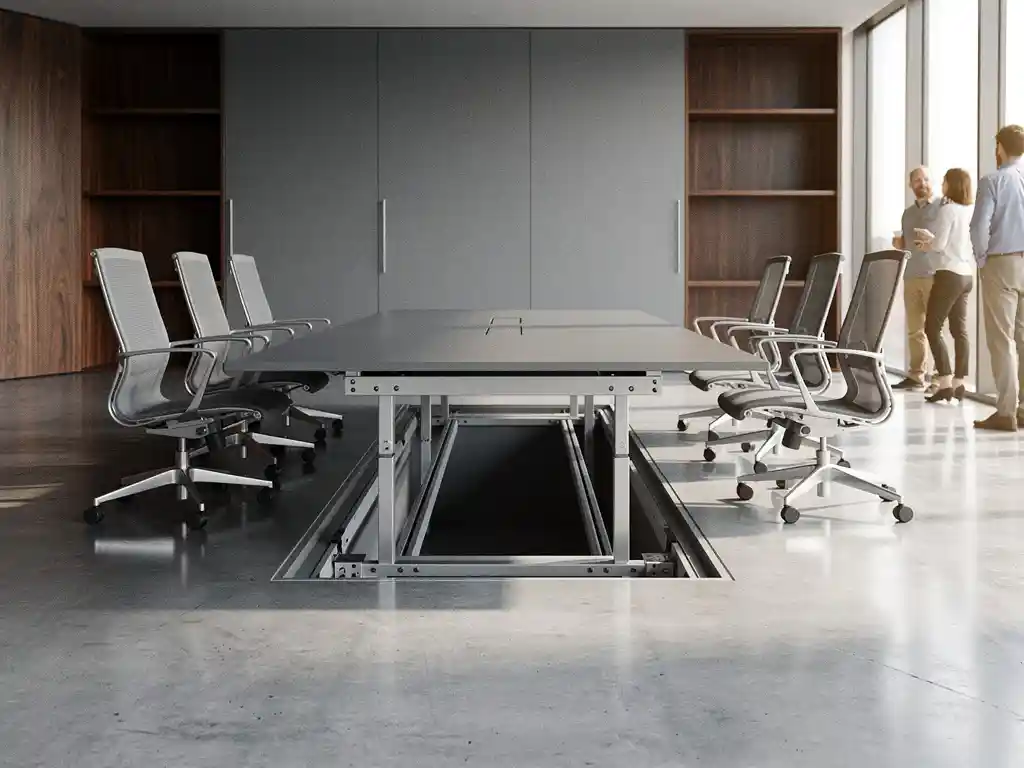
Modern meeting rooms are rapidly evolving from static spaces into smart environments that automatically adapt to users’ needs. Smart office automation is transforming not only how we meet, but also how spaces manage and maintain themselves.
From smart booking systems to automated cleanup protocols: technology makes it possible to create meeting rooms that operate seamlessly without constant human intervention. This development offers organizations the opportunity to work more efficiently, while simultaneously reducing costs and improving the user experience.
What does meeting room automation mean in practice?
Meeting room automation refers to the use of smart technologies that automatically control the layout, climate control, lighting, and cleanup of meeting rooms without human intervention. These systems use sensors, AI, and IoT devices to optimize spaces for every meeting.
In practice, this encompasses various aspects of space management. Smart lighting systems automatically adjust brightness and color temperature based on the time of day and the nature of the meeting. Climate control regulates temperature and ventilation before participants arrive, based on the number of people booked.
Automated facilities management goes beyond just technical systems. Smart furniture can reposition itself for different types of meetings, while digital whiteboards automatically clear content from previous sessions and load new templates. Reservation systems communicate with all building systems to create a seamless experience that begins as soon as someone books a room.
What technologies make automated layout possible?
IoT sensors, AI-driven systems, smart lighting, and automated climate control form the technological foundation for automated meeting room setups. These technologies work together through a central management system that makes real-time adjustments.
Occupancy sensors detect when people enter and leave a room, allowing systems to respond automatically. These sensors trigger adjustments to lighting, presentation equipment, and climate control. Some advanced sensors can even count the number of people to precisely adjust ventilation and temperature.
Smart lighting systems use daylight sensing to automatically adjust artificial lighting, which can reduce energy costs by up to 90%. AI algorithms learn from usage patterns to predict when spaces will be in use, allowing systems to respond proactively rather than reactively.
Integrated conferencing systems automatically connect to popular platforms such as Microsoft Teams and Zoom. These systems activate cameras, microphones, and screens as soon as a meeting is scheduled and turn off all equipment when the session ends.
How do you set up an automatic cleaning system for meeting rooms?
An automated cleanup system for meeting rooms is set up by combining time-based triggers, sensor technology, and automated equipment, so that the room is restored to its default configuration after every meeting. The system activates automatically when the reserved time expires or when sensors detect that the room is empty.
The system works by linking your booking software to all the smart office equipment in the room. When a meeting officially ends, the system automatically sends signals to various components. Digital whiteboards clear their content, presentation screens return to the welcome page, and audiovisual equipment turns off.
For physical cleanup, robot vacuums can be programmed to start after every meeting, while smart trash cans signal when they need to be emptied. Air purification systems activate automatically to ventilate the room and neutralize any odors.
The setup also requires defining default configurations for different types of meetings. A brainstorming session requires different lighting and temperature settings than a formal presentation. By pre-configuring these profiles, the system can not only clean up but also prepare for the next scheduled activity.
What are the benefits of automated meeting room setup?
Automated meeting room setup offers significant time savings, cost reductions, and an improved user experience by eliminating manual tasks and optimizing energy consumption. On average, organizations spend 30–40% less time on room management.
Energy savings offer a significant financial benefit. Automatic lighting and climate control ensure that systems are only active when spaces are actually in use. This can result in a 50–70% reduction in energy costs for meeting rooms, especially in organizations with many unused reserved time slots.
The user experience improves significantly because employees enter rooms that are already set up perfectly. No more searching for light switches, no more waiting for the projector to warm up, and no more time wasted adjusting the temperature. This leads to more productive meetings that can start right on time.
For facilities teams, automation means less reactive work and more time for strategic tasks. Preventive maintenance becomes possible because systems monitor their own status and flag issues before they escalate. This results in lower maintenance costs and fewer disruptions to business operations.
What challenges do you face when automating office spaces?
The biggest challenges in automating office spaces are high initial investment costs, the complex integration of various systems, and the need for ongoing technical support. Many organizations also underestimate the time required for user training and adoption.
Technical integration is often the biggest hurdle. Existing building systems are not always compatible with new smart office technologies, which requires costly upgrades or workarounds. Legacy systems can introduce security risks when connected to modern IoT networks.
Privacy and data security require careful attention. Sensors that detect motion and speech can capture sensitive information, which raises compliance issues under regulations such as the GDPR. Organizations must develop clear protocols for data collection, storage, and processing.
User adoption can be slow, especially among employees who are accustomed to traditional space management. Some people view automated systems as unpredictable or as a loss of control. Training and a phased rollout are essential to overcoming resistance and fully realizing the benefits of smart office automation.
How Wout Monseurs Helps with Smart Meeting Room Automation
We offer comprehensive Smart Office solutions that transform meeting rooms into intelligent, self-managing environments. Our expertise combines over 60 years of experience in office design with advanced automation technology.
Our Smart Office services include:
- Smart booking systems for workstations and meeting rooms via our Desk Booking tool
- Integrated conferencing systems that automatically connect to Microsoft Teams, Google Meet, and Zoom
- Smart lighting and climate control that can reduce energy costs by up to 90%
- IoT sensors and AI-driven systems for automatic space optimization
- Real-time insight into facility costs and space utilization
As a family-owned business with a strong local presence, we understand that every organization has unique needs. That’s why we work closely with our clients to develop customized solutions that align perfectly with their workflows and corporate culture. From the initial introductory meeting to final delivery, we handle the entire process.
Would you like to discover how intelligent automation can transform your meeting rooms? Contact us for a no-obligation consultation about the possibilities for your organization.
Frequently asked questions
How much does it cost to fully automate a meeting room?
Costs vary significantly depending on the size of the room and the desired features, but you should expect to pay between €15,000 and €50,000 per meeting room for a complete automation solution. This includes sensors, smart lighting, climate control, AV systems, and installation. The investment typically pays for itself within 2–3 years through energy savings and increased efficiency.
Can I implement automation gradually, or does it all have to be done at once?
A phased rollout is certainly possible and often makes more sense in terms of budget management and user acceptance. For example, start with smart lighting and reservation systems, and expand later to include climate control and automated cleaning. Most systems are modular, allowing you to upgrade step by step without losing the value of your existing investments.
What happens if the computer system goes down during an important meeting?
Professional automation systems always include manual override options and backup features. Essential functions such as lighting and climate control can always be operated manually via wall panels or apps. In addition, modern systems monitor their own status and automatically send alerts in the event of malfunctions, so that issues can be resolved quickly.
How long does it take to install a fully automated conference room system?
For an average meeting room, the entire installation and configuration process takes 2–4 weeks, depending on the complexity and existing infrastructure. The physical installation of sensors and systems usually takes 3–5 days, followed by software configuration, testing, and user training. We often schedule installations on weekends or in the evenings to avoid disrupting business operations.
Can automation systems integrate with our existing IT infrastructure?
Yes, modern automation systems are designed to integrate with existing systems such as Active Directory, Microsoft 365, and popular booking platforms. We always perform a thorough compatibility check before we begin and ensure seamless integration with your current IT environment. Minor upgrades may sometimes be required for older systems.
How do you train employees to use automated meeting rooms?
Training is crucial to successful implementation. We offer practical workshops where employees gain hands-on experience with the new systems. We also provide clear manuals and quick-start guides. Most automation features operate intuitively in the background, so the learning curve is usually short—within a week, most users are fully familiar with the system.
What maintenance is required for automated meeting rooms?
Modern automation systems require minimal maintenance thanks to their self-diagnostic features. Monthly software updates and biannual sensor calibration are usually sufficient. We offer maintenance contracts that include preventive maintenance, 24/7 monitoring, and rapid repairs. Most issues are resolved remotely, which keeps downtime to a minimum.