

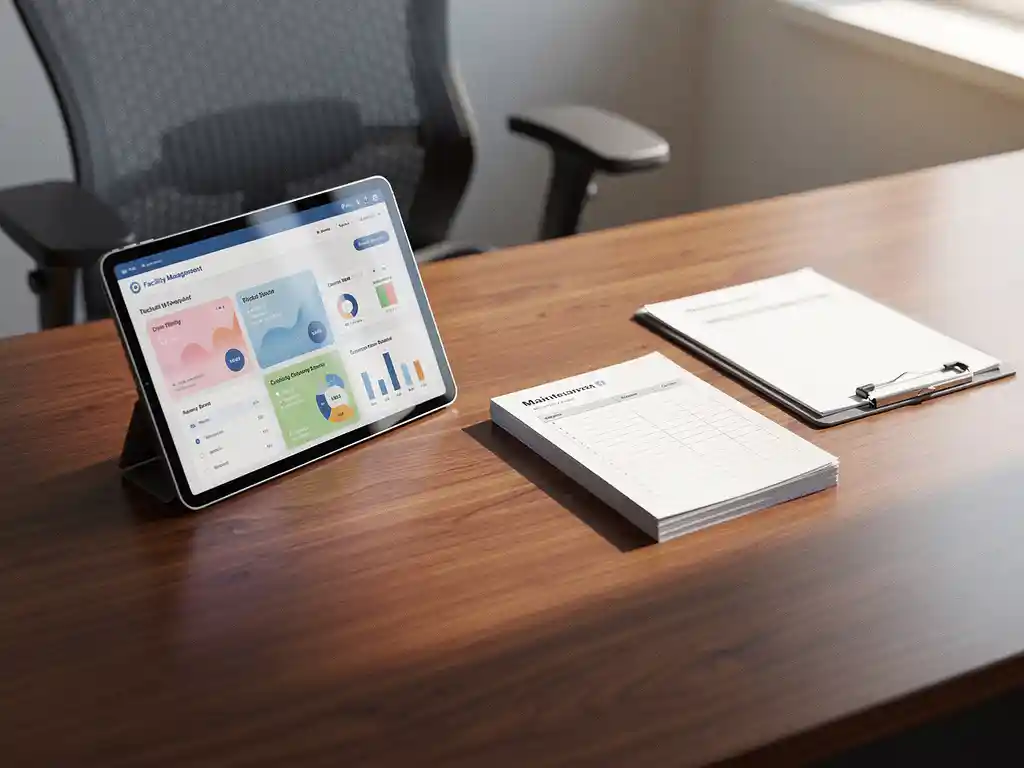
Modern offices face the challenge of efficiently managing increasingly complex facility management tasks. From keeping track of office supplies to maintaining technical equipment, these processes require a great deal of time and attention. Intelligent office automation offers a solution by automating repetitive tasks and relieving managers of routine work.
By implementing smart systems, organizations can not only reduce costs but also improve the quality of their work environment. This article explores how to successfully automate facility management tasks and which steps are crucial to this process.
What are facility management tasks, and why automate them?
Facilities management tasks include all activities necessary to ensure that an office environment functions optimally, such as managing office supplies, maintaining equipment, room reservations, and climate control. Automating these tasks saves time, reduces errors, and ensures consistent service.
Traditional facility management requires a great deal of manual oversight and planning. Staff must regularly take inventory, maintain maintenance schedules, and process reservations. These processes are not only time-consuming but also prone to human error.
Automation is changing this by utilizing sensors, software, and intelligent systems. For example, printers can automatically order new toner cartridges when levels are low, or meeting rooms can automatically become available again as soon as a meeting ends. This leads to a proactive approach in which problems are prevented rather than solved.
The benefits of automation go beyond mere efficiency. Employees experience less frustration thanks to well-functioning facilities, while managers have more time for strategic tasks. In addition, automated management provides better data insights, enabling organizations to optimize their facility costs.
Which facility management processes are best suited for automation?
The processes best suited for automation are repetitive tasks with clear rules and measurable parameters, such as print management, room reservations, climate control, and inventory management. These processes follow predictable patterns and can be effectively monitored using sensors and software.
Print management tops the list of processes that can be automated. Modern printers can monitor their own status, automatically order toner, and flag maintenance needs. This prevents unexpected downtime and ensures continuous availability.
Space and workspace management benefits greatly from automation. Desk booking systems allow employees to reserve workspaces with a single click, while sensors track actual occupancy. This data helps optimize space utilization.
Climate and lighting control can be automated based on occupancy and preferences. Smart systems automatically adjust temperature and lighting when people enter or leave a room, which can result in energy savings of up to 90%.
Inventory management for office supplies becomes more efficient with automatic reorders based on usage patterns. RFID tags and smart storage can provide real-time visibility into inventory levels and automatically place new orders.
How do you choose the right facility management software?
The right facility management software should meet your specific needs, integrate with existing systems, and be scalable to accommodate future growth. Look for user-friendliness, reporting capabilities, and the quality of customer support.
Start by taking stock of your current processes and pain points. Which tasks take the most time? Where do errors occur regularly? This analysis will help you determine which features should be prioritized when selecting software.
Integration capabilities are crucial for successful implementation. The software must be able to communicate with existing systems such as HR software, booking systems, and IoT devices. This prevents data silos and ensures seamless workflows.
Pay attention to the user interface and accessibility. Software that is difficult to use will not be widely adopted. Look for solutions with intuitive dashboards and mobile access, so that employees can easily make reservations and manage facilities.
Reporting and analytics features are essential for optimizing facility management processes. The software must provide insights into space utilization, costs per department, and trends in facility consumption. This data helps in making data-driven decisions.
What are the first steps in automating facility management tasks?
Start with a thorough analysis of your current facilities management processes, identify the biggest bottlenecks, and begin by automating one specific process before expanding to other areas. A phased approach increases the likelihood of success and minimizes risks.
Step 1: Process analysis is the foundation of successful automation. Document all current facility management tasks, measure the time they take, and identify where errors occur. This baseline measurement will help you track improvements later on.
Step 2: Prioritization helps you identify where you can make the biggest impact. Choose processes that are time-consuming, prone to errors, or have a direct impact on employee satisfaction. Print management is often a good place to start because it offers tangible benefits.
Step 3: Conduct a pilot project to test the chosen solution on a small scale. Select a single department or facility type to start with. This will provide valuable insights without significant risk and help refine processes.
Step 4: Training and communication ensure user acceptance. Organize workshops to familiarize employees with new systems and clearly communicate the benefits of automation.
Step 5: A phased rollout gradually extends automation to other processes and departments. Continuously monitor the results and adjust processes as needed based on user feedback.
How do you measure the success of automated facility management processes?
Measure the success of automated facilities management processes using specific KPIs such as time savings, cost reductions, user satisfaction, and system reliability. Establish baseline measurements before implementation to objectively assess improvements.
Time savings are a direct indicator of automation success. Measure how much time employees previously spent on manual tasks and compare this to the time now required for monitoring and managing automated systems.
Cost efficiency demonstrates the financial impact of automation. Monitor not only the direct costs of facility services, but also indirect savings, such as reduced equipment downtime and more efficient use of space.
User satisfaction measures the quality of facility services. Conduct regular surveys among employees regarding the availability and quality of facilities. High satisfaction scores indicate successful automation.
System reliability indicates how consistently automated processes operate. It measures uptime percentages, system response times, and the number of incidents requiring manual intervention.
Evaluate data quality and insights to determine whether automation enables better decision-making. Assess whether you now have more accurate data on facility usage and whether this data is actually being used for optimization.
How Wout Monseurs Helps with Smart Office Automation
We offer comprehensive Smart Office solutions that automate facility management tasks and transform your office environment into an intelligent, efficient workplace. With over 60 years of experience, we combine traditional expertise with cutting-edge technology.
Our automation solutions include:
- Automated print management: printers are monitored remotely, toner cartridges are automatically replenished, and preventive maintenance is scheduled.
- Desk booking systems: Reserve workspaces and meeting rooms with a single click via smartphone or computer.
- Smart climate and lighting control: automatic adjustment based on occupancy, with energy savings of up to 90%.
- IoT sensors and monitoring: real-time insight into facility costs and space utilization.
From comprehensive project planning to technical implementation: we guide you through the entire automation process. Contact us for a no-obligation analysis of your facility management processes and discover how intelligent automation can transform your office.
Frequently asked questions
How much does it cost to automate facility management processes?
Costs vary widely depending on the size and complexity of your office. Basic print management software starts at around €2,000–5,000, while comprehensive Smart Office solutions can cost €10,000–50,000. The investment typically pays for itself within 12–24 months through time and cost savings.
Can I implement automation in phases, or does everything have to be done at once?
Een gefaseerde aanpak is zelfs aanbevolen en vermindert risico’s aanzienlijk. Begin met één proces zoals printbeheer, evalueer de resultaten, en breid daarna geleidelijk uit naar andere facilitaire taken. Dit zorgt voor betere acceptatie door gebruikers en geeft u tijd om processen te optimaliseren.
What happens if the automated system goes down?
Professional automation systems feature built-in redundancy and backup procedures. In the event of a malfunction, most processes can be taken over manually while technical support resolves the issue. Always choose suppliers that guarantee 24/7 support and fast response times.
How long does it take for employees to get used to the new systems?
Most employees become fully accustomed to new IT systems within 2–4 weeks, especially if they are designed to be user-friendly. Proper training and clear communication about the benefits significantly speed up this process. Start by enlisting enthusiastic early adopters as ambassadors.
What data is collected, and how is privacy protected?
Automation systems typically collect anonymous usage data such as room occupancy, device status, and usage patterns. Personal data is minimized and processed in accordance with GDPR regulations. Choose suppliers who are transparent about data collection and implement robust security measures.
Can automation work in older office buildings as well?
Yes, modern automation solutions are often wireless and can be easily installed without major renovations. IoT sensors are battery-powered, and many systems communicate via existing Wi-Fi networks. A preliminary technical assessment will determine which solutions are best suited to your building.
How can I prevent automation from leading to job losses?
Automation replaces repetitive tasks, but actually creates opportunities for more strategic and valuable work. Facilities staff can focus on problem-solving, project management, and customer service. Invest in reskilling and clearly communicate that automation is intended to make work more meaningful, not to eliminate jobs.