

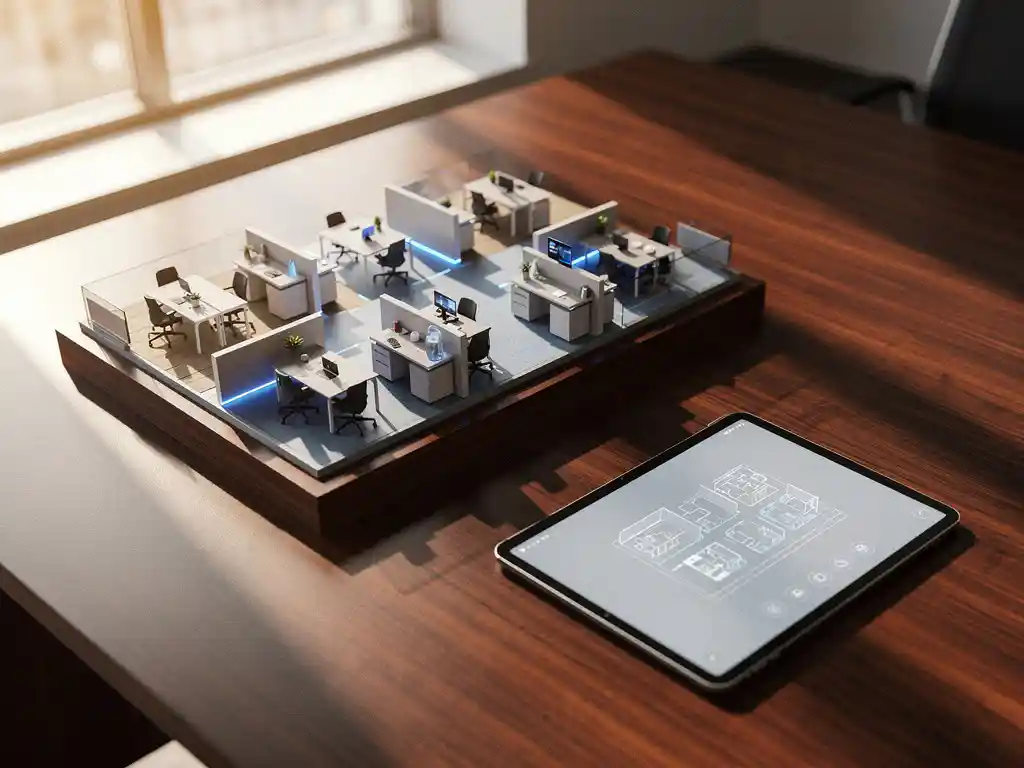
Modern offices face the challenge of efficiently utilizing flexible workspaces as employees increasingly adopt hybrid work arrangements. Intelligent office automation offers a solution by leveraging real-time data for smart space planning. This technology helps organizations optimize their office space, reduce costs, and create a better work experience.
From sensor technology to AI-driven systems, automated space planning is transforming the way we manage and design office spaces. By making data-driven decisions, companies can tailor their work environments to the actual needs of their employees.
What is automated space planning, and why is it important?
Automated space planning is an intelligent system that uses sensors, software, and data analysis to dynamically organize and manage office spaces based on real-time usage patterns. This system automatically adjusts the workspace layout without human intervention.
The main benefits of smart office automation are cost savings and increased efficiency. Traditional offices are often designed based on assumptions about space utilization, which leads to underutilized meeting rooms and overcrowded workstations. Automated systems eliminate this problem through continuous monitoring and adjustment.
For modern organizations, this technology has become essential due to the shift toward hybrid work. Employees no longer work in the office five days a week, making traditional fixed workstations inefficient. Automated space planning maximizes the utilization of available space and ensures that every square foot adds value to the organization.
What real-time data is essential for smart space planning?
The most important real-time data for smart space planning include occupancy rates, movement patterns, temperature and air quality readings, and reservation data. Together, this data provides a comprehensive picture of how spaces are actually being used.
Occupancy sensors measure how many people are in specific zones and how long they stay there. This information helps identify popular and underutilized areas. Motion detection tracks traffic flows throughout the office and reveals which routes employees use most frequently.
Environmental data such as temperature, air quality, and noise levels are crucial for employee comfort and productivity. These measurements help automatically adjust climate control and identify areas that may be too crowded or uncomfortable.
Reservation data from booking systems provide insight into planned versus actual space usage. By combining this data with actual occupancy, systems can identify patterns, such as no-shows at meetings or underutilization of reserved workspaces.
How do you collect reliable data on space utilization?
Reliable data collection requires a combination of different sensor technologies: motion sensors, privacy-protecting cameras, CO2 monitors, and smart badges. These systems must be strategically placed to ensure full coverage without compromising privacy.
Motion sensors form the basis of room monitoring and can be easily installed on ceilings or walls. Modern sensors are highly accurate and can distinguish between different activity levels. These sensors are ideal for meeting rooms to measure actual occupancy.
Privacy-friendly cameras use advanced algorithms to count people without capturing their faces or identities. This technology respects employee privacy while providing valuable insights into space utilization and traffic flows.
CO2 sensors not only measure air quality, but also provide an indication of the number of people in a room. Higher CO2 concentrations indicate more people, making these sensors a reliable additional data source for occupancy monitoring.
What technologies support automated space planning?
Automated space planning is supported by IoT sensors, AI algorithms, cloud-based platforms, and integration APIs that connect various systems. These technologies work together to create an intelligent ecosystem capable of making autonomous decisions.
Internet of Things (IoT) sensors form the nervous system of smart offices. These small, wireless devices continuously collect data on occupancy, movement, temperature, and air quality. Modern IoT sensors have long battery life and can operate for years without maintenance.
Artificial intelligence and machine learning analyze the collected data to identify patterns and make predictions. These algorithms learn from historical data to predict future space requirements and automatically suggest adjustments.
Cloud platforms centralize all data and enable real-time analysis from any location. These platforms provide dashboards that give facility managers immediate insight into space utilization and allow them to take action when necessary. Integration with existing systems, such as booking tools and HR systems, creates a seamless user experience.
How do you implement an automated space planning system?
The implementation of automated space planning begins with a thorough analysis of current space usage, followed by the selection of appropriate sensor technology, the installation of hardware, and the configuration of software. A phased approach minimizes disruption to daily operations.
The first phase involves a baseline assessment, during which we manually observe how spaces are currently being used. This information helps us determine the appropriate sensor locations and set realistic expectations for the new system.
Hardware installation requires careful planning to achieve optimal coverage without disrupting employees. Sensors must be strategically placed in meeting rooms, near entrances, and in open workspaces. Professional installation ensures that all devices are properly calibrated and connected.
The software configuration involves setting thresholds, defining room types, and linking sensors to specific locations. Training facility managers and end users is essential for successful adoption. A trial period of several weeks helps fine-tune the settings before the system becomes fully operational.
What are the costs and benefits of automated space planning?
The initial investment for automated space planning ranges from €50 to €200 per workstation, depending on the complexity of the system. The payback period is typically 12 to 24 months, thanks to savings on real estate costs and increased productivity.
Direct cost savings result from more efficient use of space. Organizations can reduce their office space by 20 to 30% through smart office automation, leading to lower rent and energy costs. Meeting rooms are utilized more effectively, meaning less space is needed for the same number of employees.
Indirect benefits include higher employee satisfaction and productivity. Employees can find available workstations and meeting rooms more quickly, which reduces stress and increases efficiency. Improved air quality and climate control provided by automated systems contribute to health and well-being.
Operational benefits translate into lower facility management costs. Automated systems require less manual intervention and provide proactive insights that enable preventive maintenance. Data-driven decisions replace guesswork, leading to better investment decisions for future office design.
How Wout Monseurs Helps with Smart Office Automation
We combine over 60 years of experience in office design with cutting-edge Smart Office technology to deliver comprehensive automated space planning solutions. Our family-owned business guides organizations through the entire implementation process, from analysis to completion.
Our Smart Office solutions include:
- Smart booking systems for workstations and meeting rooms via our Desk Booking tool
- Automatic desk adjustment based on users' personal preferences
- Real-time monitoring of space utilization and occupancy rates
- Integration with existing IT infrastructure and conferencing systems
- Insight into facility costs and energy consumption
As a full-service project designer, we ensure seamless integration between smart technology and ergonomic workplace design. From design to maintenance, we take care of everything so you can focus on your core business.
Discover how smart office automation can transform your workplace. Contact us for a no-obligation consultation on the possibilities for your organization.
Frequently asked questions
How long does it take to implement an automated space planning system?
Full implementation typically takes 4 to 8 weeks, depending on the size of the office and the complexity of the system. This includes analysis, hardware installation, software configuration, and a testing period. For larger organizations with multiple locations, this process can take 3 to 6 months.
Can existing reservation systems be integrated with intelligent office automation?
Yes, modern automated space planning systems are designed to integrate with existing scheduling tools such as Outlook, Google Workspace, and specialized facility management software. Through API integrations, all systems can work together seamlessly, allowing employees to continue using their familiar tools.
What happens if sensors malfunction or fail?
Professional systems feature built-in redundancy and monitoring. If a sensor fails, the facility manager is immediately notified. The system can continue to operate temporarily using data from nearby sensors, and faulty sensors can usually be replaced within 24 hours without disrupting the entire system.
How is employee privacy protected in the context of space monitoring?
Modern systems respect privacy by collecting only anonymous occupancy data without any personal identifiers. Cameras use algorithms that count people without capturing their faces, and sensors detect only presence, not who is present. All data is stored in encrypted form and complies with GDPR regulations.
What kind of ROI can I expect from smart office automation?
The average ROI ranges from 150% to 300% over a three-year period. Organizations typically save 20–30% on real estate costs through more efficient use of space, while productivity gains and lower energy costs provide additional benefits. The payback period is usually 12 to 24 months.
Is the system suitable for small offices, or only for large organizations?
Intelligent office automation is scalable and suitable for offices with 20 or more workstations. For smaller organizations, cost-effective basic packages are available that offer essential features. The system grows with your organization and can be expanded later with additional sensors and features.
What are some common mistakes made during implementation, and how can you avoid them?
Common mistakes include inadequate change management, an insufficient number of sensors to ensure accurate data, and neglecting user training. Successful implementation requires clear communication with employees, strategic sensor placement for optimal coverage, and comprehensive training for facility managers. An experienced partner like Wout Monseurs can help you avoid these pitfalls.