

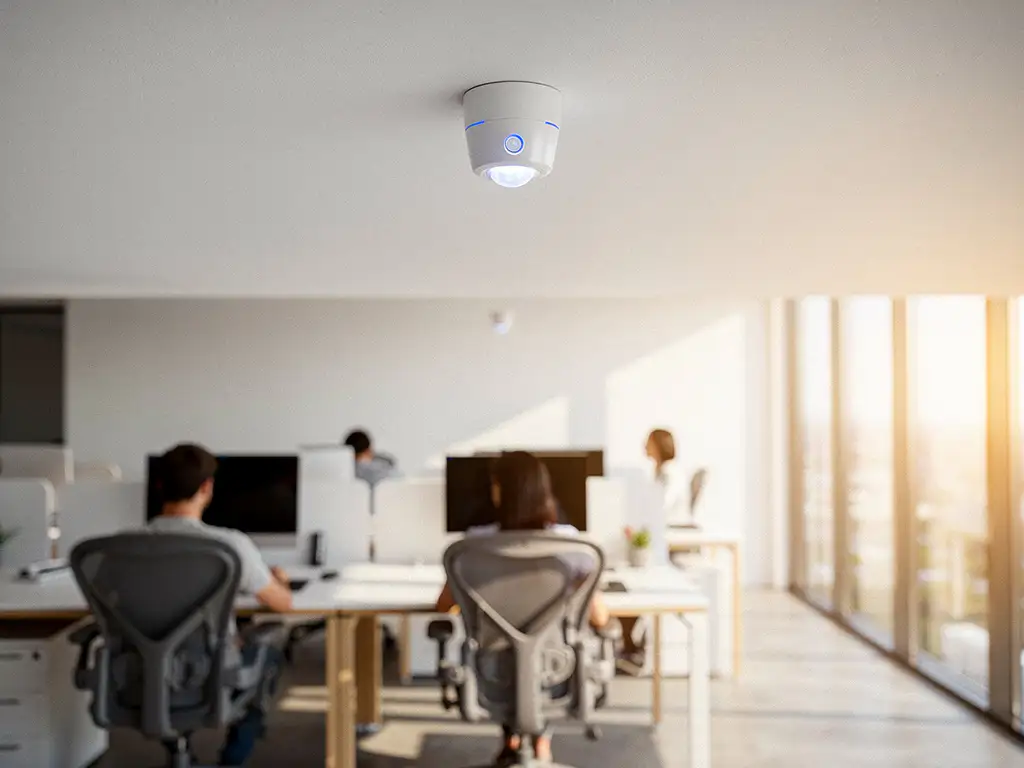
Moderne kantoren zoeken steeds vaker naar manieren om hun faciliteiten efficiënter te beheren. Intelligente kantoorautomatisering heeft zich ontwikkeld tot een krachtige oplossing waarbij sensoren en slimme technologie traditionele schoonmaakschema’s vervangen door datagedreven systemen. Deze technologische vooruitgang zorgt niet alleen voor kostenbesparing, maar ook voor een gezondere werkomgeving.
Door slimme sensoren te integreren in kantoorruimtes kunnen organisaties realtime inzicht krijgen in schoonmaakbehoeften. Dit betekent het einde van vaste, inefficiënte schema’s en het begin van een nieuw tijdperk waarin schoonmaak plaatsvindt op basis van werkelijke behoefte in plaats van aannames.
Wat zijn slimme sensoren voor schoonmaakautomatisering?
Slimme sensoren voor schoonmaakautomatisering zijn IoT-apparaten die realtime data verzamelen over ruimtegebruik, luchtkwaliteit en hygiëneniveaus om schoonmaakactiviteiten te optimaliseren. Deze sensoren meten parameters zoals beweging, temperatuur, luchtvochtigheid en zelfs bacterieniveaus om precies te bepalen wanneer en waar schoonmaak nodig is.
De technologie werkt via verschillende meetpunten die continu informatie doorsturen naar een centraal systeem. Dit systeem analyseert de data en genereert automatisch schoonmaaktaken wanneer bepaalde drempelwaarden worden overschreden. Zo ontstaat een dynamisch schoonmaaksysteem dat zich aanpast aan het werkelijke gebruik van ruimtes.
Deze intelligente sensoren maken deel uit van bredere Smart Office-oplossingen die kantoren transformeren tot efficiënte, datagedreven werkomgevingen. Ze integreren naadloos met andere gebouwbeheersystemen en kunnen via dashboards en mobiele apps worden gemonitord.
Welke voordelen biedt geautomatiseerde schoonmaakplanning?
Geautomatiseerde schoonmaakplanning verlaagt de kosten met 20-30%, verbetert de hygiëne door gerichte reiniging en verhoogt de medewerkerstevredenheid door consequent schone werkomgevingen. Het systeem elimineert overbodig schoonmaakwerk en zorgt ervoor dat drukbezochte ruimtes de aandacht krijgen die ze verdienen.
Een belangrijk voordeel is de optimale resourceallocatie. Traditionele schema’s zijn gebaseerd op aannames over ruimtegebruik, terwijl sensorgestuurde systemen werken met feitelijke data. Dit betekent dat schoonmaakpersoneel zijn tijd besteedt waar het echt nodig is, wat resulteert in efficiëntere werkprocessen en kostenbesparingen.
Daarnaast zorgt intelligente kantoorautomatisering voor betere naleving van hygiënestandaarden. Het systeem houdt automatisch bij wanneer ruimtes zijn schoongemaakt en waarschuwt wanneer onderhoud achterstallig is. Dit is vooral waardevol voor organisaties met strikte hygiënevereisten of veel bezoekers.
Hoe werken sensoren voor het detecteren van schoonmaakbehoeften?
Sensoren detecteren schoonmaakbehoeften door continue monitoring van ruimtegebruik, luchtkwaliteit en hygiëneniveaus, waarbij algoritmen patronen analyseren en automatisch taken genereren wanneer vooraf ingestelde drempelwaarden worden overschreden. Het systeem combineert verschillende datastromen om een compleet beeld te vormen van de schoonmaakbehoefte.
Het detectieproces werkt in verschillende stappen. Bewegingssensoren registreren hoeveel mensen een ruimte bezoeken en hoe lang ze blijven. Luchtkwaliteitssensoren meten CO2-niveaus, stofdeeltjes en vluchtige organische stoffen die wijzen op vervuiling. Vochtigheidssensoren in sanitaire ruimtes detecteren gebruiksfrequentie en potentiële hygiëneproblemen.
De verzamelde data wordt door machinelearningalgoritmen geanalyseerd om patronen te herkennen. Het systeem leert bijvoorbeeld dat vergaderruimtes na intensieve meetings extra ventilatie nodig hebben, of dat toiletten tijdens piekuren vaker onderhoud vereisen. Deze intelligente analyse zorgt voor proactieve schoonmaakplanning in plaats van reactieve interventies.
Welke typen sensoren kun je gebruiken voor schoonmaakautomatisering?
Voor schoonmaakautomatisering kun je bewegingssensoren, luchtkwaliteitsmonitoren, vochtigheidsdetectoren, temperatuursensoren en zelfs bacteriëntellers gebruiken, elk geoptimaliseerd voor specifieke ruimtes en schoonmaakbehoeften. De keuze hangt af van het type ruimte en de gewenste mate van automatisering.
Bewegings- en aanwezigheidssensoren vormen de basis van elk systeem. Ze registreren niet alleen of een ruimte wordt gebruikt, maar ook de intensiteit van het gebruik. PIR-sensoren detecteren beweging, terwijl meer geavanceerde sensoren zelfs het aantal personen kunnen tellen.
Luchtkwaliteitssensoren meten verschillende parameters zoals CO2-concentratie, fijnstof en vluchtige organische stoffen. Deze data helpt bij het bepalen van ventilatie- en reinigingsbehoeften. In kantines en vergaderruimtes zijn deze sensoren bijzonder waardevol voor het handhaven van een gezonde werkomgeving.
Vocht- en temperatuursensoren zijn essentieel voor sanitaire ruimtes en pantry’s. Ze detecteren niet alleen gebruikspatronen, maar ook omstandigheden die bacteriegroei bevorderen. Gespecialiseerde hygiënesensoren kunnen zelfs specifieke bacteriën of virussen detecteren, wat vooral relevant is geworden na de COVID-19-pandemie.
Hoe implementeer je een sensorgestuurd schoonmaaksysteem?
De implementatie van een sensorgestuurd schoonmaaksysteem begint met een grondige analyse van ruimtegebruik, gevolgd door strategische sensorplaatsing, systeemintegratie en training van schoonmaakpersoneel om datagedreven beslissingen te nemen. Een gefaseerde aanpak zorgt voor een soepele overgang van traditionele naar intelligente schoonmaakprocessen.
De eerste fase omvat ruimteanalyse en planning. Analyseer welke ruimtes het meest intensief worden gebruikt en waar hygiëne kritiek is. Toiletten, kantines en vergaderruimtes hebben vaak prioriteit. Bepaal per ruimte welke sensoren nodig zijn en waar ze optimaal geplaatst kunnen worden voor nauwkeurige metingen.
In de tweede fase volgt technische implementatie. Installeer sensoren op strategische locaties en verbind ze met een centraal beheersysteem. Zorg voor betrouwbare netwerkconnectiviteit en back-upsystemen. Test alle sensoren grondig en kalibreer drempelwaarden op basis van initiële metingen en de gewenste schoonmaakstandaarden.
De derde fase betreft procesintegratie en training. Train schoonmaakpersoneel in het gebruik van dashboards en mobiele apps. Ontwikkel nieuwe werkprocessen die gebaseerd zijn op sensordata in plaats van vaste schema’s. Monitor de eerste weken intensief om het systeem te verfijnen en eventuele kinderziektes op te lossen.
Hoe Wout Monseurs helpt met intelligente schoonmaakautomatisering
Wij integreren slimme sensoren voor schoonmaakautomatisering als onderdeel van onze Smart Office-oplossingen, waarbij we meer dan 60 jaar ervaring in kantoorinrichting combineren met geavanceerde IoT-technologie. Onze aanpak zorgt voor een naadloze integratie tussen traditionele kantoorinrichting en moderne automatiseringssystemen.
Onze intelligente kantoorautomatiseringsservice omvat:
- Complete sensorimplementatie afgestemd op uw specifieke ruimtes en schoonmaakbehoeften
- Integratie met bestaande systemen zoals klimaatbeheersing en verlichting voor optimale efficiëntie
- Realtime monitoringdashboards voor inzicht in schoonmaakpatronen en kostenbesparingen
- Training en ondersteuning voor uw facilitaire teams om maximaal profijt te halen van de technologie
- Onderhoud en updates om uw systeem toekomstbestendig te houden
Als familiebedrijf met een persoonlijke aanpak begrijpen wij dat elke organisatie unieke behoeften heeft. Daarom bieden we maatwerkprojectinrichting, waarbij intelligente schoonmaakautomatisering wordt geïntegreerd in het totale kantoorontwerp. Neem contact met ons op voor een vrijblijvend adviesgesprek over hoe slimme sensoren uw schoonmaakprocessen kunnen transformeren.
Veelgestelde vragen
Hoeveel kost de implementatie van slimme sensoren voor schoonmaakautomatisering?
De kosten variëren afhankelijk van de grootte van uw kantoor en het aantal sensoren, maar de investering verdient zich meestal binnen 12-18 maanden terug door de 20-30% kostenbesparing op schoonmaakactiviteiten. Een gemiddeld kantoor van 500m² kan rekenen op een investering van €15.000-25.000, inclusief installatie en configuratie.
Hoe lang duurt het voordat het systeem nauwkeurig de schoonmaakbehoeften kan voorspellen?
Het systeem heeft ongeveer 4-6 weken nodig om betrouwbare gebruikspatronen te leren en accurate voorspellingen te doen. In de eerste maand verzamelt het systeem basisdata, waarna de machine learning algoritmen patronen beginnen te herkennen en de schoonmaakplanning steeds preciezer wordt.
Wat gebeurt er als sensoren uitvallen of defect raken?
Moderne sensorsystemen hebben ingebouwde redundantie en back-up protocollen. Bij uitval van een sensor schakelt het systeem automatisch over op nabijgelegen sensoren of valt terug op een vooraf ingesteld basisschema. De meeste systemen sturen ook direct meldingen naar facility managers zodat defecte sensoren snel kunnen worden vervangen.
Kunnen bestaande schoonmaakteams werken met deze nieuwe technologie?
Ja, de meeste schoonmaakteams kunnen binnen een week leren werken met sensor-gestuurde systemen. De technologie vereenvoudigt hun werk eigenlijk door duidelijke prioriteiten aan te geven via dashboards en mobiele apps. Wij bieden uitgebreide training en ondersteuning om een soepele overgang te garanderen.
Hoe privacy-gevoelig is de data die door de sensoren wordt verzameld?
De sensoren verzamelen geen persoonlijke data of beeldmateriaal – alleen anonieme gebruiksstatistieken zoals beweging, luchtkwaliteit en temperatuur. Alle data wordt lokaal verwerkt en voldoet aan GDPR-richtlijnen. Medewerkers kunnen niet worden geïdentificeerd of getraceerd via het systeem.
Is het systeem geschikt voor kleine kantoren of alleen voor grote bedrijven?
Slimme schoonmaakautomatisering is schaalbaar en kan al voordelig zijn voor kantoren vanaf 200m². Voor kleinere kantoren focussen we op kritieke ruimtes zoals toiletten en vergaderzalen, terwijl grotere organisaties volledige gebouwintegratie kunnen implementeren. De ROI is vaak zelfs hoger bij kleinere kantoren door de relatief lagere implementatiekosten.
Hoe integreren slimme sensoren met andere kantoorautomatiseringssystemen?
Moderne sensorsystemen kunnen naadloos integreren met bestaande gebouwbeheersystemen, klimaatinstallaties en verlichting via standaard IoT-protocollen. Dit creëert een holistisch smart office ecosysteem waarbij alle systemen samenwerken voor optimale efficiëntie en comfort.