

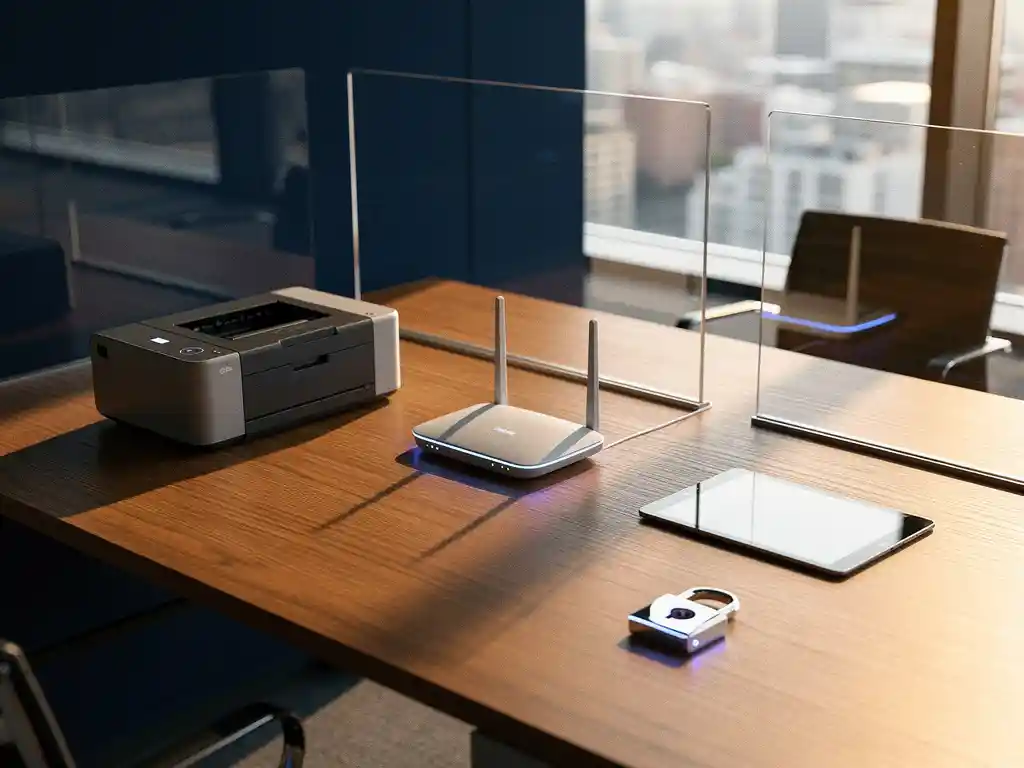
Moderne kantoren worden steeds slimmer dankzij Internet of Things (IoT)-technologie. Van intelligente thermostaten tot automatische verlichtingssystemen: deze apparaten maken werkplekken efficiënter en comfortabeler. Met de toename van verbonden apparaten groeit echter ook de zorg over gegevensprivacy en beveiliging.
De kosten voor de implementatie van een smart office kunnen aanzienlijk variëren, maar investeren in veilige IoT-netwerken is essentieel voor elke moderne werkplek. Het beschermen van gevoelige bedrijfsinformatie en persoonsgegevens van medewerkers vereist een doordachte aanpak van privacy en beveiliging, vanaf de implementatiefase.
Wat is gegevensprivacy in IoT-kantoornetwerken?
Gegevensprivacy in IoT-kantoornetwerken betreft de bescherming van persoonlijke en bedrijfsgegevens die door verbonden apparaten in de werkomgeving worden verzameld. Dit omvat het beveiligen van informatie zoals de locatie van werknemers, gebruikspatronen, biometrische gegevens en communicatie tegen ongeautoriseerde toegang of misbruik.
IoT-apparaten in kantoren verzamelen voortdurend gegevens om hun functionaliteit te optimaliseren. Deze informatie kan variëren van bewegingspatronen en aanwezigheidsgegevens tot specifieke werkgewoonten en voorkeuren. Zonder adequate privacymaatregelen kunnen deze gegevens kwetsbaar zijn voor cyberaanvallen, datalekken of ongewenste surveillance.
Een effectieve privacystrategie voor IoT-kantoornetwerken vereist transparantie over welke gegevens worden verzameld, hoe ze worden gebruikt en wie er toegang toe heeft. Dit betekent ook het implementeren van sterke beveiligingsprotocollen, regelmatige updates en een duidelijk privacybeleid voor alle medewerkers.
Welke IoT-apparaten in kantoren verzamelen persoonlijke gegevens?
Veel IoT-apparaten in moderne kantoren verzamelen persoonlijke gegevens, waaronder slimme toegangssystemen, bezettingssensoren, intelligente thermostaten, beveiligingscamera’s, geautomatiseerde verlichtingssystemen en werkplekboekingstools. Deze apparaten registreren aanwezigheid, bewegingspatronen, voorkeuren en gebruiksgedrag van medewerkers.
Slimme toegangssystemen met badgelezers of biometrische scanners verzamelen identificatiegegevens en toegangspatronen. Bezettingssensoren en bewegingsdetectoren registreren wanneer en waar medewerkers zich bevinden, wat inzicht geeft in werkpatronen, maar ook privacygevoelige locatiegegevens oplevert.
Intelligente klimaatbeheersystemen leren van gebruikersvoorkeuren en passen temperatuur en luchtkwaliteit automatisch aan. Werkplekboekingssystemen, zoals deskbookingtools, verzamelen gegevens over werkplekvoorkeuren en gebruiksfrequentie. Zelfs slimme printers kunnen printgedrag, documenttypen en gebruikersstatistieken bijhouden voor optimalisatie en kostenbeheer.
Beveiligingscamera’s met gezichtsherkenning en audio-opname kunnen zeer gevoelige persoonlijke informatie vastleggen. Conferentieruimtesystemen met microfoons en camera’s registreren mogelijk gesprekken en deelnemersgegevens, zelfs wanneer ze niet actief worden gebruikt voor vergaderingen.
Hoe stel je een veilig IoT-netwerk in op kantoor?
Een veilig IoT-netwerk begint met netwerksegmentatie: isoleer IoT-apparaten van kritieke bedrijfssystemen, implementeer sterke authenticatie, werk alle apparaten regelmatig bij en houd een gedetailleerde inventaris bij van alle verbonden apparaten. Gebruik een dedicated IoT-netwerk en implementeer end-to-end-encryptie voor alle datacommunicatie.
Netwerksegmentatie is cruciaal voor IoT-beveiliging. Creëer aparte netwerksegmenten voor IoT-apparaten, zodat een gecompromitteerd smart device geen toegang krijgt tot gevoelige bedrijfsgegevens. Implementeer firewalls tussen segmenten en beperk de communicatie tussen IoT-apparaten en kritieke systemen tot het absolute minimum.
Sterke authenticatiemechanismen zijn essentieel voor elk IoT-apparaat. Verander standaardwachtwoorden onmiddellijk na installatie en gebruik waar mogelijk multifactorauthenticatie. Implementeer certificaatgebaseerde authenticatie voor enterprise-grade apparaten en zorg voor regelmatige rotatie van toegangssleutels.
Een geautomatiseerd patchmanagementsysteem zorgt ervoor dat alle IoT-apparaten up-to-date blijven met de nieuwste beveiligingsupdates. Veel IoT-apparaten hebben beperkte update-mogelijkheden, dus kies leveranciers die langdurige ondersteuning en regelmatige securitypatches garanderen.
Welke privacy-instellingen moet je aanpassen op IoT-apparaten?
Essentiële privacy-instellingen omvatten het uitschakelen van onnodige dataverzameling, het beperken van het delen van gegevens met derden, het instellen van lokale gegevensopslag waar mogelijk, het configureren van minimale toegangsrechten en het activeren van encryptie voor alle datatransmissie. Schakel ook telemetrie en analytics uit, tenzij dit absoluut noodzakelijk is.
Begin met een grondige audit van alle privacy-instellingen per apparaat. Veel IoT-apparaten verzamelen standaard meer gegevens dan nodig is voor hun primaire functie. Schakel functies uit zoals locatietracking, gebruiksanalytics en gedragsmonitoring als deze niet essentieel zijn voor de bedrijfsvoering.
Configureer bewaartermijnen om ervoor te zorgen dat persoonsgegevens niet langer worden bewaard dan noodzakelijk. Stel automatische verwijdering in voor historische gegevens en implementeer regelmatige procedures voor het opschonen van data. Kies waar mogelijk voor edgecomputingoplossingen die gegevens lokaal verwerken in plaats van naar clouddiensten te verzenden.
Beperk netwerktoegang door alleen noodzakelijke poorten en protocollen toe te staan. Configureer access control lists om te bepalen welke systemen en gebruikers toegang hebben tot IoT-apparaten en hun gegevens. Implementeer role-based access control, waarbij medewerkers alleen toegang krijgen tot informatie die relevant is voor hun functie.
Hoe train je medewerkers in IoT-privacybewustzijn?
Effectieve IoT-privacytraining combineert praktische workshops, duidelijke beleidsrichtlijnen, regelmatige awareness-sessies en hands-on demonstraties van privacyrisico’s. Focus op concrete voorbeelden van hoe IoT-apparaten persoonsgegevens verzamelen en welke acties medewerkers kunnen ondernemen om hun privacy te beschermen.
Ontwikkel trainingsmodules die specifiek ingaan op de IoT-apparaten die in jullie kantoor worden gebruikt. Leg uit welke gegevens elk apparaat verzamelt, waarom dit gebeurt en hoe medewerkers hun privacy-instellingen kunnen aanpassen. Gebruik interactieve demonstraties om te laten zien hoe apparaten zoals slimme thermostaten of werkplekboekingssystemen werken.
Creëer duidelijke, begrijpelijke privacyrichtlijnen die specifiek zijn voor IoT-gebruik. Vermijd technisch jargon en focus op praktische do’s-and-don’ts. Leg bijvoorbeeld uit wanneer het veilig is om persoonlijke apparaten te verbinden met kantoornetwerken en wanneer dit beter vermeden kan worden.
Organiseer regelmatige awareness-sessies waarin nieuwe IoT-bedreigingen en best practices worden besproken. Gebruik praktijkvoorbeelden van privacyschendingen om de impact tastbaar te maken. Implementeer ook een meldsysteem waarmee medewerkers verdachte IoT-activiteiten kunnen rapporteren, zonder angst voor repercussies.
Hoe Wout Monseurs helpt met veilige smart office-implementatie
Wij bij Wout Monseurs begrijpen dat de implementatie van IoT-technologie in kantoren zowel kansen als uitdagingen met zich meebrengt. Onze Smart Office-oplossingen zijn ontworpen met privacy en beveiliging als uitgangspunt, zodat u kunt profiteren van intelligente kantoortechnologie zonder concessies te doen aan gegevensbescherming.
Onze aanpak voor veilige smart office-implementatie omvat:
- Uitgebreide privacy-impactassessments voorafgaand aan elke implementatie
- Netwerksegmentatie en beveiligingsarchitectuur volgens enterprise-standaarden
- Selectie van IoT-apparaten van vertrouwde leveranciers met sterke privacywaarborgen
- Configuratie van alle privacy-instellingen volgens best practices
- Medewerkerstraining specifiek gericht op uw smart office-omgeving
- Doorlopende monitoring en ondersteuning voor optimale beveiliging
Als familiebedrijf met meer dan 60 jaar ervaring combineren wij traditionele expertise met cutting-edge technologie. Onze complete projectinrichting integreert smart office-technologie naadloos in uw werkplek, waarbij privacy en gebruiksvriendelijkheid hand in hand gaan. Neem contact op voor een vrijblijvend adviesgesprek over veilige smart office-implementatie die past bij uw organisatie.
Veelgestelde vragen
Hoe lang duurt het om een volledig veilig IoT-netwerk te implementeren in een bestaand kantoor?
De implementatie van een veilig IoT-netwerk duurt doorgaans 2-6 weken, afhankelijk van de kantoorgrootte en complexiteit. Dit omvat netwerksegmentatie, apparaatconfiguratie, beveiligingstests en medewerkerstraining. Een gefaseerde aanpak waarbij apparaten geleidelijk worden toegevoegd, vermindert verstoring van de dagelijkse werkzaamheden.
Wat zijn de gemiddelde kosten voor het beveiligen van IoT-apparaten in een kantoor met 50 werkplekken?
Voor een kantoor van 50 werkplekken kunt u rekenen op €15.000-30.000 voor complete IoT-beveiliging, inclusief netwerksegmentatie, firewalls, beveiligingssoftware en professionele configuratie. Jaarlijkse onderhoudskosten bedragen ongeveer 20-30% van de initiële investering. Deze investering voorkomt echter veel duurdere datalekken en beveiligingsincidenten.
Kunnen bestaande IoT-apparaten achteraf nog veilig worden gemaakt?
Ja, de meeste bestaande IoT-apparaten kunnen achteraf beveiligd worden door firmware-updates, herconfiguratie van privacy-instellingen en netwerksegmentatie. Oudere apparaten zonder updateondersteuning kunnen via geïsoleerde netwerken of beveiligingsgateways worden beschermd. In sommige gevallen is vervanging echter de veiligste optie.
Hoe vaak moeten IoT-beveiligingsinstellingen worden gecontroleerd en bijgewerkt?
IoT-beveiligingsinstellingen moeten maandelijks worden gecontroleerd en onmiddellijk na beveiligingsupdates van leveranciers. Voer kwartaalse security audits uit en update toegangsrechten bij personeelswisselingen. Automatische monitoring tools kunnen dagelijks verdachte activiteiten detecteren en waarschuwen voor configuratiewijzigingen.
Welke juridische verplichtingen gelden er voor IoT-gegevensverzameling in Nederlandse kantoren?
Nederlandse kantoren moeten voldoen aan de AVG (GDPR) bij IoT-gegevensverzameling, inclusief het verkrijgen van toestemming, transparante informatie over datagebruik en het recht op gegevensverwijdering. Werkgevers moeten medewerkers informeren over welke gegevens worden verzameld en mogen alleen noodzakelijke data voor bedrijfsdoeleinden verzamelen. Een Data Protection Impact Assessment is vaak verplicht.
Wat moet je doen als er een datalek plaatsvindt via IoT-apparaten?
Bij een IoT-datalek moet u binnen 72 uur de Autoriteit Persoonsgegevens informeren en getroffen personen waarschuwen indien er hoog risico bestaat. Isoleer onmiddellijk gecompromitteerde apparaten, documenteer de omvang van het lek en neem forensische maatregelen. Implementeer daarna verbeterde beveiligingsmaatregelen om herhaling te voorkomen.
Hoe kies je betrouwbare IoT-leveranciers voor kantoorapparatuur?
Selecteer leveranciers die transparant zijn over gegevensverzameling, regelmatige beveiligingsupdates bieden en voldoen aan internationale beveiligingsstandaarden zoals ISO 27001. Controleer hun privacybeleid, vraag naar lokale gegevensopslag opties en zorg voor duidelijke contractuele afspraken over gegevensbescherming en aansprakelijkheid bij datalekken.