

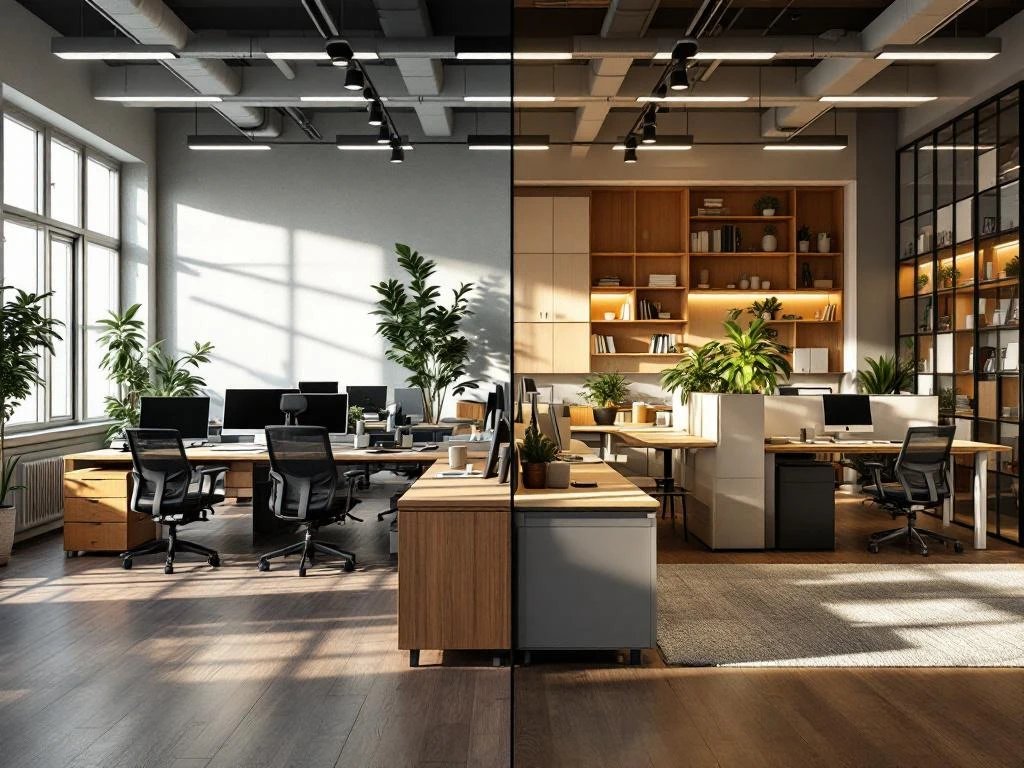
Projectinrichting combineren met bestaande kantoorconcepten vraagt om een doordachte aanpak, waarbij je nieuwe elementen naadloos integreert met wat al werkt. Je evalueert eerst welke bestaande meubelen en concepten je kunt behouden, plant vervolgens de integratie stapsgewijs en lost uitdagingen op rond stijlverschillen en ergonomie. Dit proces helpt je kosten te besparen, terwijl je een moderne, functionele werkomgeving creëert.
Wat houdt projectinrichting precies in en hoe verschilt het van reguliere kantoorinrichting?
Projectinrichting is een totaaloplossing waarbij specialisten je complete kantooromgeving ontwerpen en realiseren volgens een vast stappenplan. Het verschilt van reguliere kantoorinrichting doordat je niet alleen meubelen koopt, maar een gecoördineerd project krijgt met ontwerp, planning en uitvoering door één partij.
Bij reguliere kantoorinrichting koop je meestal losse meubelen en regel je zelf de planning. Projectinrichting gaat veel verder: je krijgt een ruimtestudie, 3D-ontwerpen, kleur- en materiaaladvies en vaak ook vloeren, plafonds, systeemwanden en verlichting. Alles wordt afgestemd op je bedrijfsidentiteit en werkprocessen.
Bedrijven kiezen voor projectinrichting omdat het tijd bespaart en zorgt voor een coherent eindresultaat. Je hebt één contactpersoon die de complete logistiek regelt, van inventarisatie tot oplevering. Dit voorkomt dat verschillende leveranciers elkaar in de weg zitten en zorgt voor een professioneel resultaat dat past bij je organisatie.
Hoe bepaal je welke onderdelen van je huidige kantoor je kunt behouden?
Begin met een grondige inventarisatie van je huidige kantoormeubelen en -concepten. Beoordeel elk item op functionaliteit, staat van onderhoud, ergonomische kwaliteit en of het past bij je gewenste nieuwe stijl. Meubelen die nog goed functioneren en er netjes uitzien, kun je vaak integreren in het nieuwe ontwerp.
Let vooral op de kwaliteit van bureaus, vergadertafels en opbergkasten. Deze hebben vaak een lange levensduur en kunnen prima gecombineerd worden met nieuwe elementen. Stoelen verdienen extra aandacht, omdat ergonomische eisen de laatste jaren zijn aangescherpt. Oude stoelen die niet meer voldoen aan moderne ergonomische standaarden kun je beter vervangen.
Maak een lijst met drie categorieën: behouden, vervangen en mogelijk behouden. Bij twijfelgevallen kun je advies vragen aan een projectinrichter. Die kan beoordelen of bestaande meubelen passen in het nieuwe ontwerp en of ze nog jarenlang meegaan. Ook financieel is dit interessant: goede bestaande meubelen besparen budget dat je kunt investeren in nieuwe, hoogwaardige aanvullingen.
Welke stappen volg je voor een succesvolle combinatie van oud en nieuw?
Start met het maken van een integratieschema, waarin je per ruimte bepaalt welke bestaande elementen blijven en waar nieuwe meubelen komen. Plan de werkzaamheden zo dat medewerkers minimaal last hebben van de verbouwing. Communiceer tijdig met je team over de veranderingen en wanneer deze plaatsvinden.
Werk ruimte voor ruimte om verstoring te minimaliseren. Begin bijvoorbeeld met vergaderruimtes of een afdeling die tijdelijk elders kan werken. Zorg dat bestaande meubelen worden gereinigd en zo nodig opgeknapt voordat ze in het nieuwe ontwerp worden geplaatst. Dit zorgt voor een uniforme uitstraling.
Plan ook de timing van leveringen zorgvuldig. Nieuwe meubelen moeten arriveren wanneer de ruimte gereed is, maar niet te vroeg, omdat ze dan in de weg staan. Houd rekening met een inloopperiode waarin medewerkers wennen aan de nieuwe indeling. Vraag na enkele weken feedback om eventuele aanpassingen te kunnen maken.
Wat zijn de grootste uitdagingen bij het combineren van verschillende kantoorconcepten?
De grootste uitdaging is het creëren van een coherente uitstraling wanneer je verschillende stijlen en merken combineert. Oude en nieuwe meubelen kunnen qua kleur, materiaal of vormgeving botsen, wat een rommelige indruk geeft. Ook ergonomische inconsistenties ontstaan gemakkelijk wanneer je oude en nieuwe werkplekken door elkaar gebruikt.
Praktische problemen komen vaak voor bij de hoogteverschillen tussen oude en nieuwe bureaus, of wanneer kabelmanagementsystemen niet op elkaar aansluiten. Ook de planning kan complex worden, omdat je rekening moet houden met bestaande meubelen die mogelijk tijdelijk verplaatst moeten worden.
Los stijlverschillen op door een verbindend element te kiezen, zoals een gemeenschappelijke kleur of een materiaal dat terugkomt in accessoires of nieuwe aanvullingen. Voor ergonomische consistentie kun je bestaande werkplekken upgraden met nieuwe monitoren, toetsenborden of bureaulampen. Bij praktische problemen helpt het om vooraf goed op te meten en een gedetailleerd plan te maken van de nieuwe indeling.
Hoe Wout Monseurs helpt met projectinrichting
Wij helpen je bij het slim combineren van projectinrichting met je bestaande kantoormeubelen door een persoonlijke aanpak, waarbij we eerst grondig inventariseren wat je al hebt. Ons team beoordeelt welke meubelen geschikt zijn om te behouden en hoe we deze kunnen integreren in een modern, ergonomisch ontwerp.
Met meer dan 60 jaar ervaring weten we precies hoe we verschillende stijlen harmonieus kunnen combineren. We maken gedetailleerde 3D-ontwerpen waarin je ziet hoe bestaande en nieuwe elementen samenwerken. Daarbij regelen we de complete planning, van het tijdelijk opslaan van bestaande meubelen tot de coördinatie van alle leveranciers.
Ons familiebedrijf staat voor continuïteit en persoonlijke betrokkenheid. Je krijgt één vast contactpersoon die het hele traject begeleidt en ervoor zorgt dat de combinatie van oud en nieuw perfect aansluit bij je bedrijfsidentiteit. Wil je weten hoe wij jouw kantoor kunnen transformeren? Neem dan contact met ons op voor een vrijblijvend adviesgesprek.
Veelgestelde vragen
Hoe lang duurt het proces van projectinrichting met behoud van bestaande meubelen?
Een projectinrichting waarbij je bestaande meubelen integreert duurt gemiddeld 6-12 weken, afhankelijk van de omvang van je kantoor. De inventarisatie en ontwerpfase nemen 2-3 weken in beslag, gevolgd door 2-4 weken voor productie en levering van nieuwe elementen. De daadwerkelijke uitvoering en integratie gebeurt meestal binnen 1-2 weken, waarbij we per ruimte werken om de bedrijfsvoering zo min mogelijk te verstoren.
Wat kost projectinrichting vergeleken met het volledig vervangen van alle kantoormeubelen?
Door bestaande meubelen te behouden kun je 30-50% besparen op de totale inrichtingskosten. Je betaalt alleen voor nieuwe aanvullingen, het ontwerp en de integratie in plaats van een complete nieuwe inrichting. De exacte besparing hangt af van hoeveel en welke meubelen je kunt hergebruiken. Hoogwaardige bureaus en kasten leveren de grootste besparingen op, terwijl stoelen en technische voorzieningen vaak wel vervangen moeten worden.
Kan ik tijdens de projectinrichting gewoon doorwerken op kantoor?
Ja, wij plannen de werkzaamheden altijd zo dat je bedrijfsvoering minimaal verstoord wordt. We werken ruimte voor ruimte en kunnen vaak ‘s avonds of in het weekend de grootste veranderingen doorvoeren. Voor kritieke werkdagen maken we aangepaste schema’s, en tijdelijke werkplekken kunnen ingericht worden als dat nodig is. Communicatie vooraf zorgt ervoor dat iedereen weet wat er wanneer gebeurt.
Wat gebeurt er met meubelen die uiteindelijk toch niet passen in het nieuwe ontwerp?
Meubelen die niet in het eindontwerp passen, kunnen we vaak herbestemmen binnen je organisatie of doorverkopen. We helpen bij het vinden van nieuwe eigenaren via onze netwerk van bedrijven die tweedehands kantoormeubelen zoeken. Als laatste optie zorgen we voor verantwoorde recycling. Tijdens de inventarisatiefase bespreken we altijd wat er met overtollige meubelen gebeurt, zodat je hier geen verrassingen krijgt.
Hoe zorg je ervoor dat oude en nieuwe meubelen er uniform uitzien?
We gebruiken verbindende elementen zoals een gemeenschappelijke kleurpallet, vergelijkbare materialen of uniforme accessoires om coherentie te creëren. Bestaande meubelen kunnen vaak opgefrist worden met nieuwe handgrepen, nieuwe bekleding of een andere kleur. Ook het toevoegen van identieke bureaulampen, planters of organisatie-accessoires zorgt voor een uniforme uitstraling door het hele kantoor.
Welke meubelen zijn het minst geschikt om te behouden bij een projectinrichting?
Oude bureaustolen die niet voldoen aan moderne ergonomische eisen zijn meestal niet geschikt om te behouden. Ook verouderde IT-meubelen, beschadigde opbergkasten en meubelen met versleten bekleding vervangen we meestal. Meubelen die niet passen bij de nieuwe brandidentiteit of werkwijze van je organisatie zijn ook kandidaten voor vervanging. We beoordelen elk item individueel op functionaliteit, staat en toekomstwaarde.
Kan ik zelf bepalen welke bestaande meubelen behouden blijven?
Absoluut, jij bepaalt uiteindelijk welke meubelen je wilt behouden. Wij geven advies gebaseerd op onze expertise over kwaliteit, ergonomie en hoe goed items passen in het nieuwe ontwerp. We respecteren emotionele waarde die bepaalde meubelen voor je hebben en zoeken creatieve manieren om deze te integreren. Het eindresultaat moet vooral bij jouw wensen en budget passen, onze rol is om dit zo goed mogelijk te faciliteren.