

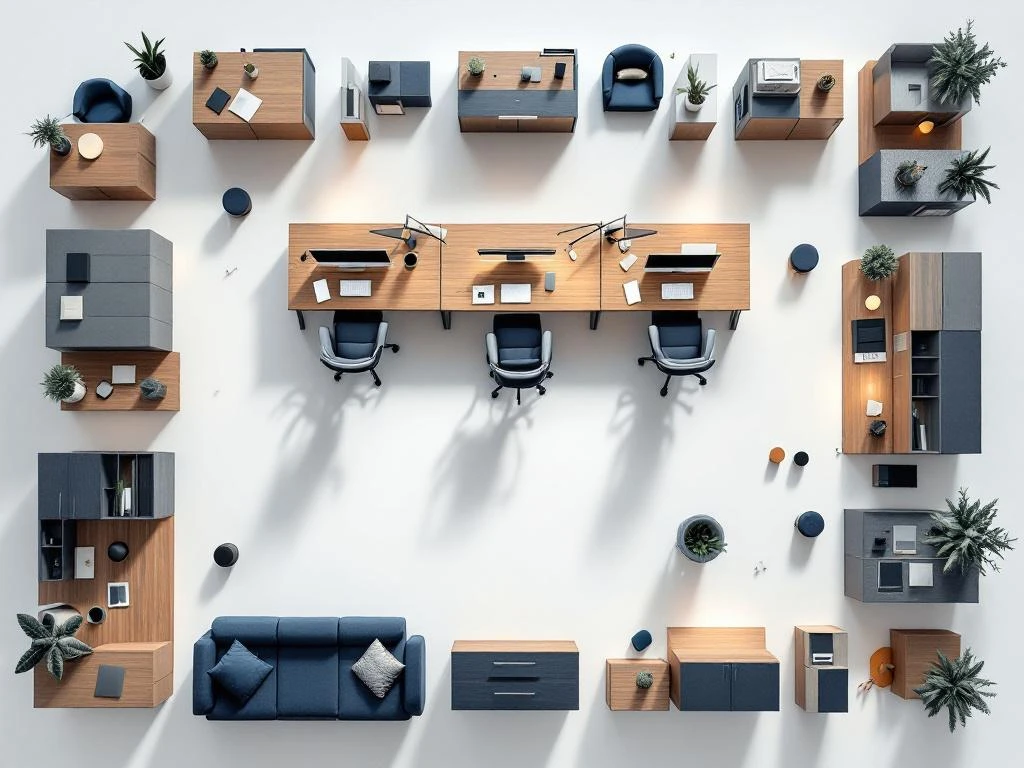
Modular project design is extremely flexible because the systems are designed to grow and change with your business. You can easily reposition, expand, or modify elements without having to replace the entire system. This flexibility makes modular design perfect for growing companies that regularly need to adapt their office layout to new situations.
What exactly is modular project design?
Modular project design consists of standard building blocks that you can combine, expand, and rearrange as needed. Instead of permanently installed furniture, you get a system of components that fit together perfectly and can be used flexibly.
The main difference with traditional office design lies in the approach. Whereas in the past you had custom-made furniture made for specific spaces, you now work with standardized modules that can be used anywhere. Think of desks that can be mounted at different heights, cabinets that can be stacked or placed side by side, and wall systems that can be expanded when necessary.
Companies choose modular systems because they are forward-thinking. You are not only investing in the current situation, but also in future possibilities. When your team grows, relocates, or changes its working style, your interior can be adapted without incurring significant costs.
How quickly can you adapt modular furniture to new situations?
Most adjustments to modular systems can be made within a few hours to a day. Simple changes, such as moving desks or adding extra storage, can often be done yourself during office hours without external help.
Practical examples of quick adjustments include converting an open workspace into a meeting room, adding extra workspaces for new employees, or creating temporary project rooms. Most modular systems can be used without tools or with simple click connections.
For larger changes, such as complete reorganizations or expansions to other floors, allow a little more time. These adjustments usually take one to three working days, depending on the scope. The advantage remains that you reuse existing components and only add to them where necessary.
What advantages does modular design offer growing companies?
The biggest advantage is long-term cost-effectiveness. You buy components that grow with your business, so you don't have to reinvest in completely new equipment every few years.
Scalability is central to modular systems. If you start with ten workstations, you can expand to fifteen without losing your existing investment. The components remain compatible and you maintain a consistent look throughout the office.
Sustainability also plays an important role. By reusing components, you reduce waste and extend the life of your office furniture. Modular systems are often of higher quality because they are designed for frequent disassembly and reassembly.
Modular systems offer unparalleled flexibility for organizational changes. You can quickly implement reorganizations, team changes, or new working methods without major disruptions to daily work.
What are the limitations of modular office solutions?
The main limitation is that customization is less possible than with traditional furnishings. You work within the limits of the modular system, which means that very specific requirements are sometimes not feasible.
From an aesthetic point of view, modular systems often have a more businesslike, standardized look. If you are aiming for a very unique or artistic office look, you may feel limited by the options available within modular systems.
The initial investment may be higher than for basic office furniture. Modular systems are of higher quality and more expensive to purchase, but you will recoup this through their longer lifespan and reusability.
You are also more tied to suppliers. It is best to make expansions within the same system to ensure compatibility. This means you have less freedom to choose other brands later on.
How Wout Monseurs assists with flexible project design
We offer complete modular solutions from high-quality brands such as Wini, Voortman, and Interstuhl. We combine these systems with our 60 years of experience to perfectly match your specific situation with the right modular components.
Our design process always starts with understanding your growth plans and working methods. We look not only at your current needs, but also at how your organization will develop in the coming years. This helps us choose the modular system that offers the best flexibility for your situation.
We guide you from design to implementation and remain available for future adjustments. Because we work with proven modular systems, we can respond quickly to changes in your organization. Whether you need an extra meeting room or are expanding your team, we have the components and expertise readily available.
Would you like to know how modular project design can help your company? Contact us for a no-obligation consultation about the possibilities for your specific situation.
Frequently asked questions
How do I determine which modular system best suits my business?
Start by analyzing your current work processes and future growth plans. Consider factors such as team size, frequency of reorganizations, available space, and budget. An experienced supplier can compare different modular systems and advise you on which brands and configurations best suit your specific situation and growth expectations.
Can I combine modular furniture with my existing office furnishings?
Yes, modular systems can be combined perfectly with existing furniture. You can make a gradual transition by first setting up specific areas in a modular way, such as workstations or meeting rooms. Make sure you coordinate colors and styles to maintain a consistent look. Many companies opt for a phased approach, transitioning step by step to fully modular solutions.
What happens if parts break or wear out?
With reputable modular systems, individual parts are available for years, making it easy to replace defective components without having to replace the entire system. Always keep the product information and serial numbers for quick reordering. Most suppliers also offer maintenance contracts that include regular inspections and preventive maintenance.
How can I prevent my modular interior from looking boring or office-like?
Modern modular systems offer many possibilities for personalization through different colors, materials, and finishes. Combine different textures, add plants, use color accents, and ensure good lighting. Many systems also have optional design elements such as decorative panels or special connectors that make the look more vibrant.
Is modular design suitable for small businesses with a limited budget?
Although the initial investment may be higher, modular furniture is actually beneficial for small growing businesses. You can start small with basic components and expand gradually. Reusability prevents costly replacements when moving or reorganizing. Many suppliers also offer leasing options or phased payment plans to spread the investment.
How long does it take to deliver and install a modular office system?
Standard modular components are usually available within 2-4 weeks, while customization may take longer. Installation of an average office (10-20 workstations) usually takes 1-2 days. For more complex configurations or large projects, allow 3-5 business days. The exact turnaround time depends on the availability of components and the complexity of your desired layout.
Can I make adjustments to my modular system myself, or do I always need professional help?
You can make many simple adjustments yourself thanks to the user-friendly connection systems of modern modular furniture. Think of moving desks, adding storage space, or adjusting partition walls. For more complex changes, electrical connections, or structural changes, professional help is recommended to ensure safety and warranty.