

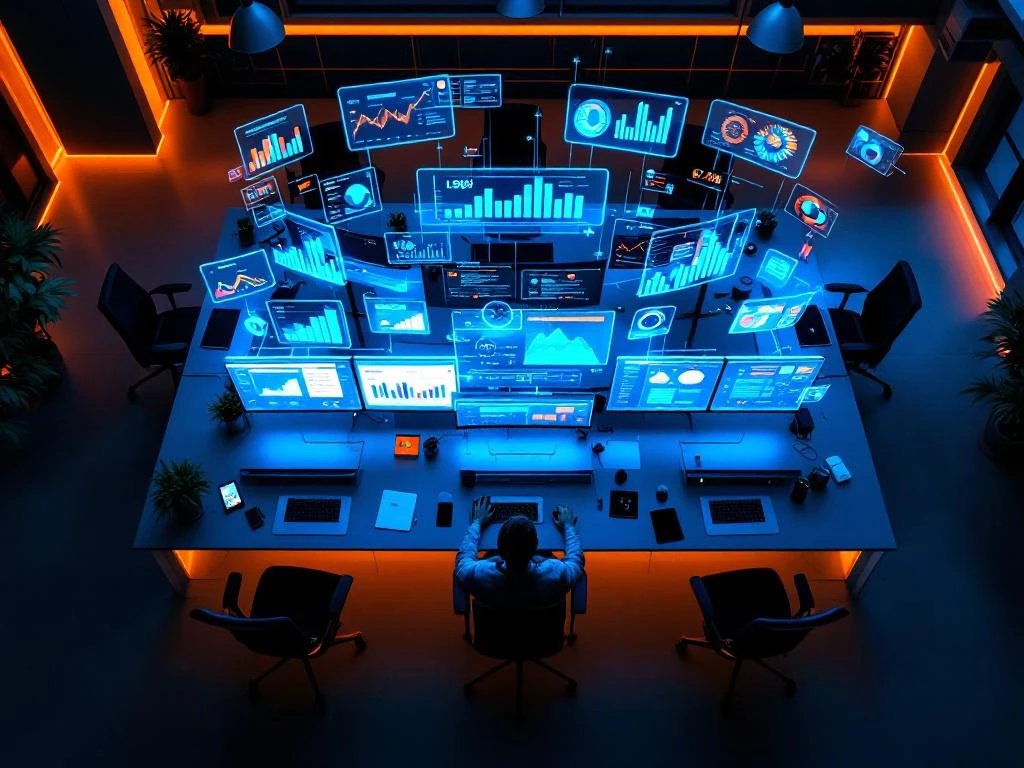
Using data for office optimization means collecting and analyzing information about how your workspace is used. By measuring data on space usage, employee behavior, and energy consumption, you gain concrete insights for better decisions. With the right data, you can design workspaces more efficiently, save costs, and improve your team's comfort.
What data do you need to optimize your office?
For effective office optimization, you need four main categories of data: space utilization, employee behavior, energy consumption, and productivity metrics. This data gives you a complete picture of how your office is functioning and where improvements can be made.
Space utilization data shows which areas are heavily used and which remain underutilized. Think of meeting room occupancy rates, walking routes through the office, and peak times of activity. This information helps you to better distribute workspaces and identify unnecessary space.
Employee behavior data includes arrival times, break patterns, and preferences for different workspaces. You can also measure how often people collaborate, which facilities they use, and how they move around the office. This provides insight into your team's working style.
Energy consumption data shows where you can save on lighting, heating, and air conditioning. By measuring when rooms are empty, you can automatically adjust systems. The temperature preferences of different zones are also valuable for comfort.
Productivity metrics such as concentration levels, noise pollution, and satisfaction scores complete the picture. This data helps you understand which environmental factors influence your team's work.
How do you collect reliable data on office usage?
Reliable office data can be collected by combining various measurement techniques: sensors, software analytics, surveys, and observation. Each method has its own advantages, and together they provide a complete picture of your office usage.
Sensors are the backbone of data collection. Occupancy sensors in meeting rooms and workplaces automatically measure when spaces are in use. Motion sensors track walking routes and traffic patterns. Temperature and air quality sensors continuously monitor the indoor climate.
Badge tracking systems record when employees enter and leave the office. Modern systems can also track which floors or zones people visit. WiFi analytics use anonymous phone data to map movement patterns.
Software analytics for office applications show how digital workplaces are being used. You can measure which software is used most, when people are online, and how often they collaborate using digital tools.
Surveys and interviews supplement technical data with personal experiences. Ask about satisfaction with workplaces, desired facilities, and bottlenecks in the current layout. Short, regular questionnaires work better than extensive annual surveys.
Observation by facility managers provides qualitative insights that sensors lack. They see social interactions, informal meetings, and how people actually use their workspace.
What can you do with the data you have collected?
With collected office data, you can make concrete improvements in space layout, workplace comfort, facilities, and energy consumption. The data transforms from numbers into practical adjustments that improve your team's work.
Space optimization is often the most visible application. If data shows that meeting rooms are empty during the day but overcrowded in the morning, you can adjust the booking system or create additional flexible spaces. Underutilization of certain areas can lead to reorganization or other functions.
You can improve workplace comfort by using climate data for automatic temperature control per zone. Noise measurements help you place acoustic solutions in the right places. Light measurements lead to better lighting that supports well-being.
Facility adjustments are based on usage patterns. If data shows that the coffee corner is frequently visited, you can expand it or add a second location. Facilities that are rarely used can be removed or redesigned.
Energy savings are achieved through automation based on occupancy data. Lighting and climate control adapt to actual occupancy. This saves costs and contributes to sustainability goals.
Employee satisfaction increases when you make adjustments based on their feedback and behavioral data. People appreciate an office that suits their working style and needs.
Which tools help you analyze office data?
There are various tools available for office data analysis, ranging from simple dashboards to advanced analytics platforms. The choice depends on the size of your office, your budget, and the desired depth of analysis.
Simple dashboards are perfect for smaller offices. These tools display occupancy rates, energy consumption, and basic trends in clear graphs. They are user-friendly and require little technical knowledge. Many sensor suppliers offer these dashboards as part of their service.
Mid-range analytics platforms combine different data sources and offer more analysis options. They can recognize patterns, make predictions, and generate automatic reports. These tools are suitable for offices with 50–500 workstations.
Enterprise platforms offer advanced features such as machine learning, predictive analytics, and integration with HR and facility management systems. They can perform complex analyses and deliver strategic insights. These tools are worth the investment for large organizations.
Spreadsheet analyses remain useful for specific questions or smaller datasets. Excel or Google Sheets can show simple trends and are accessible to everyone. They work well as a supplement to specialized tools.
Cloud-based solutions offer flexibility and scalability. You pay for what you use and can easily expand. The data is accessible everywhere and updates happen automatically.
When selecting tools, ease of use is often more important than advanced features. A tool that no one uses does not deliver value. Therefore, choose solutions that match the technical skills of your team.
How Wout Monseurs assists with smart office solutions
We support companies in implementing data-driven office optimization by combining smart technology with well-thought-out design solutions. Our experience with project design enables us to apply smart office concepts in a practical way.
Our approach begins with understanding your specific situation and goals. We assist in selecting the right sensors and analytics tools that suit your office size and budget. Through our collaboration with various technology partners, we can put together customized solutions.
We combine implementation with ergonomic furniture choices from brands such as Interstuhl and Wini. We translate data on workplace usage into concrete design recommendations that are both efficient and comfortable. Our experience with project design ensures seamless integration of technology and furniture.
After implementation, we remain involved in optimizing your office. We help interpret data and implement adjustments. Our local involvement in Breda and the surrounding area enables fast service.
Want to know how data can improve your office? Contact us for a no-obligation chat about the possibilities. We are happy to share our knowledge and experience to optimize your workplace.
Frequently asked questions
How long does it take to collect reliable data for office optimization?
For reliable patterns, you need at least 4-6 weeks of data, but for seasonal insights, 3-6 months is ideal. Start with a one-month pilot period to test and adjust your measurement systems. After this period, you can already implement initial optimizations while continuously collecting more data.
What are the most common mistakes when implementing office data systems?
The biggest mistakes are installing too many sensors at once without a clear purpose, ignoring employees' privacy concerns, and collecting data without a plan for action. Start small with a few critical measurements, communicate transparently about privacy, and decide in advance what decisions you want to make with the data.
How do you deal with employee privacy concerns when measuring office usage?
Transparency is crucial: clearly explain what you are measuring, why, and how the data will be used. Use anonymous or aggregated data where possible, and involve employees in the process. Highlight concrete benefits such as improved comfort or more efficient workplaces to generate support.
What ROI can you expect from investments in office data and smart office technology?
Typical savings range from 15-30% on energy costs and 10-20% on space costs due to more efficient utilization. The investment usually pays for itself within 12-24 months. In addition to financial benefits, you will also see increased employee satisfaction and productivity, which is more difficult to quantify but very valuable.
Can you also apply office optimization in small offices with fewer than 20 employees?
Absolutely, but the approach is different. Focus on simple, cost-effective solutions such as smart thermostats, occupancy sensors for meeting rooms, and regular employee surveys. Use free tools such as Google Analytics for website usage and simple dashboards for energy consumption.
How do you combine office data with flexible working and hybrid working models?
Hybrid working makes data even more important for capacity planning. Measure not only physical presence, but also digital collaboration and home working productivity. Use predictive analytics to forecast office utilization and dynamically adjust your space layout based on expected attendance.
What do you do if the collected data shows contradictory or unclear results?
First, check your measurement methods and recalibrate sensors. Combine quantitative data with qualitative insights gained from conversations with employees. Sometimes contradictions point to more complex patterns that require deeper investigation. Start with small, testable adjustments before implementing major changes.