

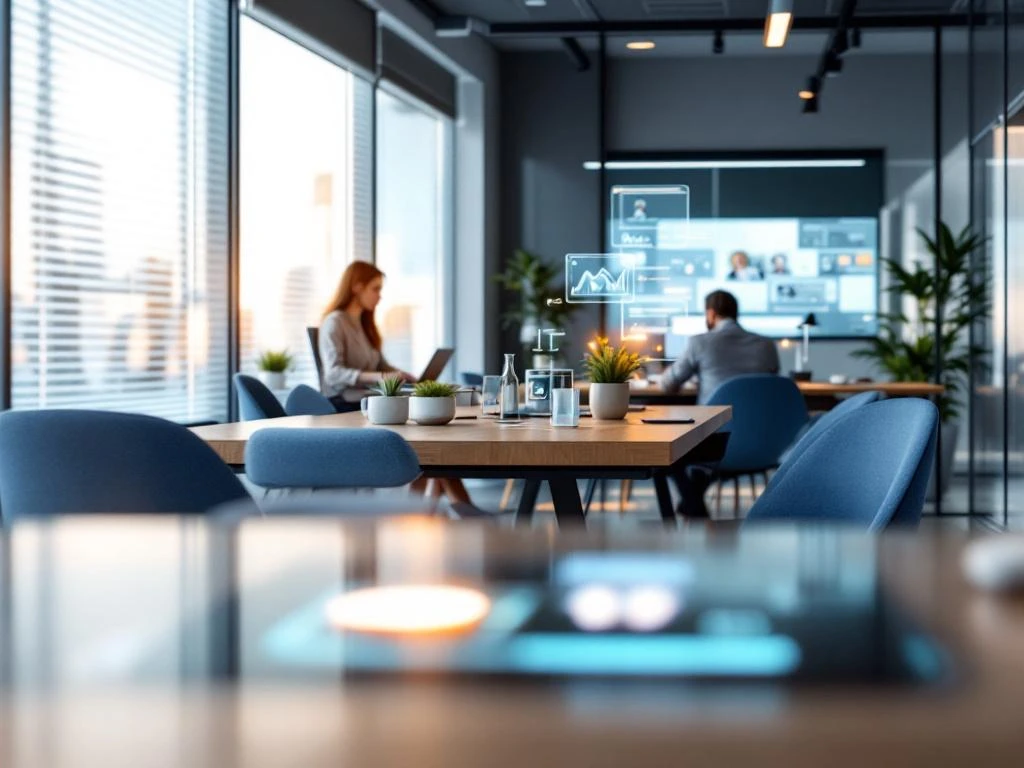
Een smart office implementeren begint met een duidelijke strategie en een stapsgewijze aanpak. Je start met het analyseren van je huidige werkplek, stelt doelen vast en kiest de juiste technologieën die aansluiten bij je bedrijfsbehoeften. Succesvolle implementatie vereist goede planning, betrokkenheid van medewerkers en een gefaseerde uitrol om weerstand te minimaliseren.
Wat is een smart office eigenlijk en waarom zou je ervoor kiezen?
Een smart office is een werkplek die intelligente technologie gebruikt om processen te automatiseren en de werkomgeving te optimaliseren. Het gaat om een kantoor dat data verzamelt via sensoren en systemen om ruimtegebruik, klimaat, verlichting en veiligheid automatisch aan te passen aan de behoeften van medewerkers.
De voordelen zijn direct merkbaar in je dagelijkse werkervaring. Medewerkers kunnen gemakkelijker vergaderruimtes vinden en boeken, de temperatuur past zich automatisch aan op basis van bezetting en je krijgt inzicht in hoe ruimtes daadwerkelijk gebruikt worden. Dit leidt tot een hogere werknemerstevredenheid, omdat mensen minder tijd kwijt zijn aan praktische zaken en zich kunnen focussen op hun werk.
Bedrijven kiezen voor smart offices omdat ze hiermee kosten besparen op energie en ruimte. Je betaalt niet meer voor ongebruikte vierkante meters en energieverspilling wordt tot een minimum beperkt. Bovendien trek je met een moderne, technologisch geavanceerde werkplek gemakkelijker talent aan, wat belangrijk is in de huidige arbeidsmarkt.
Welke technologieën horen bij een smart office?
De basis van een smart office wordt gevormd door IoT-sensoren die beweging, temperatuur, luchtkwaliteit en geluidsniveaus meten. Deze sensoren verzamelen continu data over hoe je kantoor gebruikt wordt, wat de basis vormt voor alle andere slimme functies.
Slimme verlichting past zich automatisch aan op daglicht en de aanwezigheid van mensen. Dit zorgt niet alleen voor energiebesparing, maar ook voor optimaal comfort tijdens het werken. Klimaatbeheersing werkt op dezelfde manier en houdt rekening met het aantal mensen in een ruimte en hun activiteiten.
Toegangssystemen maken gebruik van badges, smartphone-apps of zelfs gezichtsherkenning om gebouwen en specifieke ruimtes te beveiligen. Integratie met andere systemen zorgt ervoor dat bijvoorbeeld de verlichting en klimaatregeling automatisch inschakelen wanneer iemand een ruimte betreedt.
Moderne smart offices hebben ook slimme vergadersystemen die automatisch beschikbare ruimtes tonen, presentatieapparatuur aanzetten en zelfs catering bestellen. Al deze technologieën werken samen via een centraal platform dat je kunt bedienen via een app of dashboard.
Hoe begin je met de planning van een smart office-implementatie?
Begin met een grondige analyse van je huidige situatie en stel duidelijke doelen vast. Inventariseer welke problemen je wilt oplossen: gaat het om energiebesparing, betere ruimtebenutting of verhoogde werknemerstevredenheid? Deze doelen bepalen welke technologieën prioriteit krijgen.
Stel een realistisch budget op dat rekening houdt met zowel aanschafkosten als onderhoud en training. Smartofficetechnologie is een investering die zich terugverdient, maar je moet wel voldoende middelen reserveren voor een goede implementatie. Denk ook aan kosten voor het opleiden van medewerkers en eventuele aanpassingen aan je bestaande infrastructuur.
Maak een tijdlijn met verschillende fases. Start bijvoorbeeld met slimme verlichting en klimaatbeheersing voordat je overgaat naar complexere systemen zoals ruimtereservering of toegangscontrole. Deze gefaseerde aanpak helpt medewerkers wennen aan de veranderingen en geeft je tijd om elk systeem goed in te stellen.
Betrek je medewerkers vanaf het begin bij het proces. Vraag naar hun wensen en zorgen, leg uit welke voordelen de nieuwe technologie biedt en zorg voor voldoende training. Weerstand tegen verandering is vaak het grootste obstakel bij smart office-implementatie.
Welke uitdagingen kom je tegen bij smart office-implementatie?
De grootste uitdaging is vaak de technische complexiteit van het integreren van verschillende systemen. Verschillende leveranciers gebruiken verschillende protocollen en standaarden, wat compatibiliteitsproblemen kan veroorzaken. Zorg daarom voor goede technische begeleiding en kies bij voorkeur voor systemen die bewezen goed samenwerken.
Veranderingsmanagement vormt een andere belangrijke uitdaging. Medewerkers kunnen weerstand hebben tegen nieuwe technologie of bang zijn dat hun privacy wordt geschonden. Open communicatie over wat er gemeten wordt, hoe data gebruikt wordt en welke voordelen het oplevert, helpt deze zorgen weg te nemen.
Privacy en databeveiliging zijn terechte zorgen bij smart office-implementatie. Je verzamelt immers data over het gedrag en de aanwezigheid van medewerkers. Stel duidelijke richtlijnen op over datagebruik, zorg voor veilige opslag en wees transparant over welke informatie wordt verzameld en waarom.
Kosten kunnen hoger uitvallen dan verwacht, vooral als je bestaande infrastructuur grote aanpassingen nodig heeft. Plan daarom een buffer in je budget en overweeg een gefaseerde implementatie om de financiële impact te spreiden over meerdere jaren.
Hoe Wout Monseurs helpt met smart office-implementatie
Wij begeleiden je door het hele proces van smart office-implementatie, van de eerste analyse tot de uiteindelijke oplevering. Onze ervaring met kantoorinrichting en technologie-integratie zorgt ervoor dat je systemen naadloos samenwerken met je werkplek en bedrijfsprocessen.
We beginnen altijd met een grondige analyse van je huidige situatie en wensen. Op basis daarvan stellen we een implementatieplan op dat rekening houdt met je budget, tijdlijn en specifieke behoeften. Onze aanpak zorgt ervoor dat technologie en inrichting perfect op elkaar aansluiten voor optimaal werkplekcomfort.
Onze expertise ligt in het combineren van hoogwaardige kantoormeubelen met slimme technologie. We werken samen met betrouwbare technologiepartners en zorgen voor een totaaloplossing waarbij alles uit één hand komt. Dit betekent minder zorgen voor jou en een gegarandeerd resultaat.
Wil je weten hoe een smart office jouw bedrijf kan helpen? Neem contact met ons op voor een vrijblijvend gesprek. We bekijken samen de mogelijkheden en maken een plan dat past bij jouw organisatie. Meer informatie over onze smart office-oplossingen vind je ook op onze website.
Veelgestelde vragen
Hoe lang duurt een complete smart office-implementatie gemiddeld?
Een volledige smart office-implementatie duurt meestal 3-6 maanden, afhankelijk van de grootte van je kantoor en welke systemen je implementeert. Een gefaseerde aanpak waarbij je begint met basiscomponenten zoals slimme verlichting kan al binnen 4-6 weken resultaat opleveren. Complexere systemen zoals geïntegreerde toegangscontrole en ruimtereservering vragen meer tijd voor installatie en fine-tuning.
Welke ROI kan ik verwachten van een smart office-investering?
De meeste bedrijven zien hun investering binnen 2-3 jaar terugverdiend door energiebesparingen van 20-30% en betere ruimtebenutting. Daarnaast bespaar je op operationele kosten door geautomatiseerde processen en verhoogde productiviteit. De exacte ROI hangt af van je huidige energiekosten, kantoorgrootte en welke systemen je implementeert.
Kunnen smart office-systemen werken in een oud kantoorgebouw?
Ja, smart office-technologie kan ook in oudere gebouwen geïmplementeerd worden, hoewel dit soms extra aanpassingen vereist. Draadloze sensoren en systemen maken implementatie mogelijk zonder grote verbouwingen. Wel moet je mogelijk je internetinfrastructuur upgraden en extra aandacht besteden aan de integratie met bestaande installaties zoals verwarming en verlichting.
Hoe zorg ik ervoor dat medewerkers de nieuwe technologie daadwerkelijk gaan gebruiken?
Succesvol gebruik begint met goede communicatie over de voordelen en uitgebreide training. Start met een pilot groep enthousiaste medewerkers die anderen kunnen helpen en inspireren. Zorg voor duidelijke instructies, helpdesk-ondersteuning en vraag regelmatig om feedback. Maak het gebruik zo intuïtief mogelijk en toon concrete voordelen zoals tijdsbesparing bij het boeken van vergaderruimtes.
Wat gebeurt er met mijn data en hoe wordt privacy gewaarborgd?
Smart office-systemen verzamelen anonieme data over ruimtegebruik, niet over individuele personen. Data wordt lokaal opgeslagen of via beveiligde cloudoplossingen verwerkt volgens GDPR-richtlijnen. Je hebt volledige controle over welke data wordt verzameld en kunt altijd inzien hoe informatie wordt gebruikt. Transparante databeleid en opt-out mogelijkheden zijn standaard onderdeel van een goede implementatie.
Welke onderhoud en updates hebben smart office-systemen nodig?
Smart office-systemen vereisen minimaal onderhoud, voornamelijk software-updates en periodieke kalibratie van sensoren. De meeste updates gebeuren automatisch via de cloud. Plan wel jaarlijks een technische check en batterijvervanging van draadloze sensoren. Een goede leverancier biedt onderhoudscontracten aan met remote monitoring en proactieve ondersteuning.
Kan ik smart office-functionaliteit stapsgewijs uitbreiden?
Absoluut, een modulaire aanpak is zelfs aan te raden. Begin met basis-systemen zoals slimme verlichting en klimaatbeheersing, en breid daarna uit met ruimtereservering, toegangscontrole en geavanceerde analytics. Dit spreidt de kosten en geeft medewerkers tijd om te wennen. Zorg wel dat je beginsystemen compatibel zijn met toekomstige uitbreidingen door te kiezen voor open standaarden.