

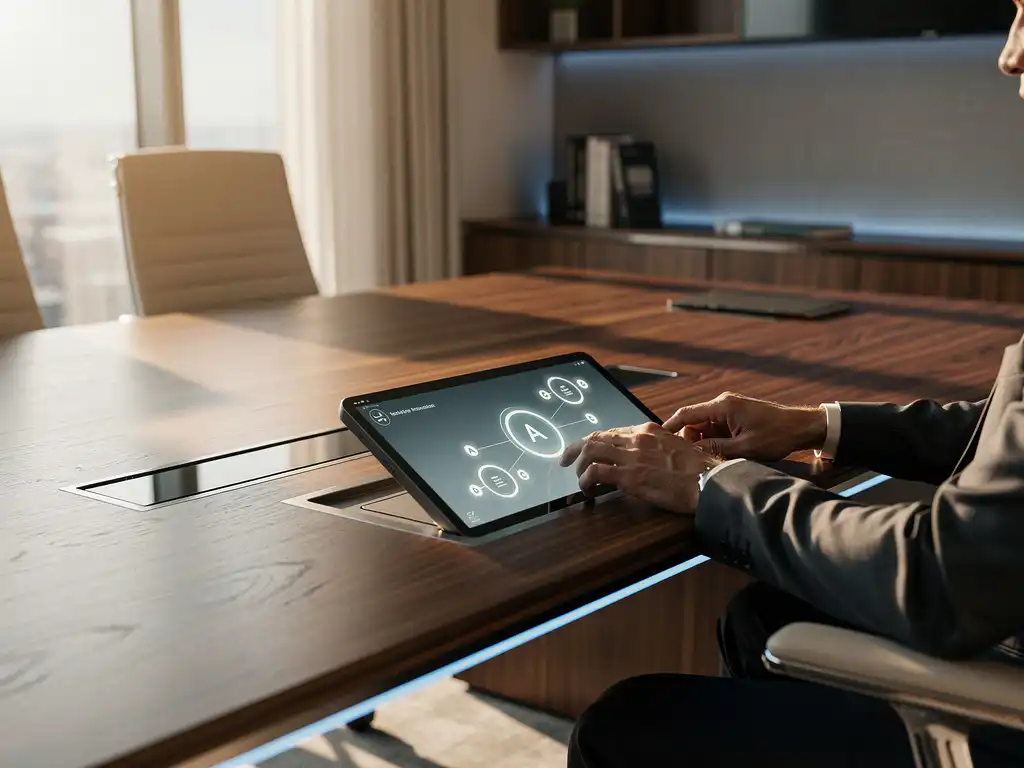
The integration of smart office technology with business process management is becoming increasingly important for organizations seeking to improve their efficiency. By linking intelligent systems to existing work processes, companies can not only reduce costs but also significantly improve productivity and employee satisfaction.
The costs of implementing a smart office vary widely, depending on the technologies chosen and the scope of the project. A strategic approach ensures that investments in smart office solutions deliver optimal returns and align seamlessly with your business objectives.
What is smart office integration with business process management?
Smart office integration with business process management involves connecting intelligent office technologies with existing business processes to enable automation, efficiency, and data-driven decision-making. This integration ensures that technology actively contributes to workflows, rather than operating in isolation from them.
The core of this integration lies in creating an ecosystem in which sensors, software, and hardware work together to optimize processes. IoT sensors collect real-time data on space utilization, temperature, and air quality, while AI-driven systems analyze this information and automatically make adjustments.
A practical example is the combination of a clean desk policy with bookable lockers and smart office technology that automatically configures desks to users’ personal preferences. This not only improves the work experience but also generates valuable data on workspace usage for facilities teams.
What benefits does smart office integration offer for business processes?
Smart office integration offers three key benefits: cost reduction through optimized energy consumption, increased productivity through automated processes, and improved employee satisfaction through personalized work environments. These benefits are achieved through the seamless integration of technology with daily work processes.
Energy savings are often the most quantifiable benefit. Smart lighting systems can reduce energy costs by up to 90% through automatic adjustments based on natural light and employee presence. HVAC systems optimize climate control based on real-time occupancy, resulting in significant savings on heating and cooling costs.
Operational efficiency is improved through automated processes, such as desk booking systems that optimize the use of workspaces and assist facilities teams with capacity planning. Data analysis provides insights into space utilization, enabling organizations to make informed decisions about office layout and facilities.
For employees, integration means greater comfort and flexibility. Personalized workstations that automatically adjust height, lighting, and temperature to individual preferences increase employee satisfaction and can help retain talent in a tight labor market.
How do you start integrating smart office solutions into existing processes?
Start by conducting a thorough analysis of your current business processes and identifying areas where technology can add value. Then launch a pilot project in a single room or department to gain experience before expanding to the entire office.
The first step is an introductory visit to identify your needs and requirements. This involves analyzing workflows, space utilization, and the existing technology infrastructure. Key questions include: Which processes are time-consuming? Where do inefficiencies occur? And what data would be useful for decision-making?
Next, develop a phased implementation strategy. Start with basic solutions such as smart lighting and climate control, which are relatively easy to install and deliver quick results. Then expand to more complex systems, such as integrated booking platforms and analytics dashboards.
Involve employees in the process from the very beginning. Organize training sessions and clearly communicate the benefits of new technologies. Resistance to change decreases when users understand how smart office solutions improve their daily work.
What technologies are essential for successful smart office integration?
Key technologies for successful smart office integration include IoT sensors for data collection, cloud-based platforms for data analysis, integrated communication systems, and user-friendly interfaces such as smartphone apps. These components must work together seamlessly to form a cohesive smart office ecosystem.
IoT sensors form the foundation of every smart office system. They measure occupancy, air quality, temperature, noise levels, and light intensity. This real-time data is transmitted to central systems that automatically make adjustments or notify managers of trends and anomalies.
Cloud-based platforms are essential for data storage, analysis, and system integration. They connect different technologies and enable users to identify patterns, make predictions, and set up automated responses. Modern conferencing technology that integrates with Microsoft Teams, Google Meet, and Zoom ensures seamless hybrid collaboration.
User interfaces such as smartphone apps and web portals make smart office features accessible to employees. Through these interfaces, they can reserve workstations, adjust climate settings, report technical issues, and provide feedback on their work experience.
How Wout Monseurs Helps with Smart Office Integration
We guide organizations through the entire smart office implementation process, from analysis to implementation. With over 60 years of experience, we combine traditional expertise with cutting-edge technology to create intelligent work environments that are perfectly aligned with your business processes.
Our approach includes:
- Thorough analysis of current processes and technology infrastructure
- Custom smart office solutions that integrate with existing systems
- Phased implementation with pilot projects for risk management
- Training and support for optimal user convenience
- Continuous monitoring and optimization of smart office systems
Our project design seamlessly integrates smart office technology into the overall office design. From intelligent lighting systems to automated climate control and modern conference solutions, we create a comprehensive, future-proof work environment.
Would you like to find out how smart office integration can improve your business processes? Contact us for a no-obligation consultation and discover the possibilities for your organization.
Frequently asked questions
What are the typical costs of smart office integration, and how can I calculate my ROI?
Costs range from €5,000 to €15,000 per workstation, depending on the technologies selected. ROI is calculated by offsetting the initial investment against energy savings (20–40% reduction), increased productivity (10–15% time savings), and lower facility costs. Most organizations see a payback period of 2–4 years.
How can I ensure that employees actually start using the new smart office technology?
Start with a pilot group of early adopters and provide comprehensive training and clear communication about the benefits. Make the system as intuitive as possible by using familiar interfaces, such as smartphone apps. Gather feedback regularly and adapt the system based on user experiences to increase adoption.
What common mistakes should I avoid when implementing a smart office?
Avoid overly ambitious first projects—start small and build up from there. Ensure you have a reliable internet connection and that your systems are compatible before you begin. Don’t overlook the privacy implications of data collection, and be transparent about what data is collected and how it is used.
How do I integrate smart office technology with my existing IT infrastructure?
Start with an IT audit to assess compatibility and identify which systems need to be updated. Choose cloud-based solutions that can integrate with existing software—such as HR systems, facility management tools, and communication platforms—via APIs. Allow sufficient time for testing and a phased rollout.
What happens to the collected data, and how do I ensure compliance with privacy regulations?
Smart office systems collect data on space usage, temperature, and occupancy, but not on individual employees. Ensure GDPR compliance through transparent privacy statements, data minimization, and secure storage. Work with your privacy officer and choose suppliers that comply with European privacy laws.
Can I also implement smart office technology in a rented office space?
Yes, many smart office solutions are non-invasive and can be installed without any structural modifications. Examples include wireless sensors, smart lighting, and app-controlled systems. Be sure to discuss the installation with the landlord in advance and ensure that the systems can be easily removed when you move out.