

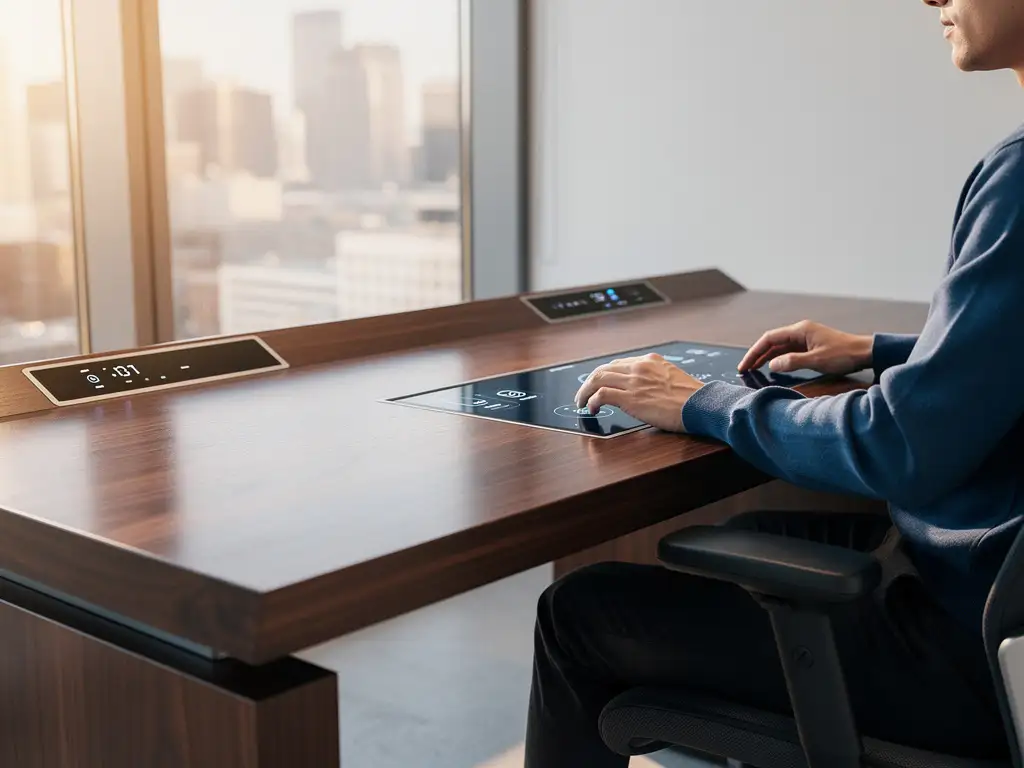
Smart office integration with building management systems is becoming increasingly important for modern companies looking to optimize their workspaces. This technological advancement combines smart office solutions with existing building systems to create a seamless, efficient work environment.
By strategically planning the costs of smart office implementation and integrating the right systems, organizations can increase operational efficiency, reduce energy costs, and significantly improve employee comfort. This integration requires a well-thought-out approach that combines technology and building management.
What is smart office integration with building management systems?
Smart office integration with building management systems involves connecting intelligent office solutions with existing building infrastructure, such as heating, ventilation, lighting, and security. This integration creates an automated ecosystem in which various systems work together to optimize the work environment.
The integration operates through a central platform that collects data from IoT sensors, smart devices, and building systems. This platform analyzes the data and automatically sends adjustments to various systems. For example, when sensors detect that a meeting room is occupied, the lighting is automatically adjusted, the temperature is regulated, and the ventilation is optimized.
Modern smart office systems can integrate with Building Management Systems (BMS) via standard protocols such as BACnet, Modbus, or KNX. These protocols ensure that different brands and systems can communicate seamlessly, regardless of the manufacturer.
What benefits does smart office integration offer businesses?
Smart office integration offers businesses significant cost savings, increased productivity, and improved employee comfort through automated systems that adapt to work patterns and user needs. These benefits often allow companies to recoup the costs of smart office implementation within a few years.
The key benefits include energy savings of up to 30%, as smart lighting systems automatically dim or turn off in unused spaces. Employee satisfaction increases thanks to customizable work environments where temperature, lighting, and acoustics are automatically adjusted to individual preferences.
Operational efficiency improves through real-time insights into space utilization, enabling organizations to make better use of their office space. Predictive maintenance prevents breakdowns by providing early warnings when systems require maintenance.
- Energy costs drop by 20–40% thanks to smart climate control
- Space utilization increases by 15–25% through occupancy tracking
- Maintenance costs are reduced through proactive monitoring
- Employee productivity increases when working conditions are optimal
How does the technical integration between smart office systems and building systems work?
The technical integration operates through a layered architecture in which IoT sensors collect data, a middleware platform processes this data, and automatically sends commands to building systems via standardized communication protocols. This architecture enables real-time monitoring and automatic adjustments.
The process begins with the sensor layer, where IoT devices continuously collect data on occupancy, temperature, air quality, and energy consumption. These sensors communicate wirelessly via Wi-Fi, Zigbee, or LoRaWAN with a central gateway.
The middleware layer processes all incoming data and uses algorithms to identify patterns and make predictions. This intelligent layer determines when systems need to be adjusted for optimal performance.
Communication protocols
Various protocols enable communication between smart office systems and building management systems. BACnet is often used for HVAC systems, while KNX is popular for lighting and window coverings. Modern systems support multiple protocols simultaneously to ensure maximum compatibility.
Data Analysis and Automation
Machine learning algorithms analyze historical data to identify usage patterns and make predictions. For example, the system learns that certain meeting rooms are heavily booked on Tuesdays and proactively adjusts the climate control settings.
What systems can be integrated into a smart office?
Smart office integration can encompass virtually all building systems, including HVAC, lighting, security, access control, audiovisual systems, and fire safety. These systems work together through a central platform that enables coordinated automation and optimization.
Lighting systems often form the foundation of smart office integration. Smart LED lighting automatically adjusts to natural light, occupancy, and individual preferences. Motion sensors ensure that lights are only on when rooms are occupied.
HVAC systems (heating, ventilation, and air conditioning) can be integrated to optimize energy consumption. The system learns when certain zones are occupied and proactively adjusts the temperature, resulting in significant energy savings.
- Access Control: Smart locks and badge systems that integrate with workspace booking
- Audiovisual systems: Automatic setup of meeting rooms based on calendars
- Fire Safety: Intelligent Detection with Real-Time Alerts
- Elevator Systems: Optimizing Wait Times During Rush Hour
- Parking Management: Smart Parking Space Allocation Linked to Workspace Reservations
Workplace-related systems
Desk booking systems integrate with lighting and climate control to automatically prepare workstations for incoming users. Ergonomic desks can be linked to user profiles to automatically adjust to the correct height.
How do you get started with smart office integration in existing buildings?
Start with a thorough analysis of existing building systems and identify priority areas where smart office integration will have the greatest impact. Begin with simple systems such as lighting or temperature control before adding more complex integrations, such as security and access control.
The first step is to conduct a building audit to determine which systems are already digital and which upgrades are needed. Many existing buildings have older BMS systems that can be upgraded with modern interfaces for smart office integration.
Opt for a phased implementation, starting with a single floor or zone as a pilot project. This will allow you to test the technology, train employees, and resolve any teething issues before rolling it out to the entire building.
Budget Planning and ROI
The cost of implementing a smart office varies widely depending on the complexity and scope of the project. A basic setup with smart lighting and temperature control costs approximately €50–100 per square meter, while a fully integrated system can cost €150–300 per square meter.
The return on investment is typically achieved within 2–4 years through energy savings, increased space utilization, and lower maintenance costs. Calculate the potential savings based on current energy costs and space utilization to establish a realistic budget.
Supplier Selection
Choose suppliers who have experience integrating systems into existing buildings and support various protocols. Make sure the platform you choose is future-proof and can grow along with your organization.
How Wout Monseurs Helps with Smart Office Integration
We offer a comprehensive approach to smart office integration that builds on our 60+ years of experience in office design. Our team combines traditional expertise with cutting-edge technology to create intelligent workspaces that truly work for your organization.
Our smart office solutions include:
- Comprehensive analysis of existing building systems and integration options
- Phased implementation with pilot projects to minimize risks
- IoT sensors and AI-driven systems for automatic optimization
- Integration with all building management systems via standard protocols
- Training and support for your team during and after implementation
At our Experience Center, you can experience smart office technology firsthand and see how different systems work together. From automatic lighting adjustments to intelligent climate control, we’ll show you how technology can transform your workplace.
Ready to transform your office with smart technology? Contact us for a no-obligation consultation about the possibilities for your organization. Together, we’ll turn your workplace into a smart, efficient environment where your team can perform at its best.
Frequently asked questions
What are the most common challenges when implementing smart office integration in older buildings?
The biggest challenges are often outdated cabling, incompatible legacy systems, and limited network infrastructure. Many older buildings have BMS systems that do not communicate natively with modern IoT devices. A thorough pre-implementation audit and a phased upgrade of critical infrastructure can overcome these obstacles.
On average, how long does it take to implement a fully integrated smart office system?
A full implementation typically takes 3–8 months, depending on the size and complexity of the building. A pilot project on a single floor can be up and running within 4–6 weeks. The phased approach ensures that employees can gradually get used to the new systems without disrupting business operations.
What cybersecurity risks does smart office integration pose, and how can you prevent them?
Smart office systems create new entry points for cybercriminals through IoT devices and network connections. Implement end-to-end encryption, regular security updates, network segmentation, and multi-factor authentication. Choose vendors that comply with international cybersecurity standards such as ISO 27001.
Can smart office integration be implemented without significantly disrupting daily operations?
Yes, through a phased rollout outside of business hours and on weekends. Start with non-critical systems, such as lighting, and work your way up to more complex integrations. Most sensors can be installed wirelessly without major infrastructure changes, minimizing disruption.
How do you measure the success of a smart office implementation, and which KPIs are important?
Key KPIs include energy consumption reduction (aim for 20–30%), space utilization (target increase of 15–25%), employee satisfaction scores, and maintenance costs. Measure these metrics before implementation to establish a baseline, and monitor them monthly. Most systems offer built-in dashboards for real-time tracking of these performance indicators.
What happens if the smart office system goes down—will employees still have access to basic functions?
Professional smart office systems always have built-in fallback mechanisms. In the event of a system failure, lighting, HVAC, and access control automatically switch to manual operation or preset default settings. Critical systems such as fire safety operate independently and do not rely on the smart office platform.
How can you ensure that smart office technology keeps pace with future developments and doesn’t become obsolete too quickly?
Choose open standards such as BACnet, KNX, and Matter, which are widely supported by various vendors. Invest in cloud-based platforms that receive regular updates, and ensure that your systems are modular and scalable. Set aside an annual budget for software updates and hardware upgrades to keep the system up to date.