

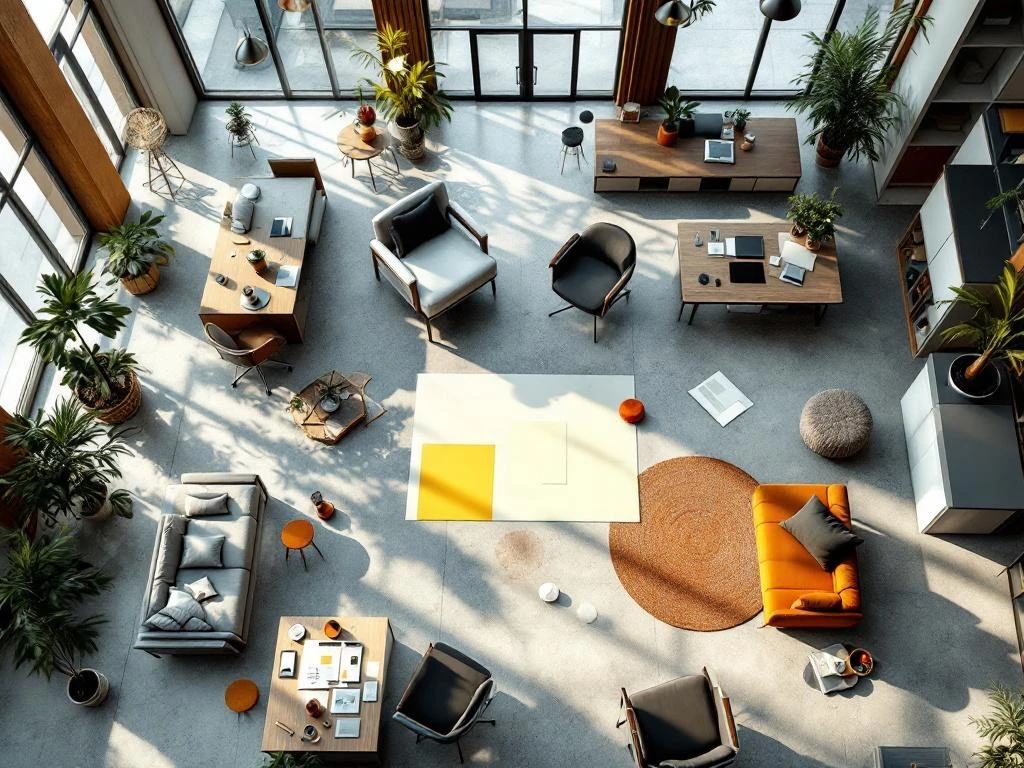
De juiste projectinrichting kies je door je behoeften, budget en werkstijl te analyseren. Begin met een duidelijke behoefteanalyse, bepaal je budget en betrek je team bij de plannen. Kies meubilair dat past bij jullie manier van werken en denk aan toekomstige groei. Een goede projectinrichter begeleidt je van ontwerp tot realisatie.
Wat is projectinrichting eigenlijk en wanneer heb je het nodig?
Projectinrichting is een complete kantoorinrichting die op maat wordt ontworpen voor jouw specifieke ruimte en werkwijze. In tegenstelling tot standaard kantoorinrichting krijg je een totaaloplossing waarbij alles op elkaar is afgestemd: van de indeling tot de meubelkeuze.
Je hebt projectinrichting nodig wanneer je een nieuwe kantoorruimte betrekt, je huidige inrichting volledig wilt vernieuwen of wanneer je team flink groeit. Ook bij een verandering in werkstijl, zoals meer flexibel werken of teamgerichte samenwerking, is projectinrichting de beste keuze.
Het grote voordeel is dat alles perfect op elkaar aansluit. Je krijgt een doordacht ontwerp dat rekening houdt met werkstromen, ergonomie en de cultuur van je bedrijf. Voor kleine bedrijven betekent dit vaak een efficiëntere ruimte-indeling, terwijl grotere organisaties profiteren van een consistente uitstraling en functionaliteit.
Welke factoren bepalen de keuze voor jouw projectinrichting?
Je budget is natuurlijk belangrijk, maar denk ook aan de bedrijfscultuur, het aantal medewerkers en jullie werkstijl. Een creatief team heeft andere behoeften dan een administratieve afdeling. Ook je toekomstplannen spelen een rol: ga je groeien of juist krimpen?
Andere relevante factoren zijn:
- De grootte en vorm van je ruimte
- Akoestische eisen voor concentratie of samenwerking
- Technische voorzieningen zoals bekabeling en verlichting
- Duurzaamheidswensen en milieudoelstellingen
- Ergonomische vereisten voor gezond werken
Denk ook aan praktische zaken zoals opslag, vergaderruimtes en ontvangstmogelijkheden. Een goede analyse van deze factoren voorkomt dat je later tegen verrassingen aanloopt.
Hoe begin je met het plannen van je projectinrichting?
Start met een grondige behoefteanalyse waarbij je alle medewerkers betrekt. Meet je ruimte nauwkeurig op en stel een realistisch budget vast. Vorm een klein projectteam met beslissingsbevoegdheid om het proces soepel te laten verlopen.
Volg dit stappenplan:
- Inventariseer de huidige situatie en knelpunten
- Bepaal je wensen en prioriteiten
- Stel een budget vast, inclusief buffer
- Zoek een betrouwbare projectinrichter
- Laat een ontwerp maken en bespreek dit uitgebreid
- Plan de uitvoering zodat je bedrijf minimaal wordt gehinderd
Belangrijk is dat je voldoende tijd uittrekt voor de planningsfase. Haast leidt vaak tot verkeerde keuzes die later duur uitpakken. Een goede voorbereiding bespaart tijd en geld.
Welke meubelen en oplossingen passen bij jouw werkstijl?
Voor flexibel werken kies je voor verstelbare bureaus en mobiele opbergoplossingen. Teamwork vraagt om open werkplekken met akoestische scheidingswanden. Concentratiewerk heeft juist afgesloten ruimtes en ergonomische stoelen nodig. Hybride werkvormen combineren deze elementen op een slimme manier.
Per werkstijl zijn dit de beste oplossingen:
Flexibel werken: Hoogteverstelbare bureaus, stoelen op wieltjes, mobiele kasten en multifunctionele ruimtes die snel kunnen worden aangepast.
Teamwork: Grote werktafels, whiteboardwanden, comfortabele zithoeken en open opstellingen die communicatie stimuleren.
Concentratiewerk: Afgesloten werkplekken, geluidsdempende materialen, goede verlichting en ergonomische werkstations.
Hybride werkvormen: Flexibele werkplekken die je kunt reserveren, verschillende zones voor verschillende activiteiten en technologie voor videovergaderen.
Vergeet de ergonomie niet: goede stoelen en bureaus voorkomen klachten en verhogen de productiviteit van je team.
Hoe Wout Monseurs helpt met projectinrichting
Wij begeleiden je van het allereerste idee tot de complete realisatie van je projectinrichting. Met meer dan 60 jaar ervaring weten we precies wat er komt kijken bij een succesvolle kantoorinrichting. We luisteren naar je wensen, analyseren je ruimte en maken een ontwerp dat perfect past bij jullie werkwijze.
Onze persoonlijke aanpak betekent dat je altijd direct contact hebt met ons team. We denken mee over ergonomie, duurzaamheid en functionaliteit. Van hoogwaardige projectmeubelen tot de kleinste details: we zorgen dat alles op elkaar aansluit.
Wil je weten hoe wij jouw kantoor kunnen transformeren? Neem contact met ons op voor een vrijblijvend gesprek over je projectinrichting.
Veelgestelde vragen
Hoelang duurt een volledig projectinrichtingstraject gemiddeld?
Een complete projectinrichting duurt meestal 6-12 weken, afhankelijk van de grootte van je kantoor en complexiteit van het ontwerp. De planningsfase neemt ongeveer 2-4 weken in beslag, gevolgd door productie en levering van de meubels (3-6 weken) en de daadwerkelijke installatie (1-2 weken). Voor urgente projecten kunnen we vaak versnelde trajecten aanbieden.
Wat zijn de meest voorkomende fouten bij projectinrichting en hoe voorkom ik ze?
De grootste fouten zijn onvoldoende budget reserveren voor onvoorziene kosten (plan 10-15% extra in), te weinig aandacht voor akoestiek in open kantoren, en het niet betrekken van medewerkers bij de planning. Voorkom dit door een grondige behoefteanalyse te doen, realistische budgetten op te stellen en je team vanaf het begin te betrekken bij de keuzes.
Kan ik mijn bestaande kantoormeubilair integreren in de nieuwe projectinrichting?
Ja, dat is zeker mogelijk en vaak ook kostenbesparend. We beoordelen welke bestaande meubels nog goed functioneren en passen in het nieuwe ontwerp. Hoogwaardige bureaus, kasten of vergadertafels kunnen meestal worden hergebruikt. Dit vergt wel een zorgvuldige planning om ervoor te zorgen dat oude en nieuwe elementen visueel en functioneel goed op elkaar aansluiten.
Hoe bereid ik mijn medewerkers voor op de overgang naar de nieuwe kantoorinrichting?
Communicatie is essentieel: betrek je team bij het ontwerpproces, organiseer een presentatie van de plannen en leg uit waarom bepaalde keuzes zijn gemaakt. Plan een geleidelijke overgang met eventueel een proefperiode voor nieuwe werkplekken. Zorg voor duidelijke instructies over nieuwe systemen en organiseer een ‘opening’ van het vernieuwde kantoor om enthousiasme te creëren.
Welke duurzame opties zijn beschikbaar voor projectinrichting?
We bieden diverse duurzame oplossingen: gecertificeerd hout (FSC), gerecyclede materialen, energiezuinige LED-verlichting en meubels met een lange levensduur. Ook circulaire concepten zoals lease-constructies en inruilprogramma’s zijn mogelijk. Veel moderne kantoormeubilair is bovendien modulair ontworpen, zodat je het later kunt uitbreiden of aanpassen zonder alles te vervangen.
Hoe zorg ik ervoor dat mijn projectinrichting toekomstbestendig is?
Kies voor flexibele, modulaire oplossingen die je kunt aanpassen aan veranderende behoeften. Investeer in hoogwaardige basiselementen zoals verstelbare bureaus en kwalitatieve stoelen, en kies voor neutrale kleuren die lang mooi blijven. Plan extra capaciteit in voor groei en zorg voor voldoende technische infrastructuur. Een goed ontwerp anticipeert op trends zoals hybride werken en veranderende teamgroottes.