

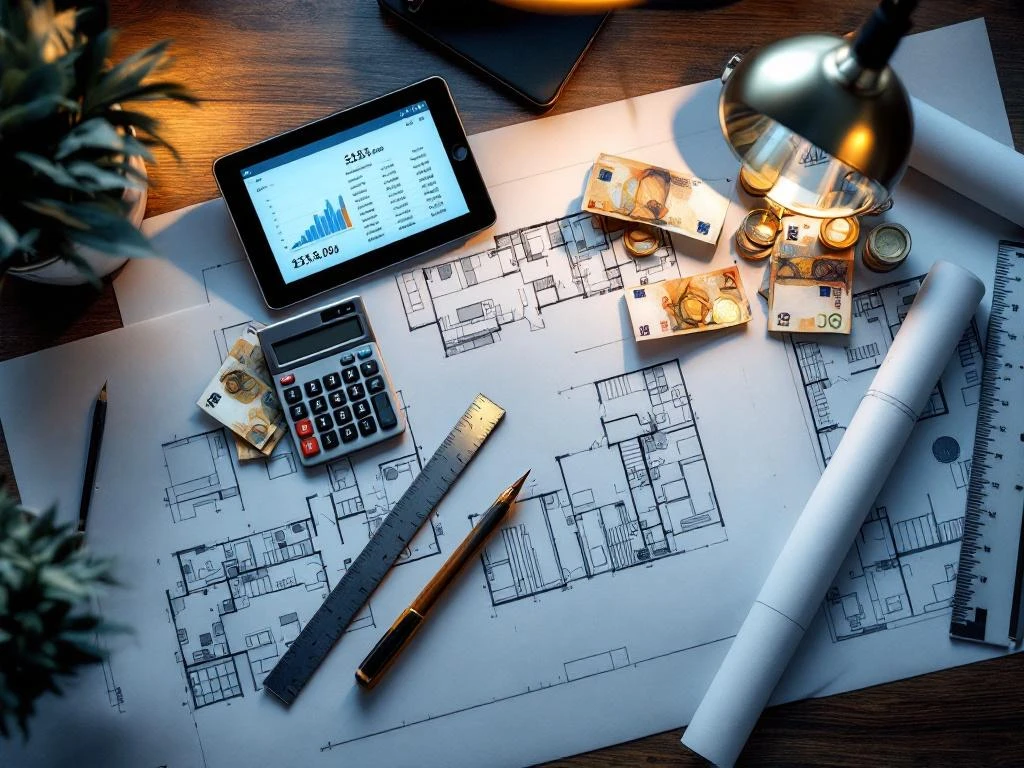
Een realistische begroting voor projectinrichting maak je door alle kostencomponenten in kaart te brengen en 10-20% buffer toe te voegen voor onvoorziene uitgaven. Begin met een inventarisatie van je behoeften, vergelijk offertes van meerdere leveranciers en plan een gefaseerde uitvoering om kosten te spreiden. Een goede voorbereiding en heldere communicatie met je inrichtingspartner voorkomen budgetoverschrijdingen.
Wat zijn de belangrijkste kostenposten bij projectinrichting?
De belangrijkste kostenposten bij projectinrichting bestaan uit meubilair, ontwerp- en advieskosten, installatie en montage, transport en logistiek, plus onvoorziene uitgaven. Daarnaast heb je vaste kosten, zoals projectmanagement, en variabele kosten die afhangen van je specifieke wensen en locatie.
Het meubilair vormt meestal het grootste deel van je budget, vaak 60-70% van de totale investering. Denk hierbij aan bureaus, stoelen, kasten, vergadertafels en loungemeubels. De kwaliteit en het merk bepalen grotendeels de prijs.
Ontwerp- en advieskosten variëren tussen 5-15% van het totale budget. Dit omvat ruimtestudies, 3D-visualisaties en kleur- en materiaaladvies. Sommige leveranciers rekenen dit apart, anderen verwerken het in de meubelprijs.
Transport en installatie kosten gemiddeld 10-15% van je budget. Dit hangt af van de locatie, de toegankelijkheid van het gebouw en de complexiteit van de montage. Speciale hijswerkzaamheden of weekendmontage verhogen deze kosten.
Houd altijd 10-20% buffer aan voor onvoorziene kosten. Denk aan extra stopcontacten, kleine aanpassingen tijdens de uitvoering of vertraging door bouwwerkzaamheden.
Hoe bepaal je hoeveel budget je nodig hebt voor kantoormeubels?
Voor kantoormeubels reken je € 1.500 tot € 4.000 per werkplek, afhankelijk van kwaliteit en functionaliteit. Basismeubels kosten minder, ergonomische en designmeubels meer. Tel het aantal werkplekken, vergaderplekken en gemeenschappelijke ruimtes op voor je totale behoefte.
Begin met een werkplekanalyse. Hoeveel mensen werken er? Hebben ze speciale eisen, zoals zit-sta-bureaus of extra beeldschermen? Directieruimtes en vergaderzalen vragen om hoogwaardiger meubels dan standaard werkplekken.
Verdeel je meubels in categorieën met verschillende budgetten. Voor een standaard werkplek: bureau € 300-800, bureaustoel € 200-600, opbergruimte € 150-400. Vergadertafels kosten € 200-500 per zitplaats, afhankelijk van grootte en uitvoering.
Kies bewust voor verschillende kwaliteitsniveaus per ruimte. In de receptie en directiekamers investeer je in representatieve meubels. Voor werkplekken kies je functionele, ergonomische oplossingen die lang meegaan.
Vraag altijd meerjarige garantie en kijk naar onderhoudskosten. Goede kantoormeubels gaan 10-15 jaar mee, dus verdeel de investering over de gebruiksduur voor een realistisch beeld van de kosten.
Welke factoren beïnvloeden de kosten van projectinrichting het meest?
De projectgrootte en tijdsdruk bepalen grotendeels je kosten. Grote projecten krijgen vaak volumekorting, maar krappe deadlines verhogen de prijs door extra inzet en expreslevering. Ook de locatie en de mate van maatwerk versus standaardoplossingen maken veel verschil.
Projectgrootte werkt in je voordeel bij grotere opdrachten. Vanaf 50 werkplekken krijg je meestal betere prijzen door volumekorting. Kleine projecten hebben relatief hogere kosten per werkplek door vaste kosten, zoals transport en projectmanagement.
Tijdsdruk verhoogt de kosten aanzienlijk. Normale levertijden zijn 6-12 weken. Wil je sneller? Dan betaal je extra voor voorraadmeubels, expreslevering en mogelijk weekendmontage. Plan daarom ruim op tijd.
Locatiefactoren spelen ook mee. Moeilijk bereikbare locaties, hoge verdiepingen zonder goede lift of beperkte parkeermogelijkheden verhogen de transport- en installatiekosten. Projecten buiten de Randstad hebben vaak hogere reiskosten.
Maatwerk kost meer dan standaardoplossingen. Speciale kleuren, afmetingen of materialen verhogen de prijs met 20-50%. Standaardmeubels uit voorraad zijn goedkoper en sneller leverbaar.
Kwaliteitseisen bepalen een groot deel van je budget. Designmerken kosten twee tot drie keer meer dan functionele alternatieven. Bepaal vooraf welke ruimtes topkwaliteit nodig hebben en waar je kunt besparen.
Hoe voorkom je budgetoverschrijding bij kantoorinrichting?
Budgetoverschrijding voorkom je door gedetailleerde planning, heldere afspraken en een buffer van 15-20% voor onvoorziene kosten. Maak concrete afspraken over wat wel en niet in de offerte zit en communiceer wijzigingen direct met je leverancier.
Start met een duidelijke briefing waarin je budget, wensen en eisen vastlegt. Deel dit met alle betrokkenen, zodat iedereen dezelfde verwachtingen heeft. Wijzigingen tijdens het project zijn de grootste oorzaak van budgetoverschrijding.
Vergelijk offertes zorgvuldig en let op wat wel en niet is inbegrepen. Sommige leveranciers rekenen transport apart, anderen verwerken dit in de meubelprijs. Vraag altijd om een gedetailleerde kostenverdeling.
Plan een gefaseerde uitvoering als je budget krap is. Begin met de belangrijkste ruimtes en breid later uit. Dit spreidt de kosten en geeft je tijd om ervaring op te doen met je leverancier.
Houd wekelijks contact met je projectleider over de voortgang en eventuele bijstellingen. Kleine aanpassingen tijdens de uitvoering kunnen grote gevolgen hebben voor je budget.
Documenteer alle wijzigingen schriftelijk en laat de kostengevolgen berekenen voordat je akkoord geeft. Mondeling “even iets toevoegen” leidt vaak tot onaangename verrassingen bij de eindafrekening.
Hoe Wout Monseurs helpt met projectinrichting
Wij helpen je vanaf het begin met een realistische projectinrichting en transparante budgetplanning. Onze ervaring van meer dan 60 jaar zorgt ervoor dat we alle kostenposten vooraf in kaart brengen en onverwachte uitgaven tot een minimum beperken.
Ons vaste stappenplan begint met een grondige ruimtestudie, waarin we je wensen en budget op elkaar afstemmen. Je krijgt een gedetailleerd 3D-ontwerp, zodat je precies weet wat je kunt verwachten. Alle kosten zijn vooraf helder, zonder verborgen toeslagen.
We regelen de complete planning met leveranciers en houden je op de hoogte van de voortgang. Je hebt één vast contactpersoon die alle vragen beantwoordt en ervoor zorgt dat je project binnen budget en planning blijft.
Voor grotere trajecten bieden we turnkeyprojecten, waarbij we alles uit handen nemen. Van ontwerp tot oplevering regel je alles via één aanspreekpunt. Wil je weten wat jouw projectinrichting kost? Neem contact op voor een vrijblijvende offerte op maat.
Veelgestelde vragen
Hoe lang van tevoren moet ik beginnen met de planning van mijn kantoorinrichting?
Begin minimaal 3-4 maanden voor de gewenste opleverdatum met de planning. Dit geeft voldoende tijd voor ontwerp, offertetrajecten, bestelling en productie. Voor grote projecten of maatwerk kan dit oplopen tot 6 maanden. Een vroege start voorkomt tijdsdruk en de bijbehorende meerkosten.
Kan ik gefaseerd inrichten om de kosten te spreiden over meerdere jaren?
Ja, gefaseerde inrichting is een slimme manier om kosten te spreiden. Begin met de meest essentiële ruimtes zoals werkplekken en vergaderzalen, en voeg later lounge-areas en extra faciliteiten toe. Let wel op dat sommige leveranciers minimale orderwaarden hanteren en dat transport- en installatiekosten per fase terugkeren.
Wat gebeurt er als mijn kantoorruimte nog niet klaar is tijdens de geplande levering?
Bij vertraging van de bouw kunnen opslagkosten ontstaan van €50-150 per dag, afhankelijk van de hoeveelheid meubels. Communiceer bouwvertragingen zo snel mogelijk met je inrichtingspartner. Veel leveranciers bieden flexibiliteit in planning, maar last-minute wijzigingen kunnen extra kosten met zich meebrengen.
Hoe ga ik om met medewerkers die specifieke ergonomische eisen hebben?
Inventariseer vooraf alle bijzondere eisen via een medewerkersonderzoek. Ergonomische aanpassingen zoals speciale stoelen, zit-sta-bureaus of beeldschermsteunen kosten €200-800 extra per werkplek. Budget hiervoor 5-10% van je totale meubelbudget en bespreek mogelijkheden voor proefplaatsingen voordat je definitief bestelt.
Welke garanties krijg ik op kantoormeubels en wat dek ik af met verzekeringen?
Kwaliteitsmeubels hebben meestal 5-10 jaar garantie op constructie en 2-3 jaar op bewegende delen. Controleer of transport- en montageschade gedekt is tijdens de installatieperiode. Voor dure designmeubels is aanvullende verzekering aan te raden. Vraag altijd om garantiebewijzen en bewaar deze zorgvuldig.
Hoe bereken ik de werkelijke kosten per werkplek als ik ook gemeenschappelijke ruimtes inricht?
Verdeel gemeenschappelijke ruimtes (vergaderzalen, keuken, lounge) evenredig over alle werkplekken. Tel alle kosten op en deel door het totaal aantal werkplekken voor de werkelijke kostprijs per werkplek. Reken bijvoorbeeld: (werkplekkosten + 30% gemeenschappelijke ruimtes) ÷ aantal werkplekken = totale kosten per werkplek.