

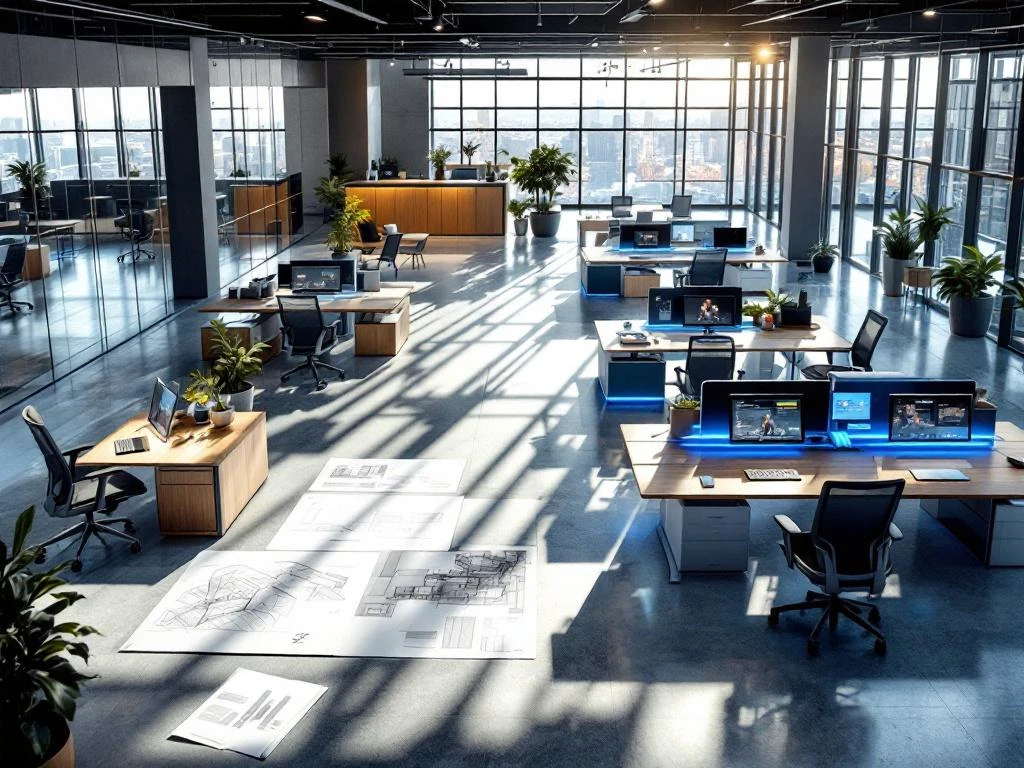
Future-proof project design means designing and furnishing your office with an eye for changing work styles, technological developments, and business growth. You can do this by choosing flexible, modular furniture and adaptable spaces that grow with your organization. The focus is on sustainability, ergonomics, and functionality that will remain relevant for years to come.
What does future-proof project design actually mean?
Future-proof project design involves designing office spaces with a long-term vision. You consciously choose solutions that are flexible enough to adapt to changing ways of working, growing teams, and new technologies. It goes beyond simply selecting attractive furniture.
The core principles of future-proof design are flexibility, sustainability, and adaptability. Flexibility means that you can quickly transform spaces from meeting rooms to workspaces or from individual workspaces to team rooms. Sustainability ensures that your investment will last for years without having to replace everything.
Companies that opt for future-proof project design save costs in the long term and can respond more quickly to changes. You don't have to redesign your entire office every few years because the current layout no longer works.
What trends will shape the future of office work?
The most important trend is hybrid working, where employees alternate between working from home and working at the office. This means that offices need fewer fixed workstations and more flexible spaces for collaboration and meetings. Your office becomes a place where people meet and work together.
Technological advances also play a major role. Wireless working is becoming increasingly common, reducing the need for fixed cabling. Digital tools for meetings and collaboration require different room layouts than traditional offices.
The well-being of employees is becoming increasingly important. Employees expect ergonomic workplaces, good air quality, and spaces that support their productivity. Sustainability is also becoming increasingly important. Companies want offices that contribute to their environmental goals and offer a healthy working environment.
How do you choose furniture that will still be relevant in 10 years' time?
Opt for modular systems that you can expand and adapt. Modular desks, cabinets, and workstations can be rearranged as your team grows or shrinks. This is much more practical than fixed furniture that you have to throw away when changes occur.
Quality is important for sustainability. Invest in furniture from reputable brands that are known for their durability. Good office furniture will last 10 to 15 years if you maintain it properly. Look at warranties and repair options.
Ergonomics should be central to your choice. Adjustable desks, good office chairs, and ergonomic accessories ensure that your furniture remains suitable for different users. Timeless designs without striking colors or shapes remain attractive and professional-looking for longer.
Also consider adaptability to new technologies. Choose desks with integrated cable ducts and furniture that is suitable for different devices and working styles.
Why is flexibility so important in modern office design?
Flexibility helps you respond quickly to changing business needs without incurring significant costs. You can rearrange spaces for new teams, different working methods, or changed activities. This saves money because you don't have to keep buying new furniture.
Modular workstations make it possible to transform individual workstations into team spaces or meeting areas. Mobile partitions and movable furniture give you the freedom to adapt your office to the planned activities on a daily basis.
Multifunctional spaces are more efficient to use. A space that serves as a workplace during the day can be used for presentations or meetings in the evening. Flexible lighting and furniture make this possible without major adjustments.
Flexibility also helps when your business is growing or shrinking. You can add or remove workspaces without having to completely redesign your office. This gives you more financial leeway for other business investments.
How Wout Monseurs assists with future-proof project design
We bring more than 60 years of experience in designing offices that grow with companies. Our process begins with a thorough analysis of your current and future needs. We look not only at today, but also at where your company will be in five years.
We work with high-quality, modular furniture systems from brands such as Interstuhl, Voortman, and Gispen. These brands are known for their durability and flexibility. You will receive a detailed 3D design so you can see exactly what your future-proof office will look like.
Our project design goes beyond just furniture. We also arrange flooring, ceilings, lighting, and cabling that are compatible with future technological developments. You will have a single point of contact who will supervise the entire project, from design to delivery.
Would you like to know how we can make your office future-proof? Contact us for a no-obligation consultation about the possibilities.
Frequently asked questions
How long does it take to set up a future-proof office?
A complete future-proof project design takes an average of 6-12 weeks, depending on the size of your office and the complexity of the project. The design phase usually takes 2-3 weeks, followed by the production and delivery of furniture. We plan the installation so that your business operations are disrupted as little as possible.
What are the additional costs of modular furniture compared to standard office furniture?
Modular systems initially cost 15-25% more than standard furniture, but you will recoup this investment within 3-5 years thanks to their flexibility and longer lifespan. You will save on future refurbishment costs and can reuse furniture when moving or reorganizing. This results in lower total cost of ownership.
How do I know if my current office is suitable for future-proof design?
Almost any office is suitable for future-proof design, but certain factors make it more effective. Open spaces with minimal load-bearing walls offer the most flexibility. We conduct a location analysis to determine what adjustments are possible within your existing space and budget.
Can I combine existing furniture with new modular systems?
Yes, you can often integrate high-quality existing furniture into a new modular system. We assess your current interior and advise you on which items can be retained and which need to be replaced. This can significantly reduce your budget while still giving you the benefits of flexibility.
How do I maintain modular office furniture for optimal lifespan?
Modular furniture requires minimal maintenance: regular vacuuming and wiping with a damp cloth is usually sufficient. Check the fastenings and hinges twice a year and lubricate moving parts if necessary. We provide a maintenance manual and offer service contracts for professional maintenance.
What happens if my business grows or shrinks rapidly after the setup?
This is exactly what future-proof design is all about. Modular systems can be expanded or reduced within a few hours without professional help. We always design with growth opportunities in mind and can supply additional modules that fit perfectly with your existing design.