

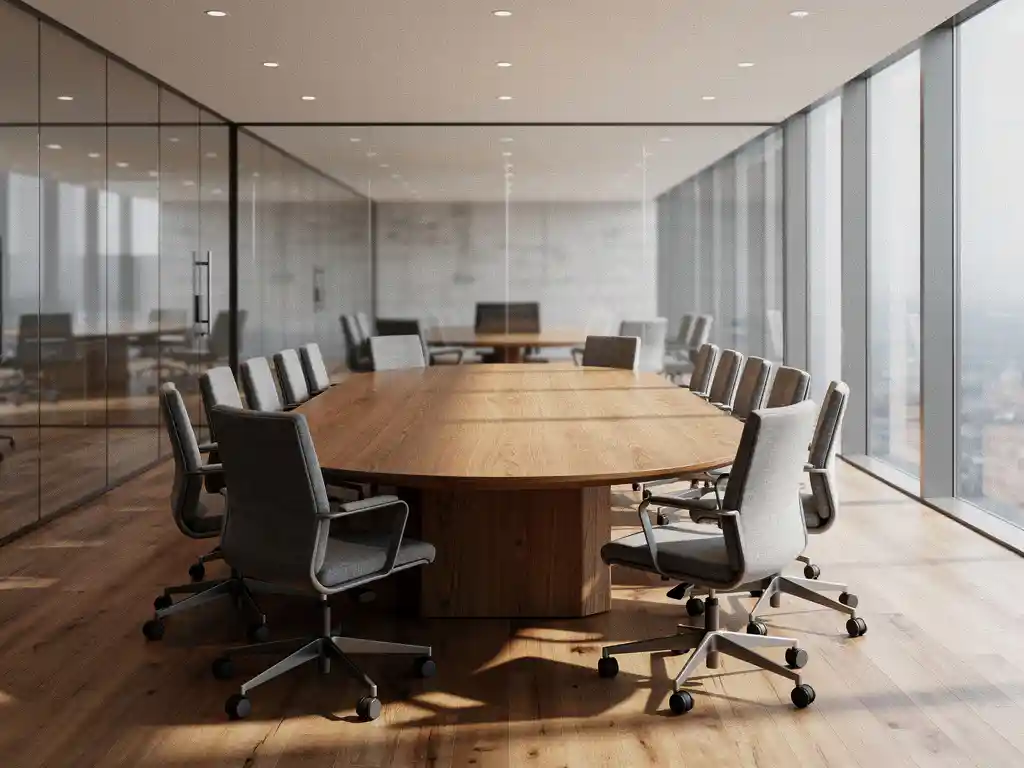
Meeting rooms are a significant investment for any office, but many organizations struggle with rooms that are booked but not used. Efficient meeting room utilization can lead to significant cost savings and boost workplace productivity.
With smart planning, technological solutions, and intelligent office automation, you can get the most out of your meeting rooms. This article discusses practical strategies for measuring, analyzing, and systematically improving utilization rates.
What is the meeting room utilization rate, and why is it important?
The meeting room utilization rate is the percentage of time a meeting room is actually in use relative to the total available time. It is calculated by dividing the actual usage time by the total available time and multiplying the result by 100.
A low utilization rate means that your investment in meeting rooms is not yielding optimal returns. On average, Dutch offices have a utilization rate of only 40 to 60% for their meeting rooms. This means that nearly half of the space and the associated costs remain unused.
A high utilization rate is important because meeting rooms involve significant costs. In addition to rental or ownership costs, you must factor in climate control, lighting, cleaning, and maintenance. If utilization is low, you’ll be paying these costs for empty spaces.
Furthermore, inefficient use of space affects employee satisfaction. Employees become frustrated when they cannot find an available meeting room, while at the same time there are rooms that have been reserved but are not being used.
How do you measure the current occupancy rate of your meeting rooms?
You can measure occupancy rates through manual observation, by analyzing reservation systems, or by using sensor technology. The most accurate method combines reservation data with actual attendance records.
For a manual measurement, you can check each meeting room at set times over a representative period of two to four weeks. Note whether the room is occupied and compare this with the reservations made. This method provides insight into both no-shows and unrecorded use.
Modern reservation systems provide detailed reports on booking patterns. Analyze this data to identify peaks and troughs in demand. Pay attention to any discrepancies between the reserved time and the actual duration of use.
Sensor technology, such as occupancy sensors or privacy-protecting cameras, provides real-time insight into room usage. These systems can automatically detect when a room is actually in use, regardless of reservations.
Combine different measurement methods to get the most complete picture. A reservation system shows the planned occupancy, while sensors measure the actual occupancy. The difference between the two figures reveals opportunities for improvement.
What factors influence meeting room occupancy rates?
The occupancy rate is influenced by booking policies, room size, technical equipment, location within the office, and the company culture surrounding meetings. External factors, such as hybrid work, also play a role.
A booking policy that is too lenient leads to a high number of no-shows. Employees book rooms “just in case,” but end up not using them. Without any consequences or automatic cancellation, these bookings remain active.
The size of meeting rooms should be tailored to actual needs. Large rooms for small teams lead to inefficient use of space, while rooms that are too small tend to be avoided. Analyze which room sizes are in highest demand.
Technical issues significantly reduce occupancy rates. Malfunctioning presentation screens, poor Wi-Fi connections, or complicated control systems cause employees to seek out alternative locations.
A room’s location within the office determines its popularity. Meeting rooms located near workstations or the cafeteria are used more often than those in more remote areas. Factors such as natural light and views also play a role.
Corporate culture and meeting habits have a significant impact. In organizations where ad hoc meetings are common, flexible spaces are valued more highly than formal boardrooms.
How can you increase occupancy rates through smart planning?
Increase occupancy rates by implementing dynamic booking rules, arranging spaces flexibly, and optimizing booking patterns. An automatic cancellation policy and real-time availability significantly improve efficiency.
Implement a “use it or lose it” policy whereby unused reservations are automatically canceled. Set a time limit of 10 to 15 minutes after the scheduled start time. This makes rooms available quickly for other users.
Distinguish between different types of meeting rooms. Designate specific spaces for short stand-ups, longer workshops, and formal presentations. This specialization increases usage frequency because each space is optimally configured for its intended purpose.
Use flexible booking slots instead of standard one-hour blocks. Many meetings last only 30 or 45 minutes. By offering shorter time slots, you can facilitate more meetings per day.
Encourage the use of less popular spaces by making them more appealing. Add extra amenities, such as whiteboards, more comfortable chairs, or better lighting. Small improvements can significantly increase usage.
Analyze booking patterns to identify peak hours. Consider flexible workspaces that can serve as informal meeting areas during quiet hours and be available for scheduled meetings during peak hours.
What technological solutions can help optimize meeting rooms?
Intelligent office automation offers a variety of technological solutions: smart booking systems with real-time availability, occupancy sensors that detect no-shows, and automated room adjustments that enhance comfort and efficiency.
Smart booking systems display real-time availability on screens outside each meeting room. Employees can immediately see which rooms are available and book them on the spot. These systems reduce search time and increase spontaneous use.
Occupancy sensors automatically detect whether a reserved room is actually being used. In the event of a no-show, the reservation is canceled and the room becomes available again. This prevents empty rooms from remaining blocked unnecessarily.
Integrated conferencing systems make meeting rooms more user-friendly. Automatic connection to laptops, easy control of presentation screens, and seamless integration with video calling lower the barrier to use.
Smart climate control automatically adjusts the temperature and lighting based on occupancy. This increases comfort and reduces energy costs. Rooms are heated or cooled only when they are actually in use.
Mobile apps allow employees to book, modify, or cancel meeting rooms while on the go. Push notifications remind users of upcoming meetings and provide updates on changes in availability.
Analytical dashboards provide insights into usage patterns, peak times, and space efficiency. This data helps inform decisions regarding space allocation and reservation policies.
How can you redesign your office layout to make better use of space?
Optimize space utilization by using modular furniture, creating multifunctional spaces, and installing flexible partitions. Acoustic solutions and smart lighting also enhance the usability of every square foot.
Modular conference tables can be quickly adapted to accommodate different group sizes. Instead of a fixed setup for eight people, you can configure the same space for four, six, or twelve participants. This increases flexibility and usage frequency.
Multifunctional spaces combine multiple functions within a single room. A space can serve as a meeting room in the morning, a training room in the afternoon, and a social space in the evening. Fold-out tables and stackable chairs make quick transformations possible.
Acoustic panels and moss walls improve sound quality and create visual separation without the need for permanent walls. This makes it possible to divide large spaces into smaller meeting areas without costly renovations.
Smart lighting adapts to different activities. Bright lighting for presentations, dimmed ambient lighting for brainstorming sessions, and natural light for longer work meetings. This enhances comfort and functionality.
Incorporate storage into the furniture to allow for quick reconfiguration of meeting rooms. Built-in cabinets for presentation materials, pull-out whiteboards, and fold-away screens keep spaces organized and flexible.
How Wout Monseurs Helps Optimize Meeting Rooms
We help organizations make the most of their meeting spaces through a combination of Smart Office technology and thoughtful space design. Our approach focuses on increasing utilization rates while improving user comfort.
Our Smart Office solutions include:
- Smart reservation systems with real-time availability
- Presence sensors that automatically detect no-shows
- Smart climate and lighting control
- Integrated conferencing systems for seamless connections
- Analytical dashboards for insights into usage patterns
For the physical layout, we offer modular furniture from top brands such as Interstuhl and Bralco, acoustic panels for optimal sound quality, and flexible partition walls that allow spaces to be quickly transformed. Our acoustic design lamps combine atmospheric lighting with sound absorption.
With over 60 years of experience in office design, we understand that every organization has unique needs. That’s why we always start with an introductory visit to analyze your specific situation and develop a customized solution.
Would you like to know how we can optimize your meeting rooms? Contact us for a no-obligation consultation and discover the possibilities for your organization.
Frequently asked questions
How long does it take to see results from measures aimed at increasing occupancy rates?
The first results are usually visible within 2–4 weeks, especially when implementing automatic cancellation rules. Structural improvements resulting from technological solutions and operational adjustments typically become fully apparent after 2–3 months. It is important to continue monitoring the data during this period and make adjustments as needed.
What is a realistic target for meeting room occupancy rates?
An occupancy rate of 70–80% is considered excellent and realistically achievable. Rates above 80% can lead to frustration because employees can no longer find spaces when they need them. It is better to aim for a consistent 75% than for 90% with regular shortages.
How can you prevent employee resistance when implementing stricter reservation policies?
Clearly explain why the measures are necessary and how they benefit everyone. Start with a pilot phase and solicit feedback from users. Ensure that the new system is more user-friendly than the old one, for example by offering mobile apps and real-time availability. Involve employees in the implementation and adjust the rules based on their experiences.
What are the costs associated with implementing smart meeting room technology?
The investment varies significantly depending on the solutions chosen and the number of rooms. Basic occupancy sensors cost approximately €200–500 per room, while complete smart office systems can cost €1,000–3,000 per room. This investment typically pays for itself within 12–18 months through improved space efficiency and lower operating costs.
How do you handle meeting rooms that are consistently less popular?
First, analyze why these spaces are underutilized—is it the location, size, furnishings, or atmosphere? Small improvements such as better lighting, more comfortable chairs, or additional technical amenities can make all the difference. If a space remains underutilized despite these improvements, consider repurposing it as a quiet workspace or an informal meeting area.
What should you do if occupancy rates suddenly drop after a period of improvement?
First, check whether any technical issues have arisen with reservation systems or equipment. Assess whether there have been changes in work patterns, such as an increase in remote work or shifts in team sizes. Ask users for feedback on any issues they may be experiencing. Often, minor adjustments to the system or setup are enough to restore capacity.
How do you ensure that flexible meeting spaces remain hygienic when used intensively?
Implement a quick cleaning system between meetings using disinfectant wipes and sprays that users can apply themselves. Ensure adequate ventilation and consider antimicrobial surface treatments for tables and chairs. Schedule a thorough daily cleaning and use materials that are easy to clean, such as smooth surfaces instead of fabric whenever possible.