

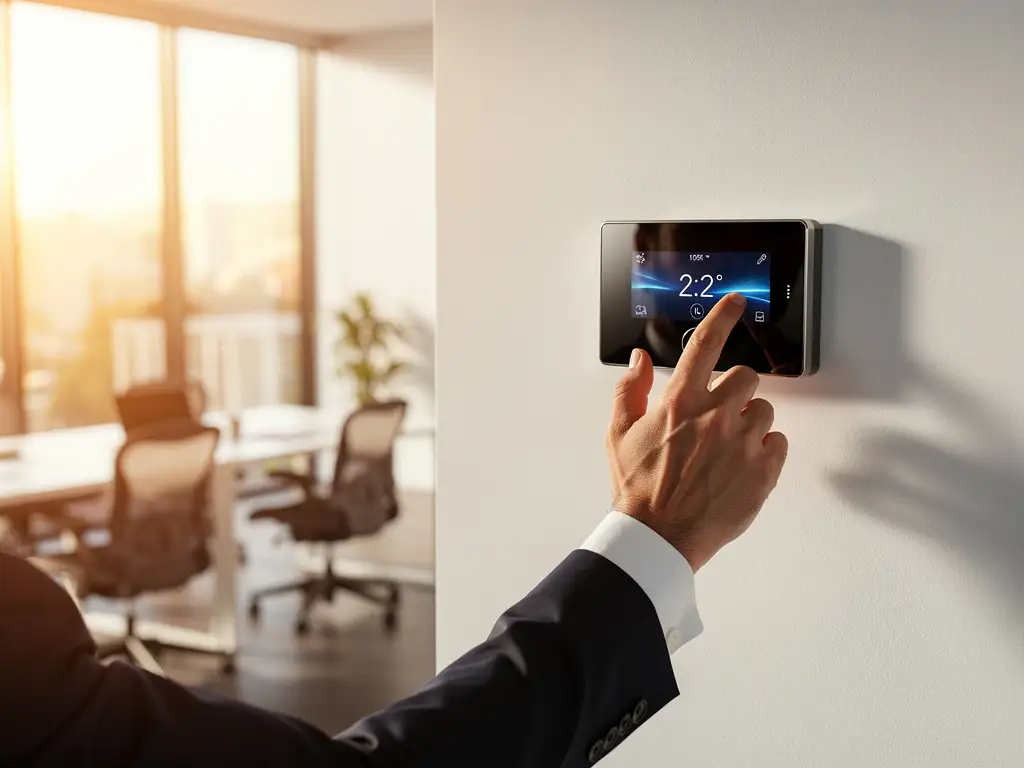
Modern offices face the challenge of controlling energy costs while creating a comfortable working environment. Smart HVAC control offers a solution by utilizing intelligent office automation that ensures climate control systems operate at peak efficiency. This technology fits perfectly within the trend toward Smart Office solutions, which an increasing number of companies are adopting.
By combining sensors, automation, and data analysis, modern HVAC systems can not only drastically reduce energy consumption but also enhance employee comfort and productivity. This article explores how smart control works and the benefits it offers for office environments.
What is smart HVAC control, and why is it important?
Smart HVAC control is an automated system that manages heating, ventilation, and air conditioning using sensors, algorithms, and real-time data analysis to create optimal indoor comfort while minimizing energy consumption. This intelligent office automation system automatically adjusts temperature, airflow, and humidity based on occupancy, outdoor conditions, and preset preferences.
The importance of smart HVAC control is growing due to a number of factors. Energy costs often account for 30–40% of an office building’s total operating costs, and traditional systems waste a great deal of energy by cooling or heating spaces that are not in use. Smart control prevents this waste by operating only where and when it is needed.
In addition, optimal climate control directly contributes to employee productivity and well-being. Research shows that temperature fluctuations and poor air quality negatively impact employees’ concentration and comfort. Smart systems maintain these factors at the ideal level, resulting in a healthier and more productive work environment.
How do smart HVAC control systems work?
Smart HVAC systems use a network of sensors that continuously collect data on temperature, humidity, CO2 levels, and motion. Algorithms analyze this information to automatically determine and implement the optimal climate settings. The system learns from usage patterns and adapts to ensure maximum efficiency.
The core of the system consists of various components that work together seamlessly. Occupancy sensors detect when rooms are in use and activate climate control only when necessary. Temperature and humidity sensors continuously measure environmental conditions, while CO2 sensors monitor air quality to adjust ventilation accordingly.
A central control system processes all sensor data and controls the HVAC components. Machine learning algorithms analyze historical data to identify patterns and make predictions. This allows the system to anticipate busy periods or weather forecasts and proactively optimize settings.
Integration with other Smart Office technologies further enhances functionality. Integration with calendar systems and desk booking tools provides insight into expected occupancy, while integration with lighting systems enables coordinated automation of the entire work environment.
What are the benefits of smart HVAC control for offices?
Smart HVAC control systems offer offices energy savings of up to 30–50%, improved air quality, consistent comfort for employees, and detailed insights into energy consumption through real-time monitoring and reporting. These benefits result in lower operating costs and higher employee satisfaction.
Energy savings are the most immediately measurable benefit. By cooling or heating only the spaces that are actually in use and by using optimal settings, companies can significantly reduce their energy bills. This also contributes to sustainability goals and reduces the office’s carbon footprint.
Employee comfort is noticeably improved by consistent temperatures and optimal air quality. Smart systems prevent common office problems such as drafts, areas that are too hot or too cold, and stale air. This results in fewer complaints, higher productivity, and a better work environment.
From an operational perspective, smart systems provide valuable insights through detailed reports on energy consumption, usage patterns, and system performance. This enables facility managers to make informed decisions regarding optimization and maintenance. Predictive maintenance becomes possible because the system detects anomalies at an early stage.
The system also supports the flexibility of modern offices. It automatically adapts to changing occupancy levels or layout changes without requiring manual reconfiguration. This is particularly valuable for companies with flexible workspaces or hybrid work models.
How do you choose the right smart HVAC control system?
Choosing the right smart HVAC system requires an analysis of the building’s size, existing systems, budget, and specific needs, followed by a comparison of vendors based on functionality, integration capabilities, and support. A phased implementation is recommended for optimal results.
Start with a thorough analysis of the current situation. Determine the size and layout of the building, the condition of existing HVAC systems, and specific challenges, such as temperature differences between zones or high energy costs. This will form the basis for the system specifications.
Key selection criteria include compatibility with existing systems, scalability for future expansions, and ease of use of the user interface. Ensure that the system can integrate with other Smart Office technologies, such as lighting, security, and desk booking systems.
Evaluate different vendors based on their experience, past projects, and support services. Inquire about implementation timelines, staff training, and maintenance contracts. A reliable partner is crucial to the success of the implementation.
Consider a phased rollout in which a pilot area is tested first before the system is rolled out more widely. This allows you to gain experience, optimize settings, and resolve any teething problems without disrupting the entire building.
How Wout Monseurs Helps with Smart HVAC Control
At Wout Monseurs, we understand that intelligent office automation is essential for modern work environments. As specialists in Smart Office technology, we help companies implement smart HVAC control systems that are perfectly tailored to their specific needs and existing office layout.
Our approach includes:
- Comprehensive analysis of your current HVAC systems and energy consumption
- Customized advice for the optimal smart control system
- Integration with other Smart Office solutions, such as desk booking and lighting systems
- Complete project design, with HVAC control as part of the overall concept
- Training and support for optimal use of the systems
With over 60 years of experience in office solutions, we combine traditional expertise with the latest technologies. Our family-owned business is known for its personalized approach and for collaborating on sustainable, future-proof solutions. Would you like to learn how smart HVAC control can improve your office? Contact us for a no-obligation consultation.
Frequently asked questions
How long does it take to install a smart HVAC system, and will it disrupt my office?
Installation typically takes 2–4 weeks, depending on the size and complexity of the building. By taking a phased approach, we can minimize disruption—work is often carried out in the evenings or on weekends. Most systems can be installed without completely shutting down the existing HVAC system.
Can I install a smart HVAC system in an old office building with outdated systems?
Yes, modern smart control systems are often compatible with existing HVAC systems through retrofit solutions. Sensors and smart thermostats can be added without completely replacing the system. A technical analysis determines which components can be retained and which need to be modernized.
What happens if the smart system fails—will I no longer have climate control?
No, smart HVAC systems always have a fallback mode in which the system reverts to basic functionality. Heating and cooling continue to operate; only the intelligent optimization is temporarily disabled. In addition, reliable suppliers offer 24/7 monitoring and rapid remote support.
How do I set individual preferences for different departments or workstations?
Modern systems offer zone-based control, allowing each department or room to be configured individually via a user-friendly app or web interface. Employees can set their own preferences within predefined limits, while the system automatically balances these with energy-saving goals.
What payback period can I expect from investing in smart HVAC?
The average payback period is between 2 and 4 years, depending on current energy costs and building characteristics. With energy savings of 30–50% and reduced maintenance costs thanks to predictive maintenance, most companies see significant reductions in their energy bills within the first year.
How does the integration with other Smart Office systems, such as lighting and security, work?
Smart HVAC systems communicate with other building systems via standard protocols (such as BACnet or KNX). This allows lighting to dim when a room is empty, while the climate control is adjusted at the same time. This coordinated automation maximizes energy savings and user comfort.
What training do my employees need to use the system?
End users require minimal training—most systems operate fully automatically. Facility managers receive comprehensive training on the dashboard, reports, and settings. The training typically lasts half a day and is followed by online support and manuals for daily use.