

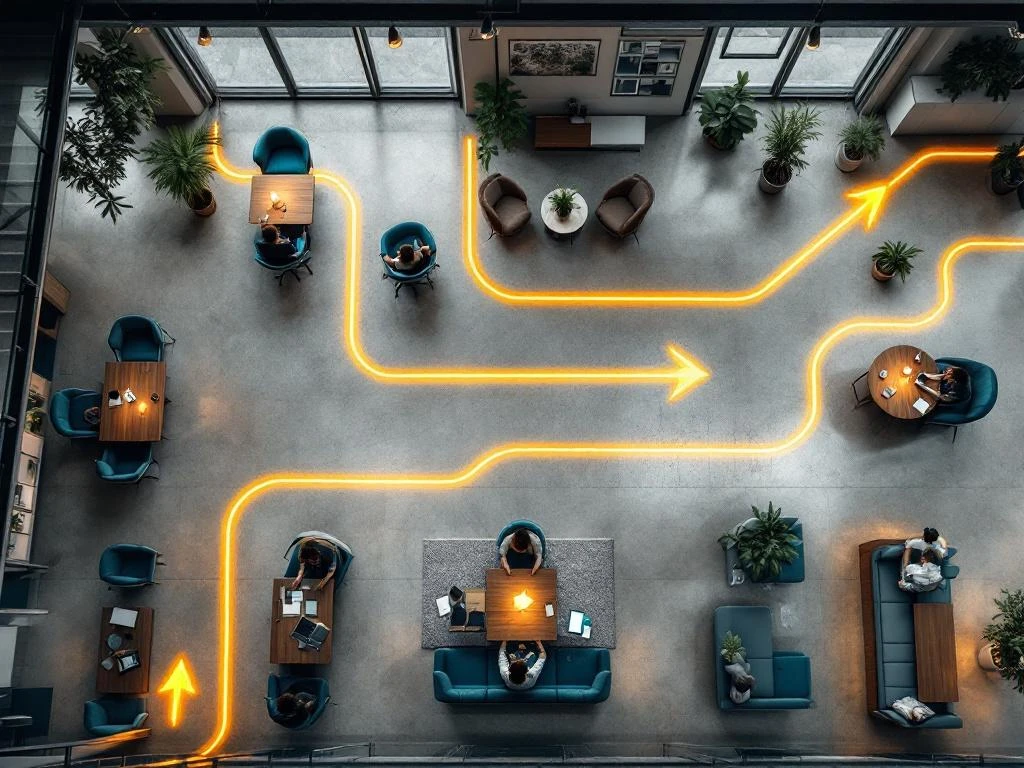
Het optimaliseren van looproutes binnen projectinrichting betekent het strategisch plannen van bewegingspatronen door je kantoor om efficiëntie en werknemerstevredenheid te verbeteren. Goede looproutes zorgen voor kortere afstanden tussen werkplekken en faciliteiten, minder onderbrekingen en een betere werksfeer. Dit artikel beantwoordt de belangrijkste vragen over het analyseren, plannen en implementeren van optimale looproutes in je kantooromgeving.
Wat zijn looproutes en waarom zijn ze belangrijk bij kantoorinrichting?
Looproutes zijn de paden die mensen dagelijks afleggen binnen je kantoor om van hun werkplek naar vergaderruimtes, koffiehoeken, printers of toiletten te gaan. Deze bewegingspatronen hebben direct invloed op hoe soepel je kantoor functioneert.
Slecht geplande looproutes leiden tot frustratie bij je medewerkers. Denk aan lange wandelingen naar de printer, constant langs collega’s lopen die geconcentreerd werken, of moeilijk bereikbare vergaderruimtes. Dit zorgt voor tijdverlies en onderbrekingen die de productiviteit schaden.
Goed doordachte looproutes daarentegen maken je kantoor een fijne plek om te werken. Medewerkers kunnen snel bij de faciliteiten die ze nodig hebben, zonder anderen te storen. Dit verhoogt niet alleen de efficiëntie, maar ook de werknemerstevredenheid. Mensen voelen zich prettiger in een ruimte die logisch en overzichtelijk is ingericht.
De impact gaat verder dan praktische overwegingen. Looproutes beïnvloeden ook de sociale dynamiek in je kantoor. Natuurlijke ontmoetingsplekken langs veelgebruikte routes stimuleren informele communicatie tussen collega’s, wat goed is voor de teamsfeer.
Hoe analyseer je de huidige looproutes in je kantoor?
Begin met observatie van dagelijkse bewegingspatronen gedurende een representatieve werkweek. Let op welke routes medewerkers het meest gebruiken, waar opstoppingen ontstaan en welke plekken juist gemeden worden.
Maak een plattegrond van je kantoor en teken de meest gebruikte paden erop. Markeer knelpunten zoals smalle doorgangen waar mensen elkaar tegenkomen, of plekken waar meerdere routes samenkomen. Let ook op ‘dode hoeken’: ruimtes die zelden gebruikt worden maar wel waardevol kunnen zijn.
Praat met je medewerkers over hun ervaringen. Vraag waar ze tegenaan lopen in hun dagelijkse bewegingen door het kantoor. Vaak hebben zij praktische inzichten die je bij observatie over het hoofd ziet. Welke routes voelen onhandig aan? Waar moeten ze omwegen maken?
Meet ook de afstanden tussen werkplekken en belangrijke faciliteiten. Hoeveel stappen zijn het van de verste werkplek naar de printer? Hoe lang duurt het om van de ene vergaderruimte naar de andere te lopen? Deze concrete gegevens helpen je prioriteiten te stellen bij het optimaliseren.
Welke factoren bepalen een goede looproute binnen projectinrichting?
De afstand tussen werkplekken en faciliteiten is de belangrijkste factor. Veelgebruikte voorzieningen zoals printers, koffiehoeken en toiletten moeten centraal bereikbaar zijn, zonder dat iemand meer dan 30 meter hoeft te lopen.
Gangbreedte speelt een grote rol in het comfort van looproutes. Hoofdgangen hebben minimaal 1,5 meter breedte nodig voor twee personen om elkaar comfortabel te passeren. Smallere gangen van 1,2 meter zijn acceptabel voor minder drukke routes, maar vermijd gangpaden smaller dan 1 meter.
De plaatsing van gemeenschappelijke ruimtes vraagt om strategisch denken. Vergaderruimtes plaats je het beste aan de rand van werkgebieden, zodat deelnemers niet door stille werkplekken hoeven te lopen. Koffiehoeken en informele ontmoetingsplekken kunnen juist centraal liggen, als natuurlijke tussenstop op veelgebruikte routes.
Ergonomische overwegingen zijn net zo belangrijk als efficiëntie. Vermijd routes die mensen dwingen om scherpe bochten te maken of over obstakels te stappen. Zorg voor goede verlichting langs alle looproutes en plaats handgrepen waar mensen steun nodig hebben.
Veiligheid mag je nooit vergeten. Alle looproutes moeten vrij zijn van struikelgevaar en voldoen aan brandveiligheidsvoorschriften. Nooduitgangen moeten altijd bereikbaar blijven, ook als je de indeling aanpast.
Hoe plan je looproutes bij het ontwerpen van een nieuwe kantoorindeling?
Start met het definiëren van functionele zones in je kantoor: stille werkplekken, vergadergebieden, sociale ruimtes en servicevoorzieningen. Deze zones vormen de basis voor je looproutes, omdat ze bepalen waar mensen naartoe moeten.
Teken de hoofdroutes tussen deze zones op je plattegrond. Behandel dit als het wegennet van je kantoor: een paar brede hoofdwegen die alle zones verbinden, aangevuld met smallere zijwegen voor lokale toegang. Vermijd waar mogelijk doodlopende paden.
Positioneer werkplekken en faciliteiten rond deze geplande routes. Plaats teams die veel samenwerken dicht bij elkaar en zorg dat iedereen gemakkelijk bij gedeelde voorzieningen kan. Denk hierbij aan de 80/20-regel: 80% van de bewegingen vindt plaats tussen 20% van de locaties.
Test je ontwerp voordat je het implementeert. Loop zelf de routes die je medewerkers dagelijks zullen gebruiken. Voelt het natuurlijk aan? Zijn er onverwachte obstakels of omwegen? Vraag ook collega’s om feedback op je plannen; zij zien vaak praktische problemen die je zelf over het hoofd ziet.
Plan flexibiliteit in je ontwerp. Kantoorbehoeften veranderen, dus zorg dat je looproutes aangepast kunnen worden zonder grote verbouwingen. Gebruik verplaatsbare meubels waar mogelijk en vermijd permanente obstakels in potentiële looproutes.
Hoe Wout Monseurs helpt met projectinrichting
Bij Wout Monseurs begrijpen we dat optimale looproutes de basis vormen van een goed functionerend kantoor. Met onze 60 jaar ervaring in projectinrichting helpen we je een kantooromgeving te creëren waar efficiëntie en werknemerstevredenheid hand in hand gaan.
Ons proces start met een grondige analyse van je huidige situatie en toekomstige behoeften. We brengen de bewegingspatronen van je medewerkers in kaart en identificeren kansen voor verbetering. Vervolgens ontwerpen we een projectinrichting die looproutes optimaliseert zonder de functionaliteit van je kantoor te compromitteren.
We leveren een compleet 3D-ontwerp waarin je precies kunt zien hoe de nieuwe looproutes eruit komen te zien. Dit geeft je de zekerheid dat het eindresultaat aansluit bij je verwachtingen. Van de eerste schets tot de volledige realisatie regelen we alles voor je, inclusief de logistiek en planning.
Wil je weten hoe we jouw kantoorlooproutes kunnen optimaliseren? Neem contact met ons op voor een vrijblijvend gesprek over de mogelijkheden voor jouw kantooromgeving.
Veelgestelde vragen
Hoe lang duurt het om looproutes te optimaliseren in een bestaand kantoor?
De optimalisatie van looproutes duurt gemiddeld 2-6 weken, afhankelijk van de grootte van je kantoor en de complexiteit van de aanpassingen. Kleinere wijzigingen zoals het herplaatsen van printers of het verwijderen van obstakels kunnen binnen enkele dagen gerealiseerd worden, terwijl complete herinrichtingen meer tijd vragen voor planning en uitvoering.
Wat zijn de kosten van het optimaliseren van kantoorlooproutes?
De kosten variëren sterk per project en hangen af van de omvang van de aanpassingen. Kleine optimalisaties zoals het herpositioneren van meubilair kosten enkele honderden euro’s, terwijl complete herinrichtingen kunnen oplopen tot €50-150 per vierkante meter. Een professionele analyse en advies kosten meestal tussen €500-1500, afhankelijk van de kantoorgrootte.
Hoe meet je het succes van geoptimaliseerde looproutes?
Meet het succes door de tijd te monitoren die medewerkers besteden aan verplaatsingen, het aantal onderbrekingen tijdens geconcentreerd werk, en de tevredenheid van werknemers via enquêtes. Ook het aantal botsingen of opstoppingen in gangen en de gebruiksfrequentie van verschillende faciliteiten zijn goede indicatoren voor de effectiviteit van je nieuwe looproutes.
Welke veelgemaakte fouten moet je vermijden bij het plannen van looproutes?
Vermijd het plaatsen van printers of koffiehoeken in stille werkzones, het creëren van te smalle gangen (minder dan 1,2 meter), en het negeren van brandveiligheidsvoorschriften. Ook het niet betrekken van medewerkers bij de planning en het onderschatten van toekomstige groei zijn veelvoorkomende fouten die later tot problemen leiden.
Hoe pas je looproutes aan bij thuiswerken en hybride werken?
Bij hybride werken worden kantoren flexibeler gebruikt, dus focus op multifunctionele ruimtes en gemakkelijk bereikbare technische voorzieningen. Zorg voor duidelijke bewegwijzering omdat niet iedereen dagelijks aanwezig is, en creëer centrale ontmoetingspunten die natuurlijke samenkomstplekken vormen voor teams die niet elke dag op kantoor zijn.
Kunnen looproutes worden aangepast zonder grote verbouwing?
Ja, veel optimalisaties zijn mogelijk zonder verbouwing. Denk aan het herplaatsen van meubilair, het verwijderen van onnodige obstakels, het aanpassen van de indeling van werkplekken, of het toevoegen van bewegwijzering. Gebruik modulaire meubels en verplaatsbare scheidingswanden om flexibiliteit te behouden voor toekomstige aanpassingen.