

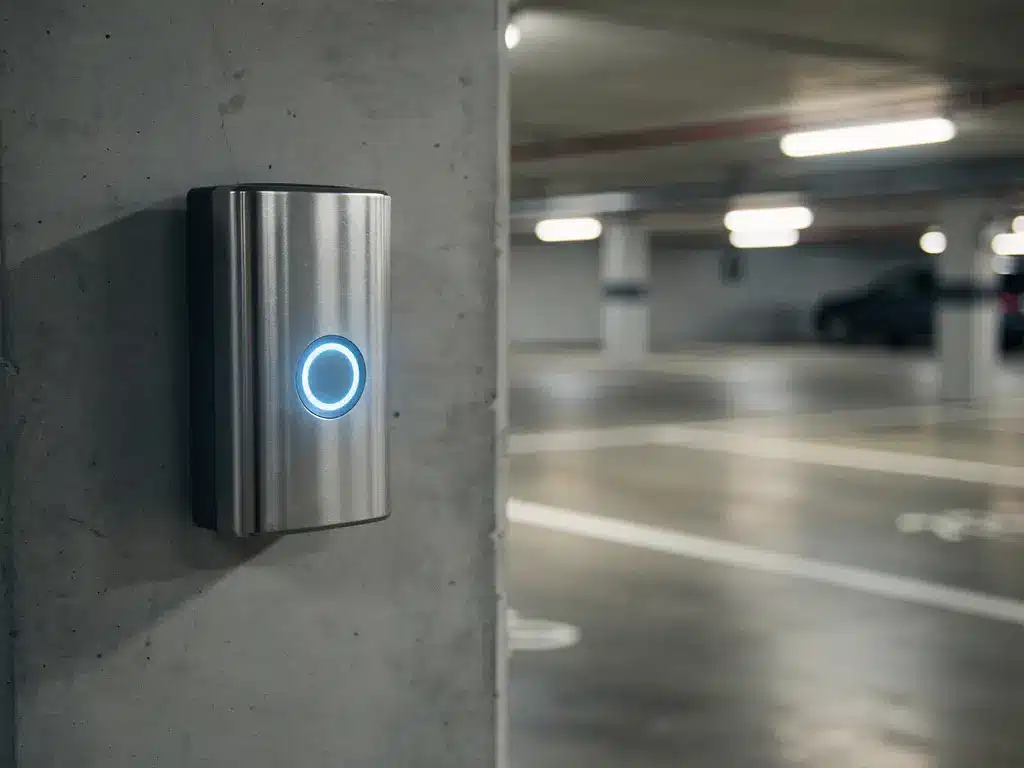
Parking management is becoming increasingly challenging for businesses as workplaces become more flexible and parking spaces remain scarce. Smart sensors in the office environment offer an innovative solution that not only optimizes parking spaces but also contributes to a more efficient workplace. This technology transforms traditional parking policies into an automated system that provides real-time insights into availability and usage.
From magnetic sensors to camera-based systems: modern parking technology makes it possible to monitor and manage every parking space via a central dashboard. This development fits seamlessly into the broader trend of smart office solutions, which make workplaces smarter and more user-friendly.
What are parking sensors, and how do they work?
Parking sensors are electronic devices that automatically detect whether a parking space is occupied or vacant, transmitting this information in real time to a central management system. These sensors use various technologies, such as magnetic fields, ultrasonic waves, or cameras, to detect vehicles.
The most common types are magnetic sensors installed in the road surface that detect changes in the magnetic field when a car arrives or departs. Ultrasonic sensors measure distance by emitting sound waves, while camera-based systems use image recognition to read license plates and identify vehicles.
The system operates via a network in which each sensor communicates wirelessly with a central hub. This hub processes all the data and sends updates to a management platform that can be accessed via smartphone apps or web interfaces. This allows users to see which spots are available in real time, make reservations, and even pay parking fees automatically.
What benefits do smart parking sensors offer businesses?
Smart parking sensors increase parking efficiency by 30–40% by eliminating wait times and enabling optimal use of available space. This directly leads to higher employee satisfaction and less stress when looking for a parking spot.
The key benefits for businesses include:
- Cost savings: Reduced need for additional parking space through optimal use of existing spaces
- Employee satisfaction: A guaranteed parking spot reduces frustration and ensures employees arrive on time
- Data insights: Detailed reports on parking patterns help with future space planning
- Flexibility: Support for hybrid work through dynamic parking space allocation
- Security: Recorded access and monitoring of who parks and when
For organizations investing in modern workplace solutions, parking sensors offer a valuable addition to existing smart office technology. The system integrates seamlessly with other workplace management tools and contributes to a holistic approach to workplace optimization.
How much does it cost to implement a smart parking system?
The cost of a smart parking system ranges from €150 to €400 per parking space, depending on the type of sensor, the complexity of the installation, and the desired features. This investment typically pays for itself within 12 to 24 months through efficiency gains.
The total cost consists of several components:
- Hardware: €100–250 per sensor, including communication equipment
- Installation: €50–150 per parking space, depending on the surface and accessibility
- Software: €2–8 per parking space per month for the cloud platform and apps
- Maintenance: €10–25 per sensor per year for battery replacement and technical support
Larger installations benefit from economies of scale, with costs per parking space potentially dropping to €100–200 for projects with more than 100 parking spaces. In addition, many suppliers offer leasing options that spread the initial investment over several years, keeping monthly costs predictable.
How do you choose the right parking sensors for your situation?
The choice of parking sensors depends on factors such as the parking area, budget, desired accuracy, and integration capabilities with existing systems. Magnetic sensors are ideal for outdoor parking lots, while camera systems are better suited for indoor parking garages.
Key considerations for selection:
Type of parking location
Outdoor parking spaces require weather-resistant sensors with long battery life. Magnetic sensors perform exceptionally well in these settings because they are installed underground and protected against vandalism. For covered parking garages, camera-based systems offer advantages due to their accuracy and the ability to recognize license plates.
Integration requirements
Check whether the system can integrate with existing access control, HR systems, or workplace management platforms. API integrations make it possible to combine parking data with other workplace data to provide a comprehensive overview of space utilization.
Scalability
Choose a system that can scale with future expansions. Wireless sensors offer more flexibility than wired systems, especially when making changes to the parking layout later on.
What challenges do you encounter when implementing smart parking?
The biggest challenges in implementing smart parking are technical integration with existing systems, user adoption, and ensuring reliable connectivity in all weather conditions. However, these obstacles can be overcome with proper planning and careful selection of suppliers.
Common implementation challenges:
Technical complexity
Integration with existing IT infrastructure can be complex, especially in older buildings. Network coverage must be guaranteed for all parking locations, which sometimes requires additional Wi-Fi extenders or mobile data connections. It is essential to conduct a thorough technical audit in advance.
User acceptance
Employees need time to get used to the new system and its associated apps. Effective communication and training are crucial for successful adoption. Start with a pilot group to gather feedback and optimize the system before rolling it out on a larger scale.
Maintenance and reliability
Sensors can malfunction due to weather conditions, battery issues, or physical damage. A proactive maintenance contract and spare sensors are essential to minimize downtime. Choose suppliers who can provide local technical support.
How Wout Monseurs Helps with Smart Parking Solutions
We seamlessly integrate smart parking sensors into our Smart Office technology as part of a comprehensive workplace solution. Our experience with intelligent office environments enables us to link parking management to other workplace management systems.
Our approach to implementing smart parking includes:
- Comprehensive planning: Parking solutions are tailored to your overall office design and workplace strategy
- Technical expertise: Our Smart Office specialists ensure seamless integration with existing systems
- User Support: Comprehensive training and support for employees during the transition to the new system
- Maintenance Service: Proactive maintenance and technical support provided by our in-house service team
As a family-owned business with over 60 years of experience, we understand that every organization has unique needs. That’s why we offer customized solutions that align perfectly with your business operations and future growth plans. Contact us for a no-obligation consultation about the possibilities of smart parking for your organization.
Frequently asked questions
How long does it take to get a smart parking system fully operational?
The implementation of a smart parking system takes an average of 4–8 weeks, depending on the size of the project. This includes 1–2 weeks for planning and preparation, 2–3 weeks for installing sensors and network equipment, and 1–2 weeks for system testing and user training. For complex integrations with existing IT systems, this process may take a few weeks longer.
What happens if the sensors malfunction or the battery runs out?
Modern parking sensors have a battery life of 5–10 years and automatically send notifications when the battery is running low. In the event of a malfunction, the management system receives an immediate alert, allowing technical support to respond quickly. Most suppliers offer 24/7 monitoring and have spare sensors available for rapid replacement within 24–48 hours.
Can employees reserve parking spots in advance through the app?
Yes, most smart parking systems offer reservation functionality via smartphone apps. Employees can book a parking spot up to 24 hours in advance, which is especially convenient for hybrid workers who aren’t in the office every day. The system can also automatically assign parking spots based on arrival time and preferences.
How accurate are parking sensors, and what is the likelihood of false alerts?
Modern parking sensors have an accuracy of 95–99%, with magnetic sensors being the most reliable. False alerts mainly occur during extreme weather conditions or due to interference from metal objects. Camera-based systems can sometimes have issues with shadows, but machine learning algorithms are continuously improving their accuracy.
Is it possible to integrate the parking system with the existing access control system?
Yes, smart parking systems can be seamlessly integrated with access control, HR systems, and other workplace management tools via API integrations. This enables automatic parking space allocation based on employee data and office scheduling. The integration also enhances security by linking access to the building and the parking lot.
What privacy considerations should I keep in mind when using camera-based parking systems?
Camera-based systems must comply with GDPR regulations and require clear privacy policies and user consent. Modern systems use edge computing to process license plates locally without storing images. Inform employees transparently about data collection and provide opt-out options where possible.
Can the system also be used for visitor parking and events?
Absolutely, smart parking systems are ideal for dynamic visitor management and events. The system can generate temporary access codes, record visitor information, and automatically calculate parking fees. For events, capacity can be adjusted and special parking zones can be configured via the central dashboard.