

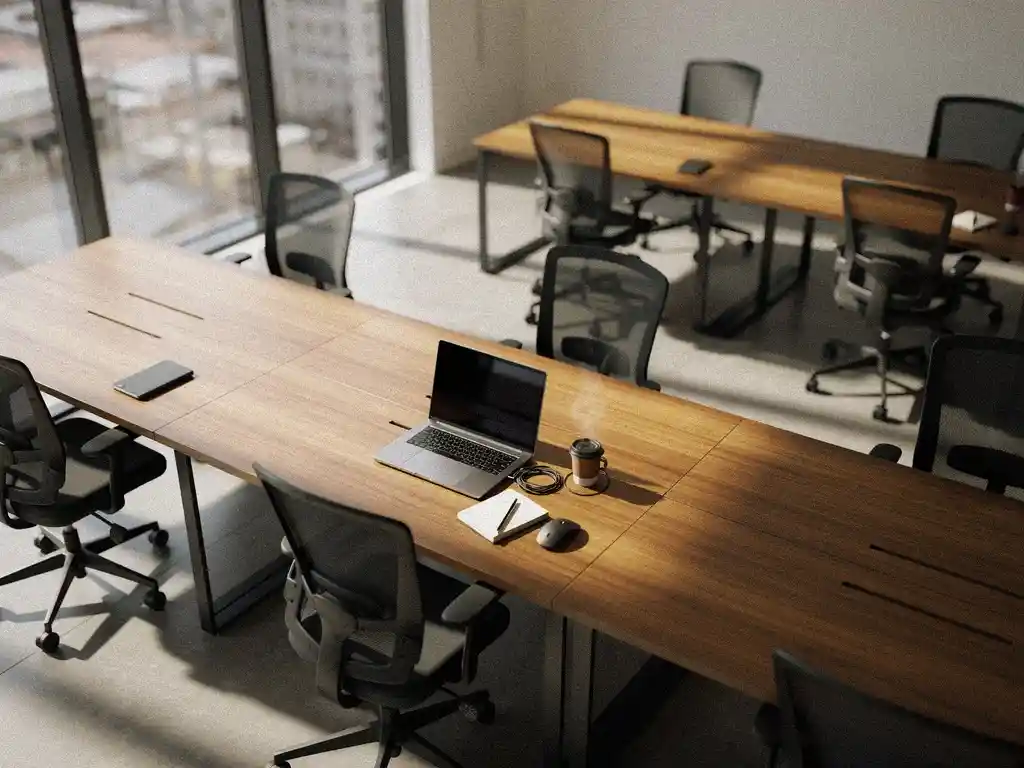
In today’s world of hybrid work and flexible offices, optimizing workspace utilization is becoming increasingly important for organizations that want to make efficient use of their office space. By collecting data on how workspaces are actually used, companies can make better decisions about their office layout and space management.
With the right data and analytical methods, you can not only reduce costs by minimizing unused workspaces, but also increase employee satisfaction by providing exactly the facilities they actually use. Intelligent office automation plays a crucial role in collecting and analyzing this valuable information.
What is workplace occupancy optimization, and why is it important?
Workplace occupancy optimization is the process of using data to analyze how workspaces are utilized and then making adjustments to maximize efficiency and satisfaction. It involves finding the right balance between available space and actual usage.
The benefits of workspace optimization are wide-ranging. First, you can achieve significant savings on real estate costs by identifying unused workspaces and adjusting your office space accordingly. In addition, it boosts employee satisfaction, as you can use work patterns to provide exactly what employees need.
In the era of hybrid work, this optimization has become even more relevant. Many organizations are finding that their traditional office layouts no longer align with new work habits, where employees alternate between working from home and in the office. By analyzing occupancy data, you can create flexible zones that adapt to changing needs.
What data do you need to optimize workspace occupancy?
To effectively optimize workplace occupancy, you need various types of data: occupancy rates per workstation, usage duration, peak times, employee preferences, and spatial patterns. Together, this data provides a comprehensive picture of how your office is used.
Occupancy rates indicate the percentage of time each workstation is actually in use. This helps you identify which stations are popular and which ones are frequently empty. Duration of use shows how long employees stay at a particular station on average, providing insight into work patterns.
Peak times and off-peak hours are crucial for planning flexible workspaces. By knowing when demand for workspaces is highest, you can better anticipate busy periods and ensure there are enough available spaces during those times.
Employee preferences, gathered through surveys or feedback, provide context for the hard data. Perhaps a workspace is underutilized because it is poorly lit or too noisy. This qualitative data helps you implement the right improvements.
How can you effectively measure workplace occupancy in your office?
The most effective way to measure workspace occupancy is through a combination of sensor technology, reservation systems, and manual observation. Modern sensors can automatically detect whether a workspace is occupied, while reservation systems provide insight into scheduled occupancy.
Occupancy sensors are the most accurate method for continuous monitoring. These small devices detect movement, heat, or even CO2 levels to determine whether a workstation is in use. They collect data 24/7 without infringing on employees’ privacy.
A desk booking tool provides valuable insights into planned occupancy versus actual usage. This allows you to see how many employees reserve a desk but ultimately do not use it—a phenomenon known as no-show behavior.
Manual counts remain valuable for validating automated systems and identifying behavioral patterns that sensors might miss. A combination of these methods provides the most reliable picture of your workplace occupancy.
What are the best tools for workplace occupancy analysis?
The best tools for workplace occupancy analysis combine real-time sensors, intelligent reservation systems, and comprehensive analytics dashboards. These integrated solutions provide both real-time insights and historical trends to support strategic decision-making.
Smart Office technology forms the foundation of modern occupancy analytics. These systems use IoT sensors that integrate seamlessly with your existing office infrastructure. They can distinguish between actual occupancy and temporary absences, resulting in more accurate data.
Analytics dashboards visualize the collected data in easy-to-understand charts and heat maps. This allows you to quickly spot patterns and identify trends. The best systems also offer predictive analytics to help plan for future office needs.
Mobile apps for employees allow them to reserve workspaces and view real-time availability. These tools also collect valuable user data and can facilitate feedback on workspace quality and preferences.
How do you interpret workplace occupancy data to achieve optimal results?
You can interpret workplace occupancy data by identifying patterns, analyzing peaks and troughs, and linking the data to business objectives. Focus on trends over longer periods rather than daily fluctuations to gain strategic insights.
Start by identifying structural patterns in your data. Which days of the week are the busiest? Are there seasonal variations? These patterns will help you make predictions and plan capacity more effectively. Also pay attention to differences between departments or teams, as these may indicate specific needs.
Analyze the ratio of reserved workstations to those actually used. A high no-show rate may indicate issues with the reservation system or unattractive workstations. Conversely, popular spots that fill up quickly may indicate features that employees value.
Link occupancy data to productivity and satisfaction metrics. High occupancy does not automatically mean optimal utilization. In some cases, lower occupancy can actually lead to higher productivity, because employees have more space and peace of mind to concentrate.
What adjustments can you make based on occupancy data?
Based on occupancy data, you can make various adjustments: reorganizing workstations, implementing flexible zones, adapting facilities, and optimizing support spaces, such as meeting rooms and break areas.
Redesigning the space is often the most impactful change. If certain areas are consistently underutilized, you can repurpose them for more popular uses. For example, a traditional open-plan office can be partially converted into additional meeting rooms if there is high demand for collaboration spaces.
Implementing flexible workspaces with modular furniture allows you to respond quickly to changing needs. Areas can be expanded during busy periods and scaled back or repurposed during quieter times.
Facility upgrades, such as improved lighting, acoustic solutions, or ergonomic furniture, can make underutilized areas more appealing. Data can reveal which workspaces are being avoided and why, allowing you to implement targeted improvements.
How Wout Monseurs Helps with Workplace Occupancy Optimization
We help organizations optimize their workplace utilization through a comprehensive approach that combines intelligent office automation with practical design solutions. Our experience as a project designer enables us to address both the technical and physical aspects of workplace optimization.
Our Smart Office solutions include:
- Implementation of desk booking tools for easy workspace reservation
- Installation of occupancy sensors for real-time monitoring
- Analytics dashboards for insights into usage patterns
- Automatic desk adjustment based on personal preferences
- Integration with existing office infrastructure
In addition, based on the data we collect, we can customize your office layout with flexible furniture, acoustic solutions, and ergonomic workstations that meet the actual needs of your employees. Thanks to our comprehensive approach, you don’t have to work with multiple suppliers—you get everything from a single source.
Would you like to know how we can optimize your workplace occupancy? Contact us for a no-obligation consultation about the options available to your organization.
Frequently asked questions
How long does it take to obtain reliable data for workplace optimization?
To identify reliable patterns, you need at least 4–6 weeks of data, but 3–6 months is ideal for making strategic decisions. This gives you insight into both daily fluctuations and seasonal trends. However, start conducting initial analyses after just 2 weeks to resolve immediate issues.
What if employees are resistant to having their workplace usage monitored?
Transparency and communication are crucial. Explain that the goal is to improve their work experience, not to monitor them. Use anonymous sensors that do not track individuals, and involve employees in interpreting the results. Demonstrate concrete improvements resulting from the data.
How much can I realistically save on office costs through workplace optimization?
Organizations save an average of 15–30% on real estate costs through workplace optimization. With hybrid work, this can rise to 40–50%. The exact savings depend on your current occupancy rate and the flexibility of your lease. ROI is typically achieved within 12–18 months.
What common mistakes should I avoid when implementing occupancy monitoring?
Avoid drawing conclusions too quickly based on short data periods, don’t ignore qualitative feedback from employees, and focus not only on occupancy rates but also on productivity and satisfaction. Also ensure that sensors are properly calibrated and that the data is validated regularly.
How do you comply with privacy laws when monitoring workplace occupancy?
Use anonymous sensors that only detect occupancy, not individual identification. Establish a clear privacy policy and inform employees about what data is being collected and why. Ensure GDPR compliance through data minimization and explicit consent where necessary.
Can I also implement workplace optimization in a small office with fewer than 50 workstations?
Absolutely, but the approach is different. Focus on simple solutions, such as manual counts combined with a basic reservation system. Small offices often see results faster because changes are easier to implement. The investment costs are also relatively lower.
How do you measure the success of your workplace optimization after implementation?
Track both hard and soft KPIs: occupancy rates, cost savings per square meter, no-show rates, and employee satisfaction scores. Conduct regular surveys on the workplace experience and monitor productivity metrics. Compare these figures with your baseline measurements from before the optimization.