

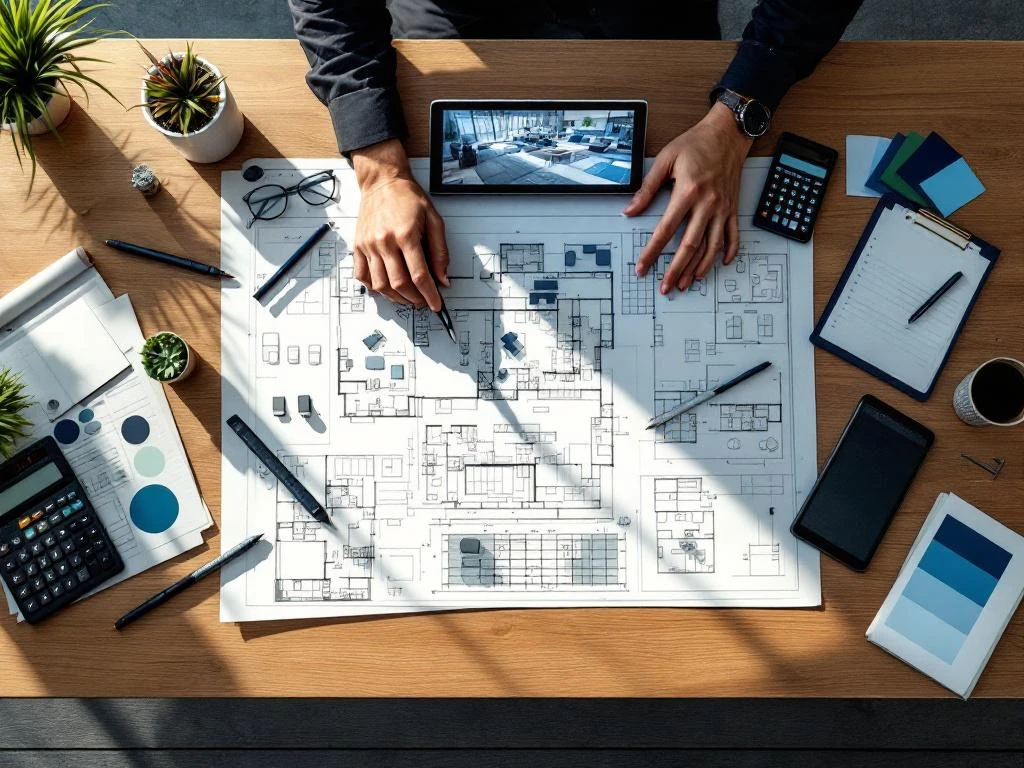
You can plan a successful project design by working systematically: start with a thorough needs analysis, determine your budget and timeline, choose the right project designer, and work together on a detailed plan for design, delivery, and installation. The key lies in good preparation and clear communication with all parties involved.
What exactly does project design entail?
Project design is the complete process of designing larger office spaces according to a structured, project-based approach. Unlike regular office design, where you buy individual pieces of furniture, project design encompasses the entire process from analysis to delivery of a fully functional office.
When setting up a project, you work with a dedicated project manager who coordinates the entire process. You receive a customized design that takes into account your corporate culture, work processes, and future plans. This includes ergonomic workstations, efficient space planning, acoustic solutions, and the right lighting.
A project-based approach is important for larger office projects because it provides clarity and structure. This helps you avoid costly mistakes, ensures timely delivery, and guarantees that everything is properly coordinated. What's more, you have a single point of contact for the entire process.
What steps should you follow when planning a project layout?
Planning a project setup follows a five-step plan that starts with a needs analysis and ends with aftercare. This systematic approach ensures that your project runs smoothly and that the end result meets your expectations.
The first step is to analyze your needs. This involves determining how many workstations you need, which functions are important, and what your budget is. Also consider future growth and changes in your organization.
Next comes the design process. A good project designer will create 2D and 3D drawings so you can see exactly what your office will look like. You can suggest changes before anything is ordered.
The planning phase determines when things will happen. Your project manager will draw up a schedule for delivery, installation, and completion. They will also coordinate when old furniture will be removed.
During implementation, your project designer will arrange delivery and professional installation. Good suppliers work outside office hours so as not to disrupt your business operations.
Finally, aftercare follows, with a warranty on delivered products and service for any adjustments or repairs.
How much time should you allow for a complete project design?
For a complete project design, you should allow 6 to 12 weeks, depending on the scope of your project. Small offices (up to 20 workstations) are often ready within 6 to 8 weeks, while large projects can take 10 to 12 weeks.
The needs analysis and design usually take two to three weeks. This may seem like a long time, but good preparation prevents problems later on. You can use this time to build internal support for the plans.
The ordering and production of furniture takes an average of 3 to 6 weeks. This depends on the availability of products and any customization. Standard office furniture can be delivered faster than special designs.
To ensure a smooth turnaround time, it is important that you provide quick feedback on designs and quotes. Also make your team available for consultation in a timely manner. Delays often arise due to late decisions or unclear communication.
Don't plan your move too tightly. Take potential delays into account and plan for an extra week rather than running out of time.
What should you look for when choosing a project designer?
When choosing a project designer, experience, personal guidance, and a comprehensive approach are the most important criteria. A good project designer has proven experience with similar projects and can provide references from satisfied customers.
Make sure you are assigned a dedicated project manager who will personally guide you. This ensures clear communication and prevents misunderstandings. Also ask about this person's availability during your project.
A comprehensive approach is valuable because you get everything from a single source: design, delivery, installation, and aftercare. This prevents problems with different suppliers pointing fingers at each other.
During the quotation process, you should pay attention to the details of the quotation. Good project designers specify exactly what will be delivered, when, and at what price. Be wary of quotations that are too general.
Ask potential suppliers these questions: How long have you been involved in project design? Can I get references? Who will be my permanent point of contact? What is included in the price? What warranty do I get? How is the schedule monitored?
How Wout Monseurs assists with project design
We guide you personally through the entire project design process, with over 60 years of experience in office design. You will be assigned a dedicated project manager who will support you from start to finish and ensure that everything goes according to plan.
Our process begins with a comprehensive needs analysis, during which we listen to your wishes and challenges. We create a design that perfectly matches your corporate culture and working methods, with a special focus on ergonomics and sustainability.
We work with high-quality brands such as Wini, Voortman, and Interstuhl, ensuring that your office is not only attractive but also functional and sustainable. Our local involvement means that we can respond quickly and maintain personal contact.
Would you like to know how we can transform your office into an inspiring workplace? Contact us for a no-obligation consultation. See also our project design page for more information about our approach and options.
Frequently asked questions
What are the most common mistakes in project design and how can you avoid them?
The biggest mistakes are underestimating the timeline, insufficient employee involvement in the design process, and not setting aside a budget for unforeseen costs. Avoid this by planning for an extra 10-15% budget and time, involving employees in decisions at an early stage, and making clear agreements about delivery dates.
How do you effectively involve employees in the project design process?
Organize workshops or surveys to identify work requirements, form a project team with representatives from different departments, and communicate regularly about progress. Let employees try out ergonomic chairs and give them a say in color choices and materials to create support.
What other costs are involved in project design besides the cost of furniture?
In addition to furniture costs, you should also factor in design and project management costs (5-10% of the total budget), delivery costs, assembly costs, and any structural modifications such as new wall openings or electrical work. Removing old furniture and moving costs may also incur additional costs.
Can a project design be implemented in phases, and what are the advantages?
Yes, phased implementation is possible and often practical for large projects. You can work on a floor-by-floor or department-by-department basis, minimizing disruption to business operations. This also spreads the investment over time and allows you to learn from previous phases before moving forward.
How do you deal with existing furniture that is still in good condition during a project design?
Make an inventory of which furniture is still functional and ergonomically sound. Good project designers can integrate existing furniture into the new design or advise on relocation. You can sell leftover furniture, donate it to charity, or use it for other spaces such as meeting rooms.
What happens if the office needs to remain in use during the project?
Professional project designers schedule work outside office hours or on weekends to minimize disruption. They draw up a detailed plan for phased implementation, provide temporary workspaces if necessary, and communicate clearly in advance about which areas will be inaccessible and when.
How do you prepare for your first meeting with a project designer?
Maak een lijst van je huidige knelpunten, verzamel informatie over aantal werkplekken en functies, stel een realistisch budget vast en verzamel inspiratiefoto’s van gewenste stijlen. Zorg ook voor plattegronden van je kantoor en denk na over toekomstplannen zoals groei of veranderingen in werkwijze.