

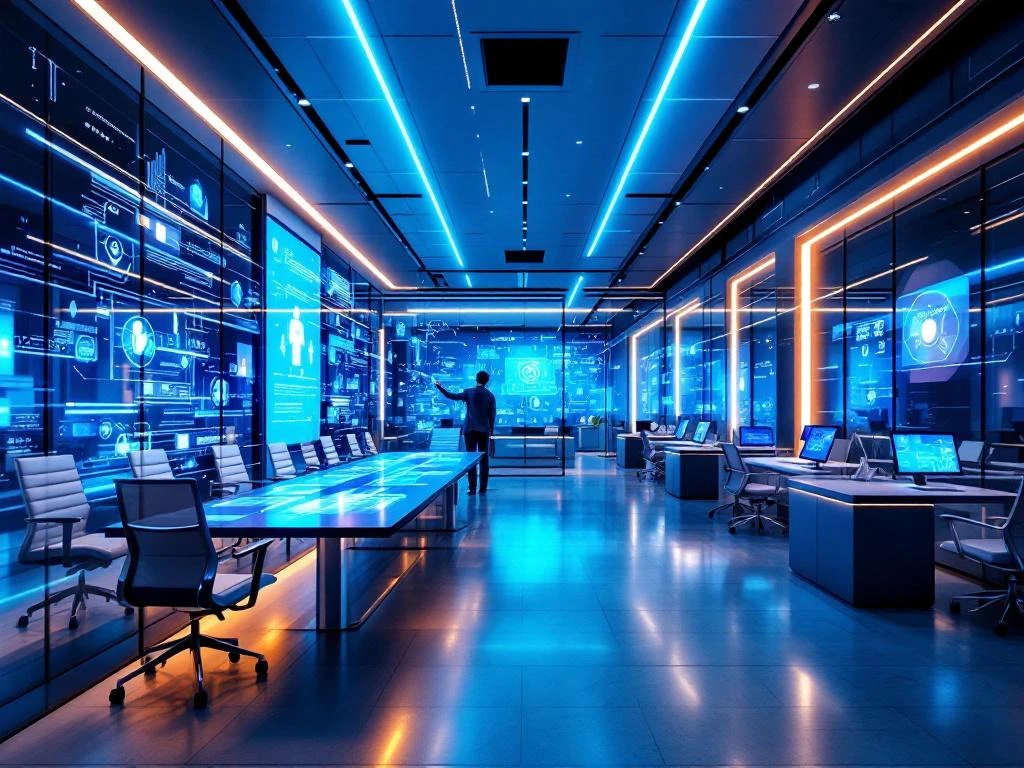
Een smart office rechtvaardigt de investering door directe kostenbesparingen, verhoogde productiviteit en verbeterde werknemerstevredenheid. De terugverdientijd ligt meestal tussen de 2 en 4 jaar, afhankelijk van de bedrijfsgrootte en de gekozen technologieën. Smart offices besparen geld op energiekosten, facilitair beheer en operationele uitgaven, terwijl ze tegelijkertijd de efficiëntie van werknemers verhogen.
Wat zijn de directe kostenbesparingen van een smart office?
Smart offices leveren meetbare besparingen op energiekosten (15-25%), facilitair beheer (20-30%) en operationele uitgaven door automatisering van verlichting, klimaatbeheersing en ruimteoptimalisatie. Deze technologieën passen zich automatisch aan op basis van aanwezigheid en gebruik.
De grootste kostenbesparingen komen van slimme energiesystemen. Automatische verlichting en klimaatbeheersing zorgen ervoor dat je alleen energie gebruikt wanneer ruimtes daadwerkelijk bezet zijn. Dit betekent dat vergaderzalen, werkplekken en gemeenschappelijke ruimtes niet onnodig verlicht of verwarmd worden.
Ruimteoptimalisatie speelt ook een belangrijke rol in de kostenbesparingen. Door sensoren en data-analyse krijg je inzicht in hoe ruimtes gebruikt worden. Dit helpt je om:
- onderbenutte ruimtes te identificeren en te herbestemmen
- schoonmaakschema’s aan te passen op basis van werkelijk gebruik
- onderhoud te plannen wanneer het echt nodig is
- minder kantoorruimte te huren door efficiënter gebruik
Hoe verhoogt een smart office de productiviteit van werknemers?
Smartofficetechnologie verhoogt de productiviteit door betere samenwerking, minder tijdverspilling aan praktische zaken en een verbeterde werkplekervaring. Werknemers besteden minder tijd aan het zoeken naar beschikbare ruimtes of het regelen van technische zaken.
De praktische voordelen zijn direct merkbaar. Werknemers kunnen eenvoudig beschikbare werkplekken en vergaderzalen vinden via een app. Ze hoeven niet meer door het kantoor te lopen om een vrije plek te zoeken. Presentatieapparatuur en videoconferentiesystemen werken automatisch, zonder dat iemand tijd kwijt is aan het opstarten van systemen.
Samenwerking wordt ook verbeterd door geïntegreerde communicatiesystemen. Teams kunnen makkelijker contact maken met collega’s, zien waar mensen werken en vergaderruimtes boeken die perfect passen bij hun behoeften. Dit zorgt voor:
- snellere besluitvorming door betere communicatie
- minder onderbrekingen door een slimmere werkplekindeling
- betere focus door optimale klimaat- en lichtomstandigheden
- efficiëntere vergaderingen door goed werkende technologie
Welke verborgen voordelen biedt smartofficetechnologie?
Smart offices bieden verborgen voordelen zoals waardevolle data-inzichten over werkplekgebruik, hogere werknemerstevredenheid, een grotere aantrekkingskracht op talent en toekomstbestendigheid van het kantoor. Deze voordelen zijn vaak moeilijker te meten, maar zeer waardevol.
Data-inzichten geven je een compleet beeld van hoe je kantoor functioneert. Je ziet welke ruimtes populair zijn, wanneer piekuren plaatsvinden en hoe werknemers door het kantoor bewegen. Deze informatie helpt bij toekomstige beslissingen over kantoorinrichting, werkplekbeleid en investeringen.
Werknemerstevredenheid stijgt omdat mensen meer controle hebben over hun werkomgeving. Ze kunnen de temperatuur aanpassen, de verlichting regelen en makkelijk samenwerken met collega’s. Dit leidt tot minder ziekteverzuim en een hogere betrokkenheid.
Voor het aantrekken van talent is een modern, technologisch geavanceerd kantoor een belangrijk voordeel. Vooral jongere werknemers verwachten een digitale werkomgeving die aansluit bij hun gewoontes. Een smart office laat zien dat je bedrijf investeert in moderne werkplekken en employee experience.
Hoe bereken je de terugverdientijd van een smartoffice-investering?
De terugverdientijd berekenen doe je door alle investeringskosten af te zetten tegen de jaarlijkse besparingen en productiviteitswinst. Reken op een terugverdientijd van 2 tot 4 jaar voor de meeste smartoffice-investeringen, afhankelijk van de bedrijfsgrootte en de gekozen technologieën.
Begin met het inventariseren van alle kosten. Denk aan de aanschaf van sensoren, software, installatie en eventuele aanpassingen aan het kantoor. Vergeet niet de kosten voor training van werknemers en onderhoud mee te nemen in je berekening.
Voor de baten reken je met:
- energiebesparingen (meestal 15-25% van de huidige energiekosten)
- lagere facilitaire kosten door efficiënter onderhoud en schoonmaak
- productiviteitswinst (moeilijker te meten, maar reken met 5-10%)
- mogelijke ruimtebesparing door betere benutting
- lagere recruitmentkosten door een betere employee experience
Kleine bedrijven (10-50 werknemers) zien vaak een terugverdientijd van 3 tot 4 jaar, omdat de investeringen per werknemer relatief hoger zijn. Middelgrote bedrijven (50-200 werknemers) kunnen rekenen op 2 tot 3 jaar, terwijl grote organisaties hun investering vaak binnen 2 jaar terugverdienen door schaalvoordelen.
Hoe Wout Monseurs helpt met smartoffice-implementatie
Wij begeleiden je van advies tot implementatie bij je overgang naar een smart office. Onze aanpak begint met een grondige analyse van je huidige situatie en wensen, gevolgd door een maatwerkontwerp dat perfect aansluit bij je bedrijf en budget.
We zorgen voor een complete implementatie waarbij alle systemen naadloos samenwerken, van de installatie van sensoren en software tot en met het trainen van je werknemers. Ons doel is dat je direct profiteert van je smartoffice-investering, zonder gedoe of technische problemen.
Na de implementatie blijven we je ondersteunen met onderhoud en optimalisatie. We monitoren de prestaties van je smart office en helpen je om de ROI te maximaliseren door systemen bij te stellen op basis van werkelijke gebruiksdata.
Wil je weten wat een smart office voor jouw bedrijf kan betekenen? Neem contact met ons op voor een vrijblijvend adviesgesprek, waarin we samen kijken naar de mogelijkheden en je businesscase.
Veelgestelde vragen
Welke smart office technologieën moet ik als eerste implementeren voor de beste ROI?
Begin met slimme verlichting en klimaatbeheersing, gevolgd door bezettingssensoren voor vergaderzalen. Deze technologieën leveren de snelste terugverdientijd op door directe energiebesparingen van 15-25%. Voeg daarna ruimteboekingssystemen toe voor verbeterde productiviteit.
Hoe lang duurt een complete smart office implementatie?
Een volledige implementatie duurt gemiddeld 3-6 maanden, afhankelijk van de kantoorgrootte en complexiteit. Kleine kantoren (tot 50 werknemers) zijn vaak binnen 6-8 weken klaar, terwijl grote organisaties 4-6 maanden nodig hebben voor een gefaseerde uitrol.
Wat als mijn werknemers weerstand hebben tegen nieuwe technologie?
Start met pilotprojecten in populaire ruimtes zoals de kantine of vergaderzalen, zodat werknemers de voordelen direct ervaren. Bied uitgebreide training aan en betrek enthousiastelingen als ambassadeurs. De meeste weerstand verdwijnt zodra mensen merken hoe de technologie hun werkdag verbetert.
Kan ik smart office technologie stap voor stap invoeren binnen mijn budget?
Ja, een gefaseerde aanpak is vaak de beste strategie. Begin met basis energiebesparingen (verlichting en klimaat), voeg vervolgens ruimtebeheer toe, en sluit af met geavanceerde analytics. Zo spreid je de investering en kunt je leren van elke fase voordat je verder uitbreidt.
Hoe meet ik of mijn smart office investering echt succesvol is?
Monitor maandelijks je energieverbruik, ruimtebenutting en werknemerstevredenheid via enquêtes. Stel KPI’s vast zoals bezettingspercentages, energiebesparing per vierkante meter en gemiddelde tijd voor het vinden van werkplekken. De meeste bedrijven zien meetbare resultaten binnen 3-6 maanden.
Wat gebeurt er met mijn data en privacy in een smart office?
Moderne smart office systemen verzamelen alleen anonieme bezettingsdata, geen persoonlijke informatie. Zorg voor GDPR-compliant leveranciers die data lokaal opslaan of versleuteld in Europa. Communiceer transparant naar werknemers over welke data wordt verzameld en waarom.
Zijn smart office systemen compatibel met mijn bestaande IT-infrastructuur?
De meeste moderne smart office oplossingen integreren via standaard API’s met bestaande systemen zoals Office 365, Slack of je HR-software. Een goede leverancier voert vooraf een compatibiliteitscheck uit en zorgt voor naadloze integratie zonder verstoring van je huidige werkprocessen.