

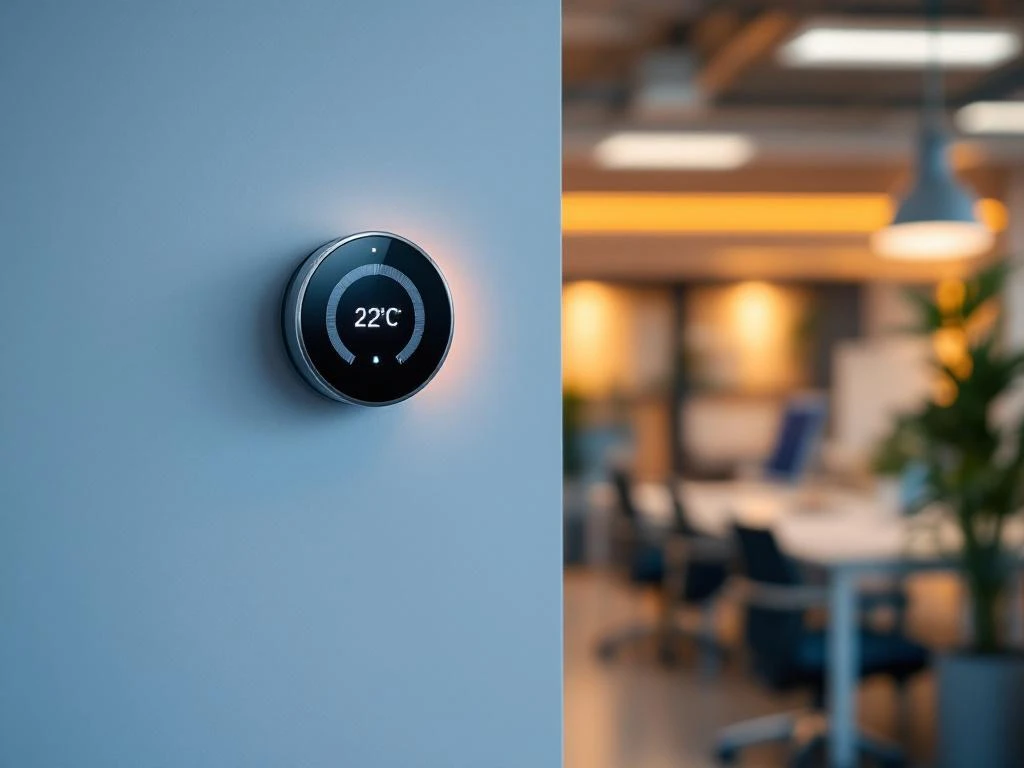
Automatic temperature control in a smart office works via smart thermostats, sensors, and HVAC systems that work together to automatically adjust the temperature without manual control. The system continuously monitors the room temperature and adjusts the heating or cooling based on preset parameters and occupancy patterns. This ensures constant comfort while saving energy and improving employee productivity.
What is automatic temperature control in a smart office?
Automatic temperature control is a smart system that independently manages the temperature in office spaces without you having to be there yourself. It uses sensors, smart thermostats, and integrated software to maintain the ideal temperature based on occupancy, time of day, and external conditions.
The system works by means of various components that communicate with each other. Temperature sensors continuously measure the room temperature and transmit this information to a central control unit. This unit analyzes the data and then sends signals to the HVAC system to adjust the heating or cooling.
Modern smart office systems can also learn from patterns. They remember when certain areas are busiest and proactively adjust the temperature before people arrive. This means that meeting rooms are already at the right temperature before a meeting starts, and that empty rooms are automatically set to energy-saving mode.
What systems do you need for automatic temperature control?
For automatic temperature control, you need four main components: smart thermostats, temperature sensors, a compatible HVAC system, and climate control software. These components work together to create a seamless temperature experience.
Smart thermostats are at the heart of the system. They receive information from sensors and control the HVAC system. Modern models have Wi-Fi connectivity and can be operated via an app. You can program them with different temperature schedules for workdays, weekends, and holidays.
Temperature sensors are the eyes of the system. They not only measure temperature, but often also humidity and movement. This allows the system to know whether rooms are occupied and adjust the temperature according to the number of people present. The sensors communicate wirelessly with the thermostat and provide real-time updates.
The climate control software connects all components and enables advanced features. It allows you to set up different zones, view energy reports, and let the system learn from usage patterns. Many software programs also integrate with other smart office systems, such as lighting and access control.
How do you set automatic temperature control for different zones?
Zone-based climate control starts with dividing your office into logical areas, such as open workspaces, meeting rooms, and individual offices. Each zone is assigned its own sensors and settings that match the use of that specific space.
For open-plan offices, you usually set a stable temperature between 20 and 22 degrees Celsius. These spaces are often occupied all day, so the system keeps the temperature constant during working hours. You can program it to warm up an hour before working hours and save energy after working hours.
Meeting rooms require a different approach. Occupancy varies greatly throughout the day. The system can be linked to your calendar system to automatically adjust the temperature for scheduled meetings. Half an hour before a meeting, the system ensures that the room is at the right temperature.
Individual workstations and offices offer the possibility for personal control. Employees can use an app to set their own temperature preferences within certain limits. The system balances these individual preferences with energy efficiency and general comfort.
What are the benefits of automatic temperature control at work?
Automatic temperature control offers three main advantages: significant energy savings, increased employee productivity, and consistent comfort throughout the working day. These advantages translate directly into lower operating costs and a better working atmosphere.
Energy savings are achieved because the system only heats or cools when necessary. Empty rooms are automatically set to an energy-saving temperature. Studies show that smart temperature control can deliver energy cost savings of up to 15%. The system also prevents waste due to excessive heating or cooling.
Productivity improves because employees do not have to worry about the temperature. Research shows that people perform best at temperatures between 20 and 22 degrees Celsius. Too hot or too cold leads to reduced concentration in both cases. Automatic control keeps the temperature in this optimal zone.
Consistent comfort means that all rooms are always at the right temperature. No more cold meeting rooms or overheated workplaces. The system anticipates changes and adapts proactively. This leads to fewer complaints about the temperature and a generally happier team.
How Wout Monseurs assists with smart office temperature control
We offer complete smart office solutions that seamlessly integrate automatic temperature control with your office design. Our team designs a system that perfectly suits your workspace and ensures optimal comfort while saving energy.
Our approach begins with a thorough analysis of your office space and usage patterns. We look at the different zones you have, how many people work there, and how the spaces are used. Based on this, we design a climate control system that automatically maintains the right temperature in each zone.
We take care of the entire implementation process, from installing sensors and thermostats to programming the software. Our team trains your employees in how to use the system and provides ongoing support. This ensures you have a smart office that is always at the perfect temperature.
Would you like to know how automatic temperature control can improve your office? Contact us for a no-obligation consultation about the possibilities.
Frequently asked questions
How much does it cost to install automatic temperature control in an existing office?
The costs vary between €2,000 and €8,000 depending on the size of your office and the complexity of your HVAC system. For an average office of 200m², you can expect to pay around €4,000-€5,000 including installation. This investment usually pays for itself within 2-3 years through energy savings.
Can I add automatic temperature control to my existing heating and cooling system?
Yes, in most cases this is possible by adding smart thermostats and sensors to your current HVAC system. Older systems sometimes require an upgrade of the control unit, but complete replacement is rarely necessary. A technical analysis can determine what adjustments are needed.
How long will it take for the system to learn our office patterns?
Modern systems start recognizing patterns after just 1-2 weeks, but optimal performance is usually achieved after 4-6 weeks. The system needs this time to learn occupancy patterns, peak hours, and seasonal changes. You can speed up the learning process by providing manual feedback via the app.
What happens if the system fails or the internet connection is lost?
Smart thermostats have an offline mode in which they fall back on the last set programs and basic temperature control. Your HVAC system will continue to function normally, only the advanced features such as remote control and learning will be temporarily unavailable. Most systems will automatically recover once the connection is restored.
Can employees override the automatic settings if they find it too hot or cold?
Yes, you can set up the system so that employees can make temporary adjustments within certain limits (e.g., ±2 degrees). These manual changes are usually temporary, and the system returns to automatic mode after a set time. This prevents energy waste due to forgotten adjustments.
How do I integrate temperature control with other smart office systems such as lighting and access control?
Most modern climate control systems can be integrated with other office automation systems via APIs or platforms such as Building Management Systems (BMS). For example, the system can adjust the temperature based on access data or be linked to meeting room booking systems. An integrated approach maximizes both comfort and energy savings.