

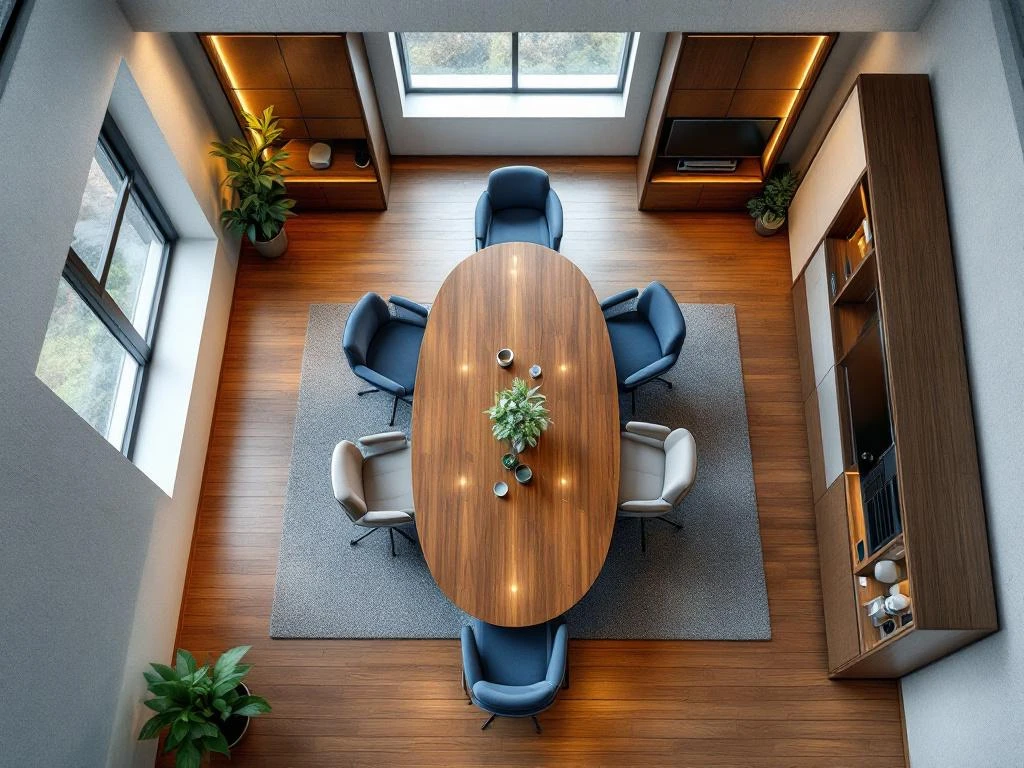
Een kleine vergaderruimte inrichten vraagt om slimme keuzes in meubilair, technologie en indeling. Focus op multifunctionele meubels, ergonomische stoelen en compacte technische oplossingen die ruimte besparen. De juiste tafelgrootte, goede verlichting en akoestiek zorgen voor productieve meetings in een beperkte ruimte.
Wat zijn de belangrijkste elementen bij het inrichten van een kleine vergaderruimte?
De basis van een functionele kleine vergaderruimte bestaat uit vijf hoofdelementen: een passende vergadertafel, comfortabele stoelen, betrouwbare technologie, goede verlichting en akoestische isolatie. Deze onderdelen bepalen samen hoe effectief je team kan vergaderen en samenwerken.
Bij beperkte ruimte stel je andere prioriteiten dan in grote vergaderzalen. De vergadertafel vormt het hart van de ruimte en moet groot genoeg zijn voor het gewenste aantal personen, zonder de ruimte te domineren. Reken ongeveer 60 centimeter breedte per persoon voor comfortabel zitten.
Goede verlichting voorkomt vermoeidheid tijdens lange meetings. Combineer natuurlijk licht met instelbare ledverlichting die geen schaduwen werpt op gezichten of documenten. Akoestiek speelt ook een grote rol: harde oppervlakken laten geluid weerkaatsen, wat storend werkt in kleine ruimtes.
Technologie moet betrouwbaar en eenvoudig te bedienen zijn. Denk aan een wandgemonteerd scherm, een goede internetverbinding en voldoende stopcontacten voor laptops en telefoons. Kabelbeheer houdt de ruimte netjes en veilig.
Welke meubelkeuzes werken het beste in een compacte vergaderruimte?
Ronde tafels werken vaak beter in kleine vergaderruimtes dan rechthoekige varianten, omdat ze meer beenruimte bieden en natuurlijke gesprekken stimuleren. Voor 4-6 personen kies je een ronde tafel met een diameter van 120-140 centimeter. Rechthoekige tafels van 160×80 centimeter passen ook goed bij deze groepsgrootte.
Stapelbare stoelen bieden flexibiliteit wanneer je de ruimte voor andere doeleinden wilt gebruiken. Kies stoelen met armleuningen voor langere vergaderingen, maar controleer of ze volledig onder de tafel passen om loopruimte te behouden.
Multifunctionele meubels maximaliseren je ruimtegebruik, zoals een vergadertafel met ingebouwde opbergvakken, wandkasten die ook als whiteboard fungeren of een bijzettafel op wielen die dienstdoet als presentatiestandaard.
Let op de verhoudingen tussen tafel en ruimte. De tafel mag maximaal 60% van de vloeroppervlakte innemen. Dit zorgt ervoor dat mensen comfortabel kunnen bewegen en stoelen kunnen verschuiven zonder tegen muren of andere meubels te stoten.
Hoe zorg je voor goede ergonomie in een kleine vergaderruimte?
Ergonomie in compacte vergaderruimtes draait om de juiste zithoogte, voldoende beenruimte en goede zichtlijnen naar presentatiemateriaal. Kies stoelen met verstelbare hoogte en rugsteun, ook al is de ruimte beperkt. Comfort verhoogt de focus en productiviteit van je team aanzienlijk.
De ideale tafelhoogte ligt tussen 72 en 76 centimeter, passend bij de meeste bureaustoelen. Zorg voor minimaal 60 centimeter beenruimte onder de tafel en 80 centimeter bewegingsruimte achter elke stoel. Dit lijkt veel, maar voorkomt een benauwd gevoel.
Positioneer het presentatiescherm zo dat niemand zijn nek hoeft te verdraaien. De bovenkant van het scherm moet op ooghoogte of iets lager hangen voor zittende personen. Een afstand van 2-3 meter tussen scherm en de verste zitplaats zorgt voor goede leesbaarheid.
Temperatuur en ventilatie worden vaak vergeten, maar zijn belangrijk voor comfort. Kleine ruimtes warmen sneller op, vooral met meerdere personen en elektronische apparatuur. Zorg voor adequate ventilatie of airconditioning om de ruimte prettig te houden.
Welke technische voorzieningen heb je nodig in een kleine vergaderruimte?
Een kleine vergaderruimte heeft minimaal een beeldscherm voor presentaties, een stabiele internetverbinding, voldoende stopcontacten en een eenvoudig geluidssysteem nodig. Kies voor wandgemonteerde oplossingen die geen vloerruimte innemen en de tafel vrijhouden van kabels en apparatuur.
Een 43-55 inch beeldscherm past goed in kleine ruimtes en biedt voldoende zichtbaarheid voor 4-8 personen. Monteer het scherm aan de muur op ooghoogte en zorg voor draadloze verbindingsmogelijkheden, zodat iedereen makkelijk kan presenteren vanaf laptop of tablet.
Plaats stopcontacten strategisch rond de tafel, bij voorkeur ingebouwd in de tafel zelf of via vloergoten. Reken op minimaal één stopcontact per twee personen. USB-laders in de stopcontacten zijn handig voor telefoons en tablets.
Voor geluid volstaat vaak een eenvoudige soundbar onder het beeldscherm. Dit verbetert de verstaanbaarheid bij videopresentaties en videovergaderingen. Zorg wel voor goede akoestische isolatie naar andere ruimtes: kleine vergaderruimtes kunnen verrassend veel geluid produceren.
Hoe optimaliseer je de indeling van een kleine vergaderruimte?
Optimale indeling begint met het centraal positioneren van de vergadertafel, met het presentatiescherm aan de korte kant van de ruimte. Houd looproutes vrij langs minimaal twee zijden van de tafel en gebruik wandruimte maximaal voor opslag en technische voorzieningen.
Plaats de tafel niet precies in het midden, maar iets naar de zijde tegenover de ingang. Dit creëert een natuurlijke looproute en voorkomt dat late aankomers de hele vergadering moeten passeren. Natuurlijk licht uit ramen moet van opzij komen, niet recht tegenover het presentatiescherm.
Wandruimte gebruik je slim voor whiteboards, opbergkasten en technische aansluitingen. Hoge kasten tot aan het plafond maximaliseren de opslag zonder vloerruimte in te nemen. Een smalle plank langs één wand biedt plek voor persoonlijke spullen tijdens vergaderingen.
Flexibiliteit creëer je door waar mogelijk meubels op wielen te kiezen. Een bijzettafel op wielen kan dienen als extra werkruimte, presentatiestandaard of plek voor catering. Stapelbare stoelen kun je opbergen als de ruimte tijdelijk voor andere doeleinden wordt gebruikt.
Hoe Wout Monseurs helpt met projectinrichting
Bij Wout Monseurs begrijpen we dat elke kleine vergaderruimte unieke uitdagingen heeft. Ons team ontwikkelt maatwerkoplossingen die jouw beschikbare ruimte optimaal benutten, zonder in te leveren op comfort of functionaliteit. We zorgen voor een complete projectinrichting, van ontwerp tot oplevering.
We werken met hoogwaardige merken zoals Interstuhl en Voortman, die ergonomische meubels maken speciaal voor compacte ruimtes. Onze ervaring van meer dan 60 jaar helpt ons de juiste balans te vinden tussen praktische functionaliteit en een professionele uitstraling. Van de eerste ruimtestudie tot het 3D-ontwerp: je ziet precies hoe jouw kleine vergaderruimte eruit komt te zien.
Klaar om jouw kleine vergaderruimte te transformeren tot een productieve werkplek? Neem contact met ons op voor een vrijblijvend gesprek over de mogelijkheden. We denken graag met je mee over slimme oplossingen die perfect passen bij jouw ruimte en budget.
Veelgestelde vragen
Hoeveel kost het om een kleine vergaderruimte compleet in te richten?
De kosten variëren sterk afhankelijk van de gekozen kwaliteit en merken, maar reken op €3.000-€8.000 voor een complete inrichting van 4-6 personen. Dit omvat een goede vergadertafel, ergonomische stoelen, beeldscherm, verlichting en basis technische voorzieningen. Maatwerk en premium merken kunnen de kosten verhogen tot €12.000 of meer.
Kan ik een kleine vergaderruimte ook gebruiken voor andere doeleinden?
Absoluut! Kies voor multifunctionele meubels zoals stapelbare stoelen, tafels op wielen en modulaire opbergsystemen. Zo transformeer je de ruimte eenvoudig naar een trainingsruimte, brainstormruimte of zelfs een tijdelijke werkplek. Plan wel voldoende opbergruimte voor het tijdelijk wegzetten van vergaderspecifieke items.
Welke veelgemaakte fouten moet ik vermijden bij het inrichten?
De grootste fout is een te grote tafel kiezen die de ruimte domineert. Andere veel voorkomende fouten zijn: te weinig stopcontacten, slechte akoestiek door harde oppervlakken, verkeerde schermhoogte en onvoldoende ventilatie. Ook het vergeten van opbergruimte voor persoonlijke spullen en presentatiemateriaal is een veelgemaakte fout.
Hoe zorg ik voor goede akoestiek in een kleine vergaderruimte zonder veel budget?
Voeg zachte materialen toe zoals een tapijt, gordijnen of akoestische wandpanelen. Een eenvoudige oplossing is het ophangen van stoffen wandbekleding of het plaatsen van boekenkasten met boeken, die geluid absorberen. Ook planten helpen geluid te dempen en verbeteren tegelijkertijd de luchtkwaliteit.
Wat is de minimale ruimtegrootte voor een functionele vergaderruimte?
Voor 4 personen heb je minimaal 12-15 m² nodig, voor 6 personen ongeveer 18-20 m². Dit omvat ruimte voor de tafel, stoelen, loopruimtes en technische voorzieningen. Kleinere ruimtes zijn mogelijk, maar ten koste van comfort en flexibiliteit. De vorm van de ruimte is vaak belangrijker dan de exacte oppervlakte.
Hoe onderhoud ik de technische apparatuur in een kleine vergaderruimte?
Plan maandelijkse controles van alle verbindingen en software-updates. Houd kabels netjes georganiseerd en stofvrij, reinig beeldschermen wekelijks met geschikte doekjes. Maak afspraken over wie verantwoordelijk is voor het onderhoud en creëer een eenvoudige handleiding voor dagelijks gebruik, zodat iedereen de apparatuur correct kan bedienen.