

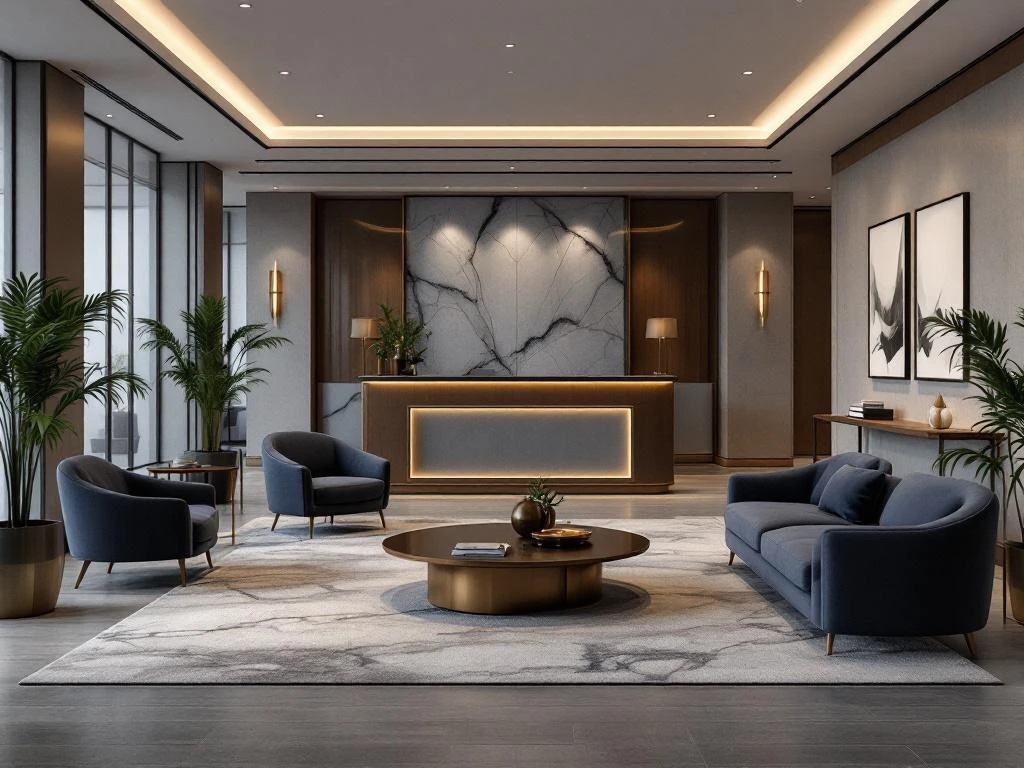
Een professionele ontvangstruimte creëer je door te focussen op hoogwaardige meubels, doordachte kleuren, goede verlichting en een functionele indeling. Deze elementen zorgen samen voor een positieve eerste indruk die jouw bedrijfsidentiteit uitstraalt. De juiste combinatie van comfortabele zitmeubels, representatieve materialen en een logische ruimtelijke opzet maakt het verschil tussen een gewone wachtruimte en een ontvangsthal die vertrouwen wekt.
Wat maakt een ontvangstruimte professioneel en representatief?
Een professionele ontvangstruimte kenmerkt zich door hoogwaardige meubels, bewuste kleurkeuzes en uitstekende verlichting. Deze drie elementen vormen de basis voor een ruimte die direct vertrouwen en professionaliteit uitstraalt bij bezoekers.
Kwaliteitsmeubels maken het grootste verschil. Denk aan stevige stoelen die comfortabel zitten, een representatieve receptiebalie en bijzettafels die praktisch én mooi zijn. Deze meubels moeten jaren meegaan en er altijd verzorgd uitzien, ook bij intensief gebruik.
De kleurkeuze bepaalt de sfeer van je ontvangstruimte. Neutrale tinten zoals grijs, beige of wit stralen professionaliteit uit en zijn tijdloos. Je kunt deze combineren met accentkleuren uit jouw huisstijl om persoonlijkheid toe te voegen zonder te opdringerig te worden.
Goede verlichting zorgt ervoor dat de ruimte uitnodigend aanvoelt. Natuurlijk licht is ideaal, maar vul dit aan met warme LED-verlichting. Vermijd felle tl-buizen die een kille sfeer creëren. De verlichting moet gelijkmatig verdeeld zijn zodat er geen donkere hoeken ontstaan.
Een functionele indeling houdt rekening met looplijnen en privacy. Zorg dat bezoekers direct weten waar ze moeten zijn en dat er geen chaos ontstaat tijdens drukke momenten. De ontvangstbalie moet centraal staan en goed zichtbaar zijn vanaf de ingang.
Welke meubels heb je nodig voor een professionele ontvangstruimte?
Voor een complete ontvangstruimte heb je comfortabele zitmeubels, een functionele receptiebalie, praktische bijzettafels en slimme opbergmogelijkheden nodig. Deze basismeubels zorgen voor een professionele uitstraling én praktische functionaliteit.
Zitmeubels zijn het hart van je ontvangstruimte. Kies voor stoelen of banken die minimaal 15 minuten comfortabel zitten, want dat is gemiddeld hoe lang bezoekers wachten. Ergonomische stoelen met goede rugsteun voorkomen dat gasten onrustig worden. Bank-stoelcombinaties bieden flexibiliteit voor verschillende groepsgroottes.
De receptiebalie moet functioneel en representatief zijn. Deze moet hoog genoeg zijn voor de privacy van documenten, maar niet zo hoog dat het een barrière vormt. Zorg voor voldoende werkruimte en ingebouwde opbergmogelijkheden voor een opgeruimde uitstraling.
Bijzettafels zijn praktischer dan je denkt. Bezoekers willen hun tas, jas of drankje ergens kwijt kunnen. Kies voor tafels die makkelijk schoon te maken zijn en bestand zijn tegen dagelijks gebruik. De hoogte moet passen bij de zitmeubels.
Opbergmogelijkheden houden de ruimte netjes. Denk aan een garderobekast, tijdschriftenrek en eventueel een kluisje voor bezoekers. Alles moet een plek hebben zodat de ruimte altijd representatief oogt.
Hoe kies je de juiste kleuren en materialen voor je ontvangsthal?
De juiste kleurkeuze combineert neutrale basiskleuren met accenttinten uit je huisstijl. Materialen zoals hout, metaal en hoogwaardige textielsoorten creëren een professionele uitstraling die jaren mooi blijft en makkelijk te onderhouden is.
Kleurpsychologie speelt een belangrijke rol in zakelijke omgevingen. Blauwtinten stralen betrouwbaarheid uit, grijs staat voor professionaliteit en groen heeft een rustgevende werking. Vermijd felle kleuren als hoofdtoon; deze kunnen afleiden of onprofessioneel overkomen.
Je huisstijl integreren doe je slim door deze als accentkleur te gebruiken. Dit kan in kussens, kunst aan de muur of een gekleurde stoel. Zo creëer je herkenning zonder dat de ruimte te druk wordt. De regel is: 60% neutrale basiskleuren, 30% secundaire kleur, 10% accentkleur.
De materiaalkeuze bepaalt de uitstraling en duurzaamheid. Hout geeft warmte en kwaliteit, metaal straalt moderniteit uit en hoogwaardige stoffen voegen comfort toe. Combineer maximaal drie verschillende materialen om rust te behouden.
Praktische overwegingen zijn net zo belangrijk als esthetiek. Kies materialen die vlekken weerstaan, makkelijk schoon te maken zijn en niet snel slijten. Een mooie bank die er na zes maanden al versleten uitziet, maakt geen professionele indruk meer.
Waar let je op bij de indeling van een ontvangstruimte?
Een goede indeling zorgt voor duidelijke looplijnen, voldoende privacy en verschillende zones binnen de ontvangstruimte. Toegankelijkheid en functionaliteit staan voorop, zodat alle bezoekers zich welkom en op hun gemak voelen.
Looplijnen moeten logisch en vrij zijn. Bezoekers moeten direct zien waar de receptie is en hoe ze daar komen zonder obstakels. Zorg voor minimaal 90 centimeter breedte in looppaden en plaats meubels nooit in de directe lijn tussen ingang en balie.
Privacyaspecten zijn belangrijk voor vertrouwelijke gesprekken. Positioneer zitmeubels zo dat bezoekers niet alles kunnen horen wat er bij de receptie wordt besproken. Een subtiele ruimteverdeler of strategische meubelplaatsing kan hierbij helpen.
Verschillende zones maken de ruimte functioneler. Creëer een wachtzone, een informele ontmoetingsruimte en eventueel een stille hoek voor telefoongesprekken. Elke zone heeft zijn eigen functie, maar moet wel harmonieus samenvloeien.
Toegankelijkheid betekent dat iedereen de ruimte kan gebruiken. Zorg voor voldoende ruimte voor rolstoelen, plaats enkele stoelen met armleuningen voor mensen die moeilijk opstaan en zorg dat alle belangrijke informatie goed leesbaar is.
Hoe Wout Monseurs helpt met projectinrichting
Wij begeleiden je van het eerste ontwerp tot de complete realisatie van jouw ontvangstruimte. Onze projectinrichtingaanpak zorgt ervoor dat elke ruimte perfect aansluit bij jouw bedrijfsidentiteit en praktische behoeften.
Ons proces begint met een uitgebreide ruimtestudie waarin we jouw wensen, budget en praktische eisen in kaart brengen. Je ontvangt een gedetailleerd 3D-ontwerp zodat je precies ziet hoe jouw ontvangstruimte eruit komt te zien. Dit voorkomt verrassingen en zorgt dat het eindresultaat exact is wat je verwacht.
We werken met hoogwaardige merken zoals Interstuhl, Voortman en Gispen, die bekendstaan om hun ergonomische en duurzame meubels. Ergonomie staat hoog op onze lijst, omdat comfortabele meubels direct bijdragen aan de positieve ervaring van jouw bezoekers.
Van ontwerp tot oplevering regelen wij alles voor je. Dit betekent de planning met leveranciers, de coördinatie van werkzaamheden en de zorg voor een vlotte montage. Je hebt één vast contactpersoon die je op de hoogte houdt van de voortgang en direct beschikbaar is voor vragen.
Wil je weten hoe wij jouw ontvangstruimte kunnen transformeren tot een professionele en representatieve ruimte? Neem contact met ons op voor een vrijblijvend gesprek over de mogelijkheden.
Veelgestelde vragen
Wat is een realistisch budget voor het inrichten van een professionele ontvangstruimte?
Het budget hangt af van de ruimtegrootte en gewenste kwaliteit, maar reken op €3.000-€8.000 voor een kleine tot middelgrote ontvangstruimte. Dit omvat kwaliteitsmeubels, verlichting en accessoires. Investeren in duurzame meubels loont op de lange termijn omdat deze jaren meegaan en hun professionele uitstraling behouden.
Hoe onderhoud ik mijn ontvangstruimte zodat deze er altijd representatief uitziet?
Stel een dagelijkse schoonmaakroutine in waarbij meubels worden afgestoft, kussens worden opgeschud en tijdschriften netjes worden gerangschikt. Plan maandelijks een grondige reiniging van stoffen en leer, en vervang versleten accessoires direct. Een goed onderhoudsplan voorkomt dat kleine problemen uitgroeien tot grote kosten.
Kan ik mijn bestaande ontvangstruimte upgraden zonder alles te vervangen?
Ja, vaak kun je met gerichte aanpassingen al een groot verschil maken. Vervang versleten kussens, voeg nieuwe verlichting toe, hang professionele kunst op of introduceer planten voor meer levendigheid. Een nieuwe kleur op de muur of nieuwe accessoires kunnen de hele uitstraling transformeren zonder grote investeringen.
Welke fouten moet ik vermijden bij het inrichten van een ontvangstruimte?
Vermijd te veel verschillende kleuren en patronen, goedkope meubels die snel verslijten, en slechte verlichting die schaduwen creëert. Zorg ook dat er geen rommel zichtbaar is en dat de ruimte niet te vol staat. Een overvolle of rommelige ontvangstruimte geeft een onprofessionele indruk, ongeacht de kwaliteit van de meubels.
Hoe zorg ik ervoor dat mijn ontvangstruimte toegankelijk is voor alle bezoekers?
Zorg voor drempelvrije toegang, minimaal 90cm brede doorgangen en voldoende manoeuvreerruimte voor rolstoelen. Plaats enkele stoelen met armleuningen voor mensen die moeilijk opstaan en zorg dat informatieborden op ooghoogte hangen. Overweeg ook een inductielus voor slechthorenden als je regelmatig presentaties houdt.
Wat zijn de eerste stappen om te beginnen met het herinrichten van mijn ontvangstruimte?
Begin met het opmeten van de ruimte en het maken van foto’s vanuit verschillende hoeken. Stel een lijst op van je must-haves en wensen, bepaal je budget en verzamel inspiratie. Neem vervolgens contact op met een professional voor advies – zij kunnen je helpen een realistisch plan te maken dat binnen je budget en tijdsplanning past.