

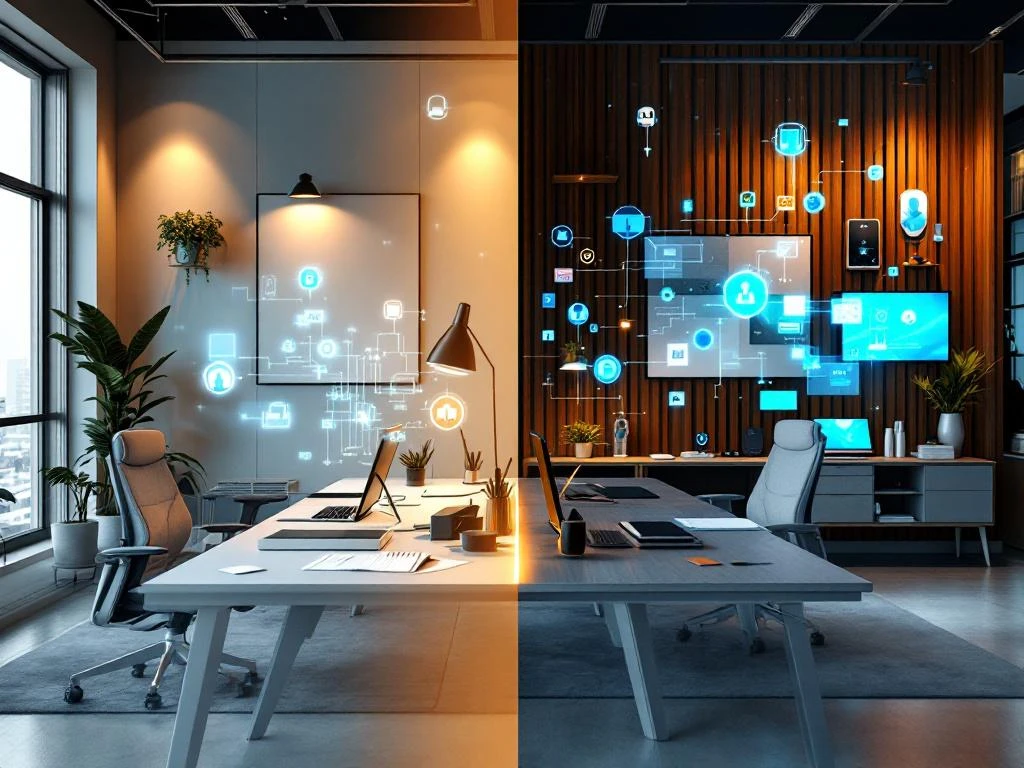
Een smart office-transformatie begin je met een duidelijke behoefteanalyse en het stellen van concrete doelen. Kies technologieën die direct impact hebben op je werkprocessen, zoals slimme boekingssystemen of geautomatiseerde verlichting. Start klein met een pilotproject, stel een realistisch budget op en voer de veranderingen geleidelijk door. Dit zorgt voor een soepele overgang naar een moderne, efficiënte werkomgeving.
Wat is een smart office en waarom is het belangrijk voor jouw bedrijf?
Een smart office is een werkomgeving die moderne technologie gebruikt om processen te automatiseren en de werkervaring te verbeteren. Denk aan slimme verlichting die zich automatisch aanpast, vergaderruimtes die je via een app kunt boeken en systemen die de temperatuur regelen op basis van aanwezigheid.
De voordelen zijn direct merkbaar in je dagelijkse werkprocessen. Werknemers besteden minder tijd aan administratieve taken en kunnen zich focussen op hun kernactiviteiten. Automatische systemen zorgen voor energiebesparing, wat je kosten verlaagt. Bovendien verhoogt het de werknemerstevredenheid, omdat frustraties over technische problemen of oncomfortabele werkomstandigheden wegvallen.
Traditionele kantoren voldoen vaak niet meer aan de moderne werkbehoeften. Flexibel werken, hybride teams en de behoefte aan efficiëntie vragen om slimmere oplossingen. Een smart office past zich aan jouw werkstijl aan, in plaats van andersom.
Welke smart office-technologieën maken het grootste verschil?
IoT-sensoren en slimme verlichting leveren de meest directe impact op je werkervaring. Deze technologieën automatiseren dagelijkse processen en verbeteren het comfort zonder dat je er bewust mee bezig hoeft te zijn.
IoT-sensoren detecteren aanwezigheid en passen automatisch verlichting, temperatuur en ventilatie aan. Dit bespaart energie en zorgt voor optimale werkomstandigheden. Slimme verlichting past zich aan het daglicht aan en ondersteunt je natuurlijke ritme.
Boekingssystemen voor vergaderruimtes elimineren dubbele reserveringen en laten zien welke ruimtes beschikbaar zijn. Geautomatiseerde toegangscontrole geeft werknemers eenvoudig toegang via badges of smartphones, terwijl je overzicht houdt over wie wanneer aanwezig is.
Klimaatbeheersing op basis van bezetting zorgt voor comfort en energiebesparing. Het systeem leert van gebruikspatronen en past zich automatisch aan.
Hoe maak je een realistisch budget en tijdschema voor je smart office-project?
Begin met een gefaseerde aanpak en reserveer 15-25% van je kantoorbudget voor smart office-technologie. Kleinere bedrijven kunnen starten met € 5.000-€ 15.000, terwijl grotere organisaties € 20.000-€ 50.000 of meer investeren.
De kosten hangen af van je kantoorgrootte, gewenste technologieën en bestaande infrastructuur. Basis slimme verlichting en sensoren kosten minder dan uitgebreide systemen met volledige automatisering. Houd rekening met installatiekosten, software en eventuele infrastructuurupgrades.
Plan 3-6 maanden voor een complete transformatie van een gemiddeld kantoor. Kleine bedrijven kunnen binnen 6-8 weken starten, grote organisaties hebben vaak 6-12 maanden nodig. Begin met één gebied of verdieping als pilot om ervaring op te doen.
Verdeel je budget over hardware (40-50%), installatie (20-30%), software (15-20%) en training (5-10%). Dit geeft je een realistische kostenraming en voorkomt onverwachte uitgaven.
Waar begin je met de implementatie van smart office-oplossingen?
Start met een behoefteanalyse waarin je de grootste pijnpunten in je huidige kantoor identificeert. Vraag werknemers naar hun frustraties en observeer welke processen inefficiënt verlopen.
Kies één gebied voor je pilotproject, bijvoorbeeld de vergaderruimtes of een specifieke afdeling. Dit geeft je de kans om te leren zonder grote risico’s. Test het systeem grondig en verzamel feedback voordat je verder uitbreidt.
Prioriteer technologieën die direct impact hebben op de dagelijkse werkervaring. Slimme verlichting en temperatuurregeling leveren snelle resultaten. Boekingssystemen en toegangscontrole volgen daarna.
Betrek je team vanaf het begin bij het proces. Leg uit waarom je deze veranderingen doorvoert en hoe dit hun werk verbetert. Organiseer trainingen zodat iedereen de nieuwe systemen effectief kan gebruiken. Een succesvolle implementatie hangt af van de acceptatie door je medewerkers.
Hoe Wout Monseurs helpt met smart office-transformaties
Wij begeleiden je door het complete proces van smart office-transformatie, van de eerste behoefteanalyse tot de uiteindelijke implementatie. Onze ervaring met moderne kantoorinrichting en technologie zorgt ervoor dat je smart office naadloos aansluit op jouw werkprocessen.
We ontwerpen een totaaloplossing die past bij jouw budget en doelen. Onze aanpak combineert ergonomische meubelen met slimme technologie, zodat je een werkplek krijgt die zowel comfortabel als efficiënt is. We werken samen met betrouwbare technologiepartners om kwalitatieve systemen te leveren.
Klaar om te starten met jouw smart office-transformatie? Neem contact met ons op voor een vrijblijvend adviesgesprek. We bespreken jouw wensen en maken een plan dat past bij jouw organisatie.
Veelgestelde vragen
Welke veelgemaakte fouten moet ik vermijden bij het implementeren van smart office-technologie?
Vermijd het installeren van te veel systemen tegelijk zonder goede training van je medewerkers. Een andere veelgemaakte fout is het niet testen van de compatibiliteit tussen verschillende smart devices voordat je ze installeert. Zorg ook dat je internetverbinding en netwerk sterk genoeg zijn om alle nieuwe technologie te ondersteunen.
Hoe zorg ik ervoor dat mijn werknemers de nieuwe smart office-systemen daadwerkelijk gaan gebruiken?
Organiseer praktische hands-on trainingen en toon concrete voordelen in plaats van alleen de technische mogelijkheden. Kies een aantal ‘tech-ambassadeurs’ onder je werknemers die anderen kunnen helpen. Houd ook rekening met een gewenningsperiode van 2-4 weken waarin je extra ondersteuning biedt.
Wat doe ik als mijn smart office-systemen niet goed samenwerken of regelmatig uitvallen?
Controleer eerst je wifi-signaal en internetsnelheid in het hele kantoor. Veel problemen ontstaan door zwakke verbindingen. Zorg voor een betrouwbare IT-partner die snel kan helpen bij storingen. Houd ook altijd handmatige back-up opties beschikbaar voor kritieke systemen zoals toegangscontrole.
Kan ik mijn bestaande kantoorapparatuur integreren met nieuwe smart office-technologie?
Veel bestaande apparaten kunnen worden geïntegreerd via slimme adapters of IoT-modules. Bijvoorbeeld, gewone lampen kunnen slim worden gemaakt met slimme schakelaars. Laat een technicus eerst je huidige infrastructuur beoordelen om te zien wat mogelijk is zonder grote vervangingen.
Hoe meet ik het succes van mijn smart office-investering?
Track concrete metrics zoals energiebesparing, tijd bespaard bij het boeken van ruimtes, en werknemerstevredenheid via enquêtes. Monitor ook het gebruik van verschillende systemen om te zien welke technologieën het meest gewaardeerd worden. Meet deze gegevens na 3 en 6 maanden om trends te identificeren.
Wat zijn de veiligheids- en privacyrisico's van smart office-technologie?
IoT-apparaten kunnen kwetsbaar zijn voor cyberaanvallen als ze niet goed beveiligd zijn. Zorg voor sterke wachtwoorden, regelmatige software-updates en een apart netwerk voor je smart devices. Informeer werknemers over welke gegevens verzameld worden door sensoren en hoe deze gebruikt worden.
Hoe bereid ik mijn kantoor voor op toekomstige technologische ontwikkelingen?
Kies systemen die modulair en uitbreidbaar zijn, zodat je later nieuwe functies kunt toevoegen. Investeer in een sterke netwerkinfrastructuur die meer data aankan. Werk samen met leveranciers die regelmatig updates en nieuwe features uitbrengen voor hun bestaande producten.