

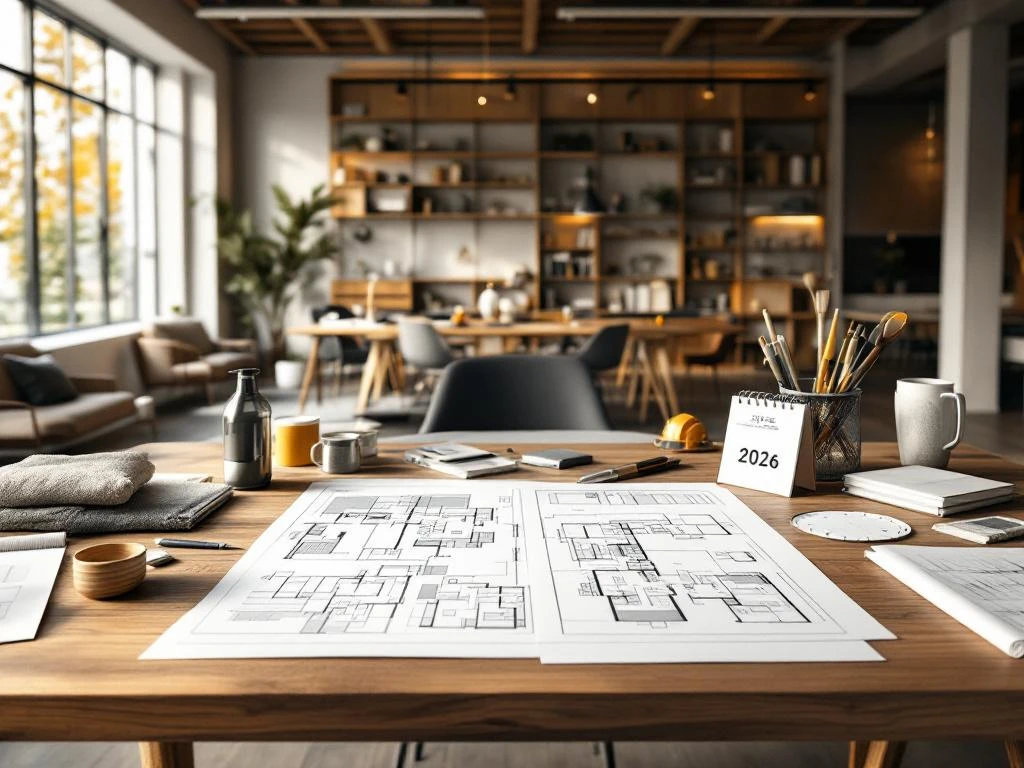
You start project design by analyzing your current situation and setting clear goals for your new workspace. Begin by taking stock of your needs, setting a realistic budget, and finding an experienced partner who can guide you from design to realization. Good preparation and the right expertise make the difference between a successful project and costly mistakes.
What is project design and why is it important for your business?
Project design is a structured approach in which your entire office environment is designed and furnished according to a fixed step-by-step plan. This goes much further than simply placing a few desks and chairs. It encompasses everything from space design and furniture selection to lighting, cabling, and even floors and ceilings.
The big difference with regular office design lies in the overall vision. With project design, you look at how different elements work together to support your business goals. Your working environment is tailored to your work processes, corporate culture, and future plans.
In 2026, companies are increasingly opting for this project-based approach because the workplace plays a strategic role. A well-designed office increases your team's productivity, helps attract talent, and conveys professionalism to customers. What's more, you avoid costly adjustments later on by planning everything properly from the outset.
When is the right time to start project design?
You can recognize the right moment for project design by clear signals in your business operations. Think of business growth where your current space is becoming too small, a move to a new location, or changing working methods, such as hybrid working, which require a different layout.
Outdated office furnishings that no longer suit your current needs are also an important sign. If employees complain about uncomfortable workplaces, if you have difficulty attracting staff, or if your office no longer has the look and feel that suits your company, then it's time to take action.
Other situations that call for project design include mergers or acquisitions where different corporate cultures come together, new laws and regulations regarding workplace ergonomics, or simply the desire to give your company a fresh look. The most important thing is not to wait until problems become urgent, but to act proactively.
What preparation do you need before you start project design?
Good preparation starts with assessing your needs and setting a realistic budget. Make a list of what needs to change and why. Consider the number of workstations, meeting rooms, storage space, and special facilities you need.
Involve all key stakeholders in this process. Ask employees about their wishes and experiences with the current layout. Talk to management about business goals and future plans. This input will help you make choices that benefit everyone.
Next, draw up a realistic timeline. Project design takes time, especially if you want to do everything properly. Take into account delivery times, any construction work, and the time needed to create designs. Also gather practical information, such as floor plans, technical installations, and any restrictions imposed by the building.
How do you choose the right partner for your project design?
You can recognize the right project designer by their experience and comprehensive approach. Look for a partner who not only supplies furniture, but also designs, plans, and supervises. They must be able to demonstrate that they have successfully completed similar projects and are proficient in various aspects of office design.
When comparing providers, pay attention to their working methods. Do they offer a clear step-by-step plan? Do they create 3D designs so you can visualize the result? Do they have a designated contact person who will guide you through the entire process? These aspects make the difference between a smooth-running project and a lot of stress.
Ask the right questions during your orientation. Ask for references, delivery times, and what happens if problems arise. Also discuss their vision on ergonomics and sustainability. A good partner thinks along with you about the long term and helps you make choices that will last for years.
How Wout Monseurs assists with project design
We offer complete project design from concept to completion, with you, the customer, at the center of everything we do. Our process always begins with a comprehensive space study in which we map out your wishes, needs, and budget. We then create a detailed 3D design so you can see exactly what your new work environment will look like.
What sets us apart is our personal approach. You will have a single point of contact who will guide you through the entire process and coordinate all aspects. From choosing ergonomic furniture to planning deliveries, we take care of everything for you. Our expertise in brands such as Interstuhl, Voortman, and Gispen ensures that your office will not only be beautiful, but also functional and sustainable.
For larger projects, we even offer turnkey solutions, where you literally hand over the keys and we take care of the rest. Would you like to know how we can transform your office? Contact us for a no-obligation consultation about your project design.
Frequently asked questions
How long does an average project design process take from start to finish?
A project design takes an average of 8-16 weeks, depending on its scope and complexity. This includes 2-3 weeks for design and planning, 4-8 weeks for furniture delivery, and 1-2 weeks for installation. More complex projects involving structural modifications may take longer.
What will happen to our current office furniture during the project design?
We help you determine which furniture can be reused and which needs to be replaced. Usable items can be integrated into the new design. For discarded furniture, we offer sustainable disposal solutions, including donation to charities or recycling.
Can we carry out the office refurbishment in phases to minimize business disruption?
Yes, phased implementation is often the best approach for active offices. We schedule the work outside office hours or by department, so that your business operations are disrupted as little as possible. Good planning prevents employees from being without a workspace for long periods of time.
How can I ensure that the new layout is suitable for the future growth of my business?
We design flexible workspaces with modular furniture that is easy to expand or adapt. Think of mobile partition walls, height-adjustable desks, and multifunctional spaces. We also take into account additional cabling and infrastructure for future expansion.
What guarantees do I get on the furniture and the work carried out?
We offer a manufacturer's warranty (usually 5-10 years) on furniture, plus our own service warranty. We provide a minimum 1-year warranty on installation and project execution. We also offer maintenance contracts to protect your investment in the long term.
How is workplace ergonomics ensured in the design?
We follow the latest ergonomic guidelines and health and safety legislation in every design. All workstations are equipped with height-adjustable desks, ergonomic chairs, and correct monitor positioning. We also pay attention to lighting, ventilation, and noise levels for optimal working comfort.
What if I change my mind about certain choices during the project?
Minor adjustments are usually still possible until the moment of ordering from suppliers. For larger changes, we will transparently pass on any additional costs. That is why the design phase is so important—here we can still adjust all requirements without additional costs.