

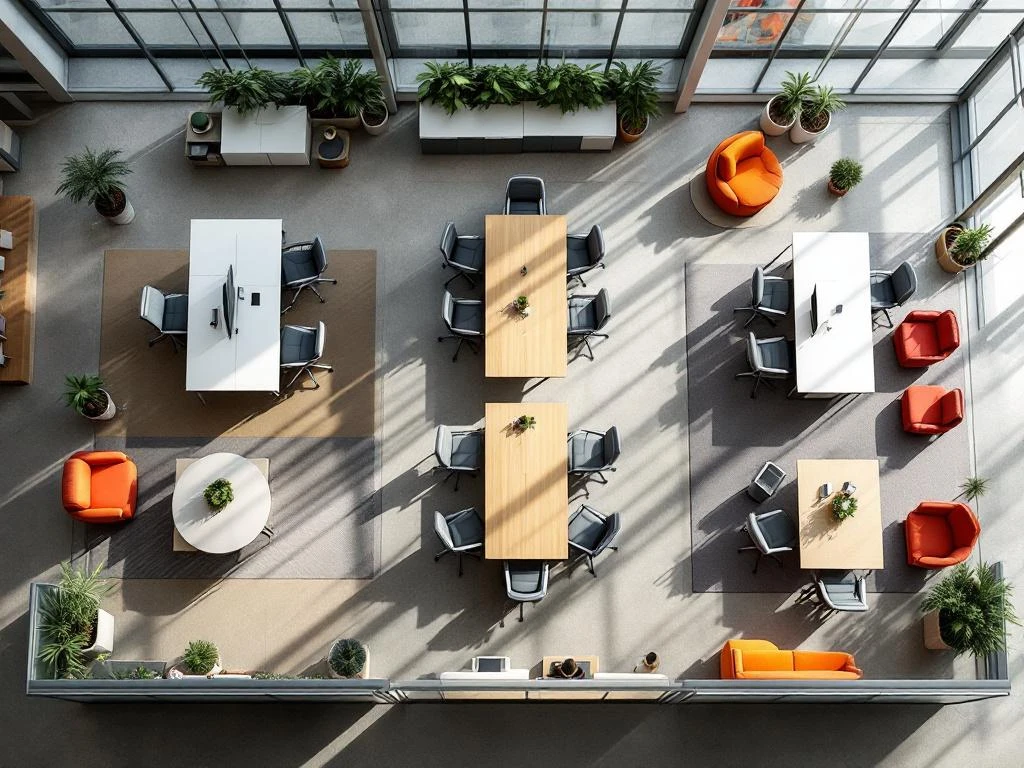
Project design for different departments requires a well-thought-out approach, in which you identify the unique needs of each department and translate them into functional workplaces. It's about balancing the specific wishes of each team with a cohesive corporate image. By listening carefully to work processes and involving employees in the design process, you can create an office that is both practical and visually cohesive.
Why do different departments need different workplace designs?
Each department has specific work processes and needs that directly influence the ideal workplace design. For example, the HR department has a greater need for privacy and quiet meeting spaces, while the IT department needs space for technical equipment and organized cable management.
The sales department benefits from flexible workstations that can be quickly adapted for presentations and customer meetings. They often have varying occupancy due to field service activities and therefore benefit from a flexible layout. Management, on the other hand, needs representative spaces that exude confidence during important business meetings.
Company culture also plays a role. Creative departments often work better in open, inspiring environments, while finance departments benefit more from quiet, focused workspaces. Recognizing these differences helps you create a workplace that supports the productivity and well-being of each department.
How do you analyze the specific needs of each department?
Start by interviewing team leaders to understand each department's work processes and daily activities. Ask about specific challenges, collaboration patterns, and what equipment they use. These conversations will give you insight into the practical needs of each team.
Observe current working practices at different times of the day. Note how employees work together, which spaces they use most, and where bottlenecks arise. These observations often reveal things that do not come up in conversations.
Make an inventory of all the equipment needed per department. Think of printers, monitors, servers, telephone systems, and specific machines. This will help you determine the technical requirements for each workplace.
Actively involve employees in the design process by means of short surveys or workshops. Ask them about their wishes for the new workplace and let them contribute ideas for solutions. This not only increases engagement, but also provides valuable, practical input that you might otherwise overlook.
Which furniture choices are best suited to different working styles?
Sit-stand desks are ideal for administrative roles, as employees spend long periods of time concentrating on their computers. These desks promote a healthy working posture and reduce physical complaints by allowing employees to alternate between sitting and standing.
Project teams benefit from flexible workstations that can be quickly adapted. Think of mobile desks, modular conference tables, and mobile whiteboards. This makes it possible to adapt the space to different project phases and team sizes.
Acoustic solutions are important for call centers and customer service departments. Choose desks with integrated screens, acoustic wall panels, and sound-absorbing materials. This creates a quiet working environment in which employees can concentrate on customer calls.
Management layers need representative furniture that exudes professionalism. High-quality conference tables, comfortable chairs, and stylish storage solutions contribute to a professional appearance during important meetings and customer visits.
How do you ensure a consistent look despite different needs?
Use a consistent color palette throughout the office, but vary its application per department. For example, use the same basic colors in different proportions or accents. This creates visual cohesion, while allowing each department to retain its own character.
Opt for material consistency in basic elements such as floors, ceilings, and primary furniture. You can add variety with accessories, lighting, and decorative elements. This creates a professional, well-thought-out look.
Subtly integrate your brand identity into the design by using company colors, logos in strategic locations, and materials that reflect your company values. This reinforces your corporate identity without being intrusive.
Balance uniformity and diversity by applying fixed design rules for key elements and allowing freedom in the details. For example, use the same desk series for everyone, but different chairs for each department. This allows you to maintain consistency while still responding to specific needs.
How Wout Monseurs assists with project design
We always approach multi-departmental project design with a thorough analysis of your specific situation. Our process begins with extensive discussions with all departments involved to fully understand their work processes and requirements.
Our experience with ergonomic workplaces helps us find the right balance between functionality and comfort for every department. We work with high-quality brands that offer sustainable solutions and perfectly suit different working styles.
Thanks to our personal guidance, you will have a single point of contact for the entire project. We take care of everything, from design to implementation, including coordination between different suppliers and planning the work.
Would you like to know how we can transform your office into a place where every department can function optimally? Please contact us for a no-obligation consultation. You can find more information about our approach and options on our project design page.
Frequently asked questions
How long does it take on average to fully furnish a multi-department office?
A complete project setup for multiple departments usually takes 6-12 weeks, depending on the office size and complexity. The analysis phase takes 2-3 weeks, followed by 2-4 weeks for design and ordering, and 2-5 weeks for delivery and installation. We always plan with your business operations in mind to minimize disruption.
What are the biggest pitfalls when setting up different departments?
The most common mistake is overlooking practical details such as power supply and network connections per workstation. Many companies also underestimate the impact of noise between departments and forget to take future growth into account. Not involving end users in the design process often leads to resistance and suboptimal results.
How do you determine the budget for project design per department?
The budget depends on the specific needs of each department, with management layers and customer-facing areas usually requiring more investment. On average, you can expect to pay €2,000-€5,000 per workstation for quality furniture, with higher costs for specialist departments such as IT (additional cabling) or call centers (acoustic solutions). We always provide a detailed cost estimate for each department to ensure transparency.
Can you renovate an existing office in phases, department by department?
Yes, phased renewal is often the practical choice for companies that need to remain operational. We usually start with departments that are least disrupted by the work, such as management or HR, and work our way toward busy departments such as sales. This prevents business downtime and spreads the investment over time.
How do you ensure that the layout adapts to changing team sizes?
Opt for modular furniture and flexible workstations that can be easily expanded or adapted. Allow for 20-30% extra space in popular areas and use mobile partitions for quick redesigns. Invest in universal infrastructure such as extra power outlets and data points, so that workstations can be easily moved without major renovations.
What role does lighting play in distinguishing between different departments?
Lighting is crucial for creating the right working atmosphere in each department. Use warm light (3000K) for creative teams and cooler light (4000K) for concentration-intensive work such as accounting. Executive offices benefit from dimmable lighting for different types of meetings, while call centers need constant, even lighting to prevent fatigue.
How do you deal with departments that regularly change their composition?
For dynamic departments such as project teams or consultancies, we recommend activity-based working. Create different zones (concentration, collaboration, telephone calls) instead of fixed workstations. Use flexible furniture on wheels, modular storage systems, and digital reservation systems for workstations and meeting rooms.