

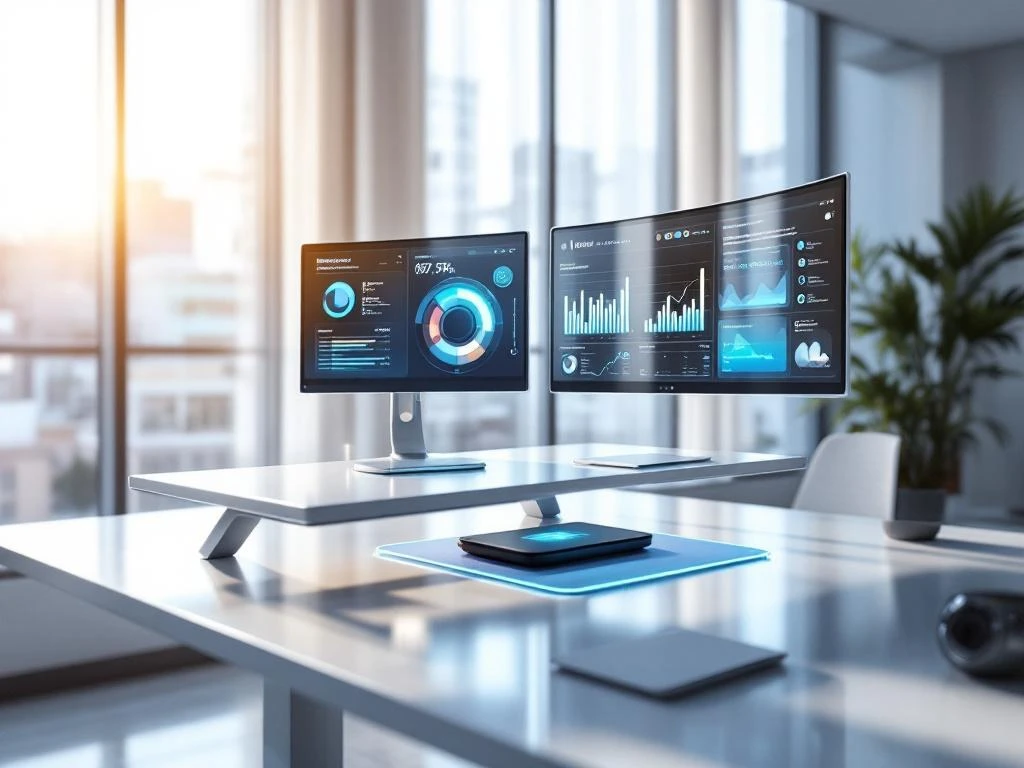
Een smart office verhoogt de productiviteit door intelligente technologieën die automatisch de werkomgeving optimaliseren. Slimme systemen voor verlichting, klimaat en ruimtebeheer zorgen ervoor dat werknemers zich beter kunnen concentreren en efficiënter werken. Deze technologieën verminderen afleidingen, verbeteren het comfort en maken dagelijkse taken eenvoudiger, wat direct resulteert in hogere productiviteit en werknemerstevredenheid.
Wat is een smart office en hoe werkt het?
Een smart office is een werkplek die gebruikmaakt van slimme technologieën om automatisch de werkomgeving te optimaliseren. Het combineert sensoren, internet-of-things (IoT)-apparaten en geautomatiseerde systemen die in real time reageren op de behoeften van werknemers. Deze technologieën werken samen om een comfortabele, efficiënte werkplek te creëren.
De belangrijkste componenten van een smart office zijn slimme sensoren die beweging, luchtkwaliteit en geluidsniveaus meten. Deze sensoren sturen informatie naar een centraal systeem dat automatisch aanpassingen maakt aan verlichting, temperatuur en ventilatie. Wanneer iemand bijvoorbeeld een vergaderruimte binnenkomt, gaat het licht automatisch aan en wordt de temperatuur aangepast.
Smartofficesystemen leren ook van gebruikersgedrag. Ze onthouden welke instellingen werknemers prefereren en passen zich daarop aan. Dit betekent dat je werkplek steeds beter wordt afgestemd op jouw manier van werken, zonder dat je er zelf aan hoeft te denken.
Welke smart office-technologieën verhogen de productiviteit het meest?
Slimme verlichting, geautomatiseerde klimaatbeheersing en digitale ruimtereserveringssystemen hebben de grootste impact op productiviteit. Deze technologieën zorgen ervoor dat werknemers minder tijd besteden aan het aanpassen van hun werkomgeving en meer tijd hebben voor hun eigenlijke taken. Bovendien creëren ze optimale omstandigheden voor concentratie en welzijn.
Slimme verlichting past zich automatisch aan het daglicht en de activiteit aan. Dit helpt je natuurlijke ritme te behouden en vermindert vermoeidheid. Studies tonen aan dat goed afgestemde verlichting de focus en alertheid verhoogt.
Geautomatiseerde klimaatbeheersing houdt de temperatuur en luchtkwaliteit op het optimale niveau. Dit voorkomt dat werknemers worden afgeleid door te warme of te koude ruimtes. Bovendien zorgt goede ventilatie voor frisse lucht, wat de concentratie ten goede komt.
Digitale werkplekoplossingen, zoals slimme, in hoogte verstelbare bureaus en systemen voor ruimtereservering, maken het werken flexibeler. Werknemers kunnen snel een geschikte werkplek vinden en hun omgeving aanpassen aan hun taken.
Hoe beïnvloedt een smart office de werknemerstevredenheid?
Een smart office verhoogt de werknemerstevredenheid door stress te verminderen en meer comfort te bieden. Werknemers hoeven minder tijd te besteden aan het zoeken naar vrije ruimtes of het aanpassen van hun werkomgeving. Dit geeft hen meer controle over hun werkdag en vermindert frustraties die de productiviteit kunnen belemmeren.
De automatische aanpassingen in een smart office zorgen voor een consistente, comfortabele werkomgeving. Werknemers ervaren minder fysieke klachten door optimale verlichting en temperatuur. Dit draagt bij aan hun welzijn en zorgt ervoor dat ze zich beter voelen tijdens het werk.
Smart office-technologieën ondersteunen ook flexibel werken. Werknemers kunnen gemakkelijk schakelen tussen verschillende werkplekken en activiteiten. Deze flexibiliteit wordt door veel mensen gewaardeerd, omdat het hen helpt hun werk beter af te stemmen op hun persoonlijke voorkeuren en werkstijl.
Bovendien creëert een smart office een moderne, innovatieve werksfeer. Werknemers voelen zich vaak trotser op hun werkplek en meer betrokken bij een bedrijf dat investeert in hun comfort en productiviteit.
Wat zijn de kosten en baten van een smart office-investering?
De initiële investering in smart office-technologieën varieert tussen de € 5.000 en € 15.000 per werkplek, afhankelijk van de gekozen oplossingen. Deze kosten worden vaak binnen twee tot drie jaar terugverdiend door energiebesparingen, verhoogde productiviteit en lagere onderhoudskosten. Bovendien helpen slimme systemen bij het aantrekken en behouden van talent.
De grootste energiebesparingen komen van slimme verlichting en klimaatbeheersing. Deze systemen gebruiken alleen energie wanneer dat nodig is en optimaliseren het verbruik automatisch. Veel bedrijven zien hun energiekosten met 20–30% dalen na de implementatie van smart office-oplossingen.
Verhoogde productiviteit is vaak de grootste baat. Wanneer werknemers zich beter voelen en minder worden afgeleid, presteren ze beter. Ook de tijd die wordt bespaard op het zoeken naar ruimtes en het aanpassen van de werkomgeving telt op.
Onderhoudskosten dalen doordat slimme systemen problemen vroegtijdig signaleren. Dit voorkomt grote reparaties en zorgt ervoor dat apparatuur langer meegaat. Bovendien kunnen veel instellingen op afstand worden aangepast, wat servicereizen bespaart.
Hoe Wout Monseurs helpt met smart office-oplossingen
Wij begeleiden je van begin tot eind bij het implementeren van smart office-concepten. Ons ervaren team ontwerpt een slimme kantooroplossing die perfect aansluit bij jouw bedrijf en werkprocessen. We combineren intelligente technologieën met ergonomische meubelen en duurzame oplossingen voor een werkplek die zowel slim als comfortabel is.
Onze aanpak begint met een grondige analyse van je huidige situatie en wensen. We kijken naar je werkprocessen, het gedrag van je werknemers en de mogelijkheden van je gebouw. Op basis hiervan maken we een ontwerp dat smart office-technologieën naadloos integreert met hoogwaardige kantoormeubelen van merken als Wini en Interstuhl.
We zorgen voor de volledige realisatie van jouw smart office, inclusief installatie, configuratie en training van je team. Onze lokale betrokkenheid betekent dat we ook na oplevering beschikbaar blijven voor ondersteuning en aanpassingen.
Wil je weten hoe een smart office jouw productiviteit kan verhogen? Neem contact met ons op voor een vrijblijvend gesprek over de mogelijkheden voor jouw bedrijf.
Veelgestelde vragen
Hoe lang duurt het om een smart office volledig te implementeren?
Een complete smart office-implementatie duurt gemiddeld 4-8 weken, afhankelijk van de grootte van je kantoor en de complexiteit van de gekozen technologieën. De planning en voorbereiding nemen meestal 2-3 weken in beslag, gevolgd door 1-2 weken installatie en configuratie, en een week voor training en fine-tuning van de systemen.
Kunnen bestaande kantoorgebouwen worden omgebouwd tot een smart office?
Ja, de meeste bestaande kantoren kunnen worden uitgerust met smart office-technologieën zonder grote verbouwingen. Moderne IoT-sensoren en slimme systemen zijn ontworpen om eenvoudig te integreren in bestaande infrastructuur. Wel is het belangrijk om vooraf de technische mogelijkheden van het gebouw te laten beoordelen door specialisten.
Wat gebeurt er als de smart office-systemen uitvallen of defect raken?
Smart office-systemen hebben meestal backup-functies en kunnen handmatig worden overgeschakeld naar standaardmodus. De meeste systemen hebben ook remote monitoring, waardoor problemen snel worden gedetecteerd en vaak op afstand kunnen worden opgelost. Voor kritieke systemen raden we aan om onderhoudscontracten af te sluiten voor snelle ondersteuning.
Hoe wordt de privacy van werknemers beschermd in een smart office?
Smart office-systemen verzamelen alleen anonieme data over ruimtegebruik en omgevingsfactoren, niet over individuele werknemers. Alle gegevens worden lokaal verwerkt en voldoen aan AVG-wetgeving. Werknemers behouden volledige controle over hun persoonlijke instellingen en kunnen kiezen welke voorkeuren ze willen delen met het systeem.
Welke training hebben werknemers nodig om met smart office-technologieën te werken?
De meeste smart office-technologieën werken automatisch en vereisen minimale training. We bieden meestal een halve dag training waarin werknemers leren hoe ze persoonlijke voorkeuren kunnen instellen en gebruik kunnen maken van features zoals ruimtereservering. De systemen zijn intuïtief ontworpen, zodat werknemers zich snel kunnen aanpassen.
Zijn er specifieke smart office-oplossingen voor kleine bedrijven?
Absoluut, er zijn schaalbare smart office-oplossingen speciaal voor kleine bedrijven vanaf 10-15 werkplekken. Deze beginnen met basis functionaliteiten zoals slimme verlichting en klimaatbeheersing, en kunnen later worden uitgebreid. De investeringskosten zijn lager en de return on investment is vaak sneller zichtbaar door de directe impact op een kleinere groep werknemers.