

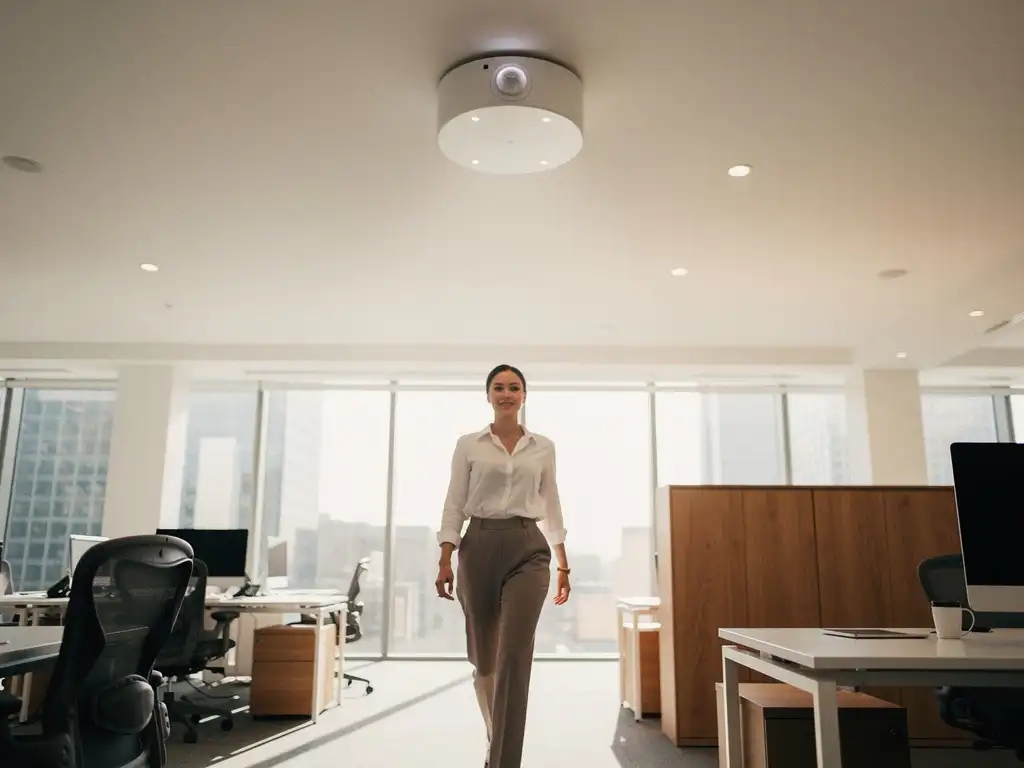
Slimme sensoren in kantooromgevingen worden steeds belangrijker in moderne werkplekken. Nabijheidssensoren spelen een cruciale rol bij het creëren van intelligente kantooromgevingen die automatisch reageren op de aanwezigheid van medewerkers. Deze technologie optimaliseert niet alleen het energieverbruik en het comfort, maar draagt ook bij aan efficiënter ruimtegebruik en een betere werkplekervaring.
Van automatische verlichting tot slimme klimaatbeheersing: nabijheidssensoren transformeren de manier waarop we werken en met onze kantooromgeving interacteren. Ze vormen de basis voor Smart Office-oplossingen die de productiviteit verhogen en de operationele kosten verlagen.
Wat zijn nabijheidssensoren en hoe werken ze in kantooromgevingen?
Nabijheidssensoren zijn elektronische apparaten die de aanwezigheid of beweging van personen detecteren zonder fysiek contact. In kantooromgevingen gebruiken deze sensoren verschillende technologieën, zoals infrarood, ultrasoon of microgolven, om automatisch systemen te activeren wanneer iemand een ruimte betreedt.
De werking is gebaseerd op het detecteren van veranderingen in de omgeving. Passieve infraroodsensoren (PIR) registreren lichaamswarmte, terwijl ultrasone sensoren geluidsgolven uitzenden en reflecties meten. Microgolfsensoren werken met hoogfrequente elektromagnetische golven die beweging detecteren, zelfs door dunne wanden heen.
In moderne kantoren worden deze sensoren geïntegreerd in verlichtingssystemen, klimaatbeheersing, toegangscontrole en ruimtebeheer. Ze kunnen onderscheid maken tussen verschillende soorten beweging en zelfs het aantal personen in een ruimte tellen, wat essentieel is voor efficiënt facilitair management.
Welke voordelen bieden nabijheidssensoren voor kantoorruimtes?
Nabijheidssensoren bieden aanzienlijke energiebesparingen tot 90% door de automatische in- en uitschakeling van verlichting en klimaatsystemen. Ze verbeteren ook het werknemerscomfort door ruimtes automatisch voor te bereiden op aankomst en optimaliseren het ruimtegebruik door realtime bezettingsdata te verstrekken.
De belangrijkste voordelen omvatten verhoogde veiligheid door automatische noodverlichting en toegangscontrole. Sensoren dragen bij aan een gezondere werkomgeving door de luchtkwaliteit en temperatuur automatisch aan te passen aan het aantal aanwezige personen. Dit sluit perfect aan bij de groeiende focus op werknemerswelzijn en duurzaamheid in moderne kantoren.
Voor facilitair management bieden de sensoren waardevolle inzichten in het ruimtegebruik, waardoor organisaties hun kantoorindeling kunnen optimaliseren. Ze ondersteunen flexibel werken door automatische werkplekregistratie en helpen bij het implementeren van clean-deskbeleid door gepersonaliseerde instellingen te activeren zodra een medewerker zijn werkplek benadert.
Welke soorten nabijheidssensoren zijn geschikt voor kantoren?
Voor kantooromgevingen zijn PIR-sensoren (passief infrarood) het meest geschikt voor algemene aanwezigheidsdetectie, ultrasone sensoren voor nauwkeurige bewegingsdetectie in kleinere ruimtes, en microgolfsensoren voor continue monitoring in grote open kantoorruimtes. Elk type heeft specifieke toepassingen, afhankelijk van de ruimte-indeling en de gewenste functionaliteit.
PIR-sensoren zijn ideaal voor vergaderruimtes en individuele kantoren, omdat ze betrouwbaar lichaamswarmte detecteren en energiezuinig zijn. Ze hebben echter een beperkt detectiebereik en kunnen moeite hebben met personen die lange tijd stilzitten. Ultrasone sensoren zijn gevoeliger voor subtiele bewegingen, waardoor ze geschikt zijn voor werkplekken waar mensen langdurig aan een bureau zitten.
Microgolfsensoren zijn krachtiger en kunnen door dunne wanden heen detecteren, wat ze geschikt maakt voor grote kantoortuinen en doorloopruimtes. Moderne hybride sensoren combineren meerdere technologieën voor optimale nauwkeurigheid. Voor Smart Office-toepassingen worden vaak IoT-enabled sensoren gebruikt die draadloos communiceren en integreren met gebouwbeheersystemen.
Hoe implementeer je nabijheidssensoren in bestaande kantoorruimtes?
De implementatie begint met een grondige analyse van de huidige kantoorindeling en de identificatie van zones waar sensoren de meeste impact hebben. Draadloze sensoren kunnen eenvoudig worden geïnstalleerd zonder grote verbouwingen, terwijl bekabelde systemen meer planning vereisen, maar stabieler zijn voor kritieke toepassingen.
De eerste stap is het in kaart brengen van verkeerstromen en gebruikspatronen in het kantoor. Sensoren worden strategisch geplaatst bij ingangen, in vergaderruimtes, bij werkstations en in gemeenschappelijke ruimtes. De hoogte en hoek van installatie zijn cruciaal voor optimale detectie zonder valse triggers.
Integratie met bestaande systemen vereist compatibiliteit met verlichtings-, HVAC- en beveiligingssystemen. Moderne sensoren communiceren via standaardprotocollen zoals Wi-Fi, Zigbee of LoRaWAN. Kalibratie en fine-tuning zijn essentieel om valse alarmen te voorkomen en de optimale gevoeligheid in te stellen. Een gefaseerde uitrol, beginnend met pilotgebieden, minimaliseert verstoring van de dagelijkse activiteiten.
Wat zijn de kosten van nabijheidssensoren voor kantoorgebruik?
Basale PIR-sensoren kosten tussen €25 en €75 per stuk, terwijl geavanceerde IoT-enabled sensoren €100 tot €300 kunnen kosten. De totale implementatiekosten variëren van €50 tot €150 per werkplek, inclusief installatie en systeemintegratie, met een terugverdientijd van 1 tot 3 jaar door energiebesparingen.
De kostenstructuur omvat hardware, installatie, software en onderhoud. Draadloze sensoren hebben lagere installatiekosten, maar kunnen hogere onderhoudskosten met zich meebrengen door batterijvervanging. Bekabelde systemen vereisen een hogere initiële investering, maar hebben lagere operationele kosten.
Software en cloudservices voor data-analyse en rapportage kosten meestal €2 tot €10 per sensor per maand. Grotere implementaties profiteren van schaalvoordelen en kunnen tot 30% kostenbesparing realiseren. De return on investment wordt gerealiseerd door energiebesparingen (30-90% op verlichting), verbeterde ruimte-efficiëntie en lagere onderhoudskosten door voorspellend onderhoud.
Hoe zorg je voor privacy bij het gebruik van nabijheidssensoren?
Privacy wordt gewaarborgd door sensoren te configureren voor anonieme detectie zonder persoonlijke identificatie, data waar mogelijk lokaal te verwerken en transparant te communiceren over het datagebruik richting medewerkers. AVG-compliance vereist expliciete toestemming en duidelijke privacyverklaringen voor alle sensorimplementaties.
Technische privacymaatregelen omvatten data-encryptie, beperkte dataopslag en het gebruik van edge computing om informatie lokaal te verwerken. Sensoren moeten zo worden geconfigureerd dat ze alleen noodzakelijke data verzamelen, zoals aanwezigheid en beweging, zonder identificeerbare kenmerken vast te leggen.
Organisatorische maatregelen zijn even belangrijk: medewerkers moeten worden geïnformeerd over de locatie en het doel van sensoren, toegang tot data moet worden beperkt tot geautoriseerd personeel, en er moeten duidelijke procedures zijn voor dataverwijdering. Regelmatige privacy-audits en transparante rapportage over datagebruik bouwen vertrouwen op en zorgen voor naleving van de privacywetgeving.
Hoe Wout Monseurs helpt met Smart Office-technologie
Wij bieden complete Smart Office-oplossingen die nabijheidssensoren integreren in uw totale kantoorinrichting. Onze expertise combineert meer dan 60 jaar ervaring in kantoorinrichting met cutting-edge technologie voor intelligente werkplekken.
Onze Smart Office-diensten omvatten:
- Analyse van uw huidige kantoorindeling en gebruikspatronen
- Ontwerp en implementatie van sensornetwerken
- Integratie met verlichting, klimaatbeheersing en vergaderruimtes
- Deskbooking-systemen met automatische werkplekaanpassing
- Realtime monitoring en rapportage van ruimtegebruik
- Onderhoud en optimalisatie van sensorsystemen
Met onze persoonlijke aanpak zorgen wij voor een naadloze integratie die perfect aansluit bij uw bedrijfsprocessen en de behoeften van uw medewerkers. Van de eerste analyse tot de volledige implementatie begeleiden wij u bij elke stap naar een intelligente, efficiënte werkomgeving. Neem contact op voor een vrijblijvend adviesgesprek over de mogelijkheden van slimme sensoren in uw kantooromgeving.
Veelgestelde vragen
Hoe lang duurt het om nabijheidssensoren in een bestaand kantoor te installeren?
De installatietijd varieert van 1-2 dagen voor kleine kantoren tot 1-2 weken voor grote complexen. Draadloze sensoren kunnen sneller worden geïnstalleerd zonder grote aanpassingen aan de infrastructuur. Na installatie is er meestal een kalibratiefase van enkele dagen nodig om de instellingen te optimaliseren.
Kunnen nabijheidssensoren vals alarm geven en hoe voorkom je dit?
Ja, valse alarmen kunnen optreden door huisdieren, bewegende objecten of trillingen. Dit wordt voorkomen door de juiste sensortype te kiezen voor elke ruimte, de gevoeligheid correct in te stellen en hybride sensoren te gebruiken die meerdere detectiemethoden combineren. Regelmatige kalibratie is essentieel.
Werken nabijheidssensoren ook goed in open kantoorlandschappen?
Ja, maar dit vereist een andere aanpak dan in afgesloten ruimtes. Microgolfsensoren zijn hier het meest geschikt omdat ze grote gebieden kunnen dekken. Voor optimale resultaten worden meerdere sensoren strategisch geplaatst en gekoppeld aan zones voor verlichting en klimaatbeheersing.
Wat gebeurt er als de sensoren defect raken of de batterij leeg is?
Moderne sensoren hebben een levensduur van 5-10 jaar en sturen waarschuwingen bij lage batterij of storingen. Bij uitval schakelen systemen automatisch terug naar handmatige bediening of een veilige stand. Preventief onderhoud en monitoring via cloudplatforms helpen problemen vroegtijdig te detecteren.
Kunnen sensoren worden geïntegreerd met bestaande gebouwbeheersystemen?
Ja, moderne nabijheidssensoren zijn ontworpen voor integratie met BMS-systemen via standaardprotocollen zoals BACnet, Modbus of KNX. Ze kunnen ook draadloos communiceren via WiFi, Zigbee of LoRaWAN. Een systeemintegrator kan de compatibiliteit beoordelen en de juiste koppelingen realiseren.
Is het mogelijk om de sensordata te gebruiken voor werkplekanalyse en optimalisatie?
Absoluut. Sensordata biedt waardevolle inzichten in bezettingspatronen, piekuren en onderbenutting van ruimtes. Deze informatie helpt bij het optimaliseren van de kantoorindeling, het aanpassen van schoonmaakschema’s en het implementeren van flexibele werkplekconcepten. Dashboards maken deze data visueel toegankelijk voor facilitair management.