

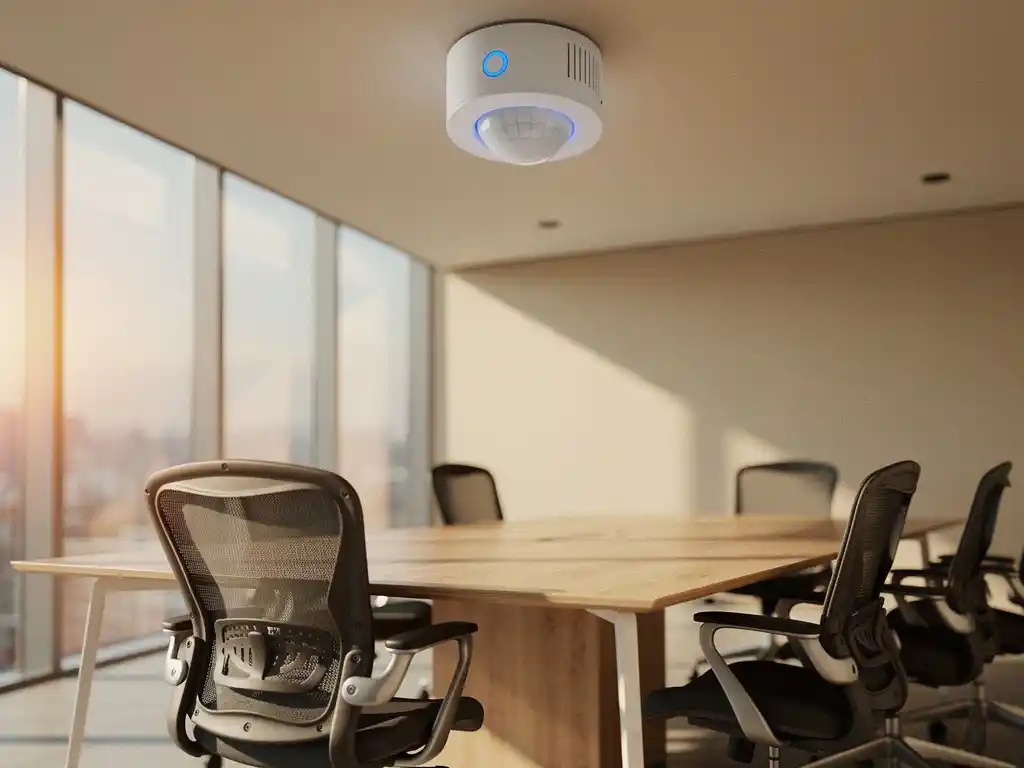
Slimme sensoren transformeren moderne kantooromgevingen door real-time data te verzamelen over ruimtegebruik, luchtkwaliteit, verlichting en temperatuur. Deze intelligente technologie maakt automatische aanpassingen mogelijk die het werknemerscomfort verbeteren en operationele kosten verlagen. Voor bedrijven die investeren in toekomstbestendige werkplekken bieden slimme sensoren in de kantooromgeving concrete voordelen op het gebied van energiebesparing, ruimteoptimalisatie en werknemerswelzijn.
De implementatie van sensortechnologie in kantoren is geen futuristische trend meer, maar een praktische noodzaak geworden. Van automatische klimaatregeling tot intelligente verlichting en flexibel werkplekbeheer: sensoren maken kantoren slimmer, duurzamer en gebruiksvriendelijker.
Wat zijn slimme sensoren en hoe werken ze in kantoren?
Slimme sensoren zijn intelligente apparaten die omgevingsdata verzamelen en deze informatie doorsturen naar centrale systemen die automatisch aanpassingen doorvoeren. In kantooromgevingen meten deze sensoren factoren zoals beweging, temperatuur, luchtkwaliteit, geluidsniveaus en lichtintensiteit om de werkplek te optimaliseren.
Het werkingsprincipe is gebaseerd op een netwerk van met elkaar verbonden sensoren die continu data verzamelen. Deze informatie wordt verwerkt door AI-gestuurde systemen die patronen herkennen en voorspellingen doen. Wanneer een sensor bijvoorbeeld detecteert dat een vergaderruimte wordt betreden, kan het systeem automatisch de verlichting aanpassen, de temperatuur regelen en de audiovisuele apparatuur activeren.
De sensoren communiceren via draadloze netwerken zoals wifi, Bluetooth of specifieke IoT-protocollen. Deze real-time datacommunicatie maakt het mogelijk om onmiddellijk te reageren op veranderende omstandigheden, waardoor energie wordt bespaard en het werknemerscomfort wordt geoptimaliseerd zonder handmatige interventie.
Welke soorten sensoren worden gebruikt in kantooromgevingen?
Kantoren gebruiken verschillende typen sensoren, elk met specifieke functies: bewegingssensoren voor aanwezigheidsdetectie, temperatuursensoren voor klimaatbeheersing, luchtkwaliteitssensoren voor ventilatie, lichtsensoren voor automatische verlichting en geluidssensoren voor akoestische optimalisatie.
Bewegingssensoren vormen de basis van veel slimme kantoorsystemen. Ze detecteren wanneer werknemers ruimtes betreden of verlaten en schakelen automatisch verlichting, verwarming en apparatuur in of uit. Deze sensoren zijn bijzonder effectief in vergaderruimtes, toiletten en minder vaak gebruikte zones.
Luchtkwaliteitssensoren meten CO2-niveaus, luchtvochtigheid en luchtvervuiling. Wanneer de luchtkwaliteit verslechtert, activeren ze automatisch ventilatiesystemen. Dit is cruciaal voor de productiviteit van werknemers, omdat slechte luchtkwaliteit concentratieproblemen en vermoeidheid kan veroorzaken.
Temperatuur- en lichtsensoren werken samen om een ideaal werkklimaat te creëren. Ze passen verwarming, koeling en kunstverlichting aan op basis van externe omstandigheden en persoonlijke voorkeuren. Geluidssensoren monitoren geluidsniveaus en kunnen waarschuwingen geven wanneer het geluidsniveau te hoog wordt om productief te werken.
Hoe verbeteren slimme sensoren de werkplekervaring?
Slimme sensoren verbeteren de werkplek door automatische aanpassingen te maken die comfort, productiviteit en welzijn verhogen. Ze zorgen voor een optimale temperatuur, verlichting en luchtkwaliteit zonder dat werknemers handmatig instellingen hoeven te wijzigen, wat resulteert in een comfortabelere en gezondere werkomgeving.
Een van de meest directe voordelen is de automatische aanpassing van het bureau aan persoonlijke voorkeuren. Via Smart Office-technologie kan een bureau automatisch worden ingesteld op de gewenste hoogte, temperatuur en verlichtingssterkte zodra een werknemer zich aanmeldt. Dit voorkomt dagelijkse ergonomische aanpassingen en bevordert een gezonde werkhouding.
Sensoren ondersteunen ook flexibel werken door real-time inzicht te geven in beschikbare werkplekken. Werknemers kunnen via een app zien welke ruimtes vrij zijn en deze reserveren, terwijl het systeem de omgeving automatisch voorbereidt. Dit voorkomt frustratie over bezette werkplekken en optimaliseert het ruimtegebruik.
De impact op de luchtkwaliteit is substantieel. Sensoren detecteren wanneer CO2-niveaus te hoog worden en activeren automatisch ventilatiesystemen. Onderzoek toont aan dat een goede luchtkwaliteit de cognitieve prestaties met 15% kan verbeteren, wat direct bijdraagt aan de productiviteit en het welzijn van werknemers.
Welke data verzamelen kantoorsensoren en hoe wordt die gebruikt?
Kantoorsensoren verzamelen data over ruimtegebruik, energieverbruik, luchtkwaliteit, temperatuurpatronen, geluidsniveaus en werknemersaanwezigheid. Deze informatie wordt gebruikt voor automatische aanpassingen, energieoptimalisatie, ruimteplanning en het verbeteren van het werknemerscomfort door middel van datagedreven beslissingen.
Ruimtegebruiksdata toont welke zones het meest en minst worden gebruikt, op welke tijdstippen en door hoeveel mensen. Deze informatie helpt bij het optimaliseren van de kantoorindeling en het identificeren van onderbenutte ruimtes. Bedrijven kunnen hierdoor hun vastgoedkosten verlagen door efficiënter gebruik te maken van beschikbare vierkante meters.
Energiedata omvat informatie over verlichting, verwarming, koeling en het gebruik van apparatuur. Sensoren detecteren wanneer ruimtes leeg zijn en schakelen automatisch systemen uit, wat tot 30% energiebesparing kan opleveren. Deze data wordt ook gebruikt voor predictief onderhoud, waarbij systemen waarschuwen voordat storingen optreden.
Luchtkwaliteitsmetingen worden gebruikt om ventilatiesystemen te optimaliseren en gezondheidsrisico’s te minimaliseren. De data toont patronen in luchtvervuiling, CO2-opbouw en luchtvochtigheid, waardoor preventieve maatregelen kunnen worden genomen. Privacy wordt gewaarborgd doordat sensoren geen persoonlijke identificatie verzamelen, maar alleen anonieme gebruikspatronen registreren.
Wat zijn de kosten en implementatie van slimme sensoren?
De kosten voor slimme sensoren in kantoren variëren van €50 tot €500 per sensor, afhankelijk van functionaliteit en kwaliteit. Implementatie vereist een initiële investering van €5.000 tot €50.000 voor een gemiddeld kantoor, maar deze kosten worden vaak binnen 2 tot 3 jaar terugverdiend door energiebesparingen en efficiëntiewinst.
Een basisimplementatie begint met het installeren van bewegings- en temperatuursensoren in de belangrijkste ruimtes. Deze sensoren kosten tussen €50 en €150 per stuk en kunnen direct worden gekoppeld aan bestaande klimaat- en verlichtingssystemen. Voor een kantoor van 500 vierkante meter zijn ongeveer 15 tot 20 sensoren nodig.
Geavanceerde systemen met luchtkwaliteitsmonitoring, geluidsdetectie en AI-gestuurde optimalisatie kosten meer, maar bieden ook grotere besparingen. De installatiekosten omvatten netwerkinfrastructuur, software en configuratie. Veel leveranciers bieden leaseopties aan, waardoor bedrijven kunnen starten met lagere initiële kosten.
De terugverdientijd wordt bepaald door energiebesparingen (20-40% reductie in energiekosten), verhoogde productiviteit door een beter werkklimaat en optimaler ruimtegebruik. Bedrijven rapporteren vaak binnen het eerste jaar merkbare besparingen op nutsvoorzieningen en een hogere werknemerstevredenheid.
Hoe Wout Monseurs helpt met Smart Office-sensoren
Wij bieden complete Smart Office-oplossingen die slimme sensoren integreren in uw kantoorinrichting. Onze expertise combineert traditionele kantoorinrichting met geavanceerde sensortechnologie voor optimale werkplekken.
Onze Smart Office-diensten omvatten:
- Volledige sensorimplementatie, afgestemd op uw kantoorindeling
- Integratie met bestaande klimaat- en verlichtingssystemen
- Deskbookingtools voor flexibel werkplekbeheer
- Automatische bureauaanpassing op persoonlijke voorkeuren
- Real-time monitoring en optimalisatie van de kantooromgeving
Als familiebedrijf met meer dan 60 jaar ervaring begrijpen wij dat elke organisatie unieke behoeften heeft. Daarom bieden wij maatwerkoplossingen die sensortechnologie naadloos integreren in uw kantoorinrichting. Van de eerste kennismaking tot de volledige implementatie begeleiden wij het gehele proces.
Ontdek hoe slimme sensoren uw kantoor kunnen transformeren. Neem contact met ons op voor een vrijblijvend adviesgesprek en ervaar onze Smart Office-oplossingen in ons Experience Center in Breda.
Veelgestelde vragen
Hoe lang duurt de installatie van slimme sensoren in een bestaand kantoor?
De installatie van slimme sensoren duurt gemiddeld 1-3 werkdagen voor een kantoor van 500m². Dit hangt af van de complexiteit van het systeem en of bestaande infrastructuur kan worden gebruikt. Draadloze sensoren kunnen vaak binnen enkele uren worden geïnstalleerd, terwijl bekabelde systemen meer tijd vergen.
Kunnen slimme sensoren worden geïntegreerd met bestaande kantoorsystemen?
Ja, moderne slimme sensoren zijn ontworpen om te integreren met bestaande HVAC-, verlichting- en beveiligingssystemen. Via standaard protocollen zoals BACnet, Modbus of API’s kunnen sensoren communiceren met uw huidige gebouwbeheersysteem zonder volledige vervanging van de infrastructuur.
Wat gebeurt er met de privacy van werknemers bij het gebruik van sensoren?
Slimme kantoorsensoren verzamelen geen persoonlijk identificeerbare informatie. Ze registreren alleen anonieme aanwezigheid, bewegingspatronen en omgevingsdata. Werknemers kunnen niet individueel worden gevolgd of geïdentificeerd, en alle data wordt conform AVG-regelgeving verwerkt en opgeslagen.
Welke onderhoud hebben slimme sensoren nodig?
Slimme sensoren vereisen minimaal onderhoud. Batterijen gaan 3-5 jaar mee, sensoren hebben zelf-diagnostische functies die storingen melden, en software-updates gebeuren automatisch via het netwerk. Een jaarlijkse controle van de kalibratie en batterijstatus is meestal voldoende.
Hoe nauwkeurig zijn luchtkwaliteitssensoren en wanneer geven ze waarschuwingen?
Moderne luchtkwaliteitssensoren hebben een nauwkeurigheid van 95-98% voor CO2-metingen. Ze geven waarschuwingen bij CO2-niveaus boven 1000 ppm (slechte luchtkwaliteit) en activeren automatisch ventilatie bij 800 ppm. Ook meten ze fijnstof, VOC’s en luchtvochtigheid met vergelijkbare precisie.
Kunnen slimme sensoren helpen bij het voldoen aan duurzaamheidscertificeringen?
Absoluut. Slimme sensoren ondersteunen BREEAM, LEED en WELL-certificeringen door meetbare data te leveren over energieverbruik, luchtkwaliteit en comfort. De continue monitoring en automatische optimalisatie helpen bij het behalen en behouden van hoge duurzaamheidsscores.
Wat als de internetverbinding uitvalt – werken de sensoren dan nog?
Ja, slimme sensoren hebben lokale intelligentie en blijven basisfuncties uitvoeren bij internetuitval. Ze slaan data lokaal op en synchroniseren automatisch wanneer de verbinding hersteld is. Kritieke functies zoals automatische verlichting en klimaatregeling blijven gewoon werken.