

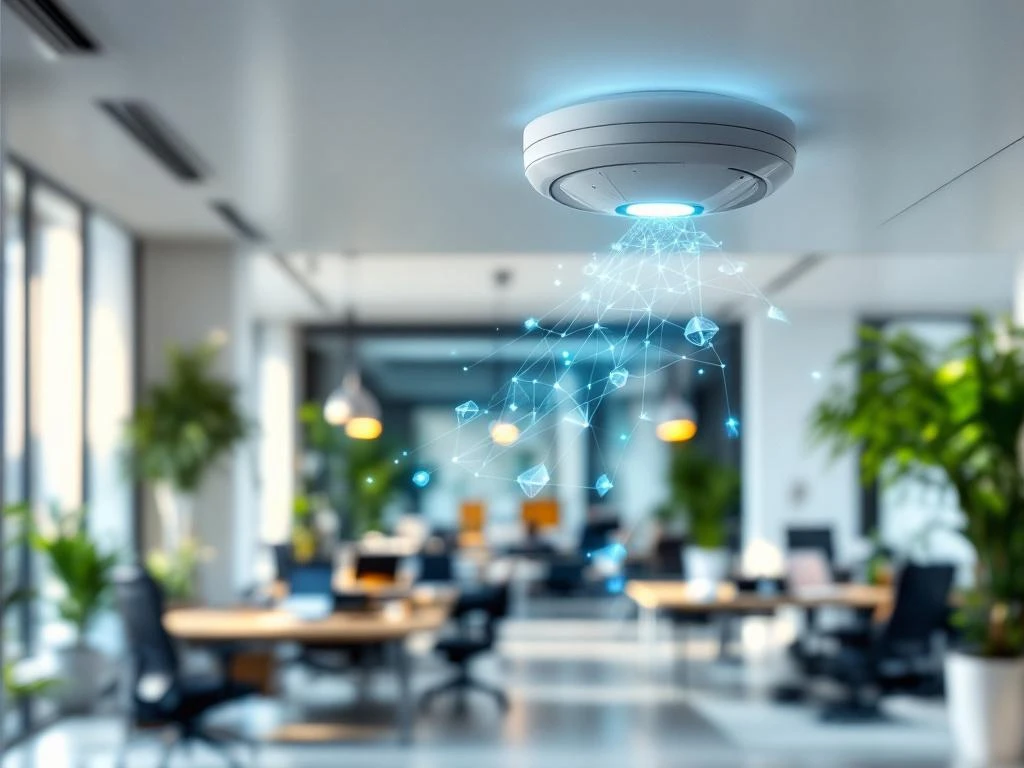
Smart office sensors work by detecting changes in the office environment and converting this information into digital data. They measure movement, light, temperature, air quality, and noise levels and send this data wirelessly to central systems. These systems analyze the data and automatically adjust office conditions for optimal comfort, energy savings, and productivity.
What are smart office sensors and what types are available?
Smart office sensors are intelligent devices that measure and monitor various aspects of your office environment. They collect real-time data on movement, temperature, light, air quality, and noise to automatically optimize your workplace. These sensors communicate with each other and with central systems to make your office smarter and more comfortable.
The most commonly used sensor types in modern offices are motion sensors, which detect when people are present. These sensors automatically switch lighting and climate control systems on or off. Light sensors measure the amount of natural light and dim or increase artificial lighting accordingly.
Temperature sensors monitor the office temperature and control heating and cooling systems. Air quality sensors measure CO2 levels, humidity, and air purity, while noise sensors monitor ambient noise. Together, these sensors ensure that your workplace is always optimally tailored to your needs and those of your colleagues.
How do smart office sensors detect and collect data?
Smart office sensors work by converting physical changes in the environment into electrical signals and then into digital data. Motion sensors use infrared technology to detect changes in heat, while light sensors contain photocells that respond to light intensity. These analog signals are converted into digital information directly in the sensor.
The collected data is sent to central systems via wireless communication. Most sensors use Wi-Fi, Bluetooth, or special IoT networks such as LoRaWAN. This connectivity ensures that all sensors can communicate in real time with your office's central management system.
The central system receives and analyzes all sensor data simultaneously. It can recognize patterns, such as busy and quiet periods, and automatically make adjustments. The data is also stored for trend analysis, allowing the system to learn from usage patterns and make increasingly accurate predictions about when adjustments are needed.
What benefits do smart office sensors offer employees?
Smart office sensors improve your working comfort by automatically creating the ideal conditions. You no longer need to manually adjust thermostats or turn lights on and off. The system ensures that the temperature, lighting, and air quality are always optimal for productive work, reducing stress and increasing your well-being.
Automatic climate control keeps the temperature at a comfortable level, while smart lighting adjusts to natural light and your tasks. This reduces eye strain and helps you stay alert throughout the day.
Better air quality, thanks to sensors that control ventilation when CO2 levels rise, ensures a fresher workplace. Sound sensors can warn when noise levels are too high or automatically adjust background music. All these improvements lead to greater concentration, fewer headaches, and a generally more pleasant work experience for you and your team.
How do smart office sensors help save energy and reduce costs?
Smart office sensors save energy by only running systems when needed. Motion sensors automatically turn off lights and climate control in empty rooms, while occupancy detection ensures that only occupied office areas are heated or cooled. This can reduce your energy bill by 20–30%.
The sensors also optimize space utilization by measuring which meeting rooms and workspaces are used most frequently. This allows for smarter planning and energy savings by temporarily shutting down less-used spaces. Smart climate control adjusts the temperature gradually rather than making sudden, large changes, which saves a significant amount of energy.
Continuous monitoring and automatic adjustments prevent energy waste caused by forgotten lights or incorrectly set thermostats. The systems also learn from usage patterns and can predict when rooms will be used, so that they are at the right temperature at exactly the right time without consuming unnecessary energy during empty periods.
How Wout Monseurs assists with smart office sensors
We help you implement smart office solutions that perfectly match your office and working methods. Our team first analyzes your current situation and advises you on which sensors will deliver the most benefits for your specific workplace. We provide a complete design that integrates seamlessly with your existing office layout.
From advice to installation and maintenance, we take care of everything for you. We select the right sensors and systems, ensure professional installation, and set everything up correctly. After installation, we offer training to your team and remain available for support and system updates.
Would you like to know how smart office sensors can improve your office? Contact us for a no-obligation consultation. We will be happy to discuss the possibilities and draw up a plan that fits your budget and wishes for a smarter, more comfortable office.
Frequently asked questions
How long does it take to install smart office sensors in an existing office?
The installation of smart office sensors usually takes 1-3 days, depending on the size of your office and the number of sensors. Wireless sensors can often be installed without major renovations. We schedule the installation so that your work is disrupted as little as possible, often outside office hours or on weekends.
Can smart office sensors also work with my existing climate and lighting systems?
Yes, modern smart office sensors are designed to integrate with most existing systems. We first analyze your current installation and provide compatible sensors and controllers. In some cases, minor adjustments are necessary, but complete replacement is rarely required.
What happens if sensors fail or the internet connection is lost?
Smart office systems usually have a backup mode that allows them to continue functioning locally without an internet connection. Faulty sensors are automatically detected and reported via the system. We offer maintenance contracts for quick replacement and ensure that your office always continues to function optimally.
How is employee privacy protected when using motion and sound sensors?
Privacy is paramount with smart office sensors. Motion sensors only detect presence, not specific individuals. Sound sensors only measure noise levels, not the content of conversations. All data is stored anonymously and complies with GDPR guidelines. We ensure transparent communication with employees about what data is collected.
Can I adjust the sensor settings myself, or do I always need technical support?
Most smart office systems have a user-friendly app or web interface that allows you to adjust basic settings such as temperature preferences and lighting levels. For more complex changes or system optimization, we offer support and training for your team. You always retain control over your office environment.
What are the typical payback periods for an investment in smart office sensors?
Most offices recoup their investment in smart office sensors within 2-4 years through energy savings of 20-30%. Larger offices often see faster payback times due to more efficient use of space and lower maintenance costs. We always perform an ROI calculation specific to your situation to provide insight into the expected savings.
Can the sensors also help with compliance with COVID-19 guidelines or other health measures?
Yes, smart office sensors can contribute to healthier workplaces. Air quality sensors monitor ventilation and CO2 levels, while occupancy sensors help manage maximum numbers of people per room. This data helps create a safer working environment and comply with health guidelines.