

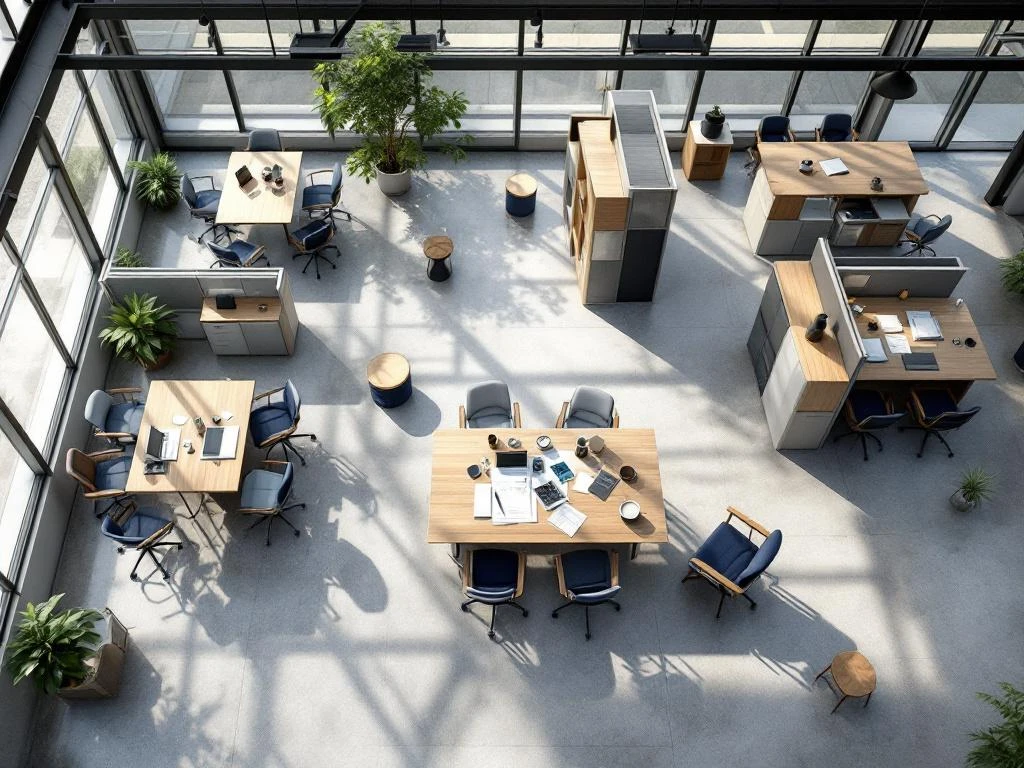
Project design for co-working spaces requires a unique approach that focuses on flexibility, multifunctionality, and adaptability. These shared workspaces must accommodate different working styles, companies, and needs in a single dynamic environment. The process involves creating modular zones, choosing versatile furniture, and designing spaces that can be easily transformed as needs change.
What makes project design for co-working spaces different from regular offices?
Co-working spaces require a flexible design approach that adapts to changing users and needs. Whereas traditional offices are designed for a fixed group of employees with known working habits, co-working spaces must function for a variety of companies, freelancers, and teams, each with their own working style.
The biggest challenge lies in creating spaces that feel both private and communal. You need zones that can transform from quiet workspaces to collaborative areas, depending on the time of day and the users. This means that every piece of furniture and every layout must contribute to this flexibility.
Project designers take a modular approach to co-working spaces. They choose furniture that is easy to move around, create clear but flexible zones, and ensure sufficient storage space for personal belongings. Lighting and acoustics also receive extra attention, because different activities have different environmental requirements.
What spaces do you need in a well-designed co-working space?
A functional co-working space consists of different zones, each with its own function, but which flow seamlessly into one another. The open workspace forms the heart, surrounded by specialized areas that support different work needs.
Open workspaces offer flexible workstations where users can choose from a variety of seating options. Private offices or quiet zones are important for concentrated work and confidential conversations. Meeting rooms in various sizes accommodate both small team meetings and larger presentations.
Relaxation areas and kitchen spaces encourage informal interactions and networking. Phone booths or acoustic cabins offer privacy for phone calls. The flow of traffic between these zones should be logical, allowing users to move effortlessly between different activities without disturbing others.
How do you choose the right furniture for flexible workspaces?
Modular furniture forms the basis of any successful co-working space design. This furniture can be combined, moved, and adapted to different configurations without having to purchase new pieces each time.
Choose desks with adjustable heights that allow for both sitting and standing work. Chairs should be ergonomic and suitable for prolonged use by different people. Storage solutions such as mobile drawers and lockers offer flexibility for users who are not permanently present.
Sustainability is particularly important because furniture is used intensively by different people. Materials must be able to withstand daily use and be easy to clean. Acoustic properties are also important: furniture that absorbs sound helps to create a pleasant working environment in a busy space.
Why is ergonomics so important in co-working spaces?
In co-working spaces, different people use the same workspaces, which makes ergonomics a more complex challenge than in traditional offices. Each piece of furniture must be able to adapt to different body heights, working habits, and health needs.
Adjustable desks and chairs are not optional, but necessary. Users must be able to quickly adapt their workspace to their personal ergonomic needs. This not only prevents health complaints, but also increases productivity and comfort for everyone who uses the space.
Good ergonomics in co-working spaces also means offering variety in working positions. Sit-stand desks, lounge areas for informal working, and different chair and table combinations give users the freedom to choose what works for them. This contributes to a healthy and productive working environment for all users.
How Wout Monseurs assists with project design
We understand that co-working spaces present unique challenges that require a specialized approach. Our project design process starts with a thorough analysis of your specific needs, user groups, and spatial possibilities.
We create 3D designs that show how different zones function and how the space can adapt to changing needs. Our expertise in ergonomic solutions ensures that all workplaces are comfortable for different users. Sustainability is central to our choice of materials, because we understand that co-working spaces are used intensively.
From the initial design to the complete realization, we take care of everything for you. Would you like to know how we can transform your co-working space into a functional and inspiring working environment? Contact us for a no-obligation consultation about the possibilities.
Frequently asked questions
How long does it take to fully furnish a co-working space?
Setting up a co-working space takes an average of 6-12 weeks, depending on its size and complexity. This includes design, furniture production, deliveries, and installation. We recommend starting early in the process, especially if you have specific ergonomic or acoustic requirements.
What are the biggest mistakes owners make when designing co-working spaces?
The most common mistakes are insufficient attention to acoustics, too few privacy options, and furniture that is not flexible enough. People also often forget to create enough storage space for the personal belongings of different users.
How do you determine the right balance between open workspaces and private areas?
Een goede vuistregel is 60-70% open werkplekken, 20-25% semi-privé zones en 10-15% volledig privé ruimtes. Dit kan variëren afhankelijk van je doelgroep – freelancers hebben meer flexibiliteit nodig, terwijl kleine bedrijven meer privacyopties waarderen.
Which investments yield the best return on investment in co-working spaces?
Ergonomic, adjustable furniture and good acoustic solutions deliver the highest ROI. These investments increase user satisfaction, reduce staff turnover, and enable higher rates. Modular systems also save costs in the long term thanks to their flexibility.
How do you ensure that the layout remains suitable as your co-working space grows?
Opt for modular systems that can be easily expanded and plan scalable zones from the outset. Invest in furniture that can be reused in different configurations and take into account additional electrical and internet connections for future expansion.
What are the most important acoustic considerations for co-working spaces?
Use acoustic panels, carpets, and furniture that absorb sound to reduce noise pollution. Create distinct zones with different noise levels and strategically place phone booths to isolate phone calls. Soft background noise can also help to mask conversations.