

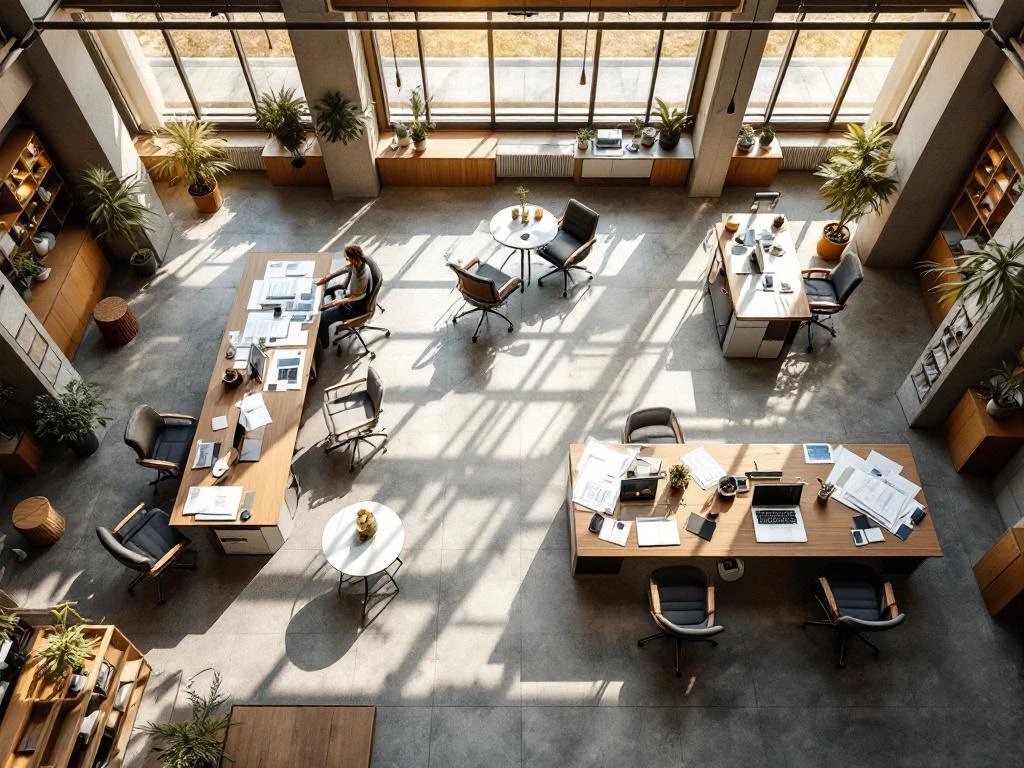
Project design for creative companies requires a unique approach that focuses on flexibility, inspiration, and collaboration. Creative teams need different workspaces, from open collaboration areas to quiet concentration zones. The planning process begins with a thorough needs analysis and budget planning, followed by choosing the right partner who understands how creativity and functionality go hand in hand.
What makes project design for creative companies different?
Creative companies need flexible workspaces that can adapt to changing projects and team compositions. This means modular furniture, movable partitions, and spaces that can be quickly transformed from presentation rooms to brainstorming areas.
The interior design should stimulate inspiration through natural light, color use, and materials that support creativity. Think of whiteboards on every wall, pin boards for visual inspiration, and comfortable seating areas where spontaneous conversations can arise. Agencies often work with different disciplines under one roof, so the layout of the space must facilitate designers, copywriters, and strategists to easily find each other.
Technical facilities also play a major role. Creative teams need high-quality monitors, good acoustics for video recordings and presentations, and sufficient power outlets for all equipment. The interior must also be professional enough to receive clients, but not so formal that it hinders creativity.
How do you start planning an office project for an agency?
Start with a thorough needs analysis involving all team members. Make an inventory of the work activities that take place, how many people work there, and how the teams work together. Also determine your growth plans for the coming years to prevent you from outgrowing your new office too quickly.
Next, draw up a realistic budget that includes not only the furniture, but also technical installations, renovation costs, and any temporary accommodation during the project. Allow for approximately 15–20% extra for unforeseen costs.
Choose a project designer who has experience with creative companies and understands how you work. Ask for references and look at previous projects. Work together to draw up a detailed plan with clear milestones and communication moments. Make sure there is one contact person who keeps track of everything and coordinates all parties.
What spaces do creative teams really need?
A well-designed creative office has different zones for different activities. Open workspaces facilitate spontaneous collaboration and make it easy to give quick feedback. These spaces must be flexible in layout, depending on the project teams.
Quiet zones are essential for concentrated work such as writing, designing, or strategic thinking. These can be enclosed office spaces, but also acoustically separated corners with comfortable workstations.
Presentation rooms with good technical facilities are needed for customer presentations and internal reviews. Think of large screens, good lighting, and flexible furniture layout. Informal meeting places, such as a kitchenette or lounge, encourage casual conversations that often lead to the best ideas.
Don't forget practical spaces: storage areas for materials and samples, a printing corner with professional equipment, and possibly a studio space for photo or video recordings.
What are the biggest challenges in project design for agencies?
Budget management is often the biggest challenge, because creative wishes do not always match financial reality. Agencies often want unique, inspiring solutions that are more expensive than standard office furniture. It is important to set priorities and determine where you want to invest.
Time planning becomes complex because creative companies often cannot stop working during a renovation. You need to plan a phased approach that allows teams to continue functioning. This requires good coordination between all parties involved.
Balancing different team needs is another challenge. Designers have different wishes than account managers or developers. Listen to all voices, but keep an overview and make decisions that benefit the whole.
Technical integration can also cause headaches. Make sure IT specialists are involved in the project at an early stage to properly plan cabling, networking, and other technical aspects.
How Wout Monseurs assists with project design
At Wout Monseurs, we understand that creative companies need unique spaces that stimulate inspiration and productivity. We start every project with a comprehensive needs analysis, listening to all team members and understanding how you work.
Our design team translates your corporate identity into an office environment that matches your culture and work processes. We work with high-quality, flexible furniture from brands such as Interstuhl and Voortman, which can grow with your company. Ergonomics is central, because healthy employees are more productive and creative.
We take care of the entire process from design to delivery, including 3D visualizations, so you know exactly what the end result will look like. Our project design approach ensures that you can continue working while we build your new office.
Would you like to know how we can transform your creative space? Contact us for a no-obligation consultation about the possibilities.
Frequently asked questions
How long does an average project design project take for a creative company?
A complete project design for a creative company takes an average of 8-12 weeks, depending on the size and complexity. This includes 2-3 weeks for design and planning, 4-6 weeks for production and delivery, and 2-3 weeks for installation. In the case of renovations, this may take longer due to construction work.
Can we move in phases so as not to disrupt business operations?
Yes, a phased approach is often the best solution for creative companies. We can work per department or zone, allowing teams to continue functioning while other areas are being fitted out. This does require careful planning and possibly temporary workspaces, but it prevents any loss of productivity during the project.
What are the most common mistakes made when designing creative workspaces?
The biggest mistakes are: insufficient acoustic separation between different work areas, too little flexibility in the choice of furniture, and underestimating storage needs. It is also often forgotten to include future growth in the design, which means that the space quickly becomes too cramped.
How do I determine the right budget for our office design?
On average, you can expect to pay between €3,000 and €6,000 per workspace for a complete setup, including furniture and technical facilities. For creative companies, this is often at the higher end of the scale due to specific requirements. Always set aside an extra 15-20% for unforeseen costs and don't forget to include renovation costs and temporary accommodation.
Which ergonomic aspects are particularly important for creative professionals?
Creative professionals often work long hours behind screens, so invest in high-quality office chairs and height-adjustable desks. Provide good lighting to prevent eye strain and position screens at the correct height. Variety in working posture is also important, so create standing workstations and comfortable seating areas.
How can I ensure that the new interior design fits in with our corporate culture?
Involve all team members in the design process by organizing workshops or surveys. Show examples of different styles and ask for feedback on 3D visualizations. A good project designer translates your brand identity and working methods into the physical space, so that employees feel at home and are proud of their workplace.