

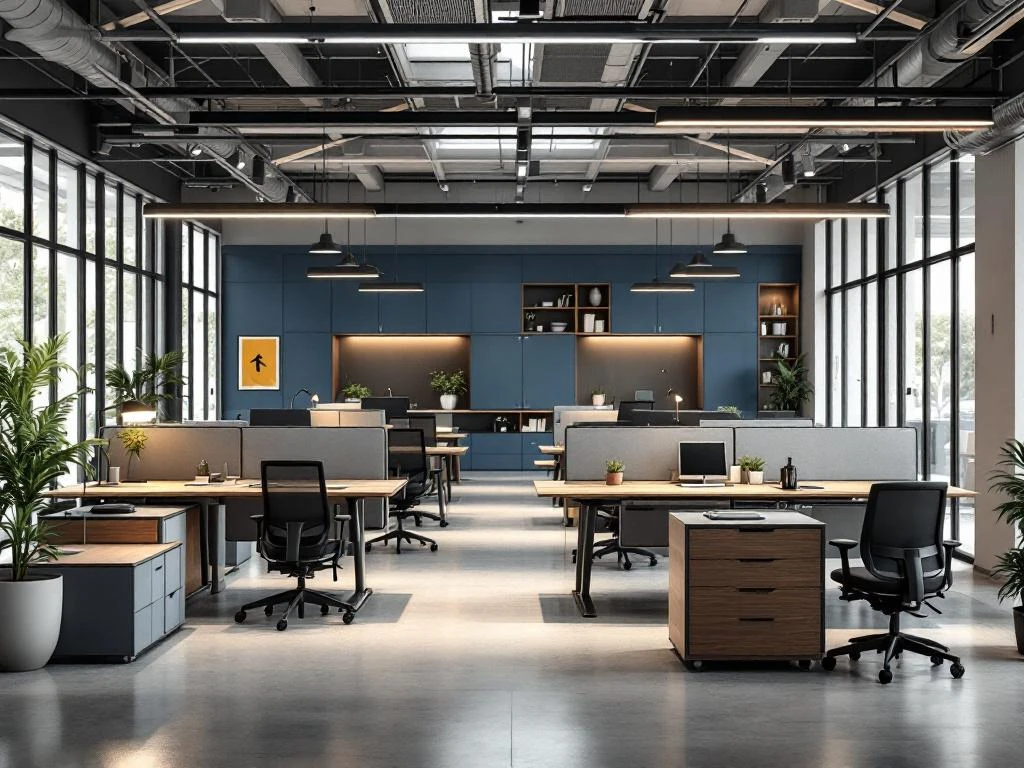
Projectinrichting voor flexibele werkplekken combineert strategische ruimteplanning met modulaire meubeloplossingen die zich aanpassen aan veranderende werkbehoeften. Het proces omvat behoefteanalyse, het ontwerp van multifunctionele zones en de implementatie van aanpasbare systemen. Deze aanpak zorgt ervoor dat je kantoor meegroeit met je organisatie en verschillende werkmodi ondersteunt.
Wat betekent projectinrichting voor flexibele werkplekken precies?
Projectinrichting voor flexibele werkplekken is het complete proces van het ontwerpen en inrichten van kantoorruimtes die zich aanpassen aan verschillende werkstijlen en veranderende behoeften. Het gaat verder dan traditionele kantoorinrichting door modulaire systemen en multifunctionele zones te creëren.
Flexibele werkplekken ondersteunen verschillende activiteiten binnen één ruimte. Denk aan zones die overdag fungeren als vergaderruimte en ’s avonds als trainingslocatie, of aan werkplekken die je snel kunt omvormen van individuele focusplekken naar collaboratieve teamruimtes.
De projectinrichting richt zich op drie hoofdelementen: modulaire meubelsystemen die je eenvoudig kunt herpositioneren, een technische infrastructuur die flexibiliteit ondersteunt en een zonering die verschillende werkactiviteiten mogelijk maakt. Het meubilair heeft vaak wielen, inklapbare onderdelen of stapelbare elementen.
Deze aanpak helpt organisaties om efficiënter om te gaan met ruimte en kosten. Je hoeft niet voor elke functie een aparte ruimte in te richten, maar creëert zones die meerdere doelen dienen, afhankelijk van de behoefte op dat moment.
Welke stappen zitten er in het proces van flexibele kantoorprojectinrichting?
Het proces van flexibele kantoorprojectinrichting bestaat uit vijf hoofdstappen: behoefteanalyse, conceptontwerp, detailplanning, implementatie en nazorg. In elke stap wordt flexibiliteit als kernprincipe meegenomen in de besluitvorming.
De behoefteanalyse start met het in kaart brengen van werkprocessen, teamgroottes en toekomstige groeiplannen. Je bespreekt welke activiteiten plaatsvinden, hoeveel mensen er werken en hoe vaak de ruimte-indeling moet veranderen. Deze informatie bepaalt de mate van flexibiliteit die nodig is.
Tijdens het conceptontwerp worden verschillende scenario’s uitgewerkt. Het ontwerp toont hoe dezelfde ruimte kan functioneren voor verschillende doeleinden. Je krijgt 3D-visualisaties die laten zien hoe zones kunnen transformeren van individuele werkplekken naar teamruimtes of presentatiegebieden.
De detailplanning werkt technische aspecten uit, zoals stroomvoorziening, dataverbindingen en verlichting die flexibel gebruik ondersteunen. De implementatie gebeurt vaak in fasen om de bedrijfsvoering niet te verstoren. De nazorg omvat training van medewerkers en evaluatie van het gebruik.
Hoe kies je de juiste meubelen voor een flexibele werkomgeving?
De juiste meubelen voor flexibele werkomgevingen hebben drie eigenschappen: modulariteit, multifunctionaliteit en mobiliteit. Ze moeten eenvoudig te verplaatsen, te combineren en aan te passen zijn aan verschillende gebruikssituaties, zonder gereedschap.
Modulaire systemen vormen de basis van een flexibele inrichting. Bureaus met uitbreidbare bladen, stapelbare stoelen en verrijdbare kasten geven je de vrijheid om configuraties snel aan te passen. Kies voor systemen waarbij onderdelen onderling uitwisselbaar zijn.
Multifunctionele meubelen maximaliseren de waarde per vierkante meter. Een hoge tafel kan dienen als sta-werkplek, informele vergaderplek of presentatieruimte. Opbergmeubelen met zitfunctie creëren extra zitplaatsen wanneer dat nodig is.
Ergonomie blijft belangrijk bij flexibele meubelen. Verstelbare elementen zoals zithoogte, bureauhoogte en armsteunen zorgen ervoor dat verschillende gebruikers comfortabel kunnen werken. Duurzaamheid is essentieel, omdat flexibele meubelen vaker worden verplaatst en aangepast dan traditioneel kantoormeubilair.
Balanceer functionaliteit met budget door te investeren in hoogwaardige basismeubelen die intensief worden gebruikt, en te besparen op accessoires die je later kunt aanvullen.
Welke uitdagingen kom je tegen bij flexibele kantoorprojectinrichting?
De grootste uitdagingen bij flexibele kantoorprojectinrichting zijn ruimteoptimalisatie, technische infrastructuur, gebruikersacceptatie en toekomstbestendigheid. Deze uitdagingen vereisen zorgvuldige planning en realistische verwachtingen over de tijd die nodig is om je aan te passen.
Ruimteoptimalisatie wordt complex omdat je rekening moet houden met verschillende configuraties. Een ruimte die perfect werkt voor teamvergaderingen kan te krap zijn voor individueel werk. Los dit op door minimale en maximale ruimtebehoeften per functie te bepalen en hierop je ontwerp te baseren.
Technische installaties zoals stroom, data en verlichting moeten flexibiliteit ondersteunen zonder dat er overal snoeren liggen. Plafondinstallaties en vloersystemen met toegangspunten op strategische locaties bieden oplossingen. Draadloze technologie vermindert de afhankelijkheid van vaste aansluitpunten.
Gebruikersacceptatie vergt tijd en training. Medewerkers moeten wennen aan het zelf aanpassen van hun werkomgeving. Duidelijke instructies, visuele hulpmiddelen en een geleidelijke invoering helpen bij de overgang.
Toekomstbestendigheid bereik je door systemen te kiezen die uitbreidbaar zijn en technologische ontwikkelingen kunnen opvangen. Vermijd te specifieke oplossingen die moeilijk aan te passen zijn aan veranderende behoeften.
Hoe Wout Monseurs helpt met projectinrichting voor flexibele werkplekken
Wij benaderen flexibele kantoorprojectinrichting als een totaaloplossing, waarbij we jouw specifieke werkprocessen centraal stellen. Onze ervaring met modulaire systemen van merken als Interstuhl en Voortman stelt ons in staat om werkplekken te ontwerpen die echt meegroeien met je organisatie.
Ons proces start met een grondige analyse van hoe je team werkt en welke veranderingen je verwacht. We vertalen deze inzichten naar 3D-ontwerpen die verschillende scenario’s tonen, zodat je precies ziet hoe je ruimte kan transformeren. Van het eerste gesprek tot en met de nazorg heb je één vast contactpersoon die het complete traject overziet.
We verzorgen niet alleen het meubilair, maar ook technische aspecten zoals bekabeling, verlichting en systeemwanden die flexibiliteit ondersteunen. Onze turnkeyprojecten betekenen dat jij de sleutel overhandigt en wij de rest regelen, inclusief planning, levering en montage.
Klaar om jouw flexibele werkplek te realiseren? Neem contact met ons op voor een vrijblijvend gesprek over jouw wensen. Bekijk ook onze complete projectinrichtingdiensten om te zien hoe wij jouw kantoor kunnen transformeren.
Veelgestelde vragen
Hoeveel tijd kost het om medewerkers te laten wennen aan flexibele werkplekken?
De meeste organisaties zien dat medewerkers binnen 2-3 maanden gewend zijn aan flexibele werkplekken, mits er goede begeleiding is. Start met een pilot groep, organiseer praktische workshops over het gebruik van modulair meubilair en zorg voor duidelijke visuele instructies bij elke zone. Een geleidelijke invoering per afdeling werkt beter dan een complete omschakeling in één keer.
Wat zijn de grootste fouten die bedrijven maken bij het inrichten van flexibele werkplekken?
De meest voorkomende fout is te weinig rekening houden met opbergruimte – flexibele werkplekken hebben juist meer opslag nodig voor wisselende materialen. Daarnaast onderschatten bedrijven vaak de behoefte aan stille zones en maken ze ruimtes te klein voor de maximale configuratie. Ook het skippen van gebruikerstraining leidt vaak tot weerstand en inefficiënt gebruik.
Hoe voorkom je rommelige kabels en snoeren bij flexibele werkplekken?
Investeer in een slimme infrastructuur met vloer- of plafondkanalen die stroom en data leveren op strategische punten in de ruimte. Gebruik draadloze technologie waar mogelijk en kies voor meubilair met ingebouwde kabelmanagement. Mobiele oplaadstations en powerbanks kunnen de afhankelijkheid van vaste aansluitpunten verder verminderen.
Is flexibele kantoorinrichting duurder dan een traditionele inrichting?
De initiële investering ligt vaak 15-25% hoger door de modulaire systemen en technische infrastructuur, maar flexibele inrichtingen besparen op lange termijn geld. Je hoeft minder vaak te verbouwen bij groei of krimp, kunt ruimte efficiënter benutten en vermijdt kosten voor aparte vergader- en trainingsruimtes. De terugverdientijd is meestal 2-3 jaar.
Welke technische eisen stelt flexibele kantoorinrichting aan het gebouw?
Een flexibele inrichting vereist een robuuste IT-infrastructuur met wifi in alle zones, voldoende stroomcapaciteit en bij voorkeur een verlaagd plafond voor kabel- en verlichtingsinstallaties. De vloer moet geschikt zijn voor verrijdbare meubelen en het HVAC-systeem moet kunnen omgaan met wisselende bezettingsgraden per zone.
Hoe meet je het succes van een flexibele werkplekinrichting?
Meet het gebruik van verschillende zones met sensoren of reserveringssystemen, vraag regelmatig feedback van medewerkers via korte enquêtes en monitor productiviteitsindicatoren. Kijk ook naar praktische zaken zoals hoe vaak configuraties worden aangepast en of alle functies daadwerkelijk worden gebruikt. Een succesvolle flexibele inrichting toont hoge bezettingsgraden en tevreden gebruikers.
Kan ik mijn bestaande kantoormeubelen integreren in een flexibel concept?
Veel bestaande meubelen zijn te integreren, vooral als ze al op wielen staan of modulair zijn. Evalueer eerst welke stukken mobiel te maken zijn en welke multifunctioneel kunnen worden ingezet. Vaak kun je 40-60% van je bestaande inventaris hergebruiken door deze aan te vullen met flexibele elementen en slimme opbergoplossingen.