

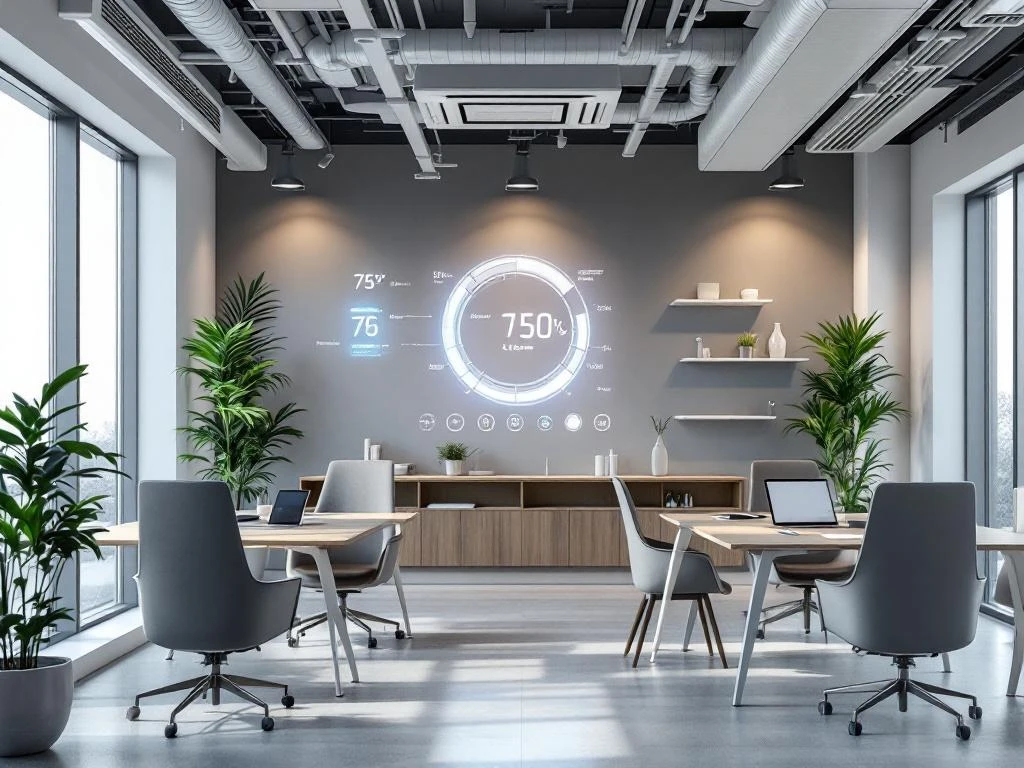
Slimme klimaatbeheersing in kantoren werkt met sensoren, slimme thermostaten en geautomatiseerde systemen die samen de temperatuur en luchtkwaliteit regelen. Deze technologie past het klimaat automatisch aan op basis van bezetting, buitentemperatuur en voorkeuren van werknemers. Het resultaat is een comfortabele werkomgeving die energie bespaart en de productiviteit verhoogt.
Wat is slimme klimaatbeheersing en waarom is het belangrijk voor kantoren?
Slimme klimaatbeheersing is een geautomatiseerd systeem dat de temperatuur, luchtvochtigheid en luchtkwaliteit in kantoorgebouwen regelt zonder handmatige ingrepen. Het maakt gebruik van sensoren, algoritmen en een internetverbinding om het binnenklimaat te optimaliseren.
De technologie achter slimme klimaatbeheersing bestaat uit verschillende componenten die samenwerken. IoT-sensoren meten continu de temperatuur, luchtvochtigheid en CO2-niveaus in verschillende ruimtes. Deze gegevens worden doorgestuurd naar een centraal systeem dat beslissingen neemt over het aanpassen van het klimaat.
Voor moderne kantooromgevingen is dit systeem relevant omdat het meerdere problemen tegelijk oplost. Je krijgt een consistente temperatuur in alle ruimtes, wat zorgt voor meer comfort voor werknemers. Tegelijkertijd bespaart het energie door alleen te verwarmen of koelen wanneer dat nodig is.
Het systeem leert ook van patronen in jullie kantoor. Het weet wanneer bepaalde ruimtes het drukst zijn en past het klimaat daarop aan. Dit betekent dat vergaderruimtes automatisch worden gekoeld voordat een meeting begint.
Hoe werkt automatische temperatuurregeling in een kantoorgebouw?
Automatische temperatuurregeling werkt met een netwerk van slimme thermostaten en sensoren die realtime data verzamelen en het klimaatsysteem aansturen. Het systeem maakt gebruik van algoritmen om de optimale temperatuur te bepalen en past zich automatisch aan veranderende omstandigheden aan.
De basis van het systeem wordt gevormd door bewegingssensoren die detecteren hoeveel mensen er in een ruimte aanwezig zijn. Meer mensen betekent meer lichaamswarmte, dus het systeem past de koeling daarop aan. Temperatuursensoren in verschillende zones meten de werkelijke temperatuur en vergelijken deze met de gewenste waarde.
Slimme thermostaten fungeren als het brein van het systeem. Ze ontvangen informatie van alle sensoren en sturen het verwarmings- en koelsysteem aan. Deze thermostaten kunnen leren van jullie gewoonten en voorkeuren, waardoor ze steeds beter worden in het voorspellen van wat er nodig is.
Het systeem houdt ook rekening met externe factoren zoals de buitentemperatuur en weersvoorspellingen. Op warme dagen begint het systeem eerder met koelen, terwijl het op koude dagen de verwarming tijdig opstart.
Welke voordelen biedt slimme klimaatbeheersing voor werknemers en bedrijven?
Slimme klimaatbeheersing verbetert de productiviteit van werknemers door een consistent comfortabel werkklimaat te creëren. Tegelijkertijd biedt het bedrijven aanzienlijke energiebesparingen en lagere operationele kosten door efficiënte automatisering.
Voor werknemers betekent dit een veel aangenamere werkervaring. Je hoeft niet meer te klagen over te warme of te koude ruimtes, omdat het systeem automatisch de juiste temperatuur handhaaft. Onderzoek toont aan dat werknemers productiever zijn bij een temperatuur tussen 20 en 22 graden Celsius.
De gezondheidsvoordelen zijn ook belangrijk. Het systeem monitort de luchtkwaliteit en zorgt voor voldoende ventilatie. Dit vermindert de kans op hoofdpijn, vermoeidheid en concentratieproblemen die vaak voorkomen in slecht geventileerde kantoren.
Voor bedrijven zijn de financiële voordelen aantrekkelijk. Energiebesparingen van 20 tot 30% zijn realistisch, omdat het systeem alleen energie gebruikt wanneer dat echt nodig is. Je betaalt niet meer voor het verwarmen van lege ruimtes of het overconditioneren van kantoorruimtes.
Duurzaamheidsaspecten spelen ook een rol. Door minder energie te verbruiken, vermindert jullie kantoor de CO2-uitstoot. Dit helpt bij het behalen van duurzaamheidsdoelstellingen en verbetert jullie bedrijfsimago.
Wat zijn de verschillende soorten slimme klimaatsystemen voor kantoren?
Er zijn vier hoofdtypen slimme klimaatsystemen: individuele klimaatregeling per werkplek, zonegebaseerde systemen voor verschillende kantoorgebieden, centrale klimaatbeheersing voor het hele gebouw en hybride oplossingen die meerdere benaderingen combineren.
Individuele klimaatregeling geeft elke werknemer controle over zijn eigen werkplek. Dit werkt goed voor open kantoren waar mensen verschillende temperatuurvoorkeuren hebben. Het nadeel is dat het duurder is om te installeren en meer energie kan verbruiken door conflicterende instellingen.
Zonegebaseerde systemen verdelen het kantoor in verschillende gebieden die apart worden geregeld. Vergaderruimtes, open werkplekken en kantines krijgen elk hun eigen klimaatregeling. Dit is efficiënt omdat verschillende ruimtes verschillende behoeften hebben.
Centrale klimaatbeheersing regelt het hele gebouw vanuit één systeem. Dit is het meest energiezuinig en het goedkoopst om te onderhouden. Het werkt het beste in kleinere kantoren waar iedereen ongeveer dezelfde temperatuurvoorkeuren heeft.
Hybride oplossingen combineren centrale beheersing met lokale aanpassingen. Het basissysteem zorgt voor de hoofdtemperatuur, terwijl individuele zones kleine aanpassingen kunnen maken. Dit biedt de beste balans tussen comfort, efficiëntie en kosten.
Hoe kies je het juiste slimme klimaatsysteem voor jouw kantoor?
De keuze voor het juiste systeem hangt af van jullie kantoorgrootte, budget, bestaande infrastructuur en specifieke behoeften. Begin met het beoordelen van jullie huidige situatie en bepaal welke problemen je wilt oplossen.
Voor kleine kantoren (tot 50 werknemers) is meestal een centraal systeem met zone-indeling voldoende. Dit is kosteneffectief en eenvoudig te beheren. Grote kantoren hebben vaak baat bij hybride systemen die zowel centrale efficiëntie als lokale flexibiliteit bieden.
Budget speelt een belangrijke rol bij de keuze. Individuele systemen hebben hogere installatiekosten, maar kunnen op termijn energie besparen. Centrale systemen zijn goedkoper om te installeren, maar minder flexibel in gebruik.
Kijk naar jullie bestaande infrastructuur. Als je al een modern verwarmings- en koelsysteem hebt, kun je vaak slimme componenten toevoegen. Bij oudere systemen kan een complete vervanging nodig zijn.
Denk ook aan toekomstige uitbreiding. Als jullie bedrijf groeit, kies dan een systeem dat makkelijk uit te breiden is. Modulaire systemen bieden deze flexibiliteit zonder grote extra investeringen.
Test het systeem eerst in een klein gebied voordat je het hele kantoor ombouwt. Dit helpt je om eventuele problemen op te lossen en werknemers te laten wennen aan de nieuwe technologie.
Hoe Wout Monseurs helpt met smart office
Wij helpen bedrijven bij het creëren van slimme kantooromgevingen, waarbij klimaatbeheersing een belangrijk onderdeel is. Als complete kantoorinrichter begrijpen we hoe verschillende systemen samenwerken om een optimale werkplek te creëren.
Ons team analyseert jullie specifieke situatie en adviseert welk smart office-systeem het beste past bij jullie behoeften en budget. We kijken niet alleen naar klimaatbeheersing, maar naar de complete werkplekervaring van jullie werknemers.
Door onze jarenlange ervaring weten we welke systemen betrouwbaar zijn en goed presteren in de Nederlandse kantooromgeving. We werken samen met gerenommeerde leveranciers die kwaliteit en service garanderen.
Wil je weten hoe slimme klimaatbeheersing jullie kantoor kan verbeteren? Neem contact met ons op voor een vrijblijvend adviesgesprek. We bespreken graag de mogelijkheden voor jullie smart office en hoe we kunnen helpen bij de implementatie.
Veelgestelde vragen
Hoeveel kost de installatie van een slim klimaatsysteem voor een gemiddeld kantoor?
De kosten variëren sterk afhankelijk van de kantoorgrootte en gekozen systeem. Voor een klein kantoor (20-50 werknemers) kun je rekenen op €15.000-€35.000, terwijl grote kantoren €50.000-€150.000 kunnen kosten. De investering verdient zichzelf meestal terug binnen 3-5 jaar door energiebesparingen en verhoogde productiviteit.
Kan ik een slim klimaatsysteem installeren in een oud kantoorgebouw?
Ja, dit is zeker mogelijk, maar vereist mogelijk extra werkzaamheden. Oudere gebouwen hebben vaak verouderde leidingen en elektrische installaties die aangepast moeten worden. Een goede isolatie is essentieel voor optimale werking. Laat eerst een technische analyse uitvoeren om de haalbaarheid en kosten te bepalen.
Hoe lang duurt het om werknemers te laten wennen aan het nieuwe systeem?
De meeste werknemers wennen binnen 2-4 weken aan het nieuwe klimaatsysteem. Begin met een informatiesessie waarin je uitlegt hoe het systeem werkt en welke voordelen het biedt. Zorg voor een feedbackperiode waarin werknemers opmerkingen kunnen maken, en pas indien nodig de instellingen aan voor optimaal comfort.
Wat gebeurt er als het systeem uitvalt of internet wegvalt?
Moderne slimme klimaatsystemen hebben ingebouwde back-upfuncties die het systeem laten werken op basis van vooraf ingestelde parameters. Bij internetuitval schakelt het systeem over naar een lokale modus met basisinstellingen. Voor kritieke situaties kun je handmatige override-functies gebruiken om de temperatuur aan te passen.
Hoeveel onderhoud heeft een slim klimaatsysteem nodig?
Slim klimaatsystemen vereisen minder onderhoud dan traditionele systemen omdat ze zelf problemen kunnen detecteren en melden. Plan twee keer per jaar een professionele inspectie in, vervang filters volgens schema en houd sensoren schoon. Het systeem waarschuwt je automatisch wanneer onderhoud nodig is.
Kunnen werknemers het systeem zelf aanpassen of hebben ze daar geen controle over?
Dit hangt af van het gekozen systeem en de instellingen die je als beheerder kiest. Je kunt werknemers beperkte controle geven binnen vooraf ingestelde grenzen (bijvoorbeeld 2-3 graden aanpassing). Voor individuele werkplekken zijn er slimme ventilatoren of verwarmingselementen die persoonlijke aanpassingen mogelijk maken zonder het hoofdsysteem te beïnvloeden.
Hoe zit het met privacy en databeveiliging bij slimme klimaatsystemen?
Slimme klimaatsystemen verzamelen vooral temperatuur- en bezettingsdata, geen persoonlijke informatie. Kies systemen die voldoen aan GDPR-regelgeving en gebruik beveiligde netwerken. Zorg dat data lokaal wordt opgeslagen waar mogelijk en werk alleen met leveranciers die transparant zijn over hun databeleid en beveiligingsmaatregelen.