

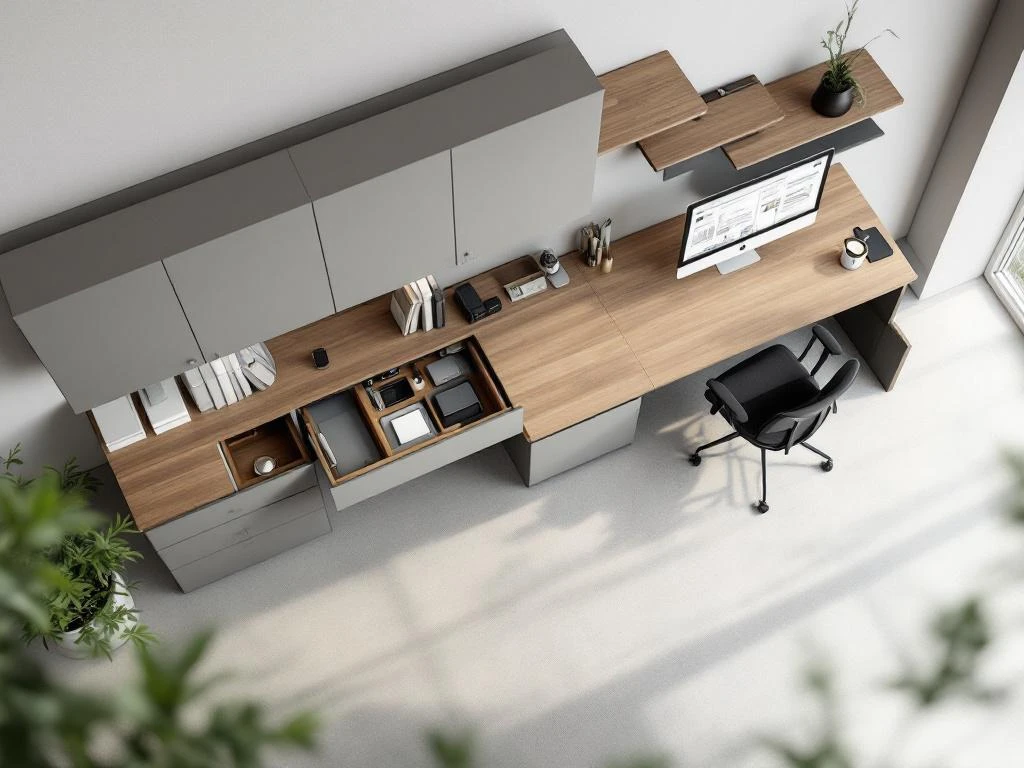
Voldoende opslagruimte binnen de projectinrichting creëer je met een slimme combinatie van verschillende opbergoplossingen, zoals kasten, laden, wandsystemen en multifunctionele meubels. Begin met het inventariseren van je opslagbehoeften per werkplek en afdeling en benut vervolgens de verticale ruimte, onderbenutte hoeken en de digitalisering van documenten om elke vierkante meter optimaal te gebruiken.
Waarom is voldoende opslagruimte zo belangrijk bij kantoorinrichting?
Voldoende opslagruimte heeft een directe invloed op de productiviteit van je medewerkers en de algehele werksfeer. Wanneer documenten, materialen en persoonlijke spullen een vaste plek hebben, werken mensen efficiënter en ervaren zij minder stress. Een opgeruimde werkomgeving zorgt voor mentale rust en helpt bij het behouden van overzicht.
Te weinig opbergruimte leidt tot rommel op werkplekken, wat de concentratie verstoort en een onprofessionele uitstraling geeft. Medewerkers verspillen tijd aan het zoeken naar documenten of materialen. Dit frustreert niet alleen jezelf en je team, maar maakt ook een slechte indruk op klanten en bezoekers.
Onvoldoende opslagruimte beïnvloedt ook de werkprocessen binnen je bedrijf. Belangrijke documenten raken zoek, deadlines worden gemist door desorganisatie en de samenwerking tussen afdelingen wordt bemoeilijkt. Een goed doordachte opslagstrategie voorkomt deze problemen en draagt bij aan een soepel draaiende organisatie.
Welke soorten opslagoplossingen kun je gebruiken in een kantoor?
Kantoorkasten vormen de basis van elke opslagstrategie en zijn beschikbaar in verschillende hoogtes en breedtes. Hoge kasten benutten de verticale ruimte optimaal, terwijl lage kasten ook kunnen dienen als roomdividers. Laden in bureaus en aparte ladeblokken bieden toegankelijke opslag voor dagelijks gebruikte items.
Wandsystemen zijn ideaal voor het opbergen van mappen, boeken en decoratieve items zonder vloerruimte in te nemen. Deze systemen kun je flexibel aanpassen aan veranderende behoeften. Mobiele opslag, zoals verrijdbare ladeblokken en trolleys, biedt flexibiliteit en kun je gemakkelijk verplaatsen waar nodig.
Multifunctionele meubels combineren verschillende functies in één product. Denk aan vergadertafels met ingebouwde opslag, zitbanken met opbergruimte of bureaus met geïntegreerde archiefkasten. Deze oplossingen zijn perfect voor kleinere kantoren, waar elke vierkante meter telt.
Digitale opslagoplossingen verdienen ook aandacht. Door documenten te digitaliseren, verminder je de behoefte aan fysieke archiefruimte aanzienlijk. Cloudopslag zorgt ervoor dat informatie altijd toegankelijk is, ongeacht de locatie.
Hoe bereken je hoeveel opslagruimte je werkelijk nodig hebt?
Begin met een inventarisatie van alle items die opgeslagen moeten worden per werkplek en afdeling. Tel documenten, kantoorbenodigdheden, persoonlijke spullen en apparatuur. Maak onderscheid tussen dagelijks gebruikte items, wekelijks benodigde materialen en archiefstukken die zelden geraadpleegd worden.
Reken per werkplek op ongeveer 0,5 tot 1 vierkante meter opslagruimte voor standaard kantoorbehoeften. Dit omvat persoonlijke documenten, kantoorartikelen en enkele persoonlijke items. Afdelingen zoals administratie of juridische zaken hebben meer archiefruimte nodig, vaak 1,5 tot 2 keer de standaard hoeveelheid.
Denk ook aan de toekomstige groei van je bedrijf. Plan 20–30% extra opslagcapaciteit in om uitbreiding mogelijk te maken zonder complete herinrichting. Bekijk welke documenten je kunt digitaliseren om de fysieke opslagbehoefte te verminderen.
Maak een lijst van seizoensgebonden items, promotioneel materiaal en reservekantoorartikelen. Deze hebben niet allemaal een plek nodig in het directe werkgebied, maar kunnen worden opgeslagen in centrale opslagruimtes of archiefkasten.
Welke slimme tricks helpen je ruimte optimaal te benutten?
Verticaal opbergen is de meest effectieve manier om meer opslagruimte te creëren zonder extra vloeroppervlak. Gebruik hoge kasten tot aan het plafond en plaats minder gebruikte items bovenin. Wandplanken en hangmappen maken optimaal gebruik van de verticale ruimte.
Onderbenutte hoeken en ruimtes bieden verrassend veel mogelijkheden. Hoekkasten, smalle trolleys tussen meubels en opbergruimte onder trappen worden vaak over het hoofd gezien. Multifunctionele meubels, zoals bureaus met ingebouwde opslag of zitbanken met opbergruimte, verdubbelen de functionaliteit.
Digitalisering van documenten bespaart enorm veel fysieke ruimte. Scan regelmatig gebruikte documenten en archiveer oude papieren digitaal. Dit vermindert de behoefte aan grote archiefkasten aanzienlijk.
Gebruik labels en kleurcodering voor snelle herkenning van de inhoud. Dit voorkomt dat medewerkers meerdere laden of kasten moeten doorzoeken. Regelmatige opruimacties houden de opslagruimte georganiseerd en voorkomen ophoping van overbodige items.
Hoe Wout Monseurs helpt met projectinrichting
Wij begrijpen dat optimale opslagruimte maatwerk vereist dat perfect aansluit bij jouw bedrijfsprocessen en werkwijze. Onze experts analyseren je specifieke opslagbehoeften en ontwerpen een projectinrichting die functionaliteit combineert met een professionele uitstraling.
Met meer dan 60 jaar ervaring weten we precies hoe we de verticale ruimte, onderbenutte hoeken en multifunctionele oplossingen slim kunnen inzetten. We werken met hoogwaardige merken die duurzame en flexibele opslagoplossingen bieden, zodat je kantoor meegroeit met je bedrijf.
Van het eerste ontwerp tot en met de complete realisatie begeleiden we het hele traject. Je krijgt een gedetailleerd 3D-ontwerp waarmee je precies ziet hoe de opslagruimte wordt geïntegreerd in je nieuwe werkomgeving. Neem contact met ons op voor een vrijblijvend gesprek over jouw opslaguitdagingen.
Veelgestelde vragen
Hoe onderhoud je een georganiseerd opbergsysteem op lange termijn?
Plan elke 3-6 maanden een opruimmoment in waarbij je controleert of items nog op de juiste plek staan en overbodige spullen weggooit. Maak duidelijke afspraken met medewerkers over waar items teruggeplaatst moeten worden en zorg voor voldoende labels. Een ‘one in, one out’ regel voorkomt ophoping van materialen.
Wat zijn de meest voorkomende fouten bij het inrichten van kantooropslag?
De grootste fout is het onderschatten van de benodigde opslagruimte en het niet reserveren van ruimte voor toekomstige groei. Daarnaast plaatsen veel bedrijven dagelijks gebruikte items te hoog of te ver weg, wat de efficiëntie vermindert. Ook het negeren van ergonomische aspecten, zoals het plaatsen van zware items op schouderhoogte, is een veelgemaakte fout.
Welke documenten kun je het beste digitaliseren en welke moet je fysiek bewaren?
Digitaliseer vooral dagelijks geraadpleegde documenten, facturen, contracten en correspondentie voor snelle toegang. Bewaar originele juridische documenten, officiële certificaten en documenten met handtekeningen fysiek, tenzij wettelijk anders bepaald. Maak altijd back-ups van gedigitaliseerde bestanden en zorg voor een duidelijke naamgevingsstructuur.
Hoe pak je opslag aan in een open kantoorruimte zonder vaste werkplekken?
Creëer centrale opslagzones met persoonlijke lockers voor medewerkers en gebruik mobiele opbergoplossingen die meebewegen. Investeer in digitale systemen voor documentbeheer en zorg voor voldoende gemeenschappelijke opbergruimte voor kantoorbenodigdheden. Wandsystemen en hoge kasten aan de randen van de ruimte bieden extra opslag zonder de openheid te verstoren.
Wat kost een professioneel opbergsysteem gemiddeld per werkplek?
Een basisopbergsysteem kost ongeveer €200-400 per werkplek, inclusief een ladekast en wandopslag. Voor uitgebreidere oplossingen met hoogwaardige kasten en multifunctionele meubels moet je rekenen op €500-800 per werkplek. Maatwerk en premium merken kunnen oplopen tot €1000+ per werkplek, maar bieden vaak meer duurzaamheid en flexibiliteit.
Hoe zorg je ervoor dat opslagoplossingen meegroeien met je bedrijf?
Kies voor modulaire systemen die je kunt uitbreiden en herindelen zonder complete vervanging. Investeer in mobiele oplossingen die je gemakkelijk kunt verplaatsen bij kantoorverbouwingen. Plan vanaf het begin 20-30% extra capaciteit in en kies voor neutrale, tijdloze designs die bij verschillende kantoorstijlen passen.
Welke veiligheidsaspecten moet je meenemen bij kantooropslag?
Zorg dat hoge kasten goed verankerd zijn aan de muur om omvallen te voorkomen en plaats zware items in de onderste laden. Houd nooduitgangen vrij van opbergmeubels en zorg dat gangpaden breed genoeg blijven (minimaal 90 cm). Voor vertrouwelijke documenten zijn afsluitbare kasten noodzakelijk, en brandbestendige kasten zijn aan te raden voor kritieke bedrijfsdocumenten.