

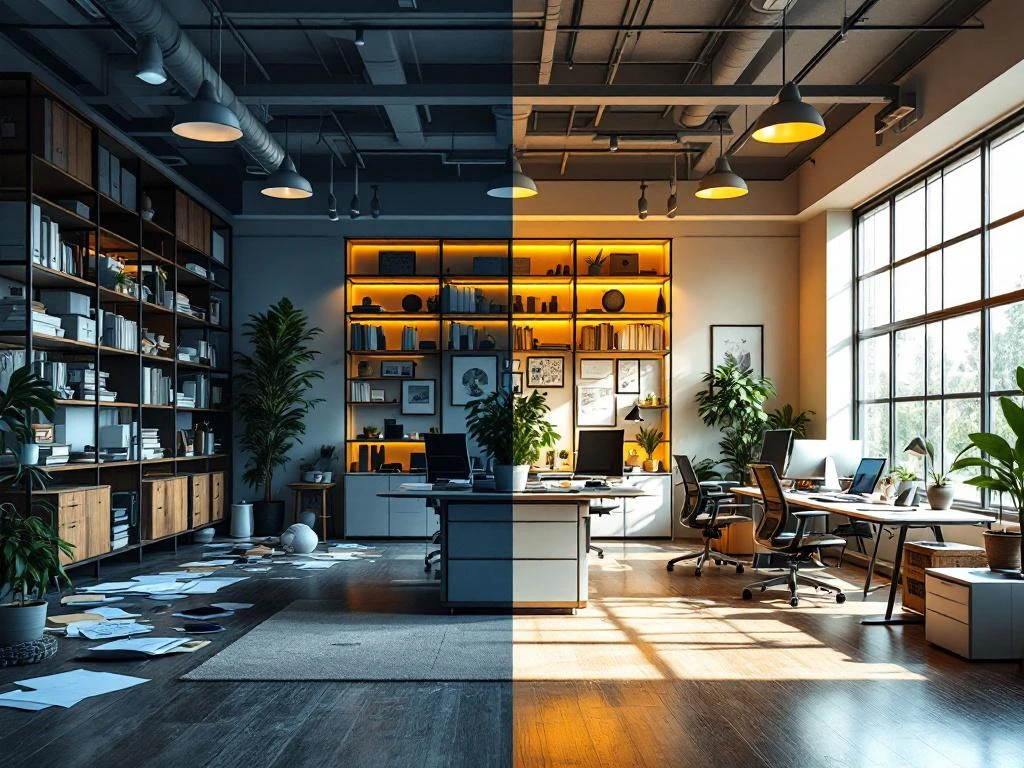
Yes, office design can significantly increase your productivity. A well-designed workspace improves your concentration, reduces stress, and supports natural work processes. Ergonomic furniture, proper lighting, and a well-thought-out layout ensure that you work more comfortably and are less distracted. The impact is immediately noticeable in your daily work performance and overall well-being.
Why does office design affect productivity?
Your physical work environment directly influences how your brain functions and how your body reacts while working. Research shows that a well-designed workplace increases your concentration, reduces stress, and has a positive effect on your motivation.
The psychological effects are clearly noticeable. Cluttered, poorly lit spaces lead to mental fatigue and distraction. In contrast, organized and comfortable workplaces help you stay focused and complete tasks more efficiently.
Your office layout also has a significant physiological impact. Poor posture caused by uncomfortable chairs can lead to back and neck pain. This discomfort can disrupt your concentration and sap your energy. Colors also play a role: cool tones such as blue promote concentration, while warm colors stimulate creativity.
Materials and textures in your workspace subconsciously influence your mood. Natural materials such as wood create a calming atmosphere, while too many hard surfaces can cause stress.
Which office furniture increases your productivity the most?
Ergonomic office chairs, height-adjustable desks, and smart storage solutions have the greatest impact on your work efficiency. These pieces of furniture provide optimal support for your body and keep your workplace organized, allowing you to perform better.
An ergonomic office chair is your most important investment. It supports your back in its natural S-curve, prevents pain, and keeps you more alert. You can work comfortably for longer without fatigue hindering your productivity.
Sit-stand desks revolutionize your working day. By regularly alternating between sitting and standing, you improve your blood circulation, increase your energy levels, and reduce the risks of prolonged sitting. Many people find that they think more creatively when working standing up.
Well-designed storage solutions keep your desk tidy and your mind clear. Drawers, cabinets, and organizers ensure that everything has its place. This saves time searching for things and prevents the stress caused by clutter.
Additional furniture such as a good desk lamp, a document holder, and an ergonomic keyboard complete your productive workplace.
How do light and sound affect your work performance?
Natural light increases alertness and regulates your biological clock, while too much artificial light causes headaches and fatigue. Noise control is equally important: constant background noise leads to stress and loss of concentration.
Daylight is essential for optimal performance. It stimulates the production of serotonin, which improves your mood and focus. Therefore, place your desk near a window or ensure that your workspace has sufficient natural light.
Artificial lighting should complement natural daylight, not replace it. LED lamps with adjustable color temperature can help: cool white light (4000–6500 K) for concentrated work, warm white light (2700–3000 K) for relaxed tasks.
Avoid harsh shadows and reflections on your screen. Indirect lighting creates a pleasant working atmosphere without straining your eyes. A good desk lamp prevents you from leaning forward to see better.
Noise control requires a well-thought-out approach. Open-plan offices often have too much background noise, which disrupts your concentration. Sound-insulating materials, plants, and soft furniture fabrics dampen unwanted noise. Consider noise-canceling headphones for tasks that require deep concentration.
What is the ideal layout for a productive office?
The ideal office layout combines open spaces for collaboration with quiet zones for concentrated work. Zone layout based on activities, with clear walking routes and flexible workstations, optimally supports different work tasks.
Open workspaces promote communication and teamwork, but can be distracting for tasks that require focus. The solution lies in creating different zones: collaboration areas for meetings, quiet workspaces for concentration, and informal meeting places for spontaneous conversations.
Movement around the office should feel natural. Wide corridors and logical walking routes prevent congestion and support the workflow. Strategically place frequently used facilities such as printers and coffee machines so that they are accessible without disturbing others.
Flexibility is important in modern offices. Movable partitions and modular furniture make it possible to adapt spaces to changing needs. Activity-based working is becoming increasingly popular: employees choose the workplace that best suits their current task.
Don't forget the support: sufficient power outlets, good Wi-Fi coverage, and ergonomic facilities at every workplace ensure that productivity is not hampered by practical limitations.
How Wout Monseurs assists with project design
We understand that a productive office environment is more than just attractive furniture. Our project design begins with a thorough analysis of your work processes, team dynamics, and spatial possibilities.
Our team translates your corporate identity into a functional office design that stimulates productivity. We take care of the complete picture: from ergonomic furniture choices and optimal lighting to thoughtful zoning and acoustic solutions. Thanks to our 3D visualizations, you can see exactly what your new workspace will look like.
We take care of everything for you, from design to implementation. Our experience with high-quality brands such as Interstuhl and Voortman guarantees sustainable solutions that will last for years. Contact us for a no-obligation consultation on how we can transform your office into a productive and inspiring workplace.
Frequently asked questions
How long will it take before I notice the effects of a new office layout on my productivity?
Most people notice an improvement in their comfort and concentration within 1-2 weeks. It takes 4-6 weeks to fully adjust to ergonomic furniture and new work routines. Physiological benefits such as less back pain due to an ergonomic chair are often noticeable within a few days.
What are the most common mistakes when setting up a home office?
The biggest mistakes are: working at the kitchen table without ergonomic support, insufficient natural light, no separation between work and private space, and ignoring noise control. Many people also underestimate the importance of sufficient storage space and a good Wi-Fi connection in the workplace.
How can I improve my existing office step by step without replacing everything at once?
Start with the basics: first invest in an ergonomic office chair and improve the lighting. Then add storage solutions to eliminate clutter. Next, consider purchasing a sit-stand desk and finally optimize the acoustics and color scheme. Spread the investments over 6-12 months.
Which plants are most suitable for an office environment and why?
Sansevieria (snake plant), pothos, and spathiphyllum are ideal because they require little light, improve air quality, and are low maintenance. These plants also help dampen noise and create a calming atmosphere. Avoid plants with strong scents or those that require a lot of water.
How do I determine the correct height for my desk and monitor?
Your elbows should be at a 90-degree angle when you type, with your forearms parallel to the floor. The top of your monitor should be at eye level, about an arm's length away. Your feet should be flat on the floor or on a footrest, with your knees at a 90-degree angle.
What is the difference between activity-based working and traditional office layouts?
In activity-based working, employees do not have a fixed workplace, but choose the space that best suits their current task: quiet zones for concentration, open spaces for collaboration, or meeting places for informal discussions. This requires more flexible furniture and technology, but increases productivity by providing optimal workspaces for each activity.
How can I effectively tackle noise pollution in an open-plan office?
Use a combination of soft materials (carpet, curtains, upholstered furniture), strategically placed plants, and acoustic panels on walls or ceilings. Create different sound zones and establish rules of conduct for telephone use. For individual protection, noise-canceling headphones are very effective during tasks that require concentration.