

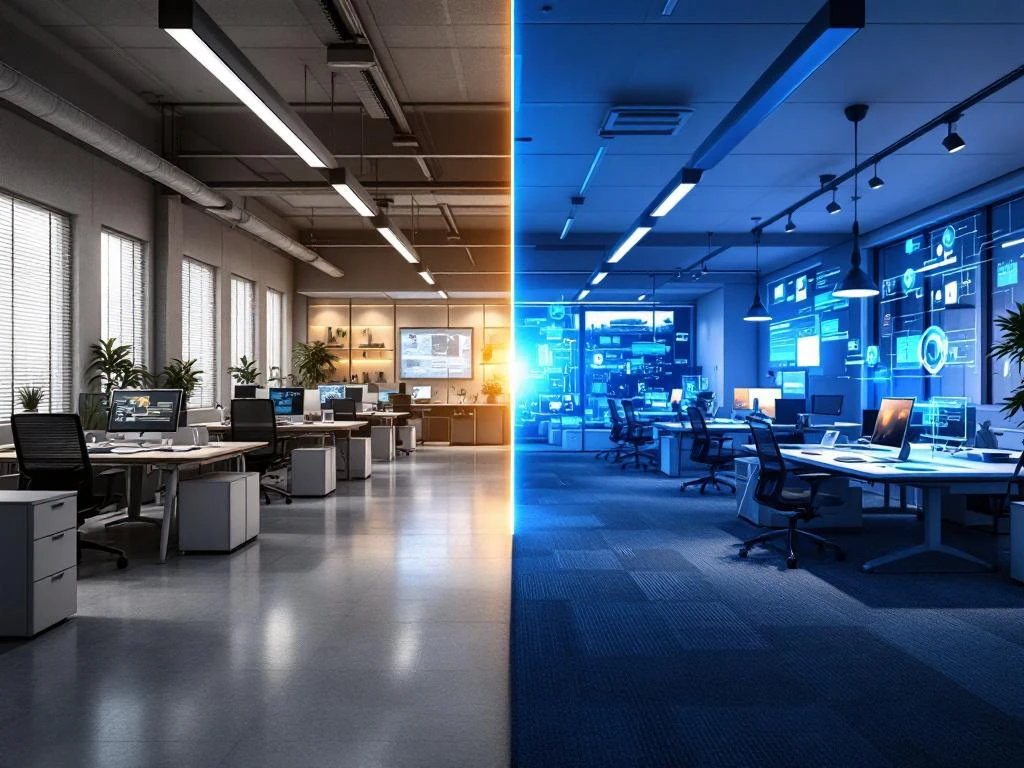
Ja, je kunt een bestaand kantoor omzetten naar een smart office. De transformatie vereist een strategische aanpak waarbij je slimme technologieën integreert in je huidige kantoorruimte. Dit omvat het installeren van IoT-sensoren, slimme verlichting, geautomatiseerde klimaatbeheersing en digitale werkplekoplossingen. Met de juiste planning en gefaseerde implementatie kun je stap voor stap je traditionele kantoor upgraden naar een intelligente werkomgeving.
Wat houdt het omzetten naar een smart office precies in?
Een smartoffice-transformatie betekent dat je je bestaande kantoorruimte uitrust met intelligente technologieën die automatisch reageren op de behoeften van werknemers en de omgeving. Het gaat om het creëren van een verbonden werkomgeving waar systemen met elkaar communiceren en processen optimaliseren.
De transformatie brengt concrete veranderingen met zich mee in verschillende aspecten van je kantoor. Verlichting wordt automatisch aangepast op basis van daglicht en de aanwezigheid van mensen. Klimaatbeheersing reageert op bezetting en buitentemperatuur. Vergaderruimtes kunnen online worden geboekt en configureren zichzelf automatisch voor presentaties.
Voor bestaande kantoorruimtes betekent dit dat je niet alles hoeft te vervangen. Veel slimme oplossingen kunnen worden geïntegreerd in je huidige infrastructuur. Denk aan slimme schakelaars die je bestaande verlichting kunnen aansturen, of sensoren die je huidige klimaatinstallatie intelligenter maken.
Welke technologie heb je nodig voor een smart office?
IoT-sensoren vormen de basis van een smart office en meten beweging, temperatuur, luchtkwaliteit en geluidsniveaus. Deze sensoren verzamelen data die andere systemen gebruiken om automatisch aanpassingen te maken voor optimaal comfort en maximale efficiëntie.
Slimme verlichting past zich automatisch aan op basis van daglicht en aanwezigheid. LED-systemen kunnen dimmen, van kleurtemperatuur veranderen en zelfs individuele werkplekken verlichten. Dit bespaart energie en verbetert het welzijn van werknemers.
Geautomatiseerde klimaatbeheersing zorgt voor een optimale temperatuur en luchtkwaliteit in verschillende zones van je kantoor. Slimme thermostaten leren van gebruikspatronen en passen de instellingen automatisch aan.
Toegangssystemen met badges, smartphone-apps of biometrische scanners vervangen traditionele sleutels. Deze systemen registreren wie wanneer het kantoor betreedt en kunnen automatisch andere systemen activeren.
Digitale werkplekoplossingen omvatten reserveringssystemen voor werkplekken en vergaderruimtes, slimme displays voor informatie-uitwisseling en geïntegreerde communicatietools die naadloos werken in de hele kantooromgeving.
Hoe pak je de omzetting van je kantoor stap voor stap aan?
Begin met een grondige inventarisatie van je huidige kantoorruimte en systemen. Analyseer welke technologie al aanwezig is en wat vervangen of geüpgraded moet worden. Breng de belangrijkste knelpunten en behoeften van je werknemers in kaart.
Stel prioriteiten op basis van impact en kosten. Start bij voorkeur met relatief eenvoudige oplossingen zoals slimme verlichting of een digitaal reserveringssysteem. Deze leveren snel zichtbare voordelen op en helpen werknemers wennen aan smartoffice-technologie.
Plan een gefaseerde implementatie over meerdere maanden. Fase één kan zich richten op basisautomatisering zoals verlichting en klimaat. Fase twee voegt toegangssystemen en werkplekbeheer toe. Fase drie integreert geavanceerde analytics en AI-gestuurde optimalisatie.
Test elke fase grondig voordat je doorgaat naar de volgende stap. Verzamel feedback van gebruikers en pas instellingen aan. Zorg voor adequate training, zodat werknemers de nieuwe systemen effectief kunnen gebruiken.
Monitor de prestaties continu en optimaliseer instellingen op basis van gebruiksdata. Smartoffice-systemen worden effectiever naarmate ze meer leren over de gebruikspatronen in je kantoor.
Wat zijn de kosten van het omzetten naar een smart office?
De kosten voor smartoffice-transformatie variëren tussen € 50 en € 200 per vierkante meter, afhankelijk van de gewenste functionaliteit en complexiteit. Basisautomatisering kost minder, terwijl volledig geïntegreerde systemen met AI en geavanceerde analytics een grotere investering vereisen.
Verschillende factoren beïnvloeden de totaalprijs aanzienlijk. De grootte van je kantoor bepaalt het aantal benodigde sensoren en apparaten. De kwaliteit van je huidige infrastructuur bepaalt hoeveel aanpassingen nodig zijn. Complexe integraties tussen verschillende systemen kosten meer dan standalone-oplossingen.
Reserveer budget voor zowel hardware- als softwarekosten. Hardware omvat sensoren, slimme apparaten en netwerkinfrastructuur. Softwarekosten zijn vaak terugkerend en omvatten licenties, cloudopslag en onderhoud.
Bereken de return on investment door energiebesparingen, verhoogde productiviteit en lagere onderhoudskosten mee te nemen. Veel bedrijven zien hun investering binnen twee tot vier jaar terugverdiend door efficiëntiewinsten.
Overweeg een gefaseerde aanpak om de initiële investering te spreiden. Start met high-impact, low-costoplossingen en breid geleidelijk uit naarmate je budget en behoeften groeien.
Hoe Wout Monseurs helpt met smartoffice-transformatie
Wij begeleiden je door het complete proces van smartoffice-transformatie, van de eerste analyse tot volledige implementatie en doorlopende ondersteuning. Ons team combineert meer dan zestig jaar ervaring in kantoorinrichting met expertise in moderne smartoffice-technologieën.
We starten altijd met een uitgebreide analyse van je huidige situatie en toekomstwensen. Vervolgens ontwikkelen we een smartofficestrategie die perfect aansluit bij je budget en bedrijfsdoelstellingen. Onze persoonlijke aanpak zorgt ervoor dat elke oplossing precies past bij jouw specifieke behoeften.
Tijdens de implementatie coördineren we alle leveranciers en zorgen we voor een naadloze integratie met je bestaande kantoorinrichting. Na installatie bieden we training voor je team en continue ondersteuning om optimale prestaties te garanderen.
Wil je weten hoe we jouw kantoor kunnen transformeren tot een smart office? Neem contact met ons op voor een vrijblijvend adviesgesprek en ontdek de mogelijkheden voor jouw werkplek.
Veelgestelde vragen
Hoe lang duurt het om een bestaand kantoor volledig om te zetten naar een smart office?
De volledige transformatie duurt gemiddeld 3-6 maanden, afhankelijk van de grootte van je kantoor en de complexiteit van de gewenste systemen. Door een gefaseerde aanpak kun je al na enkele weken de eerste voordelen ervaren van basisautomatisering zoals slimme verlichting.
Kan ik smart office technologie installeren zonder grote verbouwingen?
Ja, de meeste smart office oplossingen kunnen worden geïnstalleerd zonder grote ingrepen in je bestaande kantoor. Draadloze sensoren, slimme schakelaars en cloud-gebaseerde systemen minimaliseren de noodzaak voor verbouwingen. Alleen voor uitgebreide bekabeling of grote klimaatinstallaties kunnen kleine aanpassingen nodig zijn.
Wat gebeurt er als de technologie uitvalt of er een storing optreedt?
Smart office systemen hebben meestal ingebouwde backup-functionaliteiten en kunnen handmatig worden overgenomen. Verlichting en klimaat blijven normaal functioneren, alleen de automatische functies vallen tijdelijk weg. Professionele systemen bieden 24/7 monitoring en snelle remote ondersteuning voor storingen.
Hoe privacygevoelig zijn de data die smart office sensoren verzamelen?
Smart office sensoren verzamelen voornamelijk anonieme data over bezetting, temperatuur en lichtsterkte. Moderne systemen werken GDPR-compliant en slaan geen persoonlijke informatie op. Je kunt altijd kiezen welke data wordt verzameld en hoe lang deze wordt bewaard.
Kunnen werknemers de smart office systemen zelf bedienen en aanpassen?
Ja, de meeste smart office systemen bieden gebruiksvriendelijke apps waarmee werknemers persoonlijke voorkeuren kunnen instellen voor verlichting, temperatuur en werkplekken. Beheerders kunnen bepalen welke instellingen werknemers zelf mogen aanpassen en welke centraal geregeld blijven.
Is het mogelijk om smart office technologie uit te proberen voordat ik investeer?
Veel leveranciers bieden pilot-projecten of demo-installaties aan waarbij je een klein deel van je kantoor tijdelijk kunt uitrusten met smart office technologie. Dit geeft je de kans om de voordelen te ervaren en werknemersfeedback te verzamelen voordat je een volledige investering doet.
Wat als mijn huidige IT-infrastructuur niet geschikt is voor smart office systemen?
De meeste smart office oplossingen werken met standaard WiFi-netwerken en hebben minimale IT-eisen. Voor complexere systemen kan een netwerkupgrade nodig zijn, maar dit wordt altijd vooraf geanalyseerd. Veel systemen kunnen ook werken via mobiele dataverbindingen als backup.