

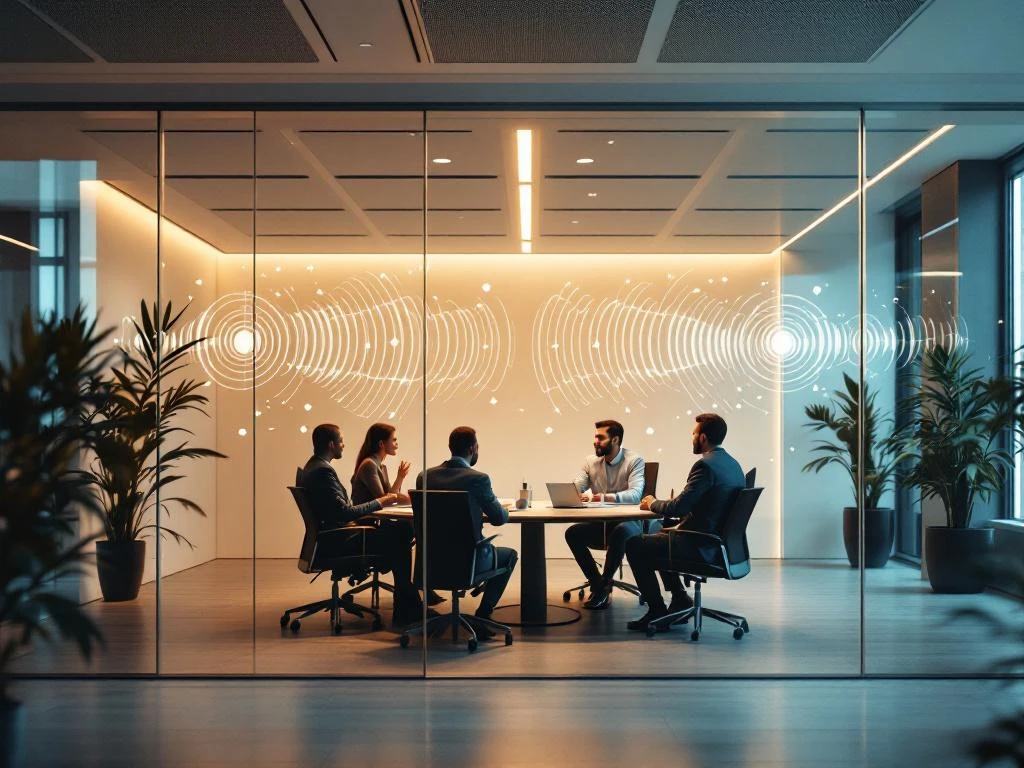
Yes, smart office meeting rooms can effectively block out noise by utilizing modern technologies such as acoustic panels, smart glass, and noise-masking systems. Their effectiveness depends on the room layout, the materials used, and the integrated audio solutions. Good sound insulation improves concentration, ensures privacy, and boosts productivity during meetings.
What does soundproofing mean in smart office meeting rooms?
Soundproofing in smart office meeting rooms prevents sound from leaking from inside to outside and vice versa. This differs from sound absorption, which dampens sound within the room. Modern smart office technology integrates both principles for optimal acoustic performance.
The concept combines traditional insulation materials with smart systems that automatically respond to noise conditions. Smart sensors detect noise levels and activate noise-masking systems when necessary. This technology ensures that confidential conversations remain private while blocking out external noise.
Effective soundproofing is essential for productive meetings, as it minimizes distractions and improves the audio and video quality of conference calls. In open-plan office environments, it prevents meetings from disturbing other employees.
What technologies provide sound insulation in smart meeting rooms?
Modern smart office meeting rooms use a combination of technologies to ensure optimal sound insulation. Acoustic panels with built-in sensors automatically adjust their properties based on occupancy and noise levels. Smart glass can switch electrically between transparent and opaque, while providing sound insulation.
Key technologies include:
- Adaptive acoustic panels that respond to ambient noise
- Electronically switchable glass with sound-absorbing properties
- Sound masking systems that activate automatically
- Integrated audio solutions with noise cancellation
Sound masking systems generate subtle background sounds that mask conversations without being distracting. These systems work in conjunction with climate control and lighting to create an integrated smart office experience.
How effective is soundproofing in different types of smart office meeting rooms?
The effectiveness of soundproofing varies greatly depending on the layout of the meeting room. Fully enclosed rooms with double walls provide the best soundproofing, while open meeting areas rely on smart sound masking systems and strategically placed acoustic elements.
Glass meeting pods perform well when equipped with laminated acoustic glass and smart ventilation that prevents sound leakage. The thickness of the glass and the quality of the seals largely determine their performance. Smart office sensors continuously monitor acoustic performance and automatically adjust the systems.
Factors that influence effectiveness include the size of the space, the number of people, the presence of hard surfaces, and integration with other smart office systems. Hybrid solutions that combine physical isolation with digital sound processing often deliver the best results.
What are the benefits of effective soundproofing for meetings and productivity?
Effective soundproofing in smart office meeting rooms leads to significantly improved concentration and increased productivity. Participants can focus entirely on the discussion, without being distracted by ambient noise or worrying about the privacy of sensitive information.
Specific benefits include improved audio quality for video and conference calls, enabling remote participants to engage more effectively. Confidentiality is ensured, which is crucial for strategic discussions and HR-related matters. Employees outside the meeting room experience less disruption, which enhances overall office productivity.
Smart office soundproofing also contributes to employee well-being by reducing stress levels. Constant exposure to unwanted noise increases stress and impairs cognitive performance. Well-soundproofed meeting rooms create a calming environment that fosters creativity and collaboration.
How Wout Monseurs Helps with Smart Office Soundproofing Solutions
We offer comprehensive smart office soundproofing solutions that integrate seamlessly with modern workspaces. Our team analyzes your specific acoustic challenges and designs custom solutions that combine optimal soundproofing with smart office features.
Our approach includes:
- Acoustic analysis of your current meeting rooms
- Advice on optimal combinations of insulation materials and smart technology
- Integration with existing smart office systems
- Implementation of adaptive noise control solutions
With over 60 years of experience in office design, we understand how soundproofing contributes to productive work environments. We partner with leading suppliers of acoustic materials and smart office technology to deliver sustainable solutions that grow with your organization.
Contact us for a no-obligation assessment of your meeting rooms and discover how smart soundproofing can transform your office environment.
Frequently asked questions
What is the cost of installing smart soundproofing in existing meeting rooms?
Costs range from €2,000 to €15,000 per meeting room, depending on the size, desired technologies, and complexity of the integration. Basic sound masking systems are affordable, while fully integrated solutions featuring smart glass and adaptive panels require a greater investment. We always provide a cost-benefit analysis to demonstrate the ROI in terms of improved productivity.
How long does it take to install smart soundproofing systems, and will this disrupt daily operations?
Most installations are completed within 1–3 business days per meeting room, depending on the complexity. We schedule work outside of business hours or on weekends to minimize disruption. Simple upgrades, such as sound masking systems, can often be installed within a few hours without interrupting business operations.
Can smart soundproofing systems be integrated with our existing meeting technology, such as Teams or Zoom?
Yes, modern smart soundproofing systems integrate seamlessly with popular video conferencing platforms. The systems can automatically activate when a video meeting begins and optimize audio settings for better sound quality. This integration significantly enhances the experience for both in-person and remote participants.
What happens if the smart systems fail—will we still have soundproofing?
All smart sound insulation systems feature a failsafe mode in which physical insulation elements—such as acoustic panels and laminated glass—continue to function. In the event of a system failure, sound masking systems automatically switch to a standard mode. We always recommend a hybrid approach in which technology enhances, rather than replaces, physical insulation.
How can I determine whether the soundproofing in our meeting rooms is actually effective?
Smart office systems provide real-time monitoring of noise levels and sound insulation performance via dashboards. In addition, we conduct periodic acoustic measurements using professional equipment. Key indicators include a reduction in ambient noise of at least 25–30 dB and positive user feedback regarding concentration and privacy.
What maintenance is required for smart soundproofing systems?
Smart systems require minimal maintenance thanks to self-diagnostic functions and automatic calibration. Semi-annual sensor checks and software updates are usually sufficient. Physical components such as acoustic panels should be cleaned annually and inspected for wear and tear. We offer maintenance contracts that include preventive service and 24/7 support for critical systems.