

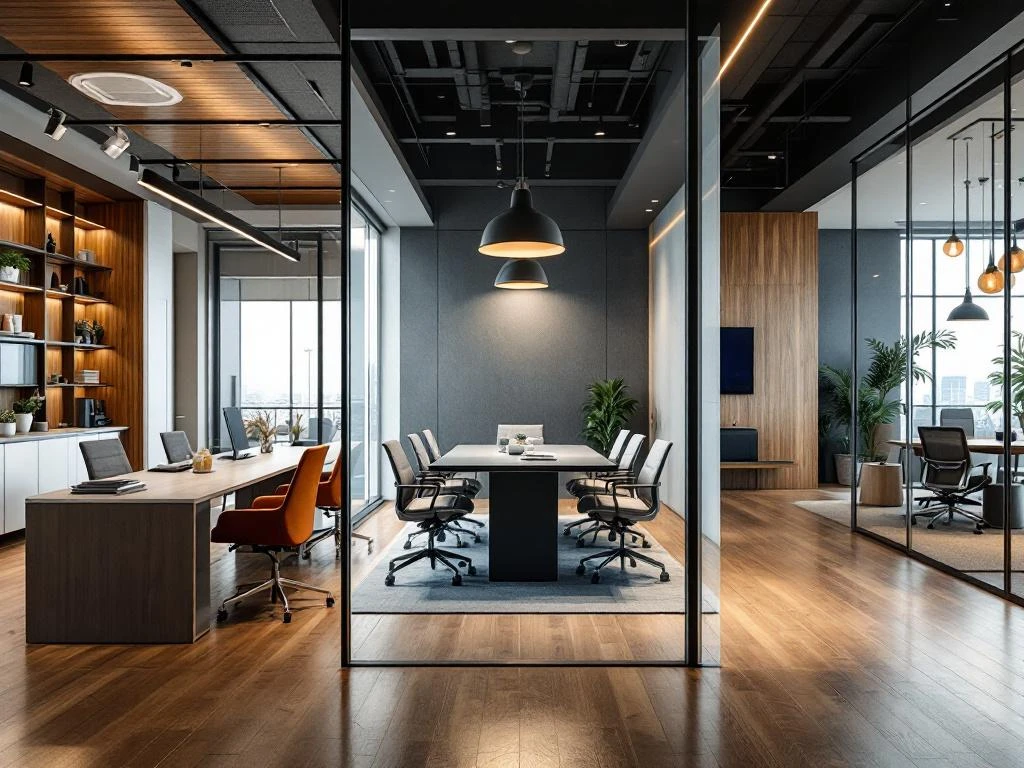
Project design is suitable for virtually all business spaces where people work, from traditional offices to modern coworking spaces. Think of company offices, meeting rooms, showrooms, reception areas, workshops, and public spaces. Suitability depends on factors such as room size, function, intensity of use, and budget. Professional design improves the functionality, appearance, and working atmosphere of any business environment.
What is project design and which spaces does it cover?
Project design is the complete professional design of business spaces, in which design, furniture, materials, and execution are coordinated. It goes beyond simply placing a few desks and chairs: it is a total concept that combines functionality, ergonomics, and corporate identity.
Project design can be applied to a wide range of spaces. Traditional office spaces form the basis, but modern working environments such as open offices, coworking spaces, and flexible workspaces are also included. Meeting rooms, boardrooms, and presentation rooms benefit from a well-thought-out design that promotes communication and collaboration.
Public business spaces are also suitable for project design. Reception areas, waiting rooms, and showrooms determine the first impression on visitors and customers. Production areas, workshops, and warehouses have specific requirements in terms of safety and efficiency. Canteens, break rooms, and social areas within companies also fall under project design.
Which business premises benefit most from project design?
Office spaces benefit most from project design, as employees spend a significant amount of time there every day. A well-designed office increases productivity, improves well-being, and reduces physical complaints through ergonomic furniture and a well-thought-out layout.
Meeting rooms and boardrooms benefit greatly from professional design, as this is where important decisions are made and clients are received. The right acoustics, lighting, and furniture choices ensure effective communication and a professional appearance.
Reception areas and showrooms determine the first impression visitors have. These spaces often influence how customers and partners perceive your company. A professionally designed reception area exudes reliability and quality.
Workshops and production areas have specific requirements in terms of safety, ergonomics, and efficiency. Project design ensures optimal workflows, safe working conditions, and spaces that meet industry requirements. Break rooms and cafeterias are also important, as they contribute to employee satisfaction and social cohesion within the company.
How do you determine whether your space is suitable for project design?
Any business space where people work is suitable for project design, but the scope and approach differ depending on the situation. The most important criteria are room size, function, intensity of use, and available budget.
The size of the space determines the possibilities and limitations of the design. Small spaces require smart solutions for optimal use of space, while large spaces offer more flexibility but also require careful zoning.
The function of the space determines the design choices. A creative workplace has different needs than a law firm or a technical workshop. Intensity of use also plays a role: spaces with a lot of traffic require more robust materials and furniture.
The budget determines the scope of the project. Even with a limited budget, you can make significant improvements by making smart choices in materials, colors, and layout. A phased approach makes project design accessible to companies with different budgets. Also consider the long term: investing in quality furniture saves on replacement and maintenance costs in the long run.
What are the advantages of project design for different spaces?
Project design delivers concrete benefits that vary depending on the type of space, but all contribute to improved business performance. The main benefits are increased productivity, improved ergonomics, a professional appearance, and optimal use of space.
In office spaces, ergonomic design reduces physical complaints and increases employee satisfaction. Good lighting and acoustics reduce fatigue and increase concentration. Carefully considered color choices and materials have a positive influence on the working atmosphere.
Meeting rooms benefit from improved acoustics and functional furniture choices that promote effective communication. A flexible layout allows for different meeting formats. In reception areas and showrooms, professional furnishings create trust among visitors and reinforce brand identity.
Workshops and production areas become safer and more efficient thanks to a well-thought-out layout and ergonomic workstations. This reduces the risk of accidents and increases productivity. Break rooms contribute to employee satisfaction and provide space for relaxation and social interaction, which strengthens team spirit.
How Wout Monseurs assists with project design
Wout Monseurs offers a complete project design servicethat goes beyond simply installing furniture. We provide a total design that perfectly matches your corporate identity and work processes. Our team has more than 60 years of experience in creating functional and inspiring work environments.
We always start with a comprehensive space study, in which we identify your specific needs and wishes. We then create a detailed 3D design so you can see exactly what your new space will look like. We take care of everything: from design and planning to delivery and installation.
Our expertise lies in combining ergonomics, sustainability, and aesthetics. We work with high-quality brands and take your budget and schedule into account. For large projects, we offer turnkey solutions, where you hand over the keys and we take care of the rest.
Would you like to know how project design can transform your space? Please contact us for a no-obligation consultation about the possibilities.
Frequently asked questions
How long does an average project design project take?
The turnaround time varies from 4-6 weeks for smaller office spaces to 3-6 months for large complex projects. This depends on the size of the space, the complexity of the design, furniture delivery times, and any renovation work that may be required. We always draw up a detailed schedule in which all steps are clearly communicated.
What is the average cost per square meter for project design?
The costs vary between €150 and €800 per m², depending on the quality level, type of space, and specific requirements. Basic designs start at around €150-€300 per m², while premium projects can cost €500-€800 per m². We always offer customized solutions within your budget and can work in phases to spread the costs.
Can I integrate existing furniture into the new design?
Yes, we can certainly incorporate existing furniture into the new design, provided that it is still in good condition and fits in with the desired concept. This helps to save costs and preserve valuable items. During the space study, we assess which existing elements are suitable for reuse.
How do I ensure that the interior design fits my corporate culture?
We always start with an extensive intake interview in which we discuss your company values, work processes, and desired atmosphere. Based on this, we translate your corporate identity into colors, materials, and room layout. Think of open spaces for collaborative cultures or more private spaces for concentrated work.
What happens if I am not satisfied with the final result?
We work with a comprehensive approval process in which you can provide input at every stage. Before implementation, we show you 3D visualizations and material samples. If something is not to your liking, we will work with you to find a solution within the agreed warranty conditions. Customer satisfaction is our top priority.
Can you also take care of technical installations such as lighting and cabling?
Yes, we offer turnkey solutions in which we collaborate with reliable partners for electrical work, lighting, ICT cabling, and climate control. This ensures a single point of contact and a coordinated approach. We ensure that all technical aspects are perfectly aligned with the layout and work processes.
Is project-based design also suitable for temporary or flexible workspaces?
Absolutely! For temporary locations or flexible workspaces, we opt for modular and relocatable solutions. Think of mobile partition walls, flexible desk systems, and multifunctional furniture. You can take this investment with you to a new location later on, which makes the costs per square meter favorable.