

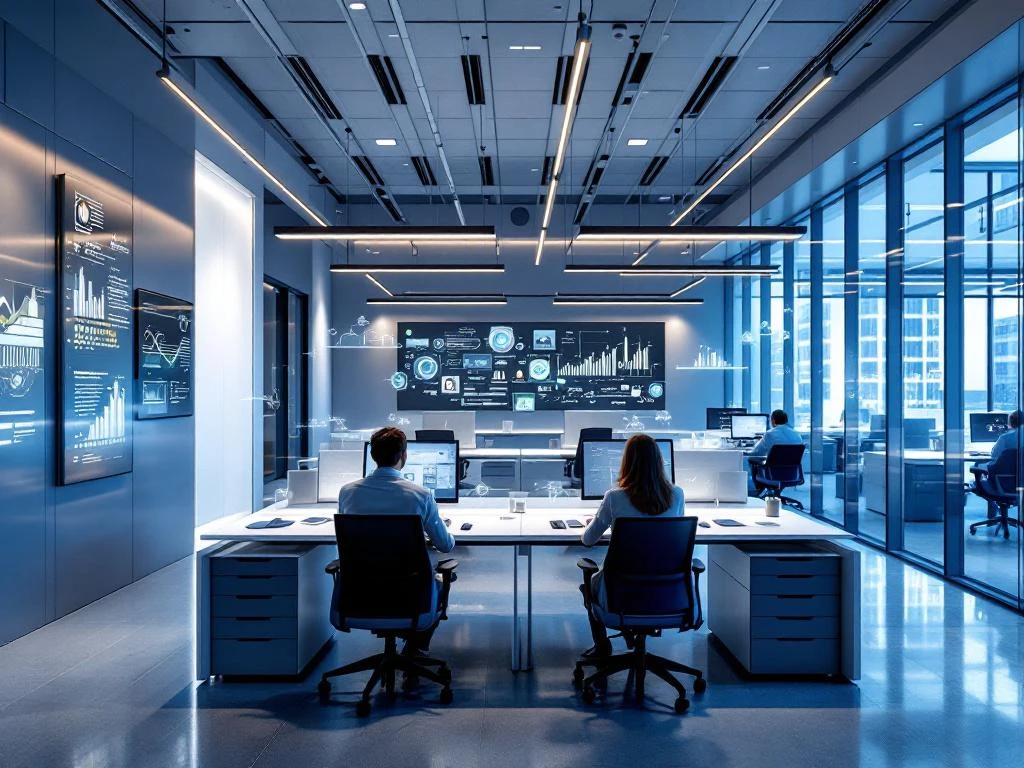
Een smart office is belangrijk voor bedrijven omdat het de productiviteit verhoogt, kosten bespaart en werknemers een betere werkervaring biedt. Door slimme technologie te integreren in de werkplek kun je energie besparen, ruimtes efficiënter gebruiken en dagelijkse processen automatiseren. Dit leidt tot een hogere werknemerstevredenheid en betere bedrijfsresultaten.
Wat is een smart office precies en hoe werkt het?
Een smart office is een werkplek die slimme technologieën gebruikt om automatisch te reageren op de behoeften van werknemers en het gebouw. Het systeem verzamelt data via sensoren en past de omgeving daarop aan, zoals verlichting, temperatuur en ruimtegebruik.
Het hart van een smart office bestaat uit verschillende technologieën die met elkaar communiceren. IoT-sensoren meten bijvoorbeeld hoeveel mensen er in een ruimte zijn en passen de verlichting en airconditioning automatisch aan. Slimme boekingssystemen laten werknemers vergaderruimtes reserveren via een app, terwijl geautomatiseerde toegangscontrole ervoor zorgt dat alleen geautoriseerde personen binnen kunnen komen.
Concrete voorbeelden van smartoffice-elementen zijn bewegingssensoren die lichten dimmen wanneer er niemand is, slimme thermostaten die de temperatuur per zone regelen en digitale displays die realtime informatie over beschikbare werkplekken tonen. Deze systemen werken samen om een comfortabele, efficiënte werkomgeving te creëren die zich aanpast aan jouw dagelijkse routine.
Welke voordelen biedt een smart office voor werknemers?
Een smart office verhoogt de werknemerstevredenheid door comfort en gemak te verbeteren. Werknemers kunnen eenvoudig werkplekken boeken, de temperatuur aanpassen en profiteren van optimale verlichting die automatisch meegaat met het daglicht.
De technologie vermindert dagelijkse frustraties aanzienlijk. Je hoeft niet meer te zoeken naar een vrije vergaderruimte of te worstelen met klimaatinstallaties. Slimme systemen zorgen ervoor dat je werkplek altijd klaar is wanneer je arriveert. Dit bespaart tijd en energie die je kunt besteden aan belangrijkere taken.
Voor de werk-privébalans bieden smart offices flexibiliteit door hybride werken te ondersteunen. Je kunt vanuit huis zien welke collega’s op kantoor zijn en werkplekken reserveren. Automatische systemen zorgen voor een gezonde werkomgeving met goede luchtkwaliteit en natuurlijk licht, wat stress vermindert en je welzijn verbetert.
Hoe bespaart een smart office geld voor bedrijven?
Een smart office bespaart geld door energieoptimalisatie en efficiënter ruimtegebruik. Automatische systemen schakelen verlichting en verwarming uit in lege ruimtes, wat de energiekosten met 20–30% kan verlagen.
Ruimte-efficiëntie is een grote kostenbesparing. Door data over ruimtegebruik kun je zien welke gebieden onderbenut zijn en je kantooroppervlak optimaliseren. Veel bedrijven ontdekken dat ze minder vierkante meters nodig hebben wanneer ze flexibele werkplekken slim inrichten.
Onderhoud wordt voorspelbaar en goedkoper door sensoren die problemen vroegtijdig detecteren. In plaats van dure reparaties kun je preventief onderhoud plannen. Automatisering van processen zoals toegangscontrole en klimaatbeheersing vermindert de behoefte aan handmatige controles en bespaart personeelskosten.
Welke smart office technologieën zijn het meest nuttig?
De meest nuttige smartoffice-technologieën zijn IoT-sensoren voor beweging en luchtkwaliteit, slimme verlichting, klimaatbeheersing en digitale boekingssystemen. Deze technologieën bieden directe voordelen die werknemers dagelijks ervaren.
IoT-sensoren vormen de basis van een slim kantoor. Ze meten bezetting, temperatuur, luchtkwaliteit en geluidsniveaus. Deze data wordt gebruikt om andere systemen automatisch aan te sturen. Slimme verlichting past zich aan het daglicht aan en dimt automatisch, terwijl slimme thermostaten zorgen voor optimaal comfort per zone.
Boekingssystemen voor werkplekken en vergaderruimtes elimineren zoektijd en conflicten. Werknemers kunnen via een app zien wat beschikbaar is en direct reserveren. Integratie tussen verschillende systemen is belangrijk: wanneer je een werkplek boekt, kan het systeem automatisch de verlichting en temperatuur in die zone aanpassen voordat je arriveert.
Hoe Wout Monseurs helpt met smartoffice-oplossingen
Wij begeleiden bedrijven van concept tot realisatie bij het implementeren van smartoffice-oplossingen. Ons team analyseert jouw huidige situatie en ontwerpt een op maat gemaakte slimme werkplek die aansluit bij jouw specifieke behoeften en budget.
Onze aanpak begint met een grondige analyse van jouw werkprocessen en ruimtegebruik. We adviseren welke technologieën de meeste waarde toevoegen voor jouw organisatie en zorgen voor een naadloze integratie met bestaande systemen. Van slimme verlichting tot geïntegreerde boekingssystemen: we leveren complete oplossingen die echt werken.
Door onze jarenlange ervaring in kantoorinrichting begrijpen we hoe technologie en werkplekontwerp samenkomen. We bieden niet alleen de installatie, maar ook training voor jouw team en doorlopende ondersteuning. Wil je weten hoe een smart office jouw bedrijf kan helpen? Neem contact met ons op voor een vrijblijvend adviesgesprek.
Veelgestelde vragen
Hoe lang duurt het om een smart office te implementeren?
De implementatie van een smart office duurt gemiddeld 4-8 weken, afhankelijk van de grootte van het kantoor en de gekozen technologieën. Eenvoudige systemen zoals slimme verlichting kunnen binnen enkele dagen operationeel zijn, terwijl complexere integraties met bestaande IT-infrastructuur meer tijd vragen. Wij plannen de installatie zo dat de dagelijkse werkzaamheden minimaal verstoord worden.
Wat als mijn bestaande IT-systemen niet compatibel zijn met smart office technologie?
Moderne smart office oplossingen zijn ontworpen om te integreren met de meeste bestaande IT-infrastructuren via standaard protocollen en API’s. Tijdens onze analyse bekijken we altijd de compatibiliteit en adviseren over eventuele aanpassingen. In veel gevallen kunnen systemen via cloudoplossingen of gateway-apparaten worden verbonden zonder grote wijzigingen aan je huidige setup.
Hoe zit het met privacy en databeveiliging in een smart office?
Privacy en databeveiliging staan centraal in onze smart office oplossingen. Alle data wordt geanonimiseerd en lokaal verwerkt waar mogelijk, met encryptie voor alle communicatie tussen apparaten. We volgen strikt de AVG-richtlijnen en kunnen transparant uitleggen welke data wordt verzameld en hoe deze wordt gebruikt. Werknemers behouden altijd controle over hun persoonlijke privacy-instellingen.
Welke return on investment kan ik verwachten van een smart office?
De meeste bedrijven zien hun investering in een smart office binnen 18-24 maanden terugverdiend door energiebesparingen (20-30%), efficiënter ruimtegebruik en verhoogde productiviteit. Concrete besparingen variëren per bedrijf, maar gemiddeld besparen organisaties €50-150 per werkplek per maand. We maken altijd een ROI-berekening op maat om realistische verwachtingen te scheppen.
Kan een smart office ook werken in een oud kantoorgebouw?
Ja, smart office technologie kan uitstekend worden geïmplementeerd in bestaande gebouwen. Draadloze sensoren en systemen maken installatie mogelijk zonder grote verbouwingen. Soms zijn kleine aanpassingen nodig aan de elektra of netwerk-infrastructuur, maar dit is meestal beperkt. We beoordelen altijd eerst de mogelijkheden en beperkingen van het bestaande gebouw.
Hoe train je werknemers om effectief gebruik te maken van smart office systemen?
Wij bieden uitgebreide training en ondersteuning om ervoor te zorgen dat alle werknemers comfortabel zijn met de nieuwe technologie. Dit omvat hands-on workshops, gebruikershandleidingen en een helpdesk voor vragen. De meeste smart office systemen zijn intuïtief ontworpen, dus de leercurve is meestal kort. We bieden ook ‘super user’ training voor IT-beheerders en facilitair managers.
Wat gebeurt er als het smart office systeem uitvalt of storingen heeft?
Smart office systemen zijn ontworpen met redundantie en fail-safe mechanismen. Bij storing schakelen systemen automatisch terug naar handmatige bediening of veilige standaardinstellingen. We bieden 24/7 monitoring en ondersteuning, met snelle responstijden voor kritieke problemen. Preventief onderhoud en regelmatige updates minimaliseren de kans op storingen aanzienlijk.