

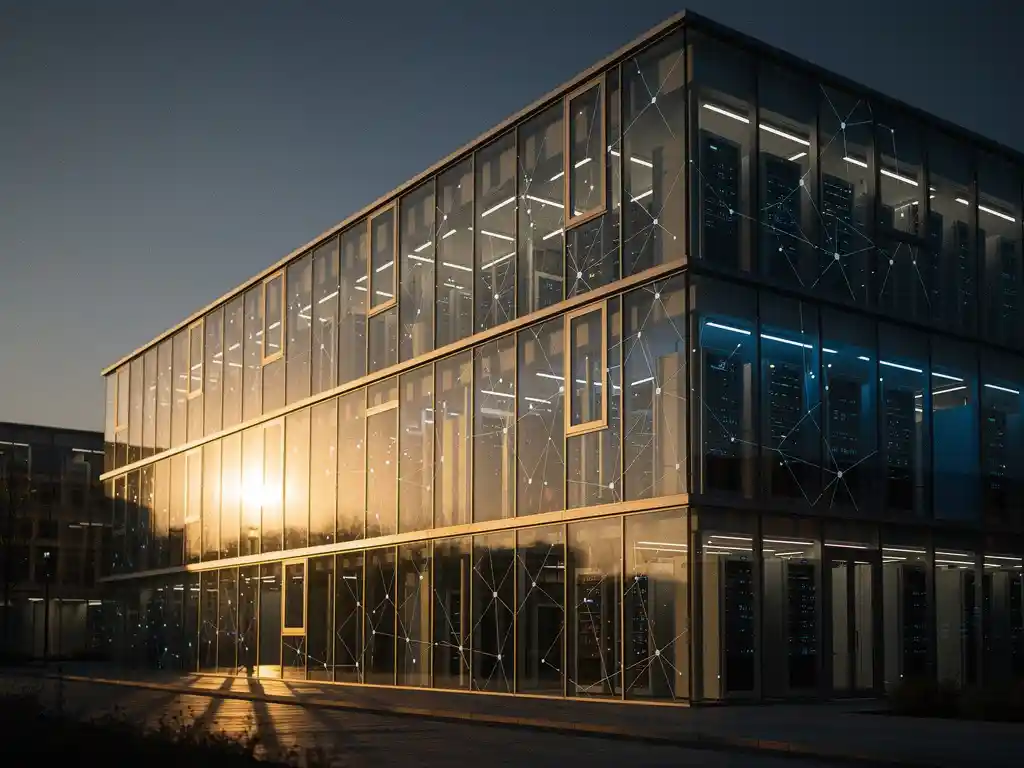
Edge computing forms the backbone of modern smart office buildings and is revolutionizing the way workplaces operate. By bringing computing power closer to the user, this technology enables real-time decision-making for everything from climate control to intelligent office automation.
For organizations investing in future-proof workplaces, edge computing offers unprecedented opportunities to boost efficiency, comfort, and productivity. From automatic desk adjustments to energy-saving lighting systems, the applications are endless.
What is edge computing, and how does it work in office buildings?
Edge computing is a distributed computing technology in which data processing takes place at or near the location where data is generated, rather than in a central data center. In office buildings, this means that sensors, cameras, and smart devices process data locally to enable an immediate response.
The system works by placing small, powerful computers in various parts of the office building. These edge devices collect data from IoT sensors that monitor temperature, air quality, motion, and energy consumption. Instead of sending all the data to the cloud, they analyze the information on-site and take immediate action.
Here’s a practical example: when an employee approaches their desk, motion sensors detect their presence. The edge system immediately turns on the lights, adjusts the desk height to their personal preferences, and starts the ventilation system—all within seconds and without any delays caused by internet connections.
What are the benefits of edge computing for smart offices?
Edge computing offers five key benefits for smart offices: ultra-low latency for real-time responses, enhanced security through local data processing, reduced bandwidth costs, improved reliability, and energy savings of up to 30% thanks to optimized systems.
Low latency is crucial for intelligent office automation. Traditional cloud-based systems often have a delay of 100–500 milliseconds, whereas edge computing enables response times of less than 10 milliseconds. This difference is essential for systems that must respond immediately to changing conditions.
Security is significantly improved because sensitive data remains on-premises. Personal preferences, usage patterns, and usage data are not sent to external servers, which reduces privacy risks and helps ensure compliance with strict GDPR requirements.
Energy savings result from intelligent optimization. Edge systems can precisely adjust HVAC systems to occupancy levels, dim lighting in unused spaces, and shut down equipment when it is not needed. These small adjustments result in substantial cost savings.
How does edge computing enhance the workplace experience?
Edge computing enhances the workplace experience through personalization, proactive support, and seamless integration of workplace systems. Employees benefit from automatic adjustments based on their preferences, improved air quality, and optimal lighting conditions—all without manual intervention.
Personalization goes beyond just desk height adjustments. Edge systems can learn from individual work patterns and preferences. They remember which temperature an employee prefers, when they take breaks, and what lighting levels they prefer for different tasks.
Proactive support means that systems resolve issues before employees even notice them. If the air quality in a meeting room deteriorates, the system automatically activates additional ventilation. If noise levels become too high, acoustic panels can be automatically adjusted.
Integration with booking systems for workstations and meeting rooms is seamless. Employees can set their preferences via an app, and the edge system ensures that each workstation is automatically configured to their specifications as soon as they arrive.
What are the costs of implementing edge computing?
The implementation costs of edge computing in office buildings range from €50 to €150 per workstation, depending on the complexity and desired features. Initial investments are typically recouped within 2 to 3 years through energy savings and increased productivity.
Hardware costs include edge servers (€2,000–€5,000 per unit), IoT sensors (€20–€100 per sensor), and network infrastructure. A typical office with 100 workstations requires 3 to 5 edge servers, plus 200 to 400 sensors for comprehensive monitoring of temperature, air quality, motion, and energy consumption.
Software licenses represent an ongoing expense of €10 to €25 per workstation per month. These costs cover system updates, security patches, and support. Many vendors offer all-inclusive packages that combine hardware, software, and maintenance.
Implementation and configuration costs typically account for 20 to 30% of the hardware investment. Professional installation ensures optimal performance and prevents costly errors. Training for facility staff is essential for effective system management.
What challenges does edge computing present?
Edge computing presents three main challenges: complex system management due to its distributed architecture, higher initial investment costs, and the need for specialized technical expertise for maintenance and troubleshooting.
System administration is becoming more complex as IT teams are required to monitor and maintain multiple edge locations. Each edge server requires regular updates, security patches, and performance monitoring. This demands more technical expertise than traditional, centralized systems.
Security requires extra attention because every edge device serves as a potential entry point. Organizations must implement robust security protocols, conduct regular penetration tests, and ensure encrypted communication between all devices.
Interoperability between different vendors can be challenging. Not all smart office systems communicate seamlessly with one another. Careful planning and selection of compatible systems are essential to avoid vendor lock-in and enable future expansions.
How Wout Monseurs Helps with Smart Office Automation
We offer comprehensive Smart Office solutions that seamlessly integrate edge computing into modern workplaces. Our expertise in intelligent office automation helps organizations fully leverage the benefits of edge computing.
Our Smart Office services include:
- Implementation of IoT sensors for climate and energy management
- Automatic desktop customization based on personal preferences
- Smart booking systems for workspaces and meeting rooms
- Integrated conferencing systems with Microsoft Teams and Zoom
- Real-time monitoring of facility costs and energy consumption
As a full-service project design firm, we combine traditional expertise with cutting-edge technology. From design to implementation, we provide a turnkey solution that transforms your office into a smart, efficient work environment.
Discover how edge computing can revolutionize your workplace. Contact us for a no-obligation consultation on the possibilities for your organization.
Frequently asked questions
How long does it take to implement an edge computing system in an existing office building?
Implementation typically takes 4–8 weeks for an average office building with 100 workstations. This includes network infrastructure installation (1–2 weeks), sensor installation (1–2 weeks), system configuration and testing (1–2 weeks), and staff training (1 week). More complex buildings with legacy systems may take 10–12 weeks.
Can existing office automation systems be integrated with edge computing?
Yes, most modern office automation systems can be integrated using standard protocols such as BACnet, Modbus, or REST APIs. Older systems may require gateway devices for connectivity. A thorough analysis of the existing infrastructure is essential to determine compatibility and integration costs.
What happens if the edge computing system goes down?
Edge computing systems feature built-in redundancy and failover mechanisms. In the event of a failure, critical functions automatically switch to backup systems or default modes. HVAC and lighting remain operational via local controllers, while smart functions are temporarily disabled. Thanks to these backup solutions, most systems achieve 99.9% uptime.
How do I secure sensitive employee data in edge computing systems?
Implement end-to-end encryption, regular security audits, and role-based access controls. Use local data anonymization so that personal preferences cannot be traced back to individuals. Ensure GDPR compliance through opt-in mechanisms and transparent data usage policies. Regular security patches and network segmentation are also crucial.
What kind of ROI can I expect from edge computing in my office?
The typical ROI ranges from 15% to 25% per year, driven by energy savings (a 20% to 30% reduction), increased productivity (5% to 10% due to improved working conditions), and lower facility costs. The payback period is usually 2 to 3 years. Organizations with high energy costs or premium office locations often see faster returns within 18 to 24 months.
Can I scale the edge computing system as my business grows?
Edge computing systems are designed for scalability. You can easily add additional sensors, edge servers, and workstations without disrupting the existing system. Modular architecture allows for incremental expansion. Be sure to plan ahead for network capacity and ensure that your initial edge servers have sufficient processing power to support future growth.