

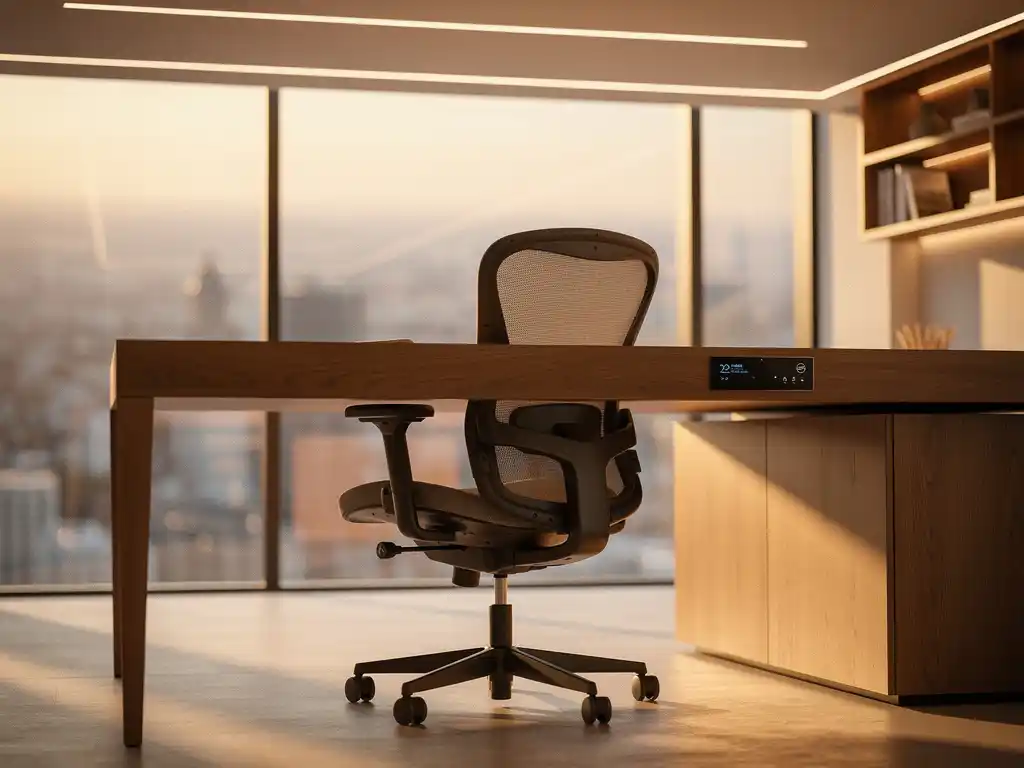
Kunstmatige intelligentie transformeert moderne kantoren tot intelligente werkomgevingen die zich aanpassen aan de behoeften van medewerkers. Van automatische bureauaanpassingen tot slimme reserveringssystemen: AI-technologie optimaliseert niet alleen de productiviteit, maar verbetert ook het werknemerscomfort en de operationele efficiëntie.
De implementatie van intelligente kantoorautomatisering gaat verder dan alleen het installeren van technologie. Het draait om het creëren van een naadloze ervaring waarbij systemen samenwerken om een optimale werkomgeving te bieden. Deze ontwikkeling sluit perfect aan bij de trend naar hybride werken en flexibele werkplekken.
Wat is kunstmatige intelligentie in slimme kantoren precies?
Kunstmatige intelligentie in slimme kantoren is een verzameling geautomatiseerde systemen die leren van gebruikersgedrag en omgevingsdata om werkplekken te optimaliseren zonder menselijke tussenkomst. Deze AI-systemen gebruiken sensoren, machine learning en data-analyse om beslissingen te nemen over verlichting, temperatuur, ruimtegebruik en werkplekvoorkeuren.
De technologie werkt via IoT-sensoren die continu data verzamelen over bezetting, lichtinval, temperatuur en geluidsniveaus. Machine learning-algoritmen analyseren deze informatie om patronen te herkennen en voorspellingen te doen. Zo leert het systeem bijvoorbeeld wanneer bepaalde vergaderruimtes het meest worden gebruikt en past het automatisch de klimaatbeheersing aan voordat mensen arriveren.
Smart Office-technologie integreert verschillende componenten, zoals intelligente verlichting die zich aanpast aan natuurlijk licht, automatische bureauaanpassingen op basis van persoonlijke voorkeuren van gebruikers en slimme reserveringssystemen voor werkplekken en vergaderruimtes. Deze systemen communiceren met elkaar om een gecoördineerde en efficiënte werkomgeving te creëren.
Hoe verbetert AI de productiviteit op de werkplek?
AI verbetert de productiviteit door repetitieve taken te automatiseren, werkplekken te personaliseren en realtime inzichten te bieden in ruimtegebruik en werkpatronen. Medewerkers besteden minder tijd aan het zoeken naar beschikbare werkplekken, het aanpassen van hun werkstation of het regelen van vergaderruimtes.
Automatische bureauaanpassing speelt hierin een cruciale rol. Wanneer een medewerker zich aanmeldt via een Desk Booking-tool, stelt het systeem automatisch de bureauhoogte, stoelpositie en verlichting in volgens persoonlijke voorkeuren. Dit bespaart dagelijks waardevolle minuten en zorgt vanaf het eerste moment voor een ergonomisch optimale werkplek.
Slimme reserveringssystemen elimineren de frustratie van dubbele boekingen en het zoeken naar vrije ruimtes. Via smartphone of computer kunnen medewerkers met één klik werkplekken en vergaderruimtes reserveren, inclusief de benodigde apparatuur en catering. Het systeem toont realtime beschikbaarheid en suggereert alternatieven bij volledige bezetting.
Data-analyse helpt organisaties om de werkplekefficiëntie te monitoren. Managers krijgen inzicht in welke ruimtes onderbenut zijn, welke werkplekken het populairst zijn en hoe zij hun kantoorindeling kunnen optimaliseren. Deze inzichten leiden tot betere beslissingen over ruimtegebruik en facilitaire kosten.
Welke AI-systemen worden het meest gebruikt in kantoren?
De meest gebruikte AI-systemen in kantoren zijn slimme verlichtingssystemen, automatische klimaatbeheersing, werkplekboekingssystemen en intelligente conferentieoplossingen. Deze systemen vormen de basis van moderne intelligente kantoorautomatisering en worden vaak gecombineerd voor maximale efficiëntie.
Slimme verlichtingssystemen gebruiken sensoren om automatisch aan te gaan wanneer iemand de ruimte binnenkomt en kunnen energiekosten tot 90% verlagen. Ze passen de lichtintensiteit aan op basis van natuurlijke lichtinval en gebruikersvoorkeuren, wat bijdraagt aan zowel comfort als duurzaamheid.
HVAC-systemen met AI-sturing optimaliseren het energieverbruik door te leren van bezettingspatronen en weersvoorspellingen. Ze warmen of koelen ruimtes vooraf op basis van geplande activiteiten en passen de temperatuur per zone aan, afhankelijk van het aantal aanwezige personen.
Moderne conferentieoplossingen koppelen naadloos met populaire softwareoplossingen zoals Microsoft Teams, Google Meet en Zoom. Deze systemen herkennen automatisch wanneer een vergadering begint, starten de juiste apparatuur en zorgen voor optimale audio- en videokwaliteit voor zowel fysieke als externe deelnemers.
Werkplekboekingssystemen maken gebruik van AI om gebruikerspatronen te analyseren en suggesties te doen voor een optimale werkplekindeling. Ze voorspellen drukte, stellen alternatieve werkplekken voor en helpen bij het creëren van een clean desk policy zonder dat werkplekken onpersoonlijk aanvoelen.
Wat zijn de kosten van AI-implementatie in kantoren?
De kosten van AI-implementatie in kantoren variëren sterk, afhankelijk van de omvang van het project en de gewenste functionaliteiten. Investeringen kunnen uiteenlopen van enkele duizenden euro’s voor basale systemen tot honderdduizenden euro’s voor complete smart office-transformaties. De return on investment wordt meestal binnen 2 à 3 jaar gerealiseerd door energiebesparingen en verhoogde productiviteit.
Basale slimme verlichtingssystemen kosten ongeveer €50-100 per werkplek, terwijl geavanceerde systemen met sensoren en automatische aanpassingen kunnen oplopen tot €200-300 per werkplek. Deze investering wordt vaak terugverdiend door de drastische verlaging van energiekosten, soms tot 90% besparing op verlichtingskosten.
Werkplekboekingssystemen en automatische bureauaanpassingen vereisen een hogere initiële investering van €500-1500 per werkplek, afhankelijk van de complexiteit van de integratie. Deze kosten omvatten software, sensoren, actuatoren en installatiewerk.
Complete smart office-implementaties, inclusief klimaatbeheersing, conferentiesystemen en geïntegreerd werkplekmanagement, kunnen €2000-5000 per werkplek kosten. Organisaties rapporteren echter vaak aanzienlijke besparingen op facilitaire kosten, een hogere werknemerstevredenheid en betere ruimtebenutting, waardoor deze investering wordt gerechtvaardigd.
Onderhouds- en softwarekosten bedragen meestal 10-15% van de initiële investering per jaar. Deze kosten dekken updates, technische ondersteuning en eventuele hardwarevervangingen.
Hoe beïnvloedt AI de ergonomie en het welzijn van werknemers?
AI verbetert de ergonomie en het welzijn van werknemers door werkstations automatisch aan te passen aan individuele lichaamsafmetingen en voorkeuren, optimale lichtcondities te handhaven en gezonde werkgewoonten te stimuleren. Deze technologie draagt bij aan het voorkomen van RSI-klachten en verhoogt het algemene comfort op de werkplek.
Automatische bureauaanpassing zorgt ervoor dat elke werkplek direct wordt ingesteld op de ergonomische behoeften van de gebruiker. Het systeem onthoudt de ideale bureauhoogte, stoelpositie en beeldschermhoek, waardoor werknemers altijd in een optimale houding werken. Dit voorkomt nekklachten, rugproblemen en andere fysieke ongemakken die ontstaan door verkeerde werkhoudingen.
Slimme verlichtingssystemen passen zich automatisch aan aan het moment van de dag en de beschikbare natuurlijke lichtinval. Voor werkplekken wordt koel wit of daglichtwit gebruikt, ideaal voor focus en alertheid, terwijl ontspanningsruimtes zoals kantines warmere tinten krijgen. Deze aanpassingen ondersteunen het natuurlijke circadiane ritme van werknemers.
AI-systemen kunnen werknemers herinneren aan gezonde werkgewoonten, zoals regelmatige pauzes, het gebruik van zit-sta-bureaus of het aanpassen van de werkhouding. Sommige systemen monitoren zelfs de tijd die in verschillende houdingen wordt doorgebracht en geven suggesties voor beweging en variatie.
De combinatie van optimale verlichting, temperatuur en luchtkwaliteit, geregeld door AI-systemen, creëert een werkomgeving die stress vermindert en de concentratie bevordert. Dit draagt bij aan het algemene welzijn en kan de productiviteit aanzienlijk verhogen.
Hoe Wout Monseurs helpt met intelligente kantoorautomatisering
Wij combineren meer dan 60 jaar ervaring in kantoorinrichting met geavanceerde Smart Office-technologie om uw werkplek te transformeren tot een intelligente, efficiënte werkomgeving. Onze Smart Office-oplossingen integreren naadloos met onze projectinrichtingsdiensten voor een complete kantoorervaring.
Onze Smart Office-diensten omvatten:
- Slimme reserveringssystemen voor werkplekken en vergaderruimtes via Desk Booking-tools
- Automatische bureauaanpassing op basis van persoonlijke voorkeuren van gebruikers
- Intelligente conferentiesystemen die koppelen met Teams, Google Meet en Zoom
- Energiezuinige verlichtingssystemen met sensoren en automatische aanpassingen
- Geïntegreerde klimaatbeheersing voor optimaal werknemerscomfort
- Realtime inzichten in facilitaire kosten en ruimtegebruik
In ons Experience Center kunt u deze technologieën zelf ervaren en zien hoe ze perfect integreren met ergonomische meubelen van topmerken als Wini, Interstuhl en Voortman. Als complete projectinrichter bieden wij turnkey-oplossingen: u draagt de sleutel over en wij regelen alles, van ontwerp tot oplevering van uw intelligente kantoor.
Ontdek hoe intelligente kantoorautomatisering uw werkplek kan transformeren. Neem contact met ons op voor een vrijblijvende kennismaking en laat u inspireren in ons Experience Center in Breda.
Veelgestelde vragen
Hoe lang duurt het om een complete smart office-implementatie uit te voeren?
Een complete smart office-implementatie duurt gemiddeld 4-8 weken, afhankelijk van de kantoorgrootte en complexiteit van de systemen. De planning begint met een analyse van uw huidige situatie, gevolgd door installatie van sensoren en systemen, softwareconfiguratie en training van gebruikers. Wij zorgen voor een gefaseerde implementatie zodat de dagelijkse werkzaamheden minimaal worden verstoord.
Kunnen bestaande kantoorsystemen geïntegreerd worden met nieuwe AI-technologie?
Ja, moderne smart office-oplossingen zijn ontworpen om te integreren met bestaande systemen zoals uw huidige klimaatbeheersing, verlichtingssystemen en IT-infrastructuur. Wij voeren vooraf een technische analyse uit om de compatibiliteit te beoordelen en adviseren over eventuele upgrades. In de meeste gevallen kunnen bestaande systemen worden uitgebreid met slimme sensoren en controllers.
Wat gebeurt er als de AI-systemen uitvallen of technische problemen hebben?
Smart office-systemen hebben ingebouwde failsafe-mechanismen die ervoor zorgen dat basisvoorzieningen zoals verlichting en klimaat handmatig bedienbaar blijven. Bij storingen schakelen systemen automatisch over naar standaardinstellingen. Wij bieden 24/7 monitoring en snelle technische ondersteuning, met gemiddelde responstijden van 2-4 uur voor kritieke problemen.
Hoe wordt de privacy van werknemers gewaarborgd bij het gebruik van sensoren en datamonitoring?
Alle smart office-systemen zijn ontworpen met privacy-by-design principes en voldoen aan AVG-wetgeving. Sensoren verzamelen alleen anonieme data over ruimtegebruik, temperatuur en lichtcondities – geen persoonlijke informatie of beeldmateriaal. Werknemers hebben altijd controle over hun persoonlijke instellingen en kunnen kiezen welke voorkeuren worden opgeslagen.
Welke training krijgen werknemers voor het gebruik van smart office-systemen?
Wij verzorgen uitgebreide training voor alle gebruikers, van management tot eindgebruikers. Dit omvat hands-on sessies met de reserveringssystemen, instructies voor het instellen van persoonlijke voorkeuren en troubleshooting van veelvoorkomende situaties. Daarnaast bieden wij online trainingsmodules en een helpdesk voor doorlopende ondersteuning.
Kunnen smart office-systemen worden aangepast aan seizoensveranderingen en wisselende kantoorbehoeften?
Absoluut. AI-systemen leren continu van veranderende patronen en passen zich automatisch aan seizoenen, vakantieperiodes en wisselende teamgroottes aan. Beheerders kunnen eenvoudig instellingen wijzigen voor speciale gebeurtenissen, nieuwe afdelingen of gewijzigde werkpatronen. Het systeem past zich binnen enkele dagen aan nieuwe situaties aan.
Hoe meet ik het succes en de return on investment van mijn smart office-investering?
Smart office-systemen bieden uitgebreide dashboards met KPI’s zoals energiebesparing, ruimtebenutting, werknemerstevredenheid en facilitaire kosten. Wij helpen bij het opstellen van meetbare doelstellingen vooraf en leveren maandelijkse rapportages. Typische ROI-indicatoren zijn 20-40% energiebesparing, 15-25% betere ruimtebenutting en verhoogde werknemerstevredenheidsscores.