

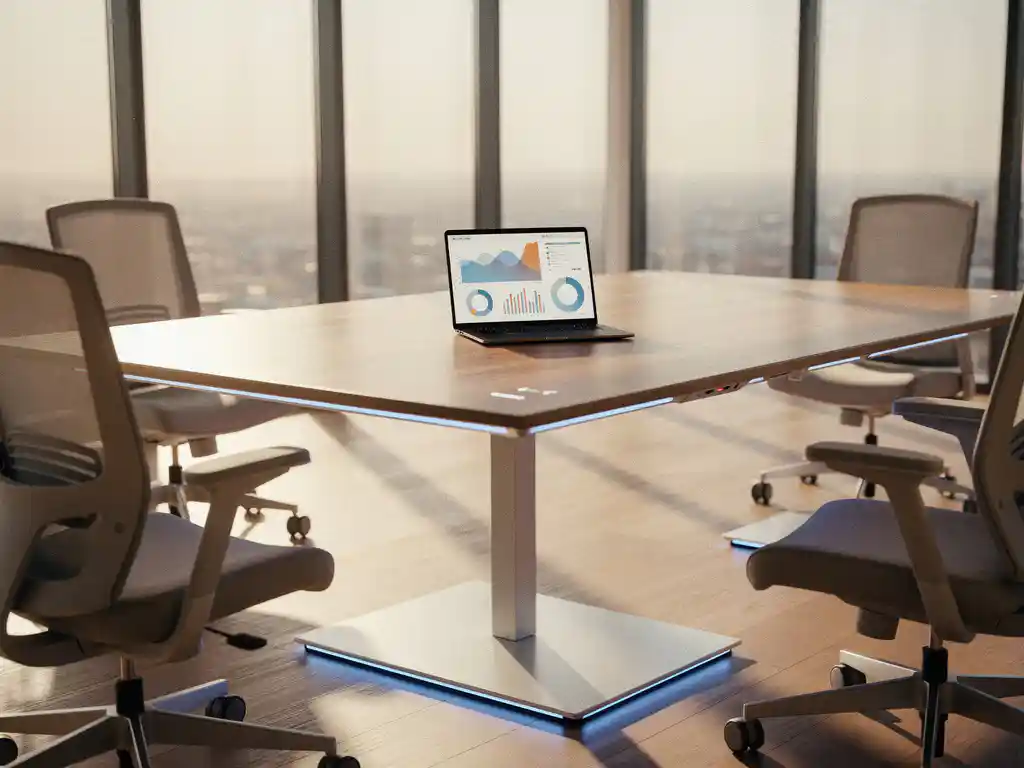
Machine learning revolutioneert de moderne werkplek door kantoren te transformeren tot intelligente omgevingen die zich aanpassen aan de behoeften van gebruikers. Deze technologie analyseert patronen in werkgedrag, optimaliseert het energieverbruik en personaliseert werkplekken automatisch. Van slimme bureaus die persoonlijke voorkeuren onthouden tot AI-gestuurde klimaatbeheersing: machine learning maakt kantoren efficiënter en comfortabeler.
Intelligente kantoorautomatisering gaat verder dan simpele sensoren en timers. Het combineert data-analyse met voorspellende algoritmen om proactief in te spelen op de behoeften van werknemers en de organisatie als geheel.
Wat is machine learning in intelligente kantoren?
Machine learning in intelligente kantoren is een vorm van kunstmatige intelligentie die automatisch leert van werkplekdata om kantoorprocessen te optimaliseren zonder expliciete programmering. Het systeem analyseert patronen in ruimtegebruik, energieverbruik en werknemergedrag om voorspellingen te doen en automatische aanpassingen door te voeren.
Deze technologie werkt door continue dataverzameling via sensoren, camera’s en IoT-apparaten in het hele kantoor. Machine learning-algoritmen verwerken deze informatie om trends te identificeren, zoals wanneer vergaderruimtes het meest worden gebruikt, welke zones de beste temperatuur nodig hebben en hoe verlichtingsschema’s de productiviteit beïnvloeden.
De intelligentie zit in het vermogen om te leren en zich aan te passen. Een traditioneel systeem volgt vooraf ingestelde regels, maar machine learning past zich continu aan op basis van nieuwe data. Dit resulteert in een kantoor dat steeds beter wordt in het anticiperen op de behoeften van zijn gebruikers.
Hoe werkt machine learning in slimme kantoorruimtes?
Machine learning in slimme kantoorruimtes werkt met een netwerk van sensoren en IoT-apparaten die realtime data verzamelen over ruimtegebruik, temperatuur, luchtkwaliteit en activiteiten van werknemers. Deze data wordt geanalyseerd door AI-algoritmen die patronen herkennen en voorspellingen doen voor automatische optimalisatie.
Het proces begint met dataverzameling via bewegingssensoren, temperatuurmeters, luchtkwaliteitssensoren en bezettingssensoren. Deze apparaten monitoren continu de kantooromgeving en het gebruikersgedrag. De verzamelde data wordt vervolgens naar een centraal systeem gestuurd, waar machine learning-algoritmen de informatie verwerken.
De algoritmen identificeren patronen zoals piekuren voor vergaderruimtes, optimale temperatuurinstellingen per zone en trends in energieverbruik. Op basis van deze analyses maakt het systeem automatische aanpassingen aan verlichting, klimaatbeheersing en ruimteconfiguratie. Een clean-deskpolicy in combinatie met persoonlijke, reserveerbare lockers zorgt bijvoorbeeld voor overzicht, terwijl Smart Office-technologie het bureau automatisch instelt op de persoonlijke voorkeuren van de gebruiker.
Het systeem wordt slimmer naarmate het meer data verzamelt. Het leert van seizoensgebonden veranderingen, werkpatronen en gebruikersvoorkeuren om steeds nauwkeurigere voorspellingen te doen en efficiëntere automatiseringen uit te voeren.
Welke voordelen biedt machine learning voor kantoorinrichting?
Machine learning biedt aanzienlijke voordelen voor kantoorinrichting door energiekosten tot 30% te verlagen, ruimtegebruik te optimaliseren en werknemerstevredenheid te verhogen via gepersonaliseerde werkomgevingen. Het automatiseert routinetaken en biedt datagedreven inzichten voor betere inrichtingsbeslissingen.
Een van de grootste voordelen is energieoptimalisatie. Slimme verlichtingssystemen gebruiken sensoren om automatisch aan te gaan wanneer iemand de ruimte binnenkomt en kunnen energiekosten tot 90% verlagen. HVAC-systemen leren van gebruikspatronen om alleen actieve zones te verwarmen of te koelen, wat resulteert in aanzienlijke besparingen.
Ruimteoptimalisatie is een ander belangrijk voordeel. Door het analyseren van bewegingspatronen en ruimtegebruik helpt machine learning bij het creëren van efficiëntere indelingen. Flexibele werkplekken kunnen dynamisch worden toegewezen op basis van de voorspelde vraag, waardoor organisaties minder vierkante meters nodig hebben.
Voor werknemers betekent dit meer comfort en productiviteit. Systemen leren individuele voorkeuren voor temperatuur, verlichting en bureauhoogte en passen deze automatisch aan. Dit draagt bij aan werknemerstevredenheid en kan helpen bij talentbehoud, wat cruciaal is in de huidige krappe arbeidsmarkt.
Machine learning biedt ook waardevolle inzichten voor facility managers. Realtime dashboards tonen ruimtegebruik, energieverbruik en onderhoudsbehoeften, waardoor datagedreven beslissingen mogelijk worden over toekomstige inrichtingsprojecten en optimalisaties.
Wat zijn de kosten van machine learning-kantooroplossingen?
De kosten van machine learning-kantooroplossingen variëren van €50 tot €200 per werkplek voor basissystemen tot €500 tot €1.500 per werkplek voor geavanceerde, geïntegreerde oplossingen. De totale investering hangt af van de complexiteit van het systeem, het aantal sensoren en het gewenste automatiseringsniveau.
Basissystemen richten zich op enkele aspecten, zoals slimme verlichting of temperatuurregeling. Deze kosten ongeveer €50 tot €100 per werkplek en bieden directe energiebesparingen. Meer uitgebreide systemen die meerdere gebouwfuncties integreren, kosten €200 tot €500 per werkplek, maar leveren ook meer besparingen en comfort op.
Enterprise-leveloplossingen met volledige AI-integratie, voorspellende analyses en gepersonaliseerde automatisering kunnen €500 tot €1.500 per werkplek kosten. Deze systemen bieden de hoogste ROI door maximale energie-efficiëntie en productiviteitsvoordelen.
Naast de initiële investering zijn er doorlopende kosten voor software-updates, dataopslag en systeemonderhoud, meestal 10% tot 15% van de aanschafkosten per jaar. De besparingen op energiekosten, de hogere productiviteit en het efficiëntere ruimtegebruik zorgen echter vaak voor een terugverdientijd van 2 tot 4 jaar.
Het is belangrijk om te investeren in systemen die met de organisatie kunnen meegroeien. Modulaire oplossingen maken het mogelijk om klein te beginnen en geleidelijk uit te breiden naarmate de voordelen duidelijk worden.
Hoe Wout Monseurs helpt met intelligente kantoorautomatisering
Wij helpen organisaties bij het implementeren van machine learning-kantooroplossingen door onze expertise in Smart Office-technologie te combineren met meer dan 60 jaar ervaring in kantoorinrichting. Ons team begeleidt het complete traject, van advies tot implementatie en onderhoud.
Onze aanpak omvat:
- Analyse van de huidige werkplekken en identificatie van automatiseringsmogelijkheden
- Ontwerp van geïntegreerde systemen die naadloos aansluiten op de bestaande inrichting
- Implementatie van slimme reserveringssystemen, automatische bureauaanpassingen en klimaatoptimalisatie
- Training van facility managers en eindgebruikers voor optimaal gebruik
- Doorlopende monitoring en optimalisatie voor maximale ROI
Als complete projectinrichter integreren wij intelligente technologie vanaf de ontwerpfase, waardoor systemen optimaal functioneren binnen de totale kantooromgeving. Van slimme conferentiesystemen tot geautomatiseerd werkplekbeheer: wij zorgen voor een toekomstbestendige oplossing die meegroeit met uw organisatie.
Wilt u ontdekken hoe machine learning uw kantoor kan transformeren? Neem contact met ons op voor een vrijblijvend adviesgesprek en ervaar de mogelijkheden in ons Experience Center in Breda.
Veelgestelde vragen
Hoe lang duurt het om machine learning-systemen in een bestaand kantoor te implementeren?
De implementatie duurt meestal 4 tot 12 weken, afhankelijk van de complexiteit en grootte van het kantoor. Basissystemen zoals slimme verlichting kunnen binnen enkele weken operationeel zijn, terwijl uitgebreide AI-geïntegreerde oplossingen meer tijd vergen voor sensoren installeren, data verzamelen en algoritmen trainen.
Wat gebeurt er met de privacy van werknemers bij het gebruik van sensoren en camera's?
Moderne machine learning-systemen zijn ontworpen met privacy-by-design principes en voldoen aan GDPR-wetgeving. Ze verzamelen geanonimiseerde data over ruimtegebruik en patronen, niet over individuele werknemers. Gezichtsherkenning wordt vermeden en data wordt lokaal verwerkt waar mogelijk.
Kunnen machine learning-systemen worden geïntegreerd met bestaande kantoorautomatisering?
Ja, de meeste moderne ML-systemen zijn ontworpen voor integratie met bestaande gebouwbeheersystemen (BMS), HVAC-installaties en verlichtingsinfrastructuur. API’s en standaardprotocollen maken naadloze koppeling mogelijk, vaak zonder volledige vervanging van bestaande systemen.
Hoe accuraat zijn de voorspellingen van machine learning-systemen in de praktijk?
Na een inloopperiode van 3-6 maanden bereiken goed geconfigureerde systemen een nauwkeurigheid van 85-95% voor ruimtegebruik en energievoorspellingen. De accuratesse verbetert continu door het leren van seizoenspatronen, gebeurtenissen en veranderende werkgewoonten.
Wat zijn de meest voorkomende implementatiefouten bij machine learning in kantoren?
Veelgemaakte fouten zijn onvoldoende sensordekking, het negeren van gebruikerstraining en te snelle verwachtingen. Succesvolle implementaties starten met een pilotgebied, betrekken werknemers vanaf dag één en plannen een geleidelijke uitrol met voldoende tijd voor systeemoptimalisatie.
Hoe meet je het succes van een machine learning-kantooroplossing?
Succes wordt gemeten via KPI’s zoals energiereductie (20-30% is realistisch), ruimte-efficiëntie (10-25% minder benodigde vierkante meters), en werknemerstevredenheidsscores. Dashboards tonen realtime prestaties en ROI-berekeningen helpen bij het aantonen van de bedrijfswaarde.
Is machine learning-technologie toekomstbestendig voor kantoren die snel veranderen?
Moderne ML-systemen zijn modulair en schaalbaar ontworpen om mee te groeien met organisatieveranderingen. Cloud-gebaseerde oplossingen kunnen eenvoudig worden uitgebreid, algoritmen passen zich automatisch aan nieuwe werkpatronen aan, en updates worden remote uitgevoerd zonder verstoring van de dagelijkse werkzaamheden.