

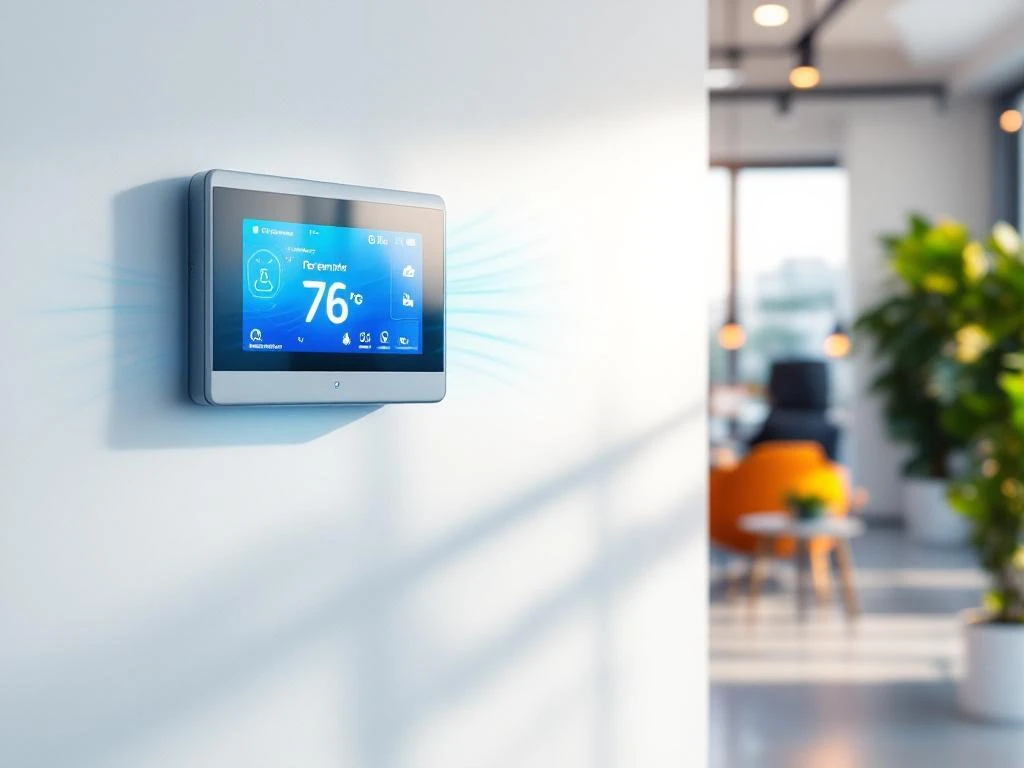
Slimme klimaatbeheersing bespaart energie door automatisch de temperatuur aan te passen aan de bezetting en het gebruik van je kantoor. Deze systemen gebruiken sensoren en intelligente thermostaten die tot 20-30% minder energie verbruiken dan traditionele klimaatregeling. Ze regelen verwarming en koeling alleen wanneer dat nodig is, passen zich aan jouw werkpatronen aan en zorgen zo voor lagere energiekosten zonder comfort in te leveren.
Wat is slimme klimaatbeheersing en hoe werkt het?
Slimme klimaatbeheersing is een systeem dat automatisch de temperatuur in je kantoor regelt op basis van bezetting, tijd en weersomstandigheden. Het werkt met sensoren die beweging detecteren, slimme thermostaten die leren van je gewoontes en software die alles op afstand aanstuurt.
Het systeem bestaat uit verschillende onderdelen die samenwerken. Temperatuursensoren meten continu de omstandigheden in verschillende zones van je kantoor. Bewegingssensoren detecteren of er mensen aanwezig zijn. De centrale verwerkingseenheid analyseert deze gegevens en stuurt het verwarmings- en koelsysteem aan.
De slimme thermostaat vormt het hart van het systeem. Deze leert van je werkpatronen en past de temperatuur automatisch aan. Als er niemand op kantoor is, schakelt het systeem naar een energiebesparende modus. Voor je aankomt, zorgt het ervoor dat de temperatuur weer comfortabel is.
Je kunt het systeem bedienen via een app op je telefoon of computer. Hiermee stel je tijdschema’s in, pas je de temperatuur aan en bekijk je hoeveel energie je bespaart. Het systeem werkt ook samen met andere smart office-technologie, zoals verlichting en beveiligingssystemen.
Hoeveel energie kun je besparen met slimme klimaatbeheersing?
Met slimme klimaatbeheersing bespaar je doorgaans 20-30% op je energiekosten voor verwarming en koeling. Voor een gemiddeld kantoor betekent dit een verlaging van de totale energierekening met 10-15%. De exacte besparing hangt af van je huidige systeem, kantoorgrootte en gebruikspatronen.
De grootste besparingen ontstaan doordat het systeem alleen energie gebruikt wanneer dat nodig is. Traditionele klimaatregeling draait vaak de hele dag op dezelfde temperatuur, ook als er niemand is. Slimme systemen schakelen automatisch naar een zuinigere modus buiten kantooruren en tijdens pauzes.
Factoren die je besparing beïnvloeden zijn de isolatie van je gebouw, het aantal werkplekken en de kwaliteit van je huidige systeem. Oudere klimaatinstallaties bieden meer besparingspotentieel dan moderne, efficiënte systemen. Ook speelt het type werk een rol: kantoren met wisselende bezetting besparen meer dan ruimtes die altijd vol zijn.
De terugverdientijd ligt meestal tussen de 2 en 4 jaar. Na deze periode is elke besparing pure winst. Naast lagere energiekosten profiteer je ook van minder onderhoud en een langere levensduur van je klimaatinstallatie door efficiënter gebruik.
Welke slimme klimaatfuncties zorgen voor de meeste besparing?
Zonering levert de grootste energiebesparing op doordat je verschillende delen van je kantoor afzonderlijk regelt. Aanwezigheidsdetectie en automatische tijdschema’s volgen als tweede en derde meest effectieve functies. Deze drie functies samen kunnen tot 25% energie besparen vergeleken met traditionele klimaatregeling.
Zonering verdeelt je kantoor in verschillende klimaatzones die onafhankelijk worden geregeld. Vergaderruimtes die alleen tijdens meetings worden gebruikt, krijgen alleen dan klimaatregeling. Werkplekken waar niemand zit, worden niet onnodig gekoeld of verwarmd.
Aanwezigheidsdetectie gebruikt sensoren om te bepalen waar mensen zijn. Het systeem past de temperatuur automatisch aan op basis van de bezetting. Als een ruimte leeg is, schakelt het naar een energiebesparende modus. Bij terugkeer zorgt het voor snel herstel van de gewenste temperatuur.
Tijdschema’s bepalen wanneer de klimaatregeling actief moet zijn. Je stelt in wanneer medewerkers aankomen en vertrekken. Het systeem start een half uur voor aankomst en schakelt uit na vertrek. Weekendstanden en vakantieperiodes worden automatisch meegenomen.
Adaptieve temperatuurregeling leert van gebruikspatronen en weersomstandigheden. Op warme dagen start de koeling eerder, op koude dagen de verwarming. Het systeem anticipeert op veranderingen en voorkomt energieverspilling door te late reacties.
Hoe kies je het juiste slimme klimaatsysteem voor je kantoor?
Kies een slim klimaatsysteem op basis van je kantoorgrootte, het aantal werkplekken en je bestaande installatie. Voor kantoren tot 200 m² volstaat meestal een systeem met één centrale unit. Grotere kantoren hebben zonering en meerdere sensoren nodig voor optimale energie-efficiëntie.
Begin met het bepalen van je budget. Eenvoudige slimme thermostaten kosten enkele honderden euro’s en zijn geschikt voor kleine kantoren. Uitgebreide systemen met zonering en geavanceerde sensoren vereisen een investering van enkele duizenden euro’s, maar besparen ook meer energie.
Bekijk of het nieuwe systeem kan integreren met je huidige klimaatinstallatie. Moderne cv-ketels en airco’s zijn meestal geschikt voor smart upgrades. Oudere systemen hebben mogelijk aanpassingen nodig of complete vervanging voor optimale werking.
Let op de gebruiksvriendelijkheid van de besturingssoftware. Je medewerkers moeten eenvoudig de temperatuur kunnen aanpassen. Kies systemen met intuïtieve apps en duidelijke interfaces. Automatische functies moeten werken zonder dagelijkse aandacht.
Overweeg toekomstige uitbreidingsmogelijkheden. Als je kantoor groeit, moet het systeem kunnen meegroeien. Modulaire systemen laten je later zones toevoegen zonder alles te vervangen. Denk ook aan integratie met andere smart office-technologie, zoals verlichting en beveiliging.
Hoe Wout Monseurs helpt met smart office-klimaatoplossingen
Wij helpen je bij het kiezen en installeren van slimme klimaatsystemen die passen bij jouw kantoor en budget. Ons team analyseert je huidige situatie en adviseert welke smart office-klimaatoplossing de beste energiebesparing oplevert voor jouw specifieke werkplek.
We zorgen voor een complete aanpak: van het ontwerp van het systeem tot en met de installatie en het onderhoud. Onze expertise in kantoorinrichting helpt bij het integreren van klimaatbeheersing met andere werkplekoplossingen. We denken mee over zonering, sensoren en besturingssystemen die aansluiten bij jouw werkprocessen.
Door onze jarenlange ervaring weten we welke systemen betrouwbaar zijn en welke leveranciers de beste service bieden. We begeleiden je van advies tot nazorg, zodat je klimaatsysteem optimaal functioneert en maximaal energie bespaart.
Wil je weten welke slimme klimaatoplossing het beste bij jouw kantoor past? Neem contact met ons op voor persoonlijk advies en een vrijblijvende offerte.
Veelgestelde vragen
Kan ik een slim klimaatsysteem installeren in een huurpand?
Ja, veel slimme klimaatsystemen zijn geschikt voor huurpanden. Kies voor draadloze sensoren en slimme thermostaten die eenvoudig te verwijderen zijn bij verhuizing. Overleg wel eerst met je verhuurder over permanente aanpassingen aan de installatie.
Hoe lang duurt de installatie van een slim klimaatsysteem?
Voor een eenvoudig systeem met slimme thermostaat en sensoren duurt de installatie meestal 1-2 dagen. Uitgebreide systemen met zonering en meerdere units vereisen 3-5 werkdagen. De exacte duur hangt af van je kantoorgrootte en de complexiteit van je bestaande installatie.
Wat gebeurt er als het systeem uitvalt of de wifi wegvalt?
Goede slimme klimaatsystemen hebben een backup-modus die automatisch activeert bij storingen. Het systeem schakelt dan over naar vooraf ingestelde temperaturen. De meeste systemen werken ook lokaal door, zodat basisfuncties blijven werken zonder internetverbinding.
Kunnen medewerkers zelf de temperatuur aanpassen of heeft alleen de beheerder toegang?
De meeste systemen bieden verschillende toegangsniveaus. Medewerkers kunnen meestal de temperatuur binnen bepaalde grenzen aanpassen via een app of wandpaneel. Als beheerder stel je de maximale en minimale temperaturen in en behoud je controle over tijdschema’s en energiebesparende instellingen.
Is een slim klimaatsysteem geschikt voor open kantoorruimtes?
Ja, open kantoren profiteren juist veel van slimme klimaatbeheersing. Door zonering kun je verschillende delen van de open ruimte afzonderlijk regelen. Aanwezigheidsdetectie zorgt ervoor dat alleen bezette zones worden geklimatiseerd, wat in grote open ruimtes aanzienlijke energiebesparing oplevert.
Welke onderhoudswerkzaamheden zijn nodig aan een slim klimaatsysteem?
Slim klimaatsystemen vereisen hetzelfde basisonderhoud als traditionele systemen: jaarlijkse controle van de installatie en filtervervanging. Daarnaast is het verstandig om sensoren schoon te houden en software-updates te installeren. Veel systemen geven zelf onderhoudsmeldingen door.
Hoe snel zie ik de energiebesparingen terug op mijn energierekening?
De eerste besparingen zijn vaak al binnen een maand zichtbaar op je energierekening. De volledige besparing van 20-30% wordt meestal binnen 2-3 maanden bereikt, zodra het systeem je werkpatronen heeft geleerd en alle instellingen zijn geoptimaliseerd.