

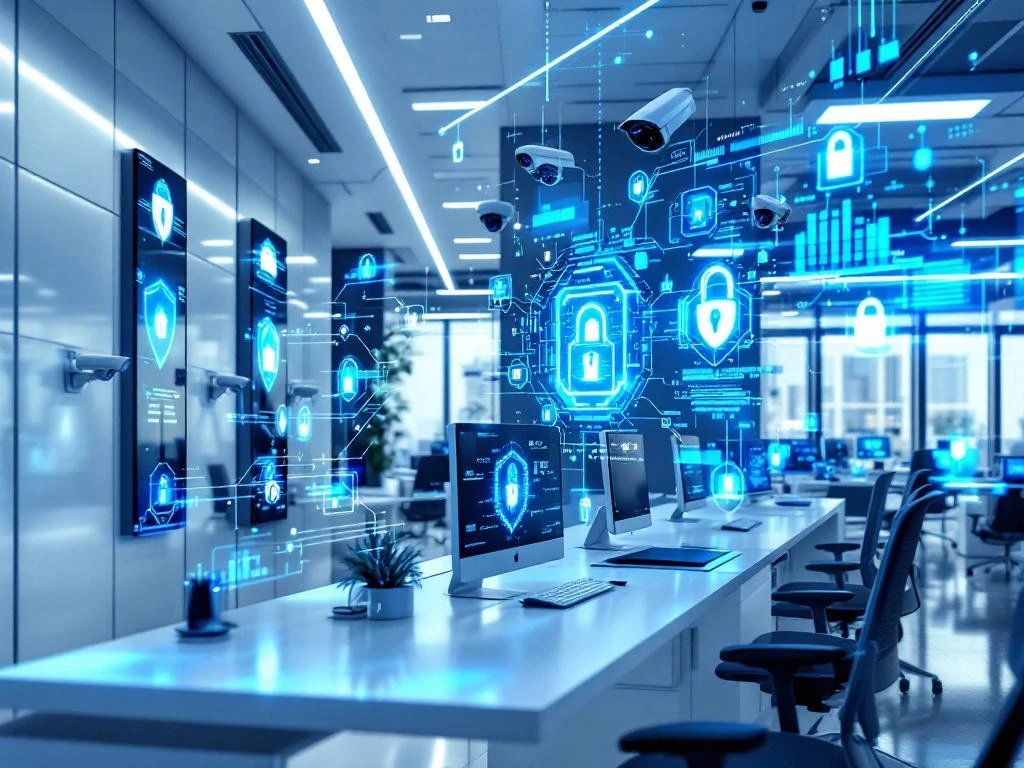
Smart office security combines modern technology with traditional security methods to provide comprehensive protection for offices. It integrates systems such as digital access control, smart cameras, motion sensors, and alarm systems that work together via a single central platform. These solutions not only offer improved security, but also greater ease of use and cost savings through automation and remote monitoring.
What security systems belong in a smart office?
A smart office security system consists of multiple integrated components that work together to provide optimal protection. The most important components are digital access control, IP camera systems, motion and glass break sensors, and a central alarm system that manages everything.
Access control forms the basis of every smart office system. This can range from badge readers to biometric scanners that use fingerprints or facial recognition. These systems determine who has access where and when.
Smart camera systems use IP technology and artificial intelligence to automatically detect suspicious activity. They can distinguish between normal movements and potential threats, reducing the number of false alarms.
Sensors play an important role in detection. Motion sensors register unwanted presence, while door and window sensors monitor opening and closing times. These sensors communicate wirelessly with the central system.
How does access control work in a modern office?
Modern access control works via digital identification methods that give employees access to specific areas based on their job and authorization level. The system records who had access where and when, and can be managed in real time.
Badge systems are the most common. Employees receive a personal badge with an RFID or NFC chip that they hold in front of a reader. The system immediately checks whether this person has access to that specific area at that time.
PIN code systems provide an extra layer of security. In addition to the badge, a personal code must be entered. This prevents misuse of lost or stolen badges.
Biometric systems use unique physical characteristics such as fingerprints or facial recognition. This method is the most secure, as biometric data cannot be copied or stolen.
Zone classification plays an important role. Different parts of the office have different access levels. General areas are accessible to everyone, while server rooms or executive offices have restricted access.
Why do companies choose smart security solutions?
Companies choose smart office security because it offers better protection against modern threats while reducing operational costs. The systems operate automatically, require less manual control, and can be monitored from any location.
Improved security is the main reason. Smart systems detect threats faster and more accurately than traditional methods. They can respond automatically by locking doors, alerting authorities, or activating specific protocols.
Cost savings are achieved through lower management costs and reduced security personnel. Automatic monitoring replaces many manual tasks, while preventive measures help avoid costly incidents.
Remote monitoring gives business managers control over their office, even when they are not physically present. Using smartphone apps, they can grant access, view cameras, and receive alarm notifications.
Ease of use improves the daily work experience. Employees do not need to manage keys and can easily access the areas they need for their work.
What are the costs of smart office security?
The cost of smart office security varies between €2,000 and €15,000 for an average office, depending on the desired functionalities and the size of the office. This investment consists of purchase costs, installation costs, and annual maintenance costs.
Basic access control systems start at around €1,500 for small offices. This includes a few badge readers, a central controller, and basic software. For more extensive systems with biometric scanners and zone classification, the costs can run up to €5,000.
Camera systems cost between €500 and €2,000 per camera, depending on the desired quality and functionalities. IP cameras with AI detection are more expensive than standard surveillance cameras, but offer more possibilities.
Installation costs usually amount to 20–30% of the equipment costs. Professional installation ensures optimal performance and prevents problems with system integration.
Annual maintenance costs vary between 10–15% of the total investment costs. This includes software updates, technical support, and periodic checks of all components.
Factors that influence the price include office size, number of access points, desired security level, and integration with existing systems. Customization increases costs but provides exactly the functionality you need.
How Wout Monseurs assists with smart office security
We offer complete smart office security solutions that perfectly match your office environment. From the initial consultation to the final installation and ongoing maintenance, we ensure a worry-free experience.
Our approach always starts with a thorough analysis of your current situation and security needs. Together, we look at which areas need extra protection and how employees prefer to work. Based on this, we design a system that integrates seamlessly with your daily activities.
We work exclusively with high-quality brands and proven technologies. Thanks to our many years of experience, we know exactly which combination of systems works best for different office environments. What's more, we ensure full integration with your existing IT infrastructure.
After installation, we remain involved in the maintenance and any expansions of the system. Our technical support is always available for questions or problems. Would you like to know how smart office security can make your office safer? Contact us for a no-obligation consultation.
Frequently asked questions
How long does it take to install a smart office security system?
De installatie duurt gemiddeld 1-3 dagen voor een standaard kantoor, afhankelijk van de complexiteit en grootte. Eenvoudige toegangscontrolesystemen kunnen vaak binnen één dag operationeel zijn, terwijl uitgebreide systemen met meerdere camera’s en sensoren meer tijd vergen. Wij plannen de installatie zo dat de dagelijkse werkzaamheden minimaal worden verstoord.
Can I expand the security system as my business grows?
Ja, moderne smart office systemen zijn modulair opgebouwd en eenvoudig uit te breiden. Je kunt nieuwe toegangspunten, camera’s of sensoren toevoegen zonder het bestaande systeem te vervangen. We adviseren altijd om bij de initiële installatie rekening te houden met toekomstige groei, zodat uitbreidingen soepel verlopen.
What happens if the system fails or there is a power outage?
Smart office security systems have built-in backup facilities such as batteries and fail-safe mechanisms. In the event of a power failure, the system remains operational for several hours, and doors can be operated manually. The system automatically sends notifications in the event of malfunctions, so that problems can be resolved quickly.
How do I secure the data collected by the system?
All data is stored and transmitted in encrypted form in accordance with the latest security standards and GDPR guidelines. We advise on local servers versus cloud storage and ensure regular backups. Access to the system is secured with strong authentication, and only authorized persons can access the data.
Can I integrate the system with my existing IT infrastructure?
Modern smart office systems are designed for seamless integration with existing networks, HR systems, and other business applications. We analyze your current IT environment in advance and ensure compatibility. Integration with systems such as Active Directory for user management is possible as standard.
What training will employees receive for the new system?
We offer comprehensive training for both end users and administrators. Employees learn how to use their badges and operate the system, while administrators receive training in adding users and interpreting reports. We also provide clear manuals and ongoing support.