

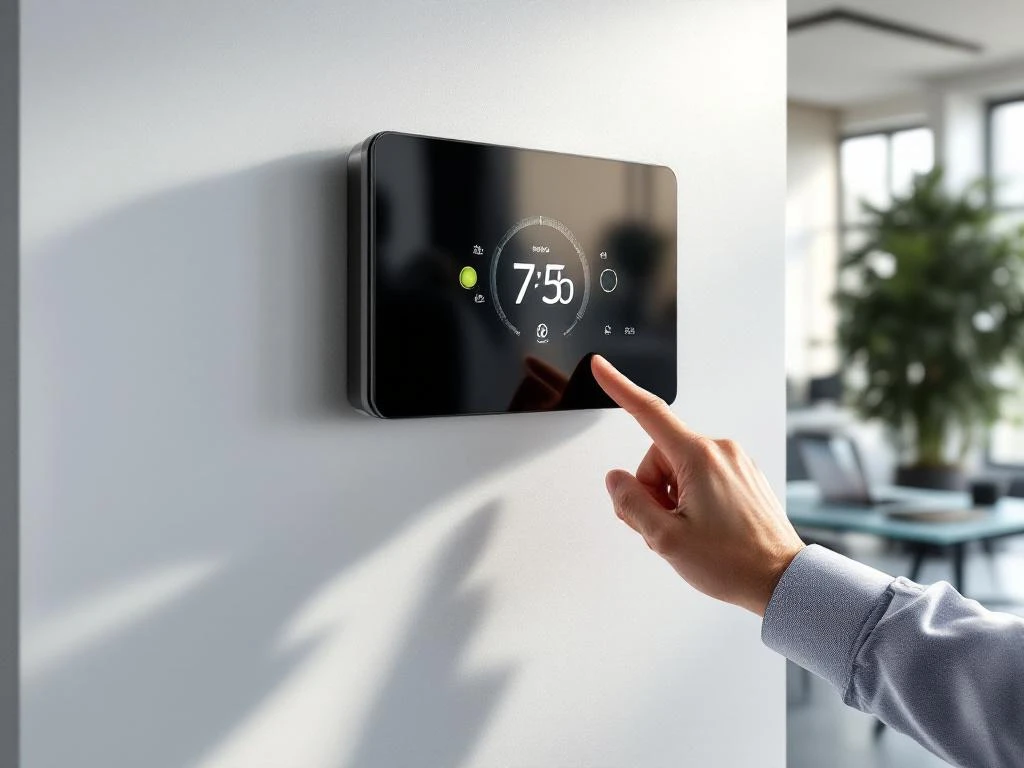
Smart office climate control is an intelligent system that automatically regulates temperature, humidity, and air quality using IoT sensors and advanced algorithms. This technology ensures an optimal working environment by making real-time adjustments based on occupancy, weather conditions, and individual preferences. The system integrates various climate control functions to save energy and maximize employee comfort.
What exactly is smart office climate control?
Smart office climate control combines intelligent sensor technology with automated systems to optimally regulate the office environment. The system uses IoT sensors that continuously measure temperature, humidity, CO2 levels, and occupancy rates to automatically make adjustments.
Key features include adaptive temperature control that adjusts based on the number of people present, automatic ventilation that supplies fresh air when CO2 levels rise, and smart zone control that regulates different office spaces individually. Modern systems can also factor in external variables, such as weather forecasts and daily routines, when making decisions.
This technology goes beyond traditional thermostats by using predictive algorithms that recognize patterns in office usage. The system learns from user behavior and automatically adjusts to provide consistent comfort while minimizing energy consumption.
How does automatic climate control work in modern offices?
Automatic climate control operates through a network of smart sensors that collect real-time data on temperature, humidity, air quality, and room occupancy. This information is processed by central algorithms that automatically adjust HVAC systems, fans, and other climate control equipment.
The technical process begins with data collection from various types of sensors: temperature sensors measure heat in different zones, air quality sensors detect CO2 levels and other pollutants, and motion sensors monitor occupancy. This data is transmitted to a central control system that uses machine learning to calculate optimal settings.
The system can respond proactively by integrating weather data and calendars. When a meeting room is reserved, the system begins cooling or heating the space even before occupants arrive. As outdoor temperatures fluctuate, the system gradually adjusts the indoor temperature to prevent sudden changes.
What are the benefits of smart climate control for employees?
Smart office climate control improves employee productivity by consistently maintaining optimal temperatures between 20 and 24 °C and keeping air quality at healthy levels. Employees experience less fatigue, headaches, and difficulty concentrating—issues often caused by poor air quality or temperature fluctuations.
The system offers individual control options via smartphone apps, allowing employees to adjust their immediate work environment without affecting other areas. This reduces office conflicts over temperature settings and increases satisfaction with the work environment.
Health benefits result from constant monitoring of air quality and automatic ventilation that removes harmful substances and excess CO2. The system can also regulate humidity to prevent dry eyes and throat irritation, which is especially important during the winter months when the air is dry from heating.
How much energy does smart climate control save?
Smart climate control typically reduces energy costs by 20–30% through adaptive control that uses energy only when and where it is needed. The system prevents waste by not conditioning empty spaces and automatically adjusting temperatures during breaks and after business hours.
Energy savings result from various mechanisms:
- Sun-based control that only cools occupied rooms
- Predictive system that anticipates occupancy patterns
- Integration with other building systems for optimal efficiency
- Automatic night mode and weekend reduction
The system also optimizes the coordination between heating, cooling, and ventilation by maximizing heat recovery. When the outside air is at the desired temperature, the system automatically switches to natural ventilation instead of mechanical cooling or heating.
How does Wout Monseurs help with smart office climate solutions?
We offer comprehensive smart office climate solutions, from consultation to implementation and maintenance. Our experienced team analyzes your office environment and designs customized solutions that are perfectly tailored to your building, work processes, and sustainability goals.
Our services include:
- Comprehensive analysis of your current HVAC systems and energy consumption
- Designing smart climate solutions using IoT sensors and automation
- Professional installation and integration with existing building systems
- Ongoing maintenance and optimization for maximum efficiency
With over 60 years of experience in office solutions, we combine traditional expertise with modern smart office technology. We ensure that your intelligent climate control system integrates seamlessly with other office solutions and contributes to a productive, healthy work environment. Contact us for a no-obligation consultation about the possibilities for your office.
Frequently asked questions
How long does it take to install a smart climate control system?
Installation typically takes 2–5 business days, depending on the size of the office and the complexity of existing systems. For smaller offices (up to 500 m²), 2–3 days is usually sufficient, while larger facilities may require up to a week. We schedule the installation to minimize disruption to normal operations.
Can I integrate the smart climate control system with my existing HVAC system?
Yes, modern smart climate control systems are designed to integrate with most existing HVAC systems. Our technicians first conduct a compatibility analysis to determine the best integration method. In 90% of cases, existing systems can be upgraded without requiring a complete replacement.
What happens if the internet connection goes down?
The system has built-in backup functionality that continues to operate locally in the event of an internet outage. Basic functions such as temperature control and ventilation remain active based on the last known settings. Once the connection is restored, the system automatically synchronizes and resumes full smart functionality.
How often does the system need to be serviced?
Preventive maintenance is recommended every 6 months, during which sensors are calibrated and filters are replaced. The system automatically sends maintenance reminders and can diagnose many issues on its own. Predictive maintenance often allows for the prevention of malfunctions before they occur.
Can employees manually override the system?
Yes, employees can use the smartphone app to make temporary adjustments to their zone (usually for 2–4 hours). The system then automatically reverts to the optimal settings. This prevents incorrect settings from becoming permanent, while still allowing employees to maintain control over their immediate work environment.
What payback period can I expect?
The average payback period is between 3 and 5 years, thanks to energy savings of 20–30% and increased employee productivity. Factors such as current energy costs, office size, and usage patterns influence this timeframe. We will calculate a detailed ROI analysis for your specific situation in advance.
What about privacy and data protection?
All sensor data is processed locally and stored in an anonymized form in accordance with GDPR guidelines. The system does not collect any personal information, only environmental data such as temperature and occupancy. Employees can view what data is being collected and have control over their own app settings.