

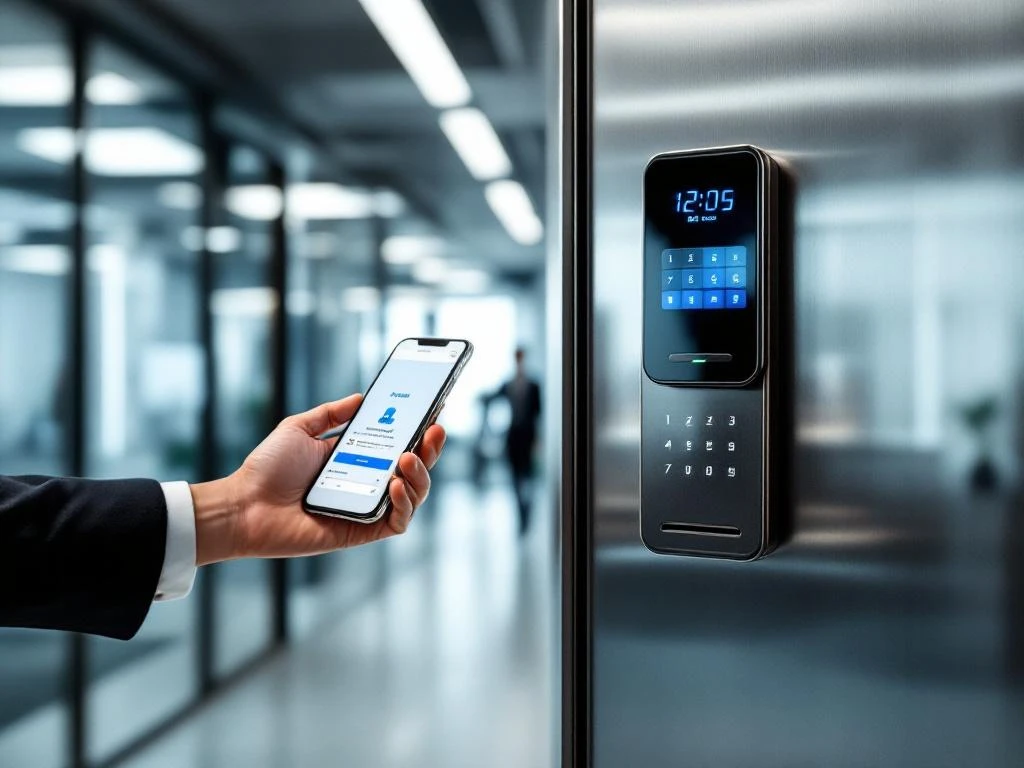
Smart office access control is a digital security system that manages access to office buildings and specific areas using modern technologies such as badges, biometric scanners, and smartphone apps. These systems replace traditional keys with intelligent solutions that enable real-time monitoring and automated access control for modern workplaces.
What exactly is smart office access control?
Smart office access control combines digital identification methods with intelligent management systems to secure and monitor office access. The system uses technologies such as RFID badges, biometric scanners, smartphone apps, and cloud-based software to determine who has access to which areas and when.
The core features include digital keys that can be stored on various devices, biometric authentication via fingerprint or facial recognition, and integrated security solutions that connect to alarm systems and cameras. These systems work together to create a seamless yet secure access experience.
Modern smart office systems also integrate with other office solutions, such as lighting, climate control, and booking systems. When an employee gains access to a room, the appropriate environmental settings can be automatically activated to ensure optimal working comfort.
What are the benefits of smart access control for offices?
Smart access control provides enhanced security through real-time monitoring, detailed access logs, and the ability to immediately revoke access rights. This eliminates the risks associated with lost keys and unauthorized access, while giving you complete control over who has access where and when.
The cost savings are significant due to the elimination of physical keys, the need to replace locks, and the deployment of security personnel. The system also reduces administrative burdens, as access rights can be managed digitally without the physical presence of staff.
- Real-time monitoring and reporting of all access activities
- Integration with other smart office systems, such as lighting and climate control
- Flexible access rights by employee and time slot
- Automatic backups and failover options for business continuity
For employees, this means greater convenience thanks to contactless access via their smartphone or badge, without the hassle of physical keys. The system can also be linked to parking spaces and reservation systems for an integrated workplace experience.
How does modern smart office access control work in practice?
Modern access control systems operate via cloud-based platforms that combine various identification methods. Badge scanners read RFID or NFC chips containing unique digital signatures, while smartphone apps use Bluetooth or Wi-Fi for proximity detection and automatic access granting.
Biometric recognition analyzes physical characteristics such as fingerprints, facial recognition, or iris scans to verify identity. This data is processed locally and compared against a secure database, with access granted or denied within seconds.
The cloud-based management system centralizes all access control and enables real-time adjustments. Administrators can modify access rights, add new users, generate reports, and monitor security incidents from any location via a web interface or mobile app.
The systems also operate offline by storing access data locally, ensuring that employees can always gain entry. Once the internet connection is restored, the system automatically synchronizes all activities with the cloud database to ensure full traceability.
What types of smart office access systems are available?
Card readers are the most commonly used solution and work with RFID or NFC badges that employees carry with them. These systems are reliable, cost-effective, and easy to implement in most office environments, from small businesses to large organizations.
PIN systems require users to enter a numeric code on a keypad. This solution works well for shared spaces or as a backup method, but is less suitable for busy offices due to the time it takes to enter the code.
- Biometric scanners for maximum security via fingerprint or facial recognition
- Mobile access via smartphone apps using Bluetooth or QR codes
- Hybrid solutions that combine multiple methods for flexibility
- Video intercom systems for visitor management and external access control
Hybrid solutions combine different technologies to provide flexibility and redundancy. Employees can choose between their badge, smartphone, or biometric authentication, while the system automatically selects the most appropriate method based on the situation and security requirements.
How we help with smart office access control systems
We help organizations select and implement access control systems that are perfectly tailored to their specific security requirements and operational processes. Our team analyzes your office environment, identifies vulnerabilities, and recommends the most suitable technological solutions.
The implementation includes full-scale project management from design through to completion, including integration with existing smart office systems such as lighting, climate control, and booking platforms. We ensure seamless integration between all technologies to deliver an optimal user experience.
- Comprehensive needs assessment and security audit of your office environment
- Professional installation and configuration by certified technicians
- Ongoing support and maintenance for optimal system performance
- Training for administrators and users on effective use
Our ongoing support ensures that your access control system always operates at peak performance. This includes regular updates, preventive maintenance, 24/7 technical support, and system expansion as your organization grows. Contact us for a no-obligation analysis of your access control needs and discover how smart office technology can improve your security.
Frequently asked questions
What happens if the smart access system goes down due to a power outage or internet outage?
Most modern systems have a built-in battery backup that lasts 8–24 hours during power outages. In the event of an internet outage, the systems continue to operate offline using locally stored access data, ensuring that authorized individuals can always gain entry. Once the connection is restored, everything automatically synchronizes with the cloud database.
How long does it take to install a new smart access system in an existing office building?
For an average office with 50–100 employees, installation typically takes 2–5 business days, depending on the number of access points and the desired integrations. Preparation and configuration take an additional 1–2 weeks. Larger buildings or complex integrations may require 2–4 weeks for full implementation.
Can employees use their smartphones if they forget their badges?
Yes, with hybrid systems, employees can always use their smartphone app as a backup method. The app works via Bluetooth, NFC, or QR codes and offers the same level of security as physical badges. Some systems can also generate temporary digital keys that administrators can send remotely.
Is it possible to set different access levels for different employees?
Absolutely. Smart access systems offer granular control, allowing you to specify for each individual which areas they can access, as well as the days and times they are permitted to do so. For example, you can grant executives 24/7 access, while office staff can only enter during business hours. These settings can be adjusted in real time via the management system.
What are the monthly costs for maintaining a smart access system?
Monthly costs range from €50–200 for small offices to €300–800 for larger organizations, depending on the number of users and desired features. This includes cloud hosting costs, software updates, technical support, and preventive maintenance. Most providers offer all-inclusive packages with transparent pricing.
How secure is biometric data, and can it be hacked?
Biometric data is stored locally on the device in encrypted form as mathematical templates, not as actual images. These templates cannot be converted back into the original biometric data. Modern systems use end-to-end encryption and comply with GDPR guidelines to ensure maximum data protection.
Can the system automatically register visitors and grant temporary access?
Yes, advanced systems include visitor management modules that allow guests to register in advance and receive temporary digital keys via email or text message. Upon arrival, they can check in themselves using a tablet in the lobby, after which the appropriate access rights are automatically activated for the agreed duration and locations.