

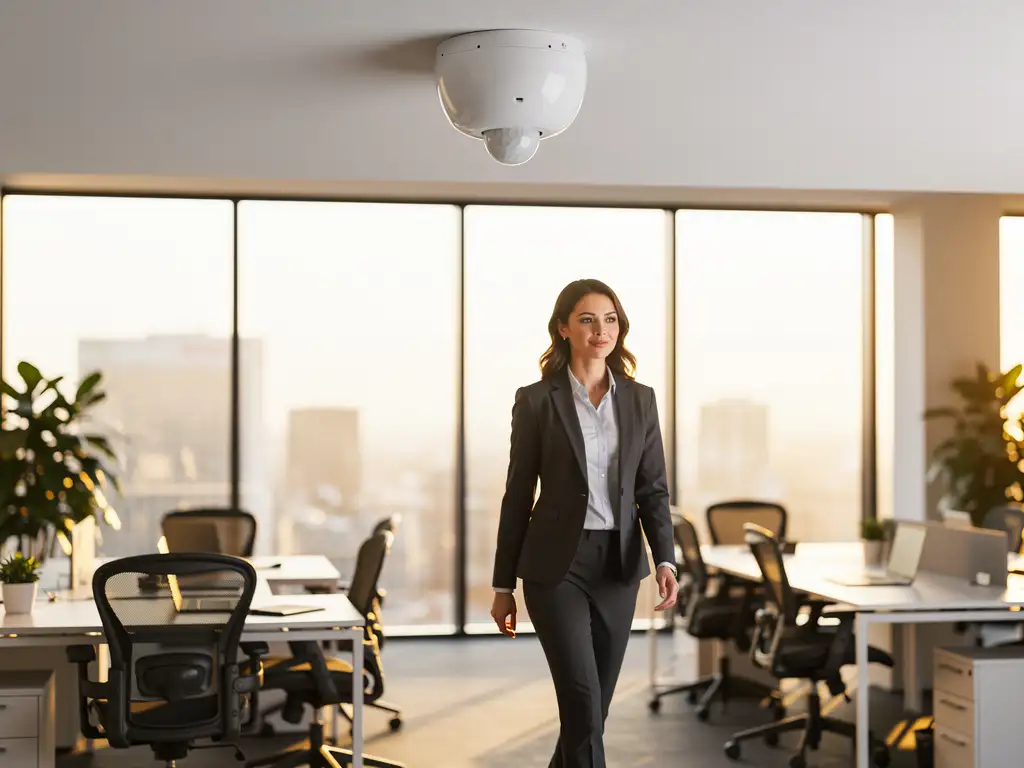
Aanwezigheidssensoren transformeren moderne kantooromgevingen door automatisch te detecteren wanneer werknemers aanwezig zijn in specifieke ruimtes. Deze slimme sensortechnologie voor kantooromgevingen wordt steeds populairder bij Nederlandse bedrijven die streven naar efficiëntere werkplekken en lagere operationele kosten.
Door de opkomst van hybride werken en flexibele werkplekken is het belangrijk geworden om real-time inzicht te hebben in het ruimtegebruik. Aanwezigheidssensoren bieden deze mogelijkheid en dragen bij aan een intelligentere, duurzamere manier van werken.
Wat zijn aanwezigheidssensoren precies?
Aanwezigheidssensoren zijn elektronische apparaten die automatisch detecteren of er personen aanwezig zijn in een bepaalde ruimte of zone. Deze slimme sensoren gebruiken verschillende technologieën, zoals bewegingsdetectie, warmtedetectie of geluidsherkenning, om menselijke activiteit waar te nemen.
De sensoren werken door hun omgeving continu te monitoren en kunnen onderscheid maken tussen verschillende soorten beweging. Moderne aanwezigheidssensoren zijn veel geavanceerder dan traditionele bewegingsmelders, omdat ze niet alleen beweging detecteren, maar ook subtiele signalen zoals ademhaling of kleine lichaamsbewegingen kunnen waarnemen.
In kantooromgevingen worden deze sensoren geïntegreerd in verlichtingssystemen, klimaatbeheersing, beveiligingssystemen en werkplekbeheersoftware. Ze communiceren draadloos met centrale systemen en kunnen real-time data verstrekken over ruimtegebruik en aanwezigheidspatronen.
Welke voordelen bieden aanwezigheidssensoren voor kantoren?
Aanwezigheidssensoren leveren aanzienlijke energiebesparingen op door automatisch verlichting en klimaatbeheersing uit te schakelen in ongebruikte ruimtes. Bedrijven kunnen tot 30-50% besparen op hun energiekosten door slimme sensoren in de kantooromgeving te implementeren.
Naast energiebesparing bieden deze sensoren waardevolle inzichten in het ruimtegebruik. Facility managers krijgen data over welke werkplekken, vergaderruimtes en gemeenschappelijke ruimtes het meest worden gebruikt. Deze informatie helpt bij het optimaliseren van kantoorindelingen en het nemen van beslissingen over toekomstige uitbreidingen of inkrimping.
Voor werknemers zorgen aanwezigheidssensoren voor verbeterd comfort doordat systemen automatisch reageren op hun aanwezigheid. Verlichting gaat aan wanneer ze een ruimte betreden, de temperatuur wordt aangepast aan hun voorkeuren en vergaderruimtes kunnen automatisch worden gereserveerd.
De sensoren dragen ook bij aan betere hygiëne en veiligheid door contactloze bediening van systemen mogelijk te maken. In tijden van verhoogde aandacht voor gezondheid is dit een belangrijk voordeel voor moderne werkplekken.
Welke verschillende types aanwezigheidssensoren bestaan er?
Er bestaan vier hoofdtypen aanwezigheidssensoren: PIR-sensoren (passief infrarood), microgolfsensoren, ultrasone sensoren en cameragebaseerde sensoren. Elk type heeft specifieke eigenschappen die geschikt zijn voor verschillende toepassingen in kantooromgevingen.
PIR-sensoren
PIR-sensoren detecteren warmtestraling van menselijke lichamen en zijn het meest gebruikte type in kantoren. Ze zijn energiezuinig, betaalbaar en betrouwbaar voor het detecteren van beweging. Deze sensoren werken goed in kleinere ruimtes, zoals individuele werkplekken en kantoren.
Microgolfsensoren
Microgolfsensoren zenden hoogfrequente golven uit en detecteren veranderingen in het reflectiepatroon. Ze zijn gevoeliger dan PIR-sensoren en kunnen beweging door dunne wanden of obstakels heen detecteren. Dit maakt ze geschikt voor open kantoorruimtes en grote vergaderzalen.
Ultrasone sensoren
Deze sensoren gebruiken geluidsgolven om beweging te detecteren en zijn zeer nauwkeurig bij het waarnemen van kleine bewegingen. Ze werken goed in ruimtes waar mensen langere tijd stilzitten, zoals aan bureaus of in vergaderruimtes.
Camera-gebaseerde sensoren
Moderne camerasensoren gebruiken beeldherkenning en AI om personen te detecteren en te tellen. Ze bieden de meeste functionaliteit, maar vereisen meer aandacht voor privacy en databeveiliging.
Waar worden aanwezigheidssensoren in kantoren toegepast?
Aanwezigheidssensoren worden primair toegepast in verlichtingssystemen, klimaatbeheersing, werkplekbeheer en beveiligingssystemen. De meest voorkomende toepassingen zijn automatische verlichting in gangen, toiletten en vergaderruimtes, plus slimme klimaatregeling in verschillende zones.
In moderne flexibele werkplekken worden sensoren geïntegreerd met deskbookingsystemen. Werknemers kunnen via een app zien welke werkplekken beschikbaar zijn, en sensoren bevestigen automatisch of een gereserveerde plek daadwerkelijk wordt gebruikt. Dit voorkomt het vasthouden van ongebruikte reserveringen.
Vergaderruimtes profiteren enorm van aanwezigheidssensoren door automatische in- en uitschakeling van presentatieapparatuur, verlichting en klimaatbeheersing. Sommige systemen kunnen zelfs automatisch vergaderingen beëindigen wanneer alle deelnemers de ruimte hebben verlaten.
In gemeenschappelijke ruimtes zoals kantines, ontspanningsruimtes en kopieerzones helpen sensoren bij het monitoren van drukte en kunnen ze werknemers via apps informeren over de beste tijden om deze ruimtes te bezoeken. Dit draagt bij aan een betere spreiding van het gebruik en vermindert wachttijden.
Hoe kies je de juiste aanwezigheidssensoren voor jouw kantoor?
De keuze voor aanwezigheidssensoren hangt af van het ruimtetype, de gewenste functionaliteit, het budget en privacyvereisten. Begin met het in kaart brengen van welke ruimtes sensoren nodig hebben en wat de primaire doelstellingen zijn: energiebesparing, ruimteoptimalisatie of werknemerscomfort.
Voor kleine kantoren en individuele werkplekken zijn eenvoudige PIR-sensoren vaak voldoende. Deze zijn kosteneffectief en eenvoudig te installeren. Voor grote open kantoorruimtes zijn microgolf- of ultrasone sensoren beter geschikt vanwege hun grotere bereik en hogere gevoeligheid.
Overweeg de integratiemogelijkheden met bestaande systemen. Moderne sensoren kunnen communiceren met gebouwbeheersystemen, verlichtingsinstallaties en werkplekbeheersoftware. Kies voor sensoren die compatibel zijn met jouw huidige infrastructuur of toekomstige uitbreidingsplannen.
Privacy is een belangrijk aandachtspunt, vooral bij cameragebaseerde sensoren. Zorg voor transparante communicatie naar werknemers over welke data wordt verzameld en hoe deze wordt gebruikt. Kies voor leveranciers die voldoen aan de AVG en een duidelijk privacybeleid hanteren.
Hoe Wout Monseurs helpt met slimme kantooroplossingen
Wij integreren aanwezigheidssensoren als onderdeel van onze Smart Office-oplossingen om moderne werkplekken te transformeren tot intelligente, efficiënte omgevingen. Onze expertise in kantoorinrichting combineert traditionele meubeloplossingen met geavanceerde sensortechnologie.
Onze aanpak voor de implementatie van slimme sensoren in de kantooromgeving omvat:
- Uitgebreide analyse van jouw ruimtegebruik en energieverbruik
- Maatwerkadvies voor het juiste type sensoren per ruimte
- Integratie met bestaande verlichtings- en klimaatsystemen
- Koppeling aan deskbookingtools en werkplekbeheersoftware
- Training voor facility managers en IT-beheerders
- Doorlopende ondersteuning en optimalisatie van systemen
Als familiebedrijf met meer dan 60 jaar ervaring begrijpen wij dat elke organisatie unieke behoeften heeft. Daarom bieden wij complete projectinrichting waarbij sensortechnologie naadloos wordt geïntegreerd in het totale kantoorontwerp. Neem contact met ons op voor een vrijblijvend adviesgesprek over hoe aanwezigheidssensoren jouw kantoor slimmer en efficiënter kunnen maken.
Veelgestelde vragen
Hoe lang duurt het om aanwezigheidssensoren in een kantoor te installeren?
De installatietijd hangt af van de grootte van het kantoor en het type sensoren. Voor een gemiddeld kantoor van 500-1000m² duurt de installatie meestal 1-2 werkdagen. Draadloze sensoren zijn sneller te installeren dan bekabelde systemen, en de configuratie en integratie met bestaande systemen kan nog eens 1-2 dagen extra vergen.
Wat zijn de gemiddelde kosten voor het implementeren van aanwezigheidssensoren?
De kosten variëren tussen €50-200 per sensor, afhankelijk van het type en de functionaliteit. Voor een compleet systeem inclusief installatie en software kun je rekenen op €3.000-10.000 voor een middelgroot kantoor. De terugverdientijd is meestal 1-3 jaar door energiebesparingen en efficiëntiewinsten.
Kunnen aanwezigheidssensoren vals alarm geven of werknemers ten onrechte 'missen'?
Moderne sensoren zijn zeer betrouwbaar, maar kunnen soms vals alarm geven door huisdieren, bewegende objecten of extreme temperatuurschommelingen. PIR-sensoren kunnen personen ‘missen’ die lang stilzitten, daarom worden vaak hybride systemen gebruikt die meerdere detectiemethoden combineren. Regelmatige kalibratie en juiste plaatsing minimaliseren deze problemen.
Hoe gaan aanwezigheidssensoren om met privacy van werknemers?
Aanwezigheidssensoren verzamelen alleen anonieme data over ruimtegebruik, niet over individuele personen. PIR- en ultrasone sensoren detecteren enkel aanwezigheid zonder persoonlijke identificatie. Bij cameragebaseerde sensoren wordt vaak edge-processing gebruikt waarbij beelden lokaal worden verwerkt en niet opgeslagen. Transparante communicatie naar werknemers over datagebruik is essentieel.
Wat gebeurt er als het systeem uitvalt of sensoren defect raken?
Goede systemen hebben failsafe-mechanismen waarbij verlichting en klimaatbeheersing automatisch overschakelen naar handmatige bediening of een standaardmodus. De meeste sensoren hebben een levensduur van 5-10 jaar en geven waarschuwingen bij lage batterij of technische problemen. Een onderhoudscontract zorgt voor snelle vervanging van defecte sensoren.
Kunnen aanwezigheidssensoren worden geïntegreerd met bestaande kantoorautomatisering?
Ja, moderne sensoren communiceren via standaardprotocollen zoals Zigbee, WiFi of LoRaWAN en kunnen worden geïntegreerd met de meeste gebouwbeheersystemen (BMS), verlichtingscontroles en HVAC-systemen. De integratie vereist vaak maatwerk en expertise van een gespecialiseerde leverancier om optimale compatibiliteit te garanderen.
Hoe meet je het succes van geïmplementeerde aanwezigheidssensoren?
Succes wordt gemeten aan de hand van energieverbruik (20-50% reductie is realistisch), ruimtebenutting (percentage tijd dat ruimtes gebruikt worden), werknemerstevredenheid en operationele efficiëntie. Dashboard-software toont real-time en historische data over ruimtegebruik, energiebesparing en systeemprestaties. ROI-berekeningen tonen meestal terugverdientijd binnen 2-3 jaar.