

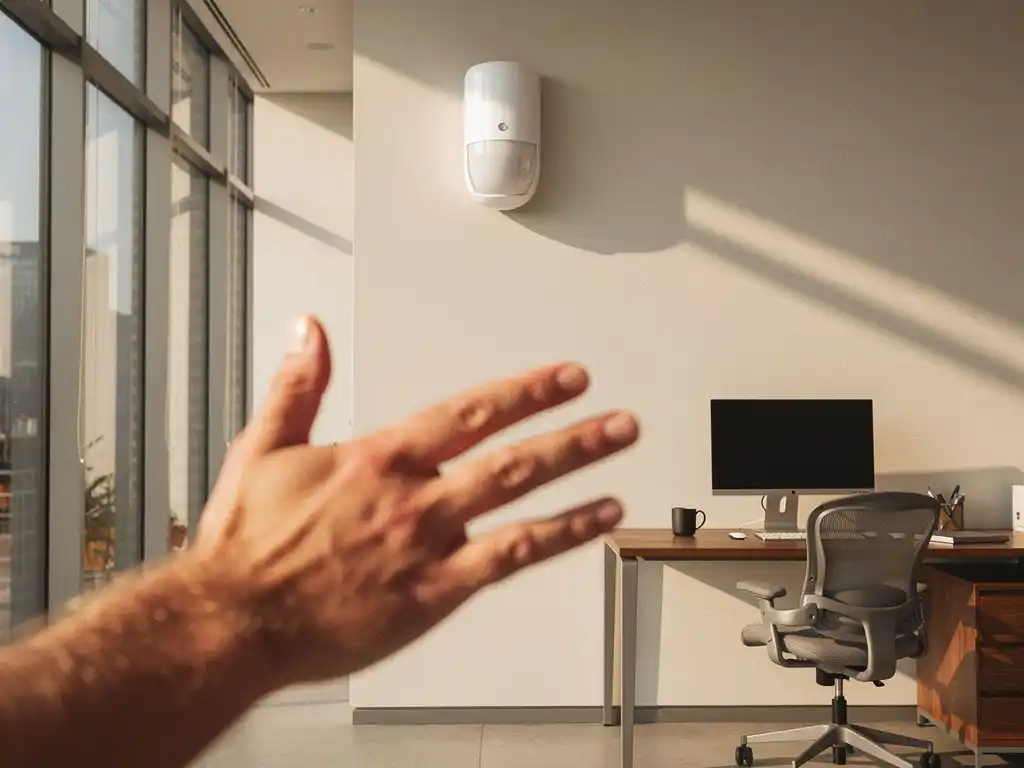
Bewegingssensoren zijn een steeds populairdere toevoeging aan moderne kantooromgevingen, vooral nu bedrijven zoeken naar manieren om energiekosten te verlagen en werkplekken slimmer in te richten. Deze technologie sluit perfect aan bij de groeiende trend naar Smart Office-oplossingen en duurzame kantoorinrichting.
In dit artikel beantwoorden we de meest gestelde vragen over bewegingssensoren in kantoren, van hun werking tot praktische toepassingen en energiebesparingen.
Wat zijn bewegingssensoren en waarom zijn ze belangrijk voor kantoren?
Bewegingssensoren zijn elektronische apparaten die automatisch beweging detecteren in een ruimte en daarop reageren door verlichting, klimaatbeheersing of andere systemen in of uit te schakelen. Ze zijn belangrijk voor kantoren omdat ze energiekosten met wel 90% kunnen verlagen en bijdragen aan een comfortabele, efficiënte werkomgeving.
Deze sensoren spelen een cruciale rol in moderne kantooromgevingen om verschillende redenen. Ten eerste zorgen ze voor automatische energiebesparing door verlichting alleen te activeren wanneer ruimtes daadwerkelijk worden gebruikt. Dit is vooral waardevol in vergaderruimtes, toiletten en andere ruimtes die niet continu bezet zijn.
Daarnaast verbeteren bewegingssensoren het werknemerscomfort door handsfree bediening mogelijk te maken. Werknemers hoeven niet meer naar lichtschakelaars te zoeken in donkere ruimtes, wat vooral praktisch is bij het betreden van kantoorruimtes vroeg in de ochtend of laat in de avond.
Voor facilitair management bieden bewegingssensoren waardevolle inzichten in ruimtegebruik. Moderne sensoren kunnen data verzamelen over wanneer en hoe vaak verschillende ruimtes worden gebruikt, wat helpt bij het optimaliseren van kantoorindelingen en schoonmaakschema’s.
Hoe werken bewegingssensoren technisch gezien?
Bewegingssensoren werken met verschillende technologieën die beweging detecteren: PIR-sensoren (Passive Infrared) reageren op warmteveranderingen, microgolfsensoren zenden radiosignalen uit die reflecteren op bewegende objecten, en ultrasone sensoren gebruiken geluidsgolven om beweging waar te nemen.
De meest gebruikte technologie in kantooromgevingen is de PIR-sensor. Deze detecteert infraroodstraling die door het menselijk lichaam wordt uitgestraald. Wanneer iemand een ruimte binnenkomt, registreert de sensor de temperatuurverandering en activeert hij het gekoppelde systeem, zoals verlichting of ventilatie.
Microgolfsensoren zijn gevoeliger dan PIR-sensoren en kunnen beweging detecteren door dunne wanden en glazen oppervlakken heen. Ze zenden continu radiosignalen uit met een frequentie van ongeveer 5,8 GHz en analyseren de terugkaatsende signalen op veranderingen die duiden op beweging.
Ultrasone sensoren werken volgens een vergelijkbaar principe, maar gebruiken geluidsgolven in plaats van radiogolven. Ze zijn zeer nauwkeurig, maar kunnen gevoelig zijn voor omgevingsgeluid, waardoor ze minder geschikt zijn voor lawaaierige kantooromgevingen.
Moderne bewegingssensoren combineren vaak meerdere technologieën om valse activeringen te minimaliseren en de detectienauwkeurigheid te verbeteren. Deze dual-technology-sensoren activeren alleen wanneer beide sensortypen beweging detecteren.
Welke soorten bewegingssensoren zijn er voor kantoorgebruik?
Voor kantoorgebruik zijn er hoofdzakelijk vier soorten bewegingssensoren beschikbaar: plafondgemonteerde sensoren voor algemene ruimtedetectie, wandgemonteerde sensoren voor specifieke zones, aanwezigheidssensoren die kleine bewegingen detecteren, en slimme sensoren die integreren met gebouwbeheersystemen.
Plafondgemonteerde PIR-sensoren zijn de meest voorkomende keuze voor kantoorruimtes. Ze bieden een detectiehoek van 360 graden en zijn ideaal voor open kantoortuinen, vergaderruimtes en gangen. Deze sensoren hebben doorgaans een detectiebereik met een diameter van 6 tot 12 meter.
Wandgemonteerde sensoren zijn geschikt voor kleinere ruimtes zoals individuele kantoren, toiletten en bergkasten. Ze hebben een detectiehoek van ongeveer 180 graden en kunnen strategisch worden geplaatst om specifieke zones te monitoren zonder andere gebieden te beïnvloeden.
Aanwezigheidssensoren zijn geavanceerdere varianten die niet alleen beweging detecteren, maar ook kleine bewegingen, zoals typen op een toetsenbord of het draaien in een bureaustoel. Deze sensoren zijn perfect voor werkplekken waar mensen langdurig stil kunnen zitten.
Slimme bewegingssensoren kunnen worden geïntegreerd met buildingmanagementsystemen en Smart Office-technologie. Ze bieden functies zoals dimbare verlichting, tijdgestuurde programmering en data-analyse van ruimtegebruik, wat waardevolle inzichten oplevert voor facilitair management.
Waar kun je bewegingssensoren het beste plaatsen in een kantoor?
Bewegingssensoren kun je het beste plaatsen in entreegebieden, vergaderruimtes, toiletten, kopieerruimtes, bergkasten, gangen en trappenhallen. Voor optimale werking moeten ze worden gemonteerd op 2,4 tot 3 meter hoogte, met vrij zicht op de te bewaken ruimte, en uit de buurt van warmtebronnen zoals radiatoren of airconditioners.
In open kantoortuinen plaats je plafondgemonteerde sensoren strategisch boven werkplekgebieden, waarbij je rekening houdt met de detectiehoek en het bereik. Een sensor met een bereik van 8 meter in diameter kan ongeveer 50 vierkante meter kantoorruimte bestrijken, afhankelijk van de indeling.
Vergaderruimtes hebben baat bij sensoren die zowel bij de ingang als centraal in de ruimte zijn geplaatst. Dit voorkomt dat de verlichting uitvalt wanneer deelnemers stilzitten tijdens presentaties. Gebruik hiervoor bij voorkeur aanwezigheidssensoren die kleine bewegingen kunnen detecteren.
Voor toiletten en kopieerruimtes zijn wandgemonteerde sensoren vaak de praktischste oplossing. Plaats ze tegenover de ingang op ongeveer 2,5 meter hoogte om optimale detectie te garanderen, zonder privacyproblemen.
Vermijd plaatsing nabij warmtebronnen, airconditioninguitlaten of gebieden met veel trillingen. Deze kunnen valse activeringen veroorzaken of juist de gevoeligheid van de sensor beïnvloeden. Zorg er ook voor dat bewegende objecten zoals planten of gordijnen de sensor niet kunnen blokkeren.
Hoeveel energie besparen bewegingssensoren in kantooromgevingen?
Bewegingssensoren kunnen in kantooromgevingen de energiekosten voor verlichting verlagen met 20 tot 90%, afhankelijk van het type ruimte en het gebruikspatroon. Gemiddeld realiseren kantoren een energiebesparing van 30 tot 50% op verlichtingskosten, wat neerkomt op honderden euro’s per jaar voor een gemiddeld kantoorpand.
De grootste besparingen worden gerealiseerd in ruimtes die niet continu bezet zijn. Vergaderruimtes, toiletten en bergkasten kunnen energiebesparingen tot 90% behalen omdat de verlichting alleen brandt wanneer deze ruimtes daadwerkelijk worden gebruikt. Voor kopieerruimtes en keukenruimtes ligt de besparing doorgaans tussen 60 en 80%.
In open kantoortuinen is de besparing lager, maar nog steeds substantieel, meestal tussen 20 en 40%. Dit komt doordat deze ruimtes overdag regelmatig bezet zijn, maar sensoren ervoor zorgen dat verlichting automatisch uitschakelt tijdens lunchpauzes, vergaderingen en na werktijd.
De terugverdientijd van bewegingssensoren ligt doorgaans tussen 6 maanden en 2 jaar, afhankelijk van de energieprijzen en het gebruik van de ruimte. Bij de huidige energieprijzen kunnen kantoren met hoge bezettingsgraden hun investering vaak binnen een jaar terugverdienen.
Naast directe energiebesparingen verlengen bewegingssensoren ook de levensduur van verlichtingsarmaturen door het aantal branduren te reduceren. Dit resulteert in lagere onderhoudskosten en minder frequente vervanging van lampen en ledmodules.
Hoe Wout Monseurs helpt met slimme sensoren voor uw kantooromgeving
Bij Wout Monseurs integreren we bewegingssensoren als onderdeel van onze Smart Office-technologie om uw kantoor energiezuiniger en gebruiksvriendelijker te maken. Met meer dan 60 jaar ervaring in kantoorinrichting combineren we traditionele expertise met moderne technologische oplossingen.
Onze Smart Office-diensten omvatten:
- Advies over de optimale plaatsing van bewegingssensoren voor uw specifieke kantoorindeling
- Integratie met verlichtingssystemen en gebouwbeheersing
- Data-analyse van ruimtegebruik voor optimalisatie van uw kantoorinrichting
- Onderhoud en monitoring van de sensorsystemen
- Training voor uw facilitaire team
Wilt u weten hoe bewegingssensoren uw kantoor kunnen verbeteren en energiekosten kunnen verlagen? Neem contact met ons op voor een vrijblijvend adviesgesprek en ontdek de mogelijkheden voor uw organisatie.
Veelgestelde vragen
Kunnen bewegingssensoren ook werken met bestaande verlichtingssystemen?
Ja, de meeste moderne bewegingssensoren kunnen worden geïntegreerd met bestaande verlichtingssystemen. Voor conventionele schakelcircuits zijn er sensoren die tussen de schakelaar en de verlichting kunnen worden geplaatst. Bij complexere systemen kan een electricien de bedrading aanpassen om sensoren te integreren zonder volledige vervanging van de verlichting.
Wat zijn de meest voorkomende problemen bij bewegingssensoren en hoe los je die op?
Veelvoorkomende problemen zijn valse activeringen door warmtebronnen, te korte of lange vertragingstijden, en gevoeligheid die te hoog of laag is ingesteld. Deze problemen kun je oplossen door sensoren weg te plaatsen van warmtebronnen, de tijd- en gevoeligheidsinstellingen aan te passen via de DIP-switches of app, en regelmatig de sensoren schoon te maken van stof.
Hoe stel je de vertragingstijd van bewegingssensoren correct in voor kantoorgebruik?
Voor kantoorgebruik wordt aanbevolen om de vertragingstijd in te stellen op 10-15 minuten voor werkplekken, 5-10 minuten voor vergaderruimtes, en 2-5 minuten voor toiletten en gangen. Te korte tijden zorgen voor irritatie bij werknemers, terwijl te lange tijden de energiebesparing verminderen. Test verschillende instellingen gedurende een week om de optimale balans te vinden.
Zijn er privacyzorgen bij het gebruik van bewegingssensoren op de werkplek?
Bewegingssensoren detecteren alleen beweging en verzamelen geen visuele of audio-informatie, waardoor privacyrisico’s minimaal zijn. Moderne sensoren kunnen wel data verzamelen over ruimtegebruik, maar deze informatie is geanonimiseerd. Informeer werknemers transparant over het doel van de sensoren en zorg voor duidelijke communicatie over welke data wordt verzameld.
Welke onderhoudsactiviteiten zijn nodig voor bewegingssensoren?
Bewegingssensoren vereisen minimaal onderhoud: reinig de sensor maandelijks met een droge doek om stof te verwijderen, controleer kwartaals de werking door de ruimte te verlaten en weer binnen te komen, en vervang batterijen in draadloze modellen volgens fabrikantspecificaties. Bij problemen controleer je eerst de instellingen voordat je technische ondersteuning inschakelt.
Kunnen bewegingssensoren worden gekoppeld aan andere Smart Office-systemen?
Ja, moderne bewegingssensoren kunnen worden geïntegreerd met gebouwbeheersystemen (BMS), klimaatbeheersing, beveiligingssystemen en Smart Office-platformen. Deze integratie maakt geavanceerde functies mogelijk zoals automatische temperatuurregeling, bezettingsrapportage, en gecoördineerde verlichting- en klimaatbediening voor maximale energie-efficiëntie.
Wat is het verschil in kosten tussen verschillende typen bewegingssensoren?
Eenvoudige PIR-sensoren kosten tussen €15-50 per stuk, terwijl geavanceerde aanwezigheidssensoren €75-150 kosten. Slimme sensoren met IoT-functionaliteit variëren van €100-300. Hoewel de initiële investering hoger is voor geavanceerde modellen, bieden ze betere energiebesparingen en functionaliteit, waardoor de meerkosten vaak binnen 1-2 jaar worden terugverdiend.